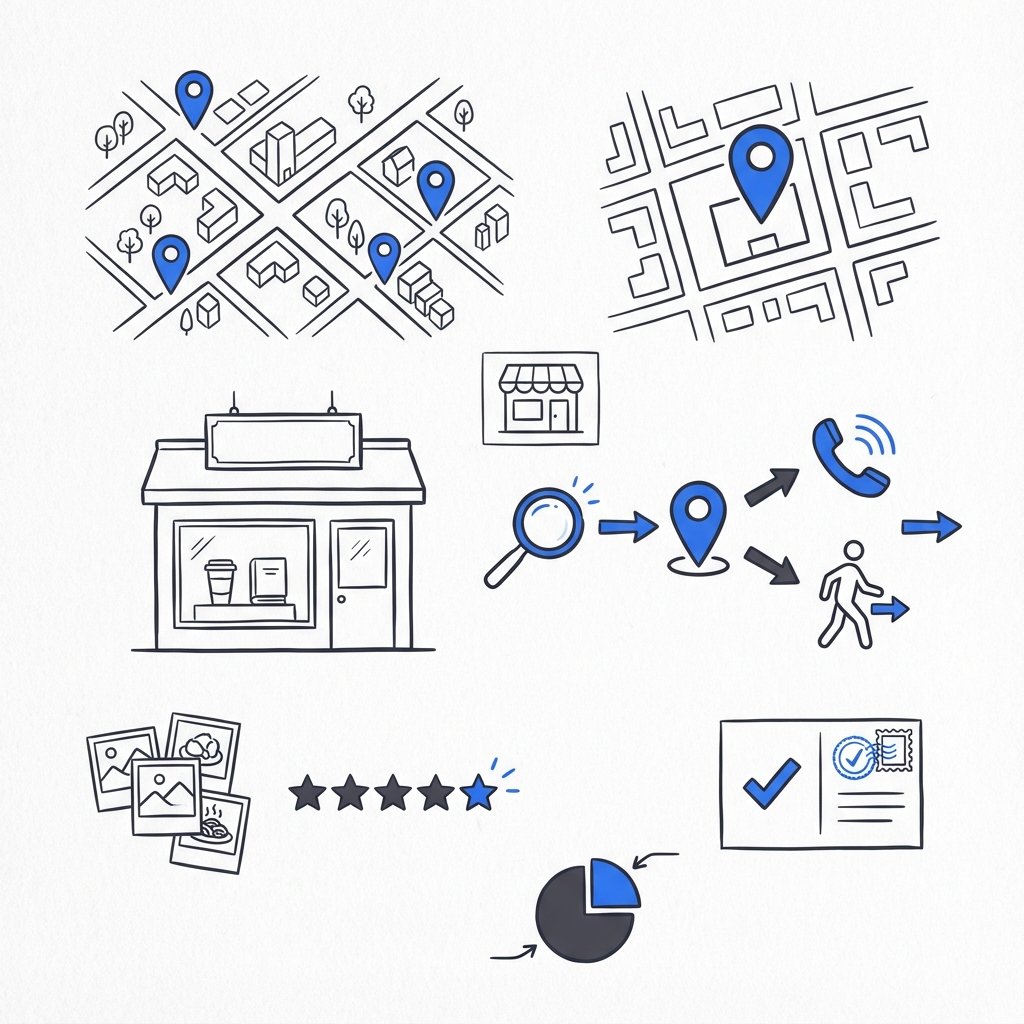
Can Instagram ads still move the needle for small and mid-sized businesses? The short answer is yes – but whether they move the needle for you depends on what you sell, how you measure, and how patiently you run the first few experiments.

How to judge instagram ads ROI: a practical starting point
instagram ads ROI is more than a single number. It’s a way to compare the money you put into attention against the revenue and lifetime value that attention creates. In plain terms: if your ads bring customers who keep buying, your instagram ads ROI looks much better than the immediate purchase alone suggests. Right away, set two kinds of expectations: short-term efficiency (clicks, add-to-carts, cost per lead) and long-term business impact (LTV and retention).
Instagram still buys attention. People scroll, pause on strong visuals, tap into product tags, and click through Stories and Reels. That attention is useful for both awareness and direct response. But the platform’s mechanics have shifted: a single set of pretty photos rarely carries a campaign anymore. Today success depends on linking creative, product feed, landing experience and measurement tightly. Consider using your logo consistently across formats to build quick recognition.
What Instagram reliably buys today
Advertisers typically use Instagram for four outcomes: broad awareness, consideration (video views, carousel engagement), direct response (catalogs and shop units), and retargeting. Each outcome carries different cost expectations – and different ways to judge whether the spend was worth it.
If you want help turning a short test into a repeatable playbook, consider working with Agency VISIBLE’s test playbook – a practical, short-term engagement that helps small teams run honest experiments and walk away with clear next steps.
Ready to test Instagram ads the right way?
Ready to learn whether Instagram ads can move the needle for your business? Start a short experiment with clear KPIs and get a written playbook to act on the results. Reach out to book a planning call and get a custom test plan.
What ads usually cost (and why numbers vary)
Talking dollars helps ground decisions, but remember averages lie without context. In mature markets like the US and UK, cost-per-click often ranges from cents to a few dollars. CPMs usually sit in the single to low-double digits. Campaign objectives, vertical competition, creative quality and seasonality all push those ranges up or down.
Conversion campaigns typically require more spend before they show profitable returns. Driving a purchase needs relevant creative, a matched product feed, fast landing pages and social proof. For many consumer e-commerce stores that invest in these pieces, profitable instagram ads ROI commonly falls in the 2x-4x range. For local services and B2B, the math focuses on cost per lead and lifetime value rather than immediate ROAS.
Why creative + funnel beat targeting alone
When people ask why an ad failed, they often point at targeting. But in practice, creative quality and funnel alignment explain most of the variance. A bold visual, a clear promise in the first second of video, and a landing page that delivers the same offer will convert far more reliably than ads that rely solely on narrow targeting.
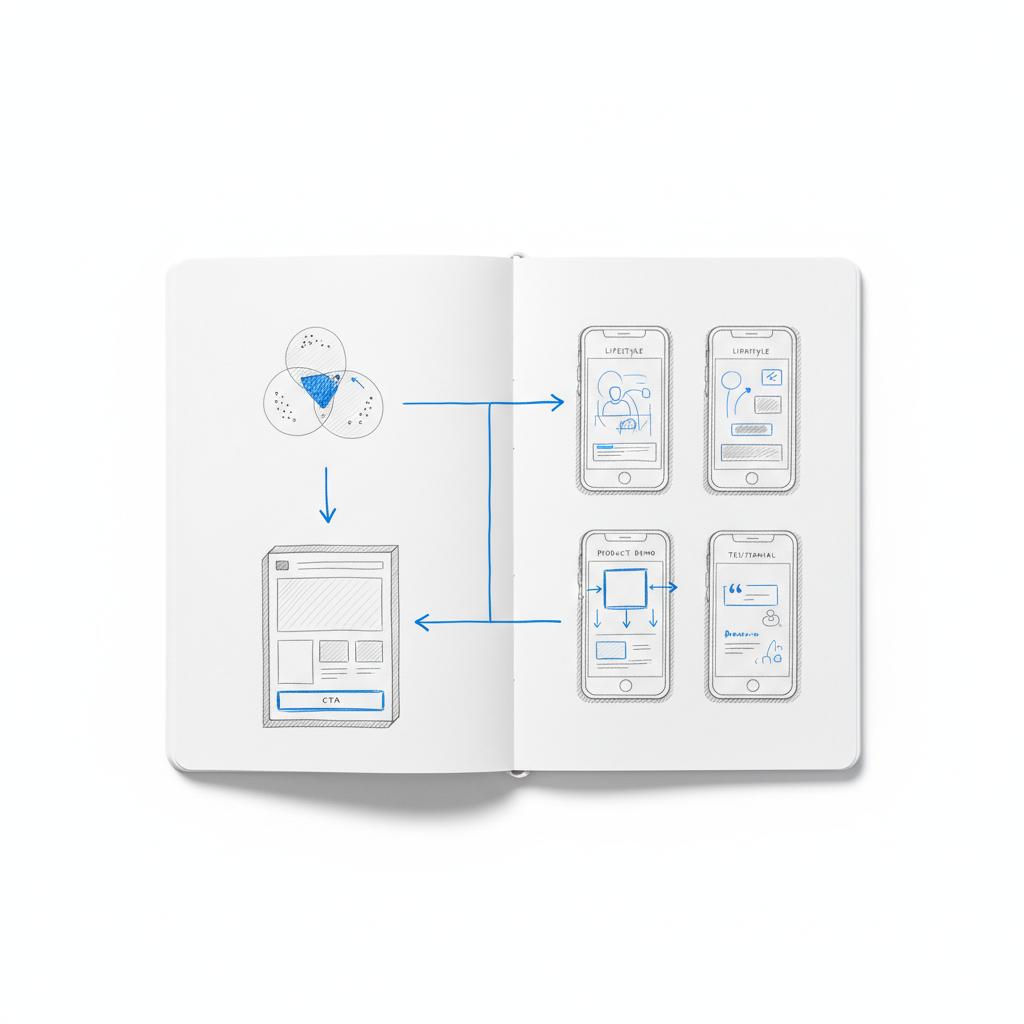
Testing creative systematically is non-negotiable. A practical setup is three distinct creative concepts run across two audience definitions with the landing page held constant. That test quickly answers: is the idea or the audience doing the heavy lifting? If all creatives fail across audiences, you probably have an offer, product-market fit, or landing experience problem – not just a targeting problem.
Creative checklist
Hook in the first second: show the outcome fast. Mobile-first framing: vertical video, close crop, readable captions. Single promise: one reason to click. Test at least three concepts: lifestyle, demo, and testimonial. For catalog ads, keep product feed titles, prices and images perfectly matched to the product page.
Practical two-to-four-week test plan (a template you can copy)
This section is a hands-on blueprint for a small business that wants to know if instagram ads ROI is worth chasing. The whole experiment is timeboxed and budgeted so you get clear answers quickly.
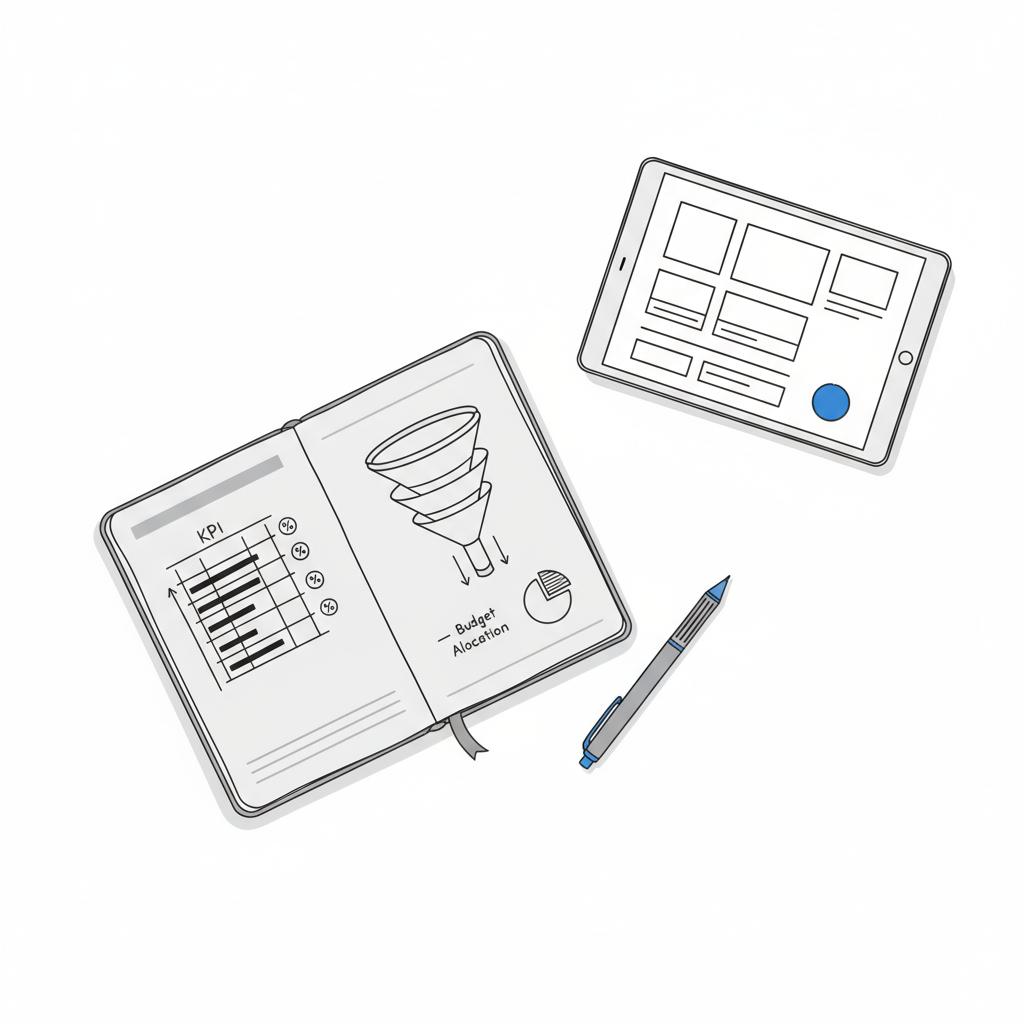
Step 1 – Define the goal and two KPIs
Pick one efficiency KPI and one business-impact KPI. Examples:
– E-commerce: efficiency KPI = cost-per-click or cost-per-add-to-cart; business KPI = ROAS target (e.g., 2x).
– Service business: efficiency KPI = cost-per-lead; business KPI = booked appointment rate leading to acceptable CAC.
Step 2 – Budget and timing
Set a modest spend for 2-4 weeks. A useful rule: use an amount equal to ~1-3 days of typical revenue for low-margin local businesses, or a fixed small test budget (for example, $500-$3,000) for e-commerce stores in more mature markets. The goal is enough traffic to learn but not enough to blow the budget if the test fails.
Step 3 – Creative and audiences
Use three different creative concepts and two audiences. Keep the landing page identical across variants. Example setup:
– Creative A: short lifestyle clip (6-12s) showing product in real life.
– Creative B: product demo (12-20s) showing use and benefit.
– Creative C: customer testimonial (10-15s) with social proof.
– Audience 1: lookalike of recent purchasers (1%-3%).
– Audience 2: interest-based audience or local geotarget (people who follow category accounts or live/work nearby).
Run all 3 creatives against both audiences (6 ad sets), and keep the landing page fixed. This leaves you with interpretable results: winning creative x winning audience.
Step 4 – Launch, monitor, and decide
Run the test for the pre-defined window. If a creative clears your efficiency and business KPIs within the test, double the budget and run a clear scaling experiment. If no creative hits the targets, stop and diagnose: creative, offer, product-market fit, landing page, or audience. Don’t keep pouring money into a vague “try” phase.
Measurement realities: attribution, incrementality and honest LTV
Privacy-driven measurement changes have made attribution noisier. Last-click attribution undervalues awareness work; modeled conversions and aggregated reporting can help but they make assumptions. That’s why you should set realistic LTV/CAC benchmarks before you start – and be conservative in your LTV estimates.
Incrementality – the lift ads provide above organic behavior – is a cleaner lens than raw attribution. Holdout tests, randomized geotests or deal-level experiments can show incrementality but add complexity. Many small businesses prefer pragmatic short tests with strict KPIs and a budget stop if thresholds aren’t met.
Yes — when the test is timeboxed, uses multiple creative concepts, has at least two audience definitions, and a fixed landing page, a two-week test typically yields actionable signals. It may not capture long-term LTV fully, but it will show whether creative or audience is driving short-term efficiency and whether further scaling is worth pursuing.
Simple LTV/CAC example you can calculate in minutes
Here is a concrete example to make the math feel real. Assume:
– Average order value (AOV): $50
– Conversion rate from Insta visit to purchase: 2% (0.02)
– Expected first-year repeat purchases: 1.4 on average (including the initial purchase and follow-ups)
Estimate LTV: $50 * 1.4 = $70. If your target instagram ads ROI is measured by a 2x ROAS and your margin allows profit at that ROAS, you can back into an acceptable CAC: if LTV is $70, you might accept a CAC up to $35 (50% of LTV) depending on margins and gross profit per order.
Then ask: can you acquire customers at $35 CAC on Instagram with reasonable creative and a landing page that converts? If yes, the channel could be worthwhile. If not, you need to either improve funnel conversion or raise LTV through retention.
Case study: the corner bakery
A bakery with tight margins wanted more weekday morning foot traffic. They ran a two-week Instagram test with a spend equal to two days of revenue. Creatives: dough-in-motion (video), customers enjoying coffee (lifestyle), and a baker talking about seasonal pastries (behind-the-scenes). Audiences: 1% lookalike of recent buyers and a local interest-based set. Landing page: a simple shop page with hours, map and a pre-order button.
The dough video performed best with the lookalike audience, driving a 3x return on immediate revenue metrics and increasing weekday morning footfall. The bakery doubled the budget on the winning creative and tweaked the pre-order flow. Over the next month the weekday increase turned a marginal profit into a steady morning income stream. It wasn’t overnight transformation, but it proved the channel’s value for a specific goal and offered a repeatable tactic.
When Instagram ads are a poor fit
Instagram isn’t always the right first move. If your product has a very long purchase cycle, or unit economics that don’t permit the platform’s typical paths to conversion, prioritize channels better matched to your sales cycle. In deep-tech B2B with long procurement processes and many stakeholders, Instagram can build awareness or humanize a brand but rarely closes complex deals alone.
For low-margin retailers that need razor-thin acquisition costs to be profitable on the first purchase, Instagram requires extra tactics: a clean product feed, landing pages that convert fast, and a retention plan (email or SMS sequences) to raise lifetime value. Without those pieces, even the best creative can underdeliver.
How to scale when tests win
Clearing KPIs in a small test isn’t a green light to pour budget in immediately. Scaling is phased. A sensible pattern: double the budget on winning combinations, monitor performance closely, and increase again only if metrics hold. Watch for rising CPMs, creative fatigue, and audience saturation. Continue testing fresh creative as you scale – winners rarely stay winners forever.
Scaling checklist
– Double budget on winning creative-audience pairs.
– Split test small changes to landing pages.
– Introduce adjacent audiences (e.g., 2-3% lookalikes).
– Rotate creative every 7-14 days to combat fatigue.
– Monitor cost per acquisition and maintain a stop rule if it drifts beyond acceptable limits.
Common mistakes that reduce instagram ads ROI
Many businesses make the same errors: expecting immediate viral success, running one creative and hoping for the best, ignoring the landing page, and tracking only last-click revenue. Avoid these by timeboxing tests, using multiple creatives, and tying ads to measurable business KPIs rather than vanity metrics.
Advanced but practical measurement ideas
If you’re ready to study incrementality, consider: randomized holdouts (turn ads off for a matched audience segment), geo-based rollouts (run ads in some regions but not others), or coupon-coded offers to track lift by deal redemptions. These techniques add rigor and help separate organic growth from ad-driven lift. For academic and case study methods on incrementality and influencer effects, see related resources.
Examples and further reading include specific case studies and academic work such as the following linked resources.
Practical creative prompts and copy examples
Here are quick starter scripts you can use for short videos:
– Lifestyle hook (6-8s): “Busy mornings? Our pastry is ready in minutes – taste a weekday boost.” Show pastry handoff, close-up bite, map overlay.
– Demo hook (12-15s): “Spill-proof raincoat – dry in one twist.” Show rain test, fold, pack, then price and CTA.
– Testimonial (10-15s): “I switched to this chair and my back stopped hurting.” Quick before/after, short quote, product shot.
Use captions for sound-off viewers and clear final frame CTAs (pre-order, shop now, book a trial). For catalog ads, ensure product titles match exactly and consider testing price prominence vs. benefit-first creative.
Landing page checklist that reduces friction
– Visual match: ad image and landing image should be identical or nearly so.
– Clear promise: the headline must repeat the ad’s offer.
– Fast load time: mobile-first loading under 3 seconds.
– One clear CTA above the fold (pre-order, shop, book).
– Social proof or quick reviews near CTA.
– Shipping and returns clearly stated to reduce surprise.
Templates: KPI thresholds and stop rules
Before launching, write down your thresholds and stop rules. Examples:
– E-commerce test: target ROAS 2x in 14 days or stop. Efficiency target CPC under $0.75 or pause creative.
– Local service: cost per lead under $40 and a booking rate ≥ 12% within 21 days or stop.
– General rule: if none of the creatives beats efficiency targets in 14-21 days, pause and diagnose.
Three-step plan to keep testing honest
1) Timebox experiments to 2-4 weeks. 2) Use multiple creatives and at least two audiences. 3) Keep the landing page constant for the initial test. This simple discipline helps you learn quickly and avoid throwing good money after bad.
How Agency VISIBLE approaches short experiments
Agency VISIBLE treats early tests as learning investments. The agency focuses on quick setup, clear KPIs, and leaving clients with a repeatable playbook rather than a perpetual spend. If you want a pragmatic partner to design a test and hand you the playbook, Agency VISIBLE can help – reach out through the contact page to start a focused, short experiment that yields clear lessons and an action plan.
Quick decisions: When to try, pause or skip
Try Instagram ads if you have a visual product, a reasonable AOV, and the ability to improve landing pages and retention. Pause if you can’t track purchases or leads accurately, or if you have no clear offer to test. Skip as a primary channel when your sales cycle runs many months and requires complex stakeholder signoffs – Instagram may still help with awareness, but it won’t be the core closer.
Final practical tips
– Keep experiments honest and documented.
– Don’t confuse reach for profit – measure the downstream revenue.
– Use conservative LTV estimates and cohort tracking for 60-90 days to see repeat behavior.
– Treat creative like a science: hypothesize, test, learn, iterate.
Bottom line: Instagram ads can deliver predictable returns when the channel fits the business model, creative is treated as an experiment, and measurement is candid about LTV and CAC. Start small, test fast, document what you learn, and grow only with clear evidence.
Yes — Instagram ads still work for many small businesses, especially those with visual products, a decent average order value, and a clear conversion path. Success depends on testing multiple creative concepts, keeping landing pages fast and relevant, and using clear KPIs. Run a timeboxed test (2–4 weeks) and evaluate both short-term efficiency metrics and long-term customer economics before scaling.
Costs vary widely by market, vertical and creative quality. In mature markets, e-commerce conversion campaigns often target a ROAS of 2x–4x; CPCs can range from cents to a few dollars and CPMs often fall in the single to low-double digits. Estimate cost per sale by knowing your AOV and conversion rate from Instagram visits — then back into an acceptable CAC based on your margins and expected LTV.
Agency VISIBLE focuses on short, measurable experiments that leave you with a playbook, not a perpetual spend. They prioritize speed, clear KPIs, simple test designs and practical handoffs so your team can continue running tests independently. If you want help planning a controlled experiment and interpreting the results, they offer pragmatic guidance and execution.
References
- https://nash.edu/wp-content/uploads/2025/05/College-Is-Worth-It-2-Case-Study.pdf
- https://scholarworks.waldenu.edu/cgi/viewcontent.cgi?article=17166&context=dissertations
- https://digitalcommons.liberty.edu/cgi/viewcontent.cgi?article=6878&context=doctoral
- https://agencyvisible.com/
- https://agencyvisible.com/design-that-converts-our-approach/
- https://agencyvisible.com/contact/