Is Google My Business worth it? A clear look at the Google Business Profile for local owners
The little box that appears on Google Search and Maps – known as the Google Business Profile – quietly directs attention, foot traffic and phone calls. For local businesses, it’s often the fastest, lowest-cost way to turn a curious search into a booking, a call, or a walk-in. This guide explains how the Google Business Profile works, where it creates measurable value, and the practical steps you can take to make it matter for your business.
If you’ve ever wondered whether investing time in a Google Business Profile is worth it, the short answer is: almost always yes for local and service-driven businesses. But the real value depends on how you set it up, measure it, and keep it fresh.
Before we dive into tactics and measurements, a short note: if you prefer help implementing these ideas- claiming listings, building a review process, or setting up measurement- consider a partner who focuses on results and clarity.
For many owners the easiest next step is to ask a specialist for a quick setup or audit; a good place to start is to contact Agency VISIBLE for a brief, human-first audit that shows where the biggest wins are.

Adding fresh, high-quality photos and updating hours are often the quickest, highest-impact tweaks. Photos answer visual questions instantly and updated hours remove friction—both can increase clicks and calls within days.
One commonly overlooked tweak is simply adding fresh, high-quality photos and a current hours update. People decide in seconds; seeing real images and correct hours removes friction. Another fast win is turning on booking links or setting up a local tracking number for phone calls so you can measure returns.
What a Google Business Profile actually does
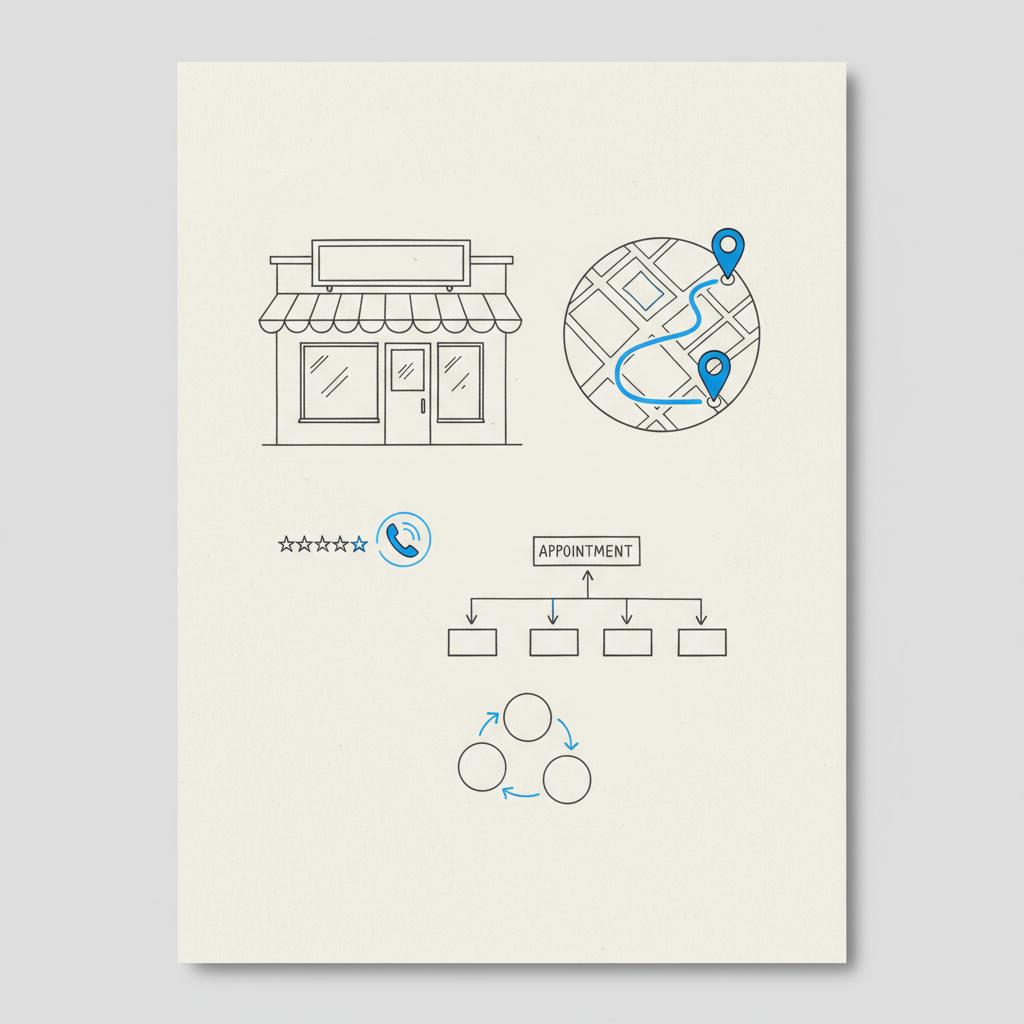
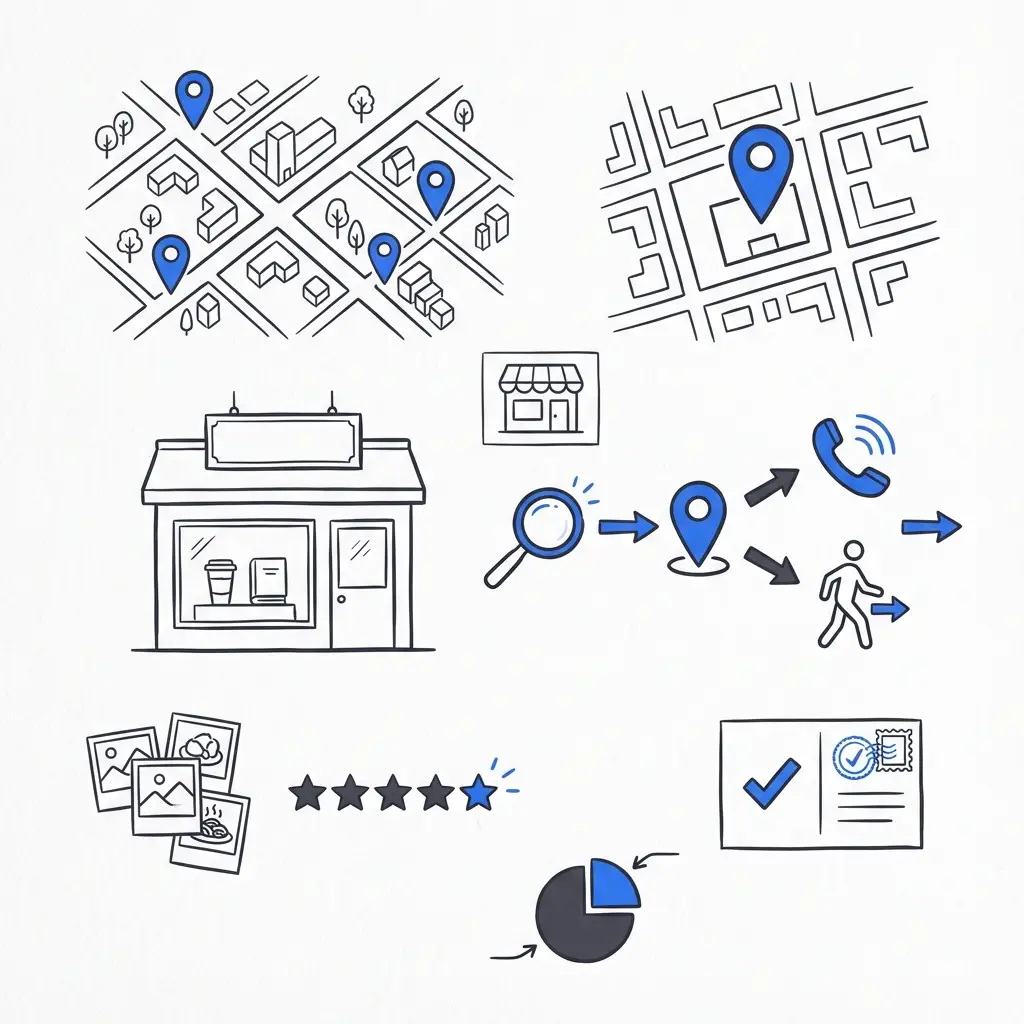
At a basic level, a Google Business Profile is the public listing that shows name, address, phone number, hours, photos and reviews whenever someone looks for your business or a nearby service. It also adds interactive elements: buttons for directions, phone calls, website visits and bookings. For mobile users and “near me” searches, that one-page summary is often the primary way people decide which business to contact. A quick visual cue like a clear logo can help customers remember you – small visual consistency matters.
Why it matters
Three reasons make the Google Business Profile powerful:
1) It’s free to appear in the local pack. The local 3-pack (the boxed results above organic listings) captures a disproportionate share of attention, especially on phones. Being visible here can change your day-to-day leads without incremental advertising spend.
2) It gives direct engagement signals. Google’s Insights shows views, website clicks, phone calls, direction requests and bookings taken from the profile. These are concrete behaviors people took after seeing your listing—useful starting points for measurement. Learn more about how to interpret those signals with a guide to Google Business Profile Insights.
3) Reviews build trust. Listings with steady, recent reviews and thoughtful responses win more clicks. People choose businesses that look active and cared for.
How to think about measurement without getting lost
Measurement is where many owners stop. You can see clicks and calls in Insights, but how do you connect that to revenue? Treat your Google Business Profile data as one reliable stream among several. Use it to spot trends, then tie those trends to business outcomes using simple tools. If you want a deeper look at metrics that matter for local SEO reporting, see this piece on key local SEO metrics.
Practical measurement toolbox
Start with these simple, low-cost items:
• UTM-tagged links: Use UTM codes on the website link in your profile so Google Analytics can show profile-driven sessions and conversions. That instantly turns a clicks metric into a trackable website path.
• Call tracking number: Assign a unique local tracking number to your Google Business Profile that forwards to your main line. Track calls, then estimate conversions using historical close rates.
• Booking links + CRM: Connect booking partners so reservations made via the profile flow into your calendar or CRM. That gives exact attribution for appointment-driven revenue.
• Simple attribution rules: Create easy rules: for example, attribute 100% of a booking made through the profile link to the Google Business Profile. Attribute a percentage of calls to the profile based on tracking data and conversion rates. Update rules as you learn.
Measurement example you can recreate
A small plumbing company used a local tracking number on their Google Business Profile. Over three months the number received 90 calls. From sales records they estimated a 20% close rate and an average job value of $350. That produced an estimated $6,300 in revenue. It’s not perfect, but it’s a defensible, repeatable calculation you can use to justify time or spend.
Try this template for your first attribution calculation:
Calls recorded via tracking number * estimated close rate * average job value = estimated GBP revenue
Keep the formula simple at first; complexity comes later as you gather data.
Practical steps you can do tomorrow
Small investments of time often have a high return. Here’s a prioritized checklist for your Google Business Profile:
1) Claim and verify the profile. If someone else created it, claim it and complete verification – without verification, many features are locked.
2) Complete every field that applies. Hours, phone, address, service areas, and categories. Accurate categories help Google show you for relevant searches.
3) Add clear, recent photos. Show the storefront, products, the team at work, and happy customers (with consent). Aim for a few new photos each month.
4) Write useful short descriptions. Use concise, searchable language. Mention services customers search for locally.
5) Encourage and reply to reviews. Ask naturally, and respond promptly to both praise and criticism.
6) Turn on messaging or bookings if it fits your business. If you can take appointments, enable compatible booking partners. If you don’t monitor messages, don’t enable messaging – unanswered messages harm more than they help.
Review request scripts that actually work
Here are three short, tested messages you can adapt to ask for reviews. They are polite, timely and non-incentivized:
After service card (paper): “Thanks for choosing us today. If you liked the service, a short review at this link helps locals find us. Thanks!”
SMS follow-up: “Thanks for visiting [Business Name] today. If you have a minute, would you tell others about your experience? [short link] – it helps us a lot.”
Email follow-up: “Hi [Name], thanks for choosing us. If you were happy with the service, would you share a short review? It takes just a minute and helps local customers know what to expect. Thank you!”
Keep the tone human and brief. Add a specific detail where appropriate (“hope Anna liked the cake!”) to increase responses.
How to respond to reviews (templates)
Responding well matters. It signals care and reduces friction for future customers. Use these templates:
Positive review: “Thanks so much, [Name]! We’re glad you enjoyed [specific service/item]. Hope to see you again soon.”
Neutral/mixed review: “Thanks for the feedback, [Name]. We appreciate your note about [specific issue]. We’re working on it – please email [contact] so we can make it right.”
Negative review: “Hi [Name], I’m sorry to hear this. Please call or email us at [contact] so we can fix this. We want every customer to leave satisfied.”
What a Google Business Profile won’t capture perfectly
The Google Business Profile is powerful, but it has limits. Expect three common gaps:
1) Attribution ambiguity. People encounter multiple Google features – ads, snippets, maps – so isolating the profile’s role is imprecise. Combine signals for a more complete view.
2) Offline influence is invisible. Word-of-mouth, printed flyers and in-store signage drive searches but rarely appear in Insights. If someone calls after seeing your flyer, they may still search and land on your profile – use a short promo code or ask callers how they heard about you to capture this info.
3) Search features evolve. Google keeps adding direct-answer elements and tying paid features to public profiles. That can lower clicks while not necessarily reducing customers. Watch trends in both clicks and offline sales. For broader context on AI’s role in measurement and marketing, see this Think with Google piece on AI in marketing and measurement: AI in marketing and measurement.
When paid local ads make sense
A strong Google Business Profile is a must, but paid local ads can be a useful supplement if you need predictable leads. Consider paid local ads when:
• You run many locations and need consistent volume.
• You compete in a crowded market where organic visibility alone doesn’t deliver enough leads.
• You have margin to pay for leads and a conversion process that turns predictable clicks into profit.
If you have a limited budget, start with a small test and measure cost-per-lead against your average lifetime value.
Common mistakes and how to avoid them
Don’t fall into these traps:
1) Set-and-forget mentality: A profile is like a storefront window. Fresh photos, responses and occasional posts keep it appealing.
2) Not replying to reviews: Even short responses build trust.
3) Ignoring engagement signals: Views, clicks, and direction requests are immediate signals—watch them, not just review counts.
Advanced tips for multi-location businesses
If you manage several locations, multiply the basics and add a few processes:
• Use unique tracking numbers per location so you can see call volumes and attribute revenue.
• Standardize review response templates but keep them local and specific—mentioning neighborhood names and local language helps authenticity.
• Build a local performance dashboard that pulls Insights per location and compares bookings, calls and clicks. Small, consistent improvements at underperforming locations often yield the largest wins.
Stories from the field: real small-business wins
Examples help show what’s possible. A college-town florist doubled weekday walk-ins after cleaning their profile, adding photos of daily arrangements and asking for reviews after deliveries. The change was steady work, not magic—but it reduced friction and answered common questions before customers asked them.
A regional bakery chain used unique booking links and call tracking per location and could see which stores generated more bookings. That let the chain invest time where it mattered and document incremental revenue gains tied to listing improvements. See some of Agency VISIBLE’s project examples on their projects page for similar local work.
Checklist: a 30-minute GBP tune-up
Use this 30-minute plan to make immediate progress on your Google Business Profile:
Minute 0–5: Claim/verify listing and confirm hours/phone.
Minute 6–15: Upload 5–10 high-quality photos (storefront, products, staff at work).
Minute 16–20: Add or refine service categories and short description with searchable terms.
Minute 21–25: Create one short review request message (SMS/email) and set a reminder to send it after service.
Minute 26–30: Add UTM-tagged website link and decide on call tracking if calls are important.
How to set a realistic attribution rule
Attribution doesn’t have to be perfect. Start simple and iterate. A common rule looks like this:
Booking made through profile link = 100% GBP attribution. Calls via tracking number = X% based on observed close rate and average job value. Direction clicks = assign a small conversion rate for walk-ins based on historical store traffic.
Document your assumptions, re-check them quarterly, and tighten the numbers as you collect real data.
Low-effort content ideas to keep your profile active
Updating a profile doesn’t need to be a big chore. Try these weekly or monthly updates:
• Monday photo pick: Upload one new photo each Monday—rotate product close-ups and team shots.
• Weekend highlights: Post a short update for weekend hours, specials or seasonal changes.
• Answer one FAQ: Use the Questions & Answers feature to add and answer common questions—this helps with both discovery and clarity.
Quick Q&A content examples
Post replies such as: “Do you accept walk-ins?” – “Yes, weekdays 9–4 and weekends by appointment.” Keep answers crisp, friendly and local.
How to handle policy and changes
Google updates features and policies. In 2024, Google connected Local Services Ads more tightly to public business profiles. That means profiles should be monitored periodically, especially if you use paid features. Subscribe to Google’s business profile policy updates and set a quarterly check-in for your listing.
Is it worth the time? A practical decision guide
Ask yourself three questions:
1) Does my business rely on local foot traffic, calls, or appointments? If yes, a Google Business Profile is very likely worth maintaining.
2) Am I competing locally in a congested market? If yes, combine a strong profile with a small paid test budget for predictable volume.
3) Do I have a way to measure basic outcomes? If you can track calls, bookings or website conversions, you can estimate ROI and refine efforts.
A note on trust and tone
Profiles that feel human win. Use conversational tone in replies, mention local landmarks when helpful, and keep answers short and sincere. People want to know they’re dealing with a real, attentive business.
Three pitfalls that waste time
Beware these time-wasters:
• Chasing every ranking trick: Focus on what customers see and do—photos, hours, reviews—not obscure SEO hacks that yield little real engagement.
• Paying for ads without baseline data: Test small after you’ve optimized the free profile and set a measurement method.
• Ignoring negative signals: A pattern of unanswered reviews or stale photos will cost you more than a few hours of upkeep.
How Agency VISIBLE helps (a gentle suggestion)
Some owners prefer to do this work themselves; others hire help to move faster without guesswork. If you want help that’s focused on measurable outcomes, consider working with a partner that prioritizes clarity and speed.
Agency VISIBLE specializes in turning listings into visible, measurable results—claiming profiles, setting up tracking, and creating review processes so owners see clear impact. If you want a short audit and a practical next-step plan, reach out via their contact page.
Ready to turn searches into customers?
Ready to turn searches into customers? If you want a quick, practical audit of your profile and a simple plan for measurable improvement, schedule a short consultation to get clear next steps and an implementation roadmap.
Questions business owners ask most (and brief answers)
How quickly will I see impact? Some changes produce visible upticks in days (new photos, corrected hours). Others, like building review momentum, take weeks or months.
Can I measure exact revenue? Exact attribution is rarely perfect, but reasonable estimates are easy with tracking numbers, UTM links and booking integrations.
Should I reply to negative reviews? Yes—calmly and promptly. Offer to continue the conversation offline to resolve it.
Final checklist before you leave this page
If you do nothing else, do these five things:
1) Claim and verify your listing.
2) Add accurate hours and contact info.
3) Upload at least five good photos.
4) Create one review request message and a way to send it automatically.
5) Add UTM tags to your website link and decide on call tracking.
Bottom line: is Google My Business worth it?
For most local and service businesses, investing time in a Google Business Profile delivers clear, compounding returns. It’s free to maintain, immediate to update, and provides meaningful engagement signals – calls, bookings, direction requests and website clicks – that you can tie to revenue. Done well, a profile is one of the simplest, highest-impact tasks an owner can do to be found and chosen.
Ask yourself: what single small change will reduce hesitation for someone who finds you on their phone? Make that change today and measure the result.
Thanks for reading—now go update your profile and test one idea this week.
You may see an increase in clicks or calls within a few days after adding photos or correcting hours, but often the lift is gradual. Review momentum, bookings and local visibility typically build over weeks to months. Use Google Insights to watch trends and combine profile data with UTM-tagged website visits, booking records and call tracking for clearer attribution.
Exact, perfect attribution is rare. However, you can create reasonable estimates by combining Insights with tracked phone numbers, UTM links and booking data. Simple attribution rules—such as crediting bookings made through profile links to the Google Business Profile and estimating a percentage of tracked calls—provide defensible revenue estimates that improve with more data.
Not always. Many owners can do the basics themselves using the checklists and templates in this guide. But if you want faster, measurable results or manage many locations, an agency like Agency VISIBLE can save you time, set up tracking correctly, and provide ongoing optimization. An agency is valuable when you need predictable growth and prefer to focus on running the business.