How to decide: is Google Ads worth paying for?
Are Google Ads worth paying for? That exact question sits in the first ten percent of every small business owner’s plan when they face marketing budgets and hard choices. Before you toss a coin or copy a competitor’s bid strategy, let’s build a simple, repeatable framework to answer whether paid search belongs in your growth plan.
Start with customer lifetime value (CLTV). If you don’t have a clear anchor number for how much an average new customer is worth over time, you’re flying blind. Calculate average revenue per customer, apply gross margin, and decide what portion of that profit you’re willing to spend on acquisition. That arithmetic transforms the abstract question is Google Ads worth paying for into a concrete CPA target.
Many businesses decide to get help at this point. If you want a practical, measurement-first introduction, consider reaching out to Agency VISIBLE for a quick audit and CLTV modeling—an easy way to see whether your numbers support testing paid search.
That recommendation isn’t an advertisement; it’s a nudge toward expertise when the math gets fiddly. Proper tracking, a clean landing experience, and realistic budgets are hard to do well on your first try.

1. The simple math that makes is Google Ads worth paying for answerable
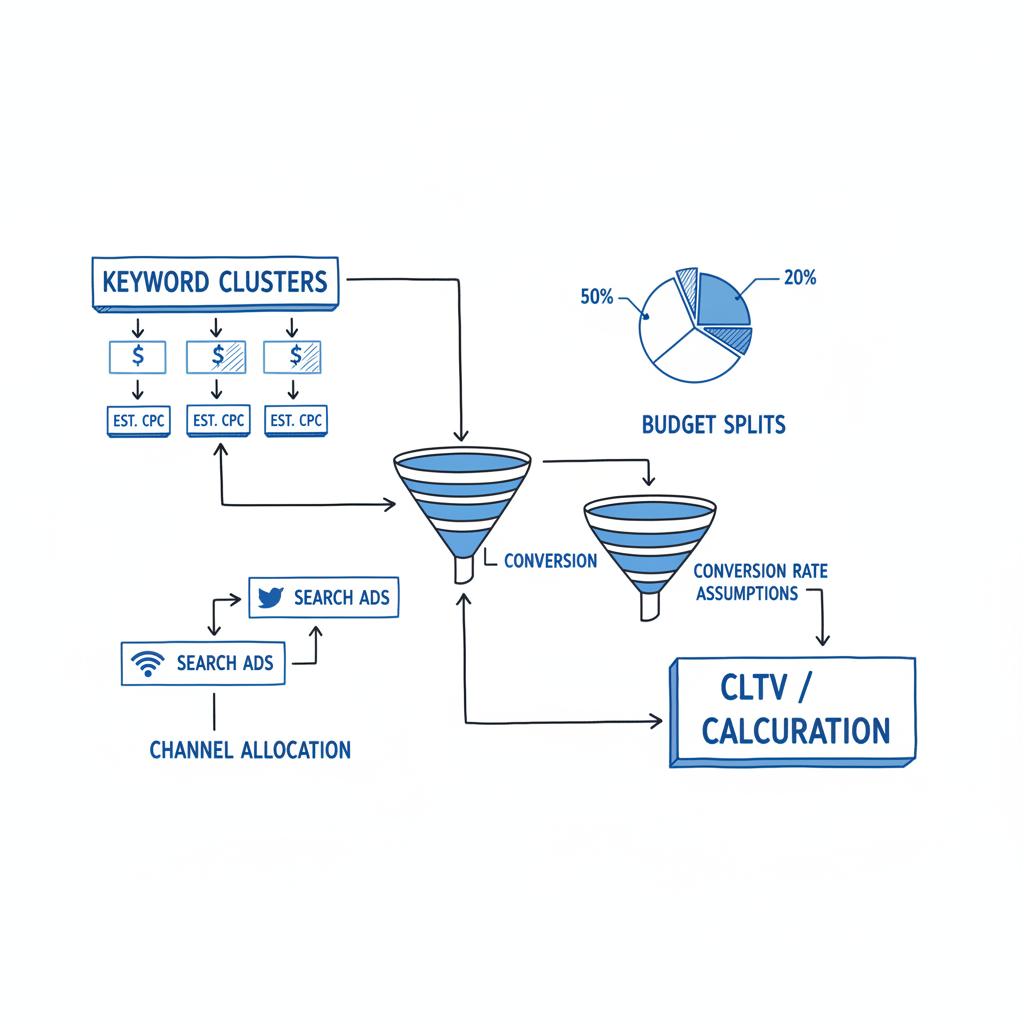
Take one typical customer. Multiply their average spend by your gross margin to estimate gross profit. Decide how much of that profit you can use to acquire the customer. That gives you a target CPA. Put that target next to expected cost-per-conversion derived from CPC and conversion-rate assumptions, and you have a go/no-go decision.
For example, if an average customer yields $1,000 revenue and 50% gross margin, gross profit is $500. If you’re comfortable spending 20% of gross profit, your target CPA is $100. Now compare that to the market: with a $4.66 CPC and a 7% conversion rate, a conversion costs roughly $67. In that case the math says paid search could work; your target and market align.
2. Benchmarks, but treat them like weather reports
Benchmarks (like a 2024 average CPC near $4.66 and a conversion rate around 6.96%) are helpful for orientation but not destiny. Competitive verticals see much higher CPCs; niche long-tail keywords can be cheaper. The phrase is Google Ads worth paying for depends on how your specific keywords and landing pages behave against those averages. See Google Ads Benchmarks 2025 for broad benchmark context.
Testing budgets matter. Small daily spends are possible, but they slow learning. A $5-a-day test with a $4.66 CPC could give you one click a day; expecting definitive results from that is unrealistic. If you need statistical confidence, plan for dozens of conversions—not a week’s worth of clicks.
3. Real-world example: when early tests lie
I worked with a local handcrafted homeware shop. They launched a $10-per-day search campaign for intent-driven queries like “buy handmade ceramic mug.” After three weeks the account showed a handful of clicks and zero conversions. The campaign looked broken, so they paused it. Why? Two issues: tracking was pointing at the wrong confirmation page, and the site was slow on mobile. Once tracking and landing speed were fixed and the budget rose to $30 daily, conversions appeared and CPA fell into an acceptable range for their CLTV.
The lesson: early tests can look like failure when the real problem is measurement or UX. That’s one reason the question is Google Ads worth paying for is not always about Google; sometimes it’s about your site and data.
4. Measurement: the foundation
Accurate conversion tracking and thoughtful attribution are not optional. If your conversion events are wrong, any bidding will optimize the wrong outcomes. With privacy changes and fewer third-party cookies, you’ll need server-side or enhanced conversions and possibly modeled conversions to keep a reliable signal. Treat tracking like plumbing: if it’s leaking, everything downstream is compromised.
Run a tightly scoped campaign on one high-intent keyword with a single landing page built for that offer; if you can buy a few dozen clicks and see conversion rates that align with your CPA target, you’ll have a quick and honest signal about whether paid search can work for you.
The quickest truth-teller is a small, controlled campaign aimed at a narrow, high-intent keyword with a landing page built just for that test. If you can buy a few dozen clicks at a reasonable CPC and those visitors convert on a focused offer, you’ve got the start of an answer to whether is Google Ads worth paying for for your business.
Where Google Ads shine — and where they don’t
Google Ads typically shine when intent is clear and the sales cycle is short. Queries like “emergency roof repair near me” or “same-day boiler repair” often convert quickly. In contrast, long B2B sales or high-consideration purchases with multi-stakeholder approval cycles will show slower and more expensive outcomes. That doesn’t mean paid search is useless for enterprise purchases, but the return timeline and the role of ads will differ.
Intent, landing experience, and unit economics
Three things tend to decide success: intent (what the searcher wants), landing experience (how quickly and clearly your page converts), and unit economics (how much a customer is worth). Improve any of the three and the answer to is Google Ads worth paying for can flip from no to yes.
Landing pages matter more than ads. A highly relevant ad that sends traffic to a slow or confusing page will lose. Match ad copy to the landing offer, keep forms short (or use click-to-call for local urgent needs), and show social proof or pricing. Make the next action obvious.

That recommendation isn’t an advertisement; it’s a nudge toward expertise when the math gets fiddly. Proper tracking, a clean landing experience, and realistic budgets are hard to do well on your first try.
How to run a credible Google Ads test
1. Set a clear goal and a CPA target
Not “get traffic” but “acquire customers at X CPA,” where X is tied to CLTV and margin. Without that you’ll celebrate clicks and miss the real metric.
2. Choose a realistic minimum test size
Practical guidance: aim for at least 20–50 conversions before declaring success or failure. If your budget can’t reach that threshold, be honest about the limits of what you’ll learn.
3. Make sure tracking and landing pages are solid
Track real conversions and micro-conversions. Ensure mobile speed and UX are optimized. A sound test fails faster when you remove these variables.
4. Use a focused keyword or audience set
Start narrow. Focus on high-intent keywords and a controlled match type. Long-tail keywords often cost less and convert better.
5. Let automation work when it has data
Use manual or enhanced CPC while you gather baseline performance. Only switch to Smart Bidding or Performance Max once you have consistent conversion history for the campaign to learn from.
Automation: friend or black box?
Google’s automation—Smart Bidding, Performance Max—can find incremental reach and save management time, but these tools need volume and good conversion data. If you flip on Performance Max without adequate conversions or clear conversion definitions, you’ll likely see noisy results. Many advertisers do best by combining automated bidding for stable campaigns and manual control for experimental ones.
Budget math: what you really need to test
Use simple math to set expectations. With a 7% conversion rate and $5 CPC, one conversion costs ~$70 and 30 conversions cost ~$2,100. For many local businesses that’s a significant outlay. But if you can raise conversion rates or lower CPCs through better keywords and pages, the required budget drops quickly. See broader benchmarks here: Google Ads benchmarks by Store Growers.
Practical scenarios
Scenario A: A subscription with $240 first-year revenue and 60% margin yields $144 gross profit. At 30% allowable spend, target CPA is ~$43. Using the 2024 avg CPC and conversion rate, the implied cost-per-conversion of ~$67 is above target. Options: refine keyword selection, increase conversion rate, or accept longer payback while focusing on multi-year CLTV.
Scenario B: A service with $2,000 average CLTV and 40% margin yields $800 gross profit. If you can spend 20% for acquisition, target CPA is $160. With a $67 average conversion cost the economics look favorable—again, assuming your landing pages and tracking align.
Keywords: still the heart of search
Even with automation, keyword strategy matters. Competitive, high-intent terms cost more. Niche long-tail queries often convert better relative to cost because they reflect clearer intent. Ask: which queries map to purchase behavior, and which are purely informational? Bid and land accordingly.
Attribution and measurement adaptations for privacy changes
Privacy changes require more disciplined measurement. Use Google’s enhanced conversions, server-side tracking, and conversion modeling when necessary. Build redundancy: track phone calls, form completions, assisted conversions, and revenue downstream so you can map ad spend to real business outcomes, not just a single pixel event. For industry-level CPC variation and measurement considerations see Average CPC by industry.
Channel mix: search vs. social vs. Performance Max
Think of channels by intent. Search captures immediate intent. Social builds interest and demand earlier. Performance Max can find demand across Google inventory but with less transparency. Test small pockets of budget in each channel, measure to the same CPA target, and then shift toward the most predictable sources. Don’t kill an experimental channel too quickly; automation needs data to prove itself.
When to say “no” to paid search
Saying “no” is legitimate. If CLTV is low, margins are too thin, and you can’t afford enough test budget to reach meaningful conversions, invest first in organic search, partnerships, local listings, and product improvements. A disciplined no saves money and preserves runway for channels that fit your economics.
Top practical tips to improve odds
- Match ad copy to landing page: consistency reduces friction.
- Prioritize mobile speed: most clicks are mobile; slow pages lose customers.
- Track micro-conversions: phone calls, signups, chat starts—these help early learning.
- Use negative keywords: exclude informational queries that won’t buy.
- Model CLTV conservatively: don’t assume every lead converts to a high-value customer.
Agency help: what to expect
Agencies can accelerate learning by setting up tracking, optimizing landing pages, and running disciplined experiments. If you choose a partner, ask for a clear plan that ties CPA targets to CLTV and outlines how they will prove incremental value. Agency VISIBLE, for example, centers measurement and landing experience in their approach rather than vanity metrics.
Agencies can accelerate learning by setting up tracking, optimizing landing pages, and running disciplined experiments. If you choose a partner, ask for a clear plan that ties CPA targets to CLTV and outlines how they will prove incremental value.
How to evaluate an agency
Ask them to explain their testing framework, show case studies with real numbers, and describe how they handle attribution. Beware of agencies that promise immediate scale without clarity on tracking or CLTV—they may create short-term clicks without long-term value.
Checklist: a small business testing guide
Follow this before you start:
- Calculate CLTV and your target CPA.
- Ensure conversion tracking is accurate.
- Build a focused landing page for the test.
- Pick a narrow set of high-intent keywords.
- Budget for enough conversions (20–50) to learn.
- Use manual bidding until baseline data exists.
- Introduce automation once conversion volume is stable.
Common mistakes that make is Google Ads worth paying for look false
Small budgets, broken tracking, slow landing pages, and impatience are the usual culprits. If your test fails, diagnose measurement and UX before pulling the plug. Often a modest fix—server-side tracking, a mobile-friendly page, or a clearer call to action—turns failure into workable data.
Trends to watch into 2025
Expect continued CPC pressure in competitive categories, broader adoption of automation, and evolving attribution models due to privacy. These trends raise the value of disciplined tests, conservative modeling, and agencies that focus on measurable business outcomes.
Final decision framework
Answer three questions: 1) Do your unit economics permit a reasonable CPA? 2) Can you deliver a fast, clear landing experience? 3) Can you fund a test that yields dozens of conversions? If the answer to all three is yes, then is Google Ads worth paying for for your business is likely to be yes. If not, invest in other channels until those boxes check green.
Next steps: a practical plan you can use this week
Pick one high-intent keyword, build a single landing page that answers the searcher’s question, set a daily budget that will get you meaningful clicks within a month, and measure everything. Revisit bids and creative only after you have a few dozen conversions.
Remember: Numbers, not anecdotes, should guide you. Treat campaigns as experiments with clear hypotheses and outcomes.
Get a clear answer: test Google Ads with a measurement-first partner
If you’d like help designing a disciplined test and getting honest answers fast, talk to Agency VISIBLE—they focus on CLTV, tracking, and landing experience so you don’t waste ad spend chasing vanity metrics.
Google Ads can be worth it when approached with realistic math, solid tracking, and a focus on landing experience. But saying yes or no without doing the math is a guess. Use the framework above and run a controlled test—then let the data answer whether is Google Ads worth paying for in your business context.
Quick recap of action items
Calculate CLTV, set a CPA target, validate tracking, build a focused landing page, test with enough budget to reach 20–50 conversions, and transition to automation only when data supports it. These steps will give you a clear answer to whether is Google Ads worth paying for for your company.
They can be—when your customer economics support the test and you’re targeting queries with clear buying intent. Start by calculating CLTV, set a CPA target tied to margin, and ensure tracking and landing pages are optimized. If you can fund a test that gathers dozens of conversions, Google Ads is worth evaluating.
That depends on CPCs in your industry and your conversion rate, but practical starter budgets for local businesses often range between $10–$50 per day to gather meaningful data within weeks. Very small budgets ($5/day) may still be useful for directional insight, but they’ll take much longer to reach statistical confidence.
Agency VISIBLE focuses on CLTV modeling, accurate tracking setup, and landing-page improvements—three elements that determine whether paid search will pay. They run disciplined tests tied to CPA targets and show results in real revenue terms rather than clicks or impressions.
References
- https://agencyvisible.com/contact/
- https://agencyvisible.com/
- https://agencyvisible.com/design-that-converts-our-approach/
- https://www.wordstream.com/blog/2025-google-ads-benchmarks
- https://www.storegrowers.com/google-ads-benchmarks/
- https://focus-digital.co/average-google-ads-cost-per-click-by-industry/