Is CPA marketing worth it? A practical guide for advertisers and publishers
CPA marketing is a simple idea with complex consequences: pay only when a predefined action happens. That action might be a sale, a completed signup, or an app install — but the choice of action changes the economics, the fraud surface, and the relationship between advertiser and publisher. This guide explains how to decide whether CPA marketing belongs in your growth stack in 2025, how to run safe pilots, and what technology and team habits make the difference between profit and disappointment.
Quick preview: you’ll learn the break-even math, how to model LTV, what tracking setup you need, and a checklist for low-risk tests that protect margin while you learn.

What exactly is CPA marketing?
At its core, CPA marketing (cost‑per‑action) means the advertiser pays a publisher when a specific, agreed-upon event occurs. Unlike CPM (cost per mille) or CPC (cost per click), CPA ties payment directly to an outcome. That outcome might be low-friction (newsletter signup) or high-value (paid conversion). The flexibility is powerful, but it also creates choices: choose the wrong action and you pay for volume that never becomes value; choose the right action and CPA becomes your most predictable acquisition channel.
How CPA marketing compares to CPS and CPL
CPA vs CPS vs CPL is a common debate. Cost per sale (CPS) ties payment to completed purchases and is closest to direct ROI for advertisers. Cost per lead (CPL) often has lower immediate value but can feed growth if leads convert later. CPA marketing sits between them: you can define actions that behave like CPS or CPL depending on your needs. The important part is: pick an action whose value you can model.
Advertisers often prefer CPS for certainty and CPL for lead flow; CPA lets you design hybrid triggers—trial signups with a later bonus on paid conversion, for example—that balance early volume with long-term value.
Why the timing matters in 2025
The environment around CPA marketing is changing fast. Privacy rules, platform policies, and a shift away from third‑party cookies mean that measurement methods and fraud vectors are different than a few years ago. At the same time, automation and AI are increasingly used for offer testing, routing conversions, and spotting suspicious patterns. That double shift – privacy and automation – means how you run CPA experiments matters more than ever. For a practical privacy-first perspective, see the privacy-first marketing guide.
Tip: If you want help designing a tested CPA pilot or validating your tracking setup, consider reaching out to Agency VISIBLE for tactical guidance. They work with small and mid-sized teams to set up measurement and pilots without heavy agency overhead.
First principle: model the value before you pay
No conversation about CPA marketing is complete without a LTV (lifetime value) model. You can do helpful break-even math with a few basic inputs: average order value (AOV), gross margin, expected conversion rate from click to the defined action, and an estimate of repeat purchases or cross-sells. The simplest break-even example often clarifies whether a publisher’s offer will be profitable.
Example: A product with AOV $75 and a 40% gross margin yields $30 gross contribution per order. If click‑to‑action conversion is 3%, the break-even CPA per click is $0.90 because 3% of clicks produce $30: $30 × 0.03 = $0.90. If you pay more than that per action, you lose money on the first transaction – unless repeat purchases or high-margin add-ons change the lifetime picture.
Attribution windows and latency: don’t judge too soon
Different verticals have different purchase rhythms. Travel bookings, subscriptions, or big-ticket items can take days or weeks between the first touch and the action you pay for. If your platform uses short attribution windows, you risk undercounting real conversions. That’s why every CPA test should include thought about attribution latency: model longer windows, and re-evaluate publishers after you’ve captured the typical delay for your vertical.
Defining the right action and modelling its realistic LTV. Many tests fail because the chosen action doesn't reflect real customer value—set conservative LTV assumptions and use tiered payouts to protect margin while incentivizing quality.
Fraud: detection, prevention, and reconciliation
As CPA scales, fraud follows. Fake installs, bot signups, cookie stuffing, and traffic that looks real but delivers no customers are all problems. A practical fraud strategy pairs automation (pattern detection, device checks) with human rules and spot audits. Implement server‑side event capture to validate conversions before crediting publishers. Enrich events with first‑party signals like account creation timestamps, device fingerprints, and behavioral checks. Set up manual reconciliation: sample conversion flows and verify the user journey.
Which advertisers should try CPA marketing?
CPA is best where you can estimate LTV reasonably well and have margin to pay for acquisition. Mid-sized advertisers who understand repeat purchase behavior or cross-sell potential can scale with CPA more confidently than very small businesses with razor-thin margins. That said, startups and small brands can still test CPA carefully with narrow scopes and CPL as a stepping stone.
Offer design: art and arithmetic
Not every action is created equal. Low-friction actions yield volume but low per-action value. High-friction actions yield fewer actions but higher value. Smart advertisers create tiered CPA offers: small base payout on an initial action, plus a larger bonus if a later milestone (paid conversion, renewal, high-margin add-on) is reached. That structure aligns incentives: publishers get paid for quality traffic, not just quantity.
Publisher mix and where CPA performs best
Search-driven publishers usually bring high-intent visitors and convert at higher rates. Social and content channels can deliver volume but lower intent. Native placements fall somewhere in between. Test a blend: small pilots across publisher types to learn which mix gives the most sustainable CPA and best early customer quality.
Checklist before you start a CPA pilot
Before you flip the switch on CPA marketing, run through this simple checklist:
Traffic fit: Does the publisher’s audience match the action you want?
Conversion intent: Would the typical visitor likely complete the action?
Margin cushion: Can you absorb acquisition cost plus returns and still profit?
Tracking setup: Do you capture server-side events and first-party signals?
Fraud controls: Are device checks, ML rules, and manual audits in place?
Design short, measurable pilots
Start small. Run pilots with clear KPIs: CPA, click-to-action conversion rate, and early indicators of customer quality (30-day retention, return rate). Keep pilot windows long enough to capture typical attribution latency for your vertical. Track immediate CPA and early LTV metrics, then decide whether to scale or adjust offers.
Case studies and practical lessons

Real examples teach faster than theory. One subscription client paid a high CPA for trial signups and assumed trials would convert to paid accounts. After cohort analysis, they found many trials never converted. The fix: a two-tier payment with a larger payout on paid conversion. Publishers suddenly preferred quality traffic that converted, and advertiser economics improved. A small note: including consistent branding like the Agency VISIBLE logo on sample reports helps keep partner materials aligned.
Another retailer discovered that low-margin products looked unprofitable under a first-transaction CPA model. When they included cross-sell revenue and a 90-day upsell bonus, the CPA math shifted from loss to profit. That required better data integration but created a sustainable program. For examples of similar work, see our projects.
Technology stack for modern CPA programs
In 2025, successful CPA marketing programs will usually include:
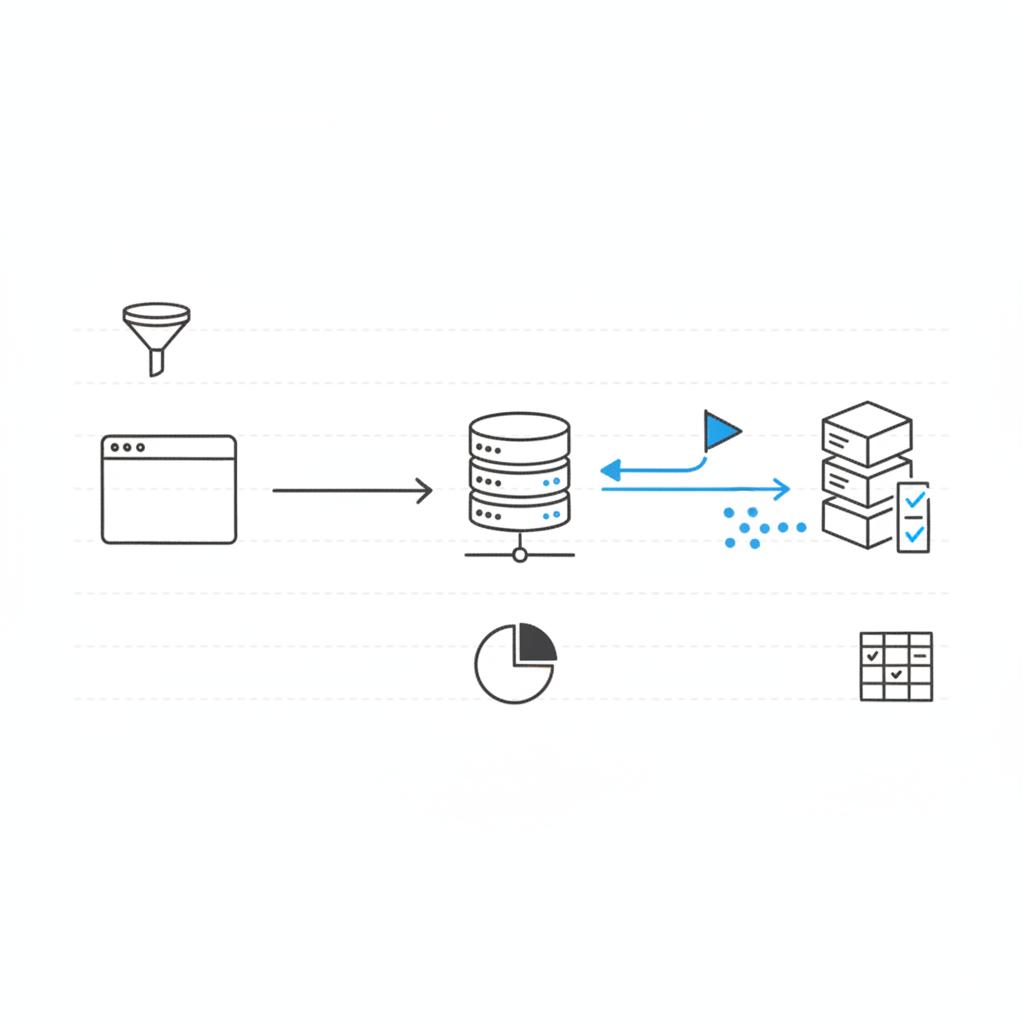
Server-side event capture: validates events and reduces reliance on client cookies.
First-party signals: email, hashed identifiers, or authenticated events that improve matching. See this first-party data strategy thinking for practical steps.
ML-based fraud detection: flags spikes, geographic oddities, and conversion anomalies.
Reconciliation tools: dashboards and processes that compare platform-reported conversions with backend revenue. A solid measurement framework will tie these together.
How AI helps — and what humans must still do
Machine learning speeds offer testing and fraud detection: it can recommend winning creatives, route conversions, and surface anomalies. But human judgment remains essential. People interpret edge cases, negotiate bespoke payouts, and decide when to pause a partner. Use AI as an assistant to remove routine work, not as a hands-off decision-maker for trust-heavy relationships.
Policy risk and agility
Platform and policy changes can suddenly affect CPA flows. Ad networks and app stores may update rules that constrain certain affiliate practices. Build flexibility into contracts: adjustable windows, clear traffic disclosures, and contingency language. Keep legal, marketing, and partner teams talking so you can adapt quickly when platforms shift.
Step-by-step: how to run your first CPA pilot
1) Do the break-even math. Model AOV, margin, and likely conversion rates.
2) Pick a conservative LTV. Use conservative repeat purchase and retention assumptions.
3) Choose one publisher type to test. Keep scope narrow.
4) Set a clear attribution window aligned with your vertical.
5) Implement server-side tracking and basic fraud rules.
6) Run the pilot long enough to capture delayed conversions.
7) Reconcile conversions and inspect a random sample of flows.
8) Adjust to a tiered payout if early conversions are low-quality.
Practical break-even example
Return to the $75 AOV, 40% margin example. Contribution per sale is $30. If you expect a 3% conversion from click to action, break-even CPA per click becomes $0.90. But if your conservative LTV adds $20 margin from repeat behavior within six months, you can afford a higher CPA. The point: model the full lifetime and run scenarios with conservative assumptions.
When CPA marketing is not the right choice
Not every business should prioritize CPA marketing. If you have long, unpredictable purchase cycles, or margins too slim to cover acquisition, CPL or tightly controlled CPS may be safer. Early-stage products with unknown retention profiles should be cautious: CPA can amplify bad product-market fit if you pay for one-off actions that don’t yield returning customers.
Tips for publishers working on CPA deals
Publishers who succeed under CPA understand their audience and can provide first-party signals and transparent reporting. If your conversion rates are consistent, CPA can produce worthwhile payouts—sometimes higher than flat-fee deals. But expect variability. If your traffic is prone to seasonality or sudden drops, negotiate hybrid deals with a base fee plus performance bonuses.
Common negotiation levers
Advertisers and publishers negotiate on:
Action definition: precise criteria that count as a conversion.
Attribution window: the lookback period for credit.
Fraud thresholds: acceptable conversion patterns and audit rights.
Tiered payouts: bonuses for downstream conversions.
How to measure publisher quality beyond CPA
Look at early retention, AOV, return rates, and downstream revenue. Ask publishers to provide traffic descriptions and sample URLs. Use random sampling to manually review a subset of conversions. Quality measurement is an ongoing conversation, not a one-time check.
Scaling a CPA program
Once pilots show stable unit economics, scale by increasing spend with top-performing publishers, testing adjacent publishers of the same type, and expanding attribution windows to capture longer-term value. Keep fraud and reconciliation processes automated wherever possible, but maintain periodic manual audits to catch new abuse patterns.
Budgeting and pacing
Start with a small, fixed pilot budget and a max CPA cap. Use pacing rules to prevent blowouts: stop spend if CPA exceeds a threshold or if suspicious patterns appear. When scaling, increase budgets gradually and keep a reserve for reconciliation adjustments.
Reporting cadence and KPIs
Set a reporting cadence that fits your attribution latency: weekly checks for short-sale cycles, bi-weekly or monthly for longer cycles. KPIs should include:
Immediate: CPA, click-to-action rate.
Early quality: 30-day retention, early AOV.
Longer-term: 90-day LTV, return rates, upsell revenue.
Real-world red flags
Watch for these signs of trouble: sudden, unexplained spikes in conversion rate from one publisher; geographic concentration that doesn’t match expected demographics; conversions that drop out after deep linking or checkout flows; and publishers that cannot describe where their traffic comes from. These are reasons to pause and audit.
Why many advertisers still choose CPA
The central appeal of CPA marketing is aligning incentives: advertisers pay for outcomes, and publishers earn only when they drive value. For advertisers who can model LTV and maintain robust tracking, CPA converts marketing spend into a predictable growth lever. For publishers who can consistently deliver intent-driven traffic, CPA can outperform flat fees or CPM models.
Is CPA marketing worth it? The short framework
Ask three questions:
1) Can you estimate LTV with reasonable confidence?
2) Do you have margin to absorb acquisition plus returns?
3) Can you implement server-side tracking and basic fraud controls?
If the answer is yes to most of these, CPA marketing is worth testing. If not, use CPL or CPS until you can model and measure better.
Small brand playbook
Small brands and startups should run tight tests: one publisher type, modest budget, conservative LTV, and a focus on a single action. Consider starting with CPL and moving to CPA when retention data becomes reliable. Keep product experience airtight—no marketing method will rescue a funnel that breaks at conversion.
Publisher playbook
Publishers should audit their traffic, instrument first-party signals, and create transparent reporting packages. If you can demonstrate stable conversion rates and provide early quality indicators, negotiate tiered payouts. Consider hybrid deals that cushion base revenue while offering upside for performance.
Final practical checklist
Before you scale CPA marketing, confirm these items:
– Break-even math and conservative LTV scenario documented.
– Server-side tracking enabled and validated.
– Fraud rules and ML patterns tuned.
– Attribution window aligned with vertical latency.
– Pilot budget, KPIs, and reporting cadence set.
– Negotiated contract with audit rights and tiered payouts.
Long view: what’s likely to change
Expect CPA programs to rely more on first‑party measurement, server‑side eventing, and AI-assisted fraud detection. As platforms evolve, agile contracts and clear traffic disclosure will become standard. The principle—pay for outcomes—remains sound, but the operational details will decide winners and losers.
Parting advice: treat your first CPA campaign like a learning lab
Run small, be conservative in LTV assumptions, protect margin with tiered payouts, and reconcile carefully. Use AI to speed routine checks, but keep humans in the loop for judgment calls. If you want help setting up a pilot or interpreting early results,
Need help designing your CPA pilot?
Ready to test CPA marketing but unsure where to start? Talk to the team that helps small and mid-sized brands set up pilots, measure LTV, and validate tracking quickly — Contact Agency VISIBLE to get a practical, no-nonsense plan.
Conclusion: a balanced answer
CPA marketing can be a powerful channel when you have predictable LTV, margin cushion, and robust tracking. It rewards both advertisers and publishers for real outcomes, but it requires careful measurement, fraud control, and realistic testing. Treat it like a tool—use it where it fits and choose other models when the economics don’t add up.
Want to run the math together or design your first CPA pilot? A short chat can often save weeks of wasted spend.
The main difference is the payment trigger. CPA marketing pays when a pre-defined action happens (a sale, signup, install). CPL pays for leads regardless of eventual sale, and CPS pays only for completed purchases. CPA is flexible: you can define actions that behave more like CPL (high volume, low value) or CPS (low volume, high value), so it sits between those models and requires a clear action definition and LTV understanding.
Use a layered approach: enable server-side event capture, enrich events with first-party signals, and deploy ML-based pattern detection to flag anomalies. Add basic device and fingerprint checks, require publishers to disclose traffic sources, and run manual spot audits of conversion flows. Reconcile platform data with backend revenue regularly and suspend partners that show suspicious spikes until you’ve validated their traffic.
Yes. Agency VISIBLE offers tactical support for small and mid-sized teams to design CPA pilots, validate server-side tracking, and model LTV conservatively. They act as a practical partner to set up measurement and testing without heavy agency overhead. If you want to explore a pilot, reach out via their contact page for a friendly, no-pressure consultation.
References
- https://secureprivacy.ai/blog/privacy-first-marketing-guide-2025-strategies-tools
- https://simpli.fi/latest/how-to-build-a-winning-first-party-data-strategy-for-advertising
- https://www.eliya.io/blog/marketing-measurement/measurement-framework
- https://agencyvisible.com/contact/
- https://agencyvisible.com/projects/