Is $10 a day enough for Google Ads?
Short answer: sometimes – if you have a clear message, sharp targeting, and a plan to convert clicks into real relationships. This article explains how and when a small Google Ads budget can be useful, but also why paid budget is only one part of a lasting online presence.
Why an online presence matters more than a logo
A logo can start a conversation, but it does not finish it. When someone discovers your business, they look for cues: is this place real, is it helpful, do other people like it? An online presence is the place where those cues live. It is where your story meets proof. A thoughtful website, steady content, and a clear signal of who you are build the kind of trust that turns casual curiosity into real connection.
People expect to find you online. They expect to find the answer to one question: will this make my life easier? Meeting that expectation does not require endless advertising or a perfect budget. It asks for clarity, consistency, and a few well-chosen touches that show you care.

Start with a clear message; everything else follows
The most common mistake I see is confusion. Businesses try to be everything for everyone, and the result is a website that sounds like a brochure and a social feed that reads like a press release. Clarity begins with a single sentence about who you serve and how you help. Not a slogan. A sentence you could say to a neighbor while pouring coffee. If you can’t say it simply, people won’t remember it.
Think of your message like a lamp in a dim room. It doesn’t need to be bright enough to light the whole house. It only needs to shine on the things you want visitors to notice first: what you do, who you help, and how to reach you. That small beam makes the rest easier: your website feels purposeful, your content stays focused, and your marketing becomes more honest.
How this ties to paid advertising
If you plan to run Google Ads – especially with small budgets – your landing page and message must be crisp. A $10-a-day campaign will buy only a handful of clicks in many markets. If those clicks land on a page that is unclear, you’ve wasted not just money, but trust. Before you increase spend, make sure your headline, offer, and contact methods are obvious. For a tactical small-budget approach, see the guide from Defined Digital Academy: Can You Really Win with Google Ads on $10/Day?
If you’d like help refining the message and building landing pages that actually convert those precious clicks, consider partnering with a focused agency. For a friendly, strategic conversation, connect with Agency VISIBLE — they listen first and help you invest where it matters.
Design for human attention, not design awards
Good design is invisible. It helps people find what they need, understand it, and take the next step without friction. That means fast pages, readable text, simple visuals, and clear places to act. It also means writing in a tone that sounds like a person rather than a corporate memo.
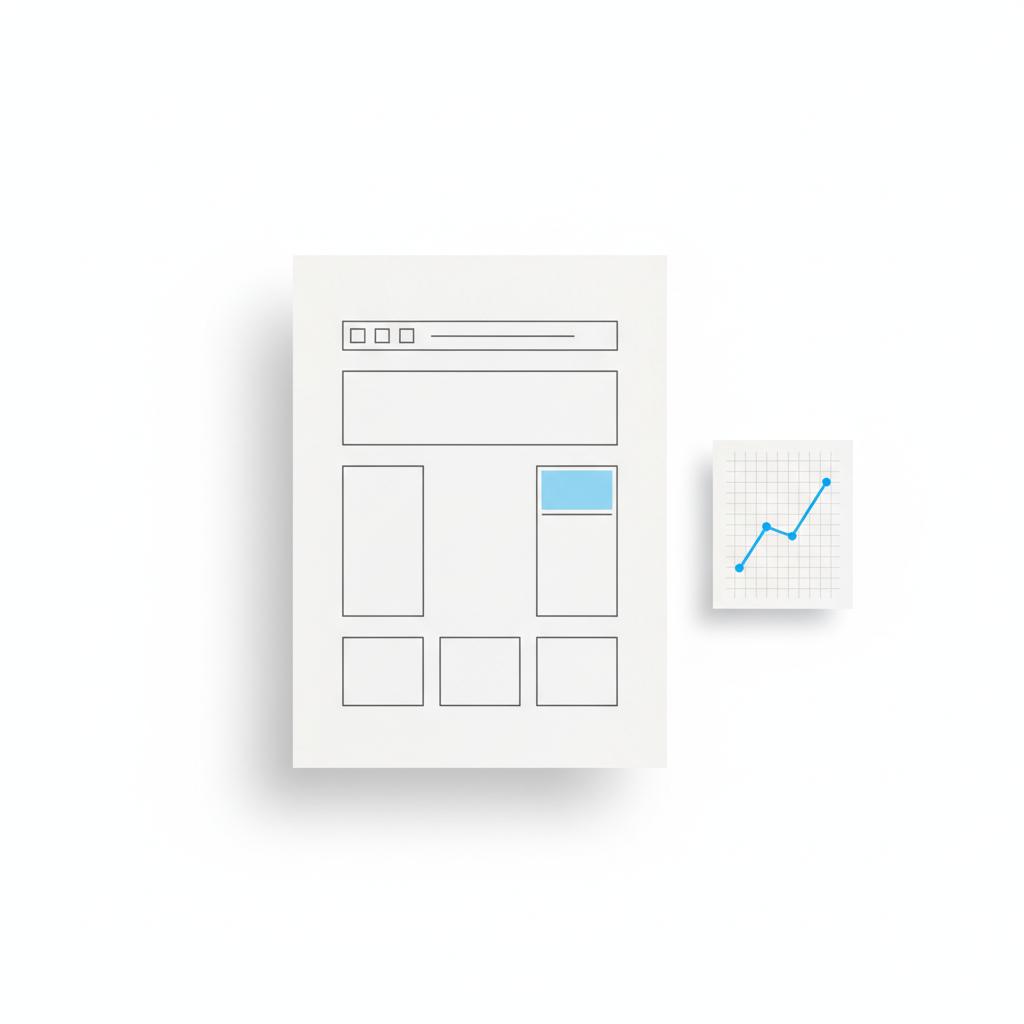
When someone lands on your site, they scan. They look for one or two signs that this is worth their time: a clear headline, a photo that feels real, contact details that are easy to find. If those signs are missing, people leave. If they are present, they stick around a little longer. Little things add up: a friendly image, a concise headline, a visible phone number. These choices build trust more reliably than a gallery of gimmicky effects. A simple, well-used logo can be one of those helpful cues.
When someone lands on your site, they scan. They look for one or two signs that this is worth their time: a clear headline, a photo that feels real, contact details that are easy to find. If those signs are missing, people leave. If they are present, they stick around a little longer. Little things add up: a friendly image, a concise headline, a visible phone number. These choices build trust more reliably than a gallery of gimmicky effects.
Content that helps, not just sells
Content can feel like either a gift or a pushy salesperson. The difference is whether it answers a real question someone has right now. Useful content isn’t just promotional. It explains, it reassures, and sometimes it entertains. It’s what you might tell someone who asked for help over a cup of tea.
Useful content comes in many forms. Stories about how you solved a problem for a customer make abstract benefits feel tangible. How-to guides that walk someone through one step at a time reduce uncertainty and lower barriers to contact. Short videos that show a product in real life let people imagine ownership. The important part is that each piece of content has one clear purpose and one clear audience.
Search is a conversation, not a magic trick
When people search online, they are trying to solve a problem. Your job is to be one of the good answers. That begins with understanding what people ask and how they ask it. Talk like your customers when you write. Use the words they would use in a question.
This is less about stuffing pages with clever phrases and more about writing naturally and helpfully. A good page answers a single question well. It shows why your answer works and includes proof: examples, testimonials, images, or a clear explanation. A steady habit of creating helpful pages slowly builds trust with search engines and with humans. For more on starting budgets and forecasting, this overview is useful: Google Ads for Small Business
Local presence: the little things with big returns
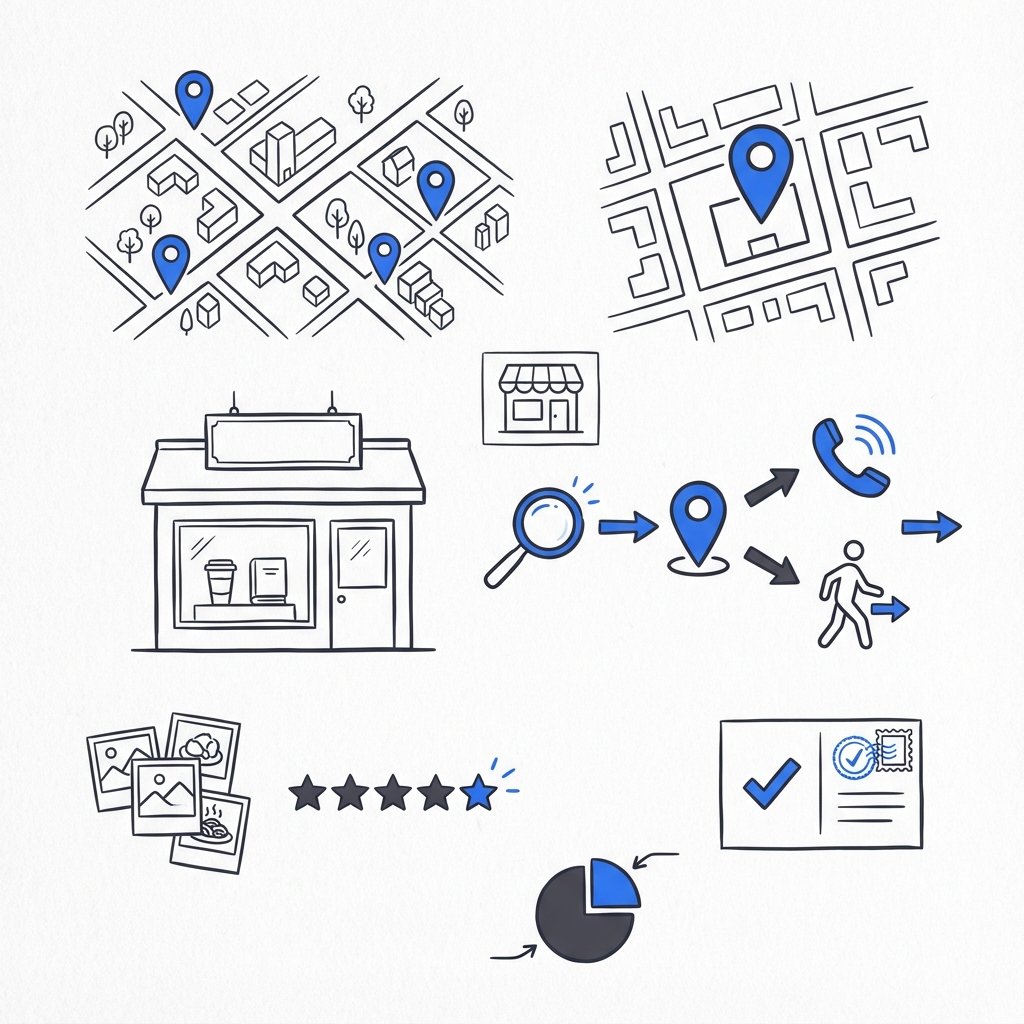
If your customers live nearby, being visible in local listings matters. A profile that shows your address, hours, photos, and recent reviews tells people you are real and open for business. Replying to reviews — the good and the hard ones — shows you care about experience.
Think of local listings like a shop window on a busy street. A tidy window, a friendly note about opening hours, and a few good photos make people more likely to come in. Neglect that window and you invite doubt.
Social media with intention, not exhaustion
You do not need to be everywhere. The temptation to chase every platform ends in thin posts and tired owners. Pick one or two places where your audience actually spends time. Show up there with the aim of adding value.
Value can be small: a behind-the-scenes photo, an honest story about a challenge, a quick tip someone can use right away. These moments build personality. They also let people practice trusting you before they buy. Social platforms reward sincere, steady contribution more than flashy bursts.
The quiet power of reviews and referrals
Nothing persuades like another person’s experience. Reviews, testimonials, and word-of-mouth are the bedrock of ongoing trust. Encourage customers to share what they liked in a brief sentence. Make it easy for them. Then, thank them publicly and respond privately if there was a problem.
A personal note to a customer after a purchase, a hand-written card in a package, or a follow-up email asking if everything arrived as expected creates the kind of small rituals that turn customers into champions. Those champions will return, and they will bring friends.
Measuring what matters without getting lost in numbers
It is easy to drown in metrics. Pageviews, likes, impressions – they can be hypnotic, but most of them are vanity measures. What you want to track are actions that move the relationship forward: did someone contact you, sign up for a newsletter, click to learn more, or make a purchase? Those are the changes that matter.
Start with one or two simple questions you want to answer and look for the data that answers them. If you want more calls, check which pages lead to the phone number. If you want more bookings, look at the path people take before they book. Small experiments – a clearer headline, a different photo, a shorter form – can show what works. Test for a while, learn, and keep the changes that help.
So, back to the question: Is $10 a day enough for Google Ads?
Let’s be practical. Google Ads is a powerful tool, but it’s not magic. Whether Is $10 a day enough for Google Ads? depends on your goals, industry, and how well the rest of your presence converts those clicks into customers.
When $10 a day can be useful
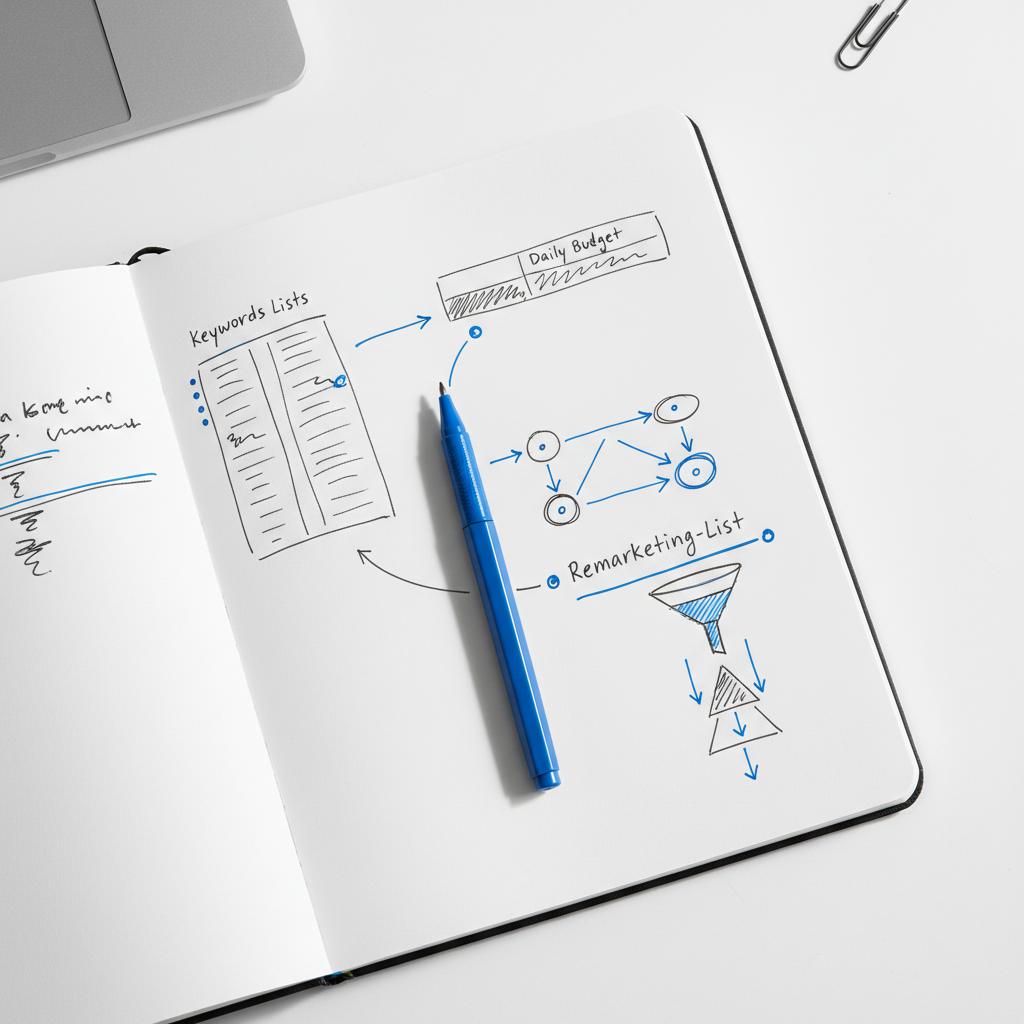
• Testing a message or headline: For a short experiment to see which headline or call-to-action performs better, $10 a day can buy useful early data. Use very specific, low-competition keywords and a tightly focused ad group.
• Local, niche offers: If you’re a small local business targeting a tiny geographic area with low CPCs (cost-per-click), $10/day can deliver steady, affordable clicks – especially for services with high lifetime value.
• Remarketing to warm traffic: A small daily budget can be enough to stay in front of visitors who already know you. Remarketing lists often have lower CPCs and higher conversion rates.
When $10 a day is unlikely to be enough
• Competitive keywords: In many industries – legal, insurance, finance – CPCs are high. $10/day will barely buy a handful of clicks and won’t move the needle.
• Scaling growth: If your goal is to scale quickly or reach a wide audience, $10/day is too small. You need a budget that supports a meaningful volume of tests and conversions.
• Poor landing pages: If your site doesn’t convert, more clicks will not help. Invest first in clarity and conversion. Paid ads amplify what’s already working; they rarely fix fundamental UX or messaging problems.
Most often, improving the homepage and primary landing pages gives more reliable returns than a tiny ad budget. A stronger homepage converts more organic and paid visitors, making any future ad spend far more efficient.
Most often, improving the homepage and primary landing pages gives more reliable returns than a tiny ad budget. A stronger homepage converts more organic and paid visitors, making any future ad spend far more efficient.
Stretching each dollar: tactics for small Google Ads budgets
If you decide to test with $10 a day, treat it like a lab. You are experimenting, not launching a full growth engine. Here are tactical moves that help stretch a small budget.
1. Laser-focus your targeting
Pick a single audience and a single conversion action. Reduce geographic range, narrow the time of day ads show, and use negative keywords to avoid wasted clicks.
2. Use high-intent, low-competition keywords
Long-tail phrases and hyper-specific queries often cost less. Instead of bidding on broad terms, target queries that signal someone close to conversion.
3. Prioritise remarketing
People who have visited your site once are more likely to convert. Remarketing campaigns can amplify the value of every organic visit and are usually cheaper per click.
4. Run short, focused experiments
Test one variable at a time: headline A vs headline B, landing page A vs B. Keep tests for a defined period so you can draw useful conclusions.
5. Track the right metrics
For a $10/day campaign, focus on conversions, not clicks. Even if clicks are inexpensive, they are only valuable if they lead to a measurable action: a call, a booking, a signup.
Combining paid and organic: the multiplier effect
Paid ads are a flashlight: they bring attention quickly. Organic work – clear messaging, local listings, useful content – are the floor that holds steady. A small ad budget works best when it points people at a tidy onboarding path: a clear headline, a good image, a short form or simple booking process, and social proof.
Think of paid and organic like the front and back of a shop window. Paid ads pull people up to the window; your website and content invite them inside. When both elements are cared for, each dollar in ads tends to perform better because visitors find what they expect. For practical pricing and budgeting context, this guide is a readable reference: Google Ads Pricing and Budgeting Tips
A simple 90-day plan that includes a low-budget Google Ads test
Below is a practical roadmap that blends organic work with a cautious paid test. It keeps the shop tidy while seeing whether a $10/day test can yield useful leads.
Month 1 — Prepare the soil
• Clarify your single-sentence message and place it prominently on your homepage.
• Ensure mobile speed and a visible phone number.
• Set up Google Analytics and conversion tracking (calls, form submits).
• Clean up your local listings and respond to reviews.
Month 2 — Plant seeds and run a narrow ad test
• Write two helpful articles answering customer questions.
• Create a short landing page for one offer (discount, free consult, downloadable guide).
• Launch a $10/day Google Ads test focused on one location, one search phrase set, or a remarketing list. Run for 14-21 days to gather data.
Month 3 — Tend the garden
• Ask three customers for short testimonials and add them to the landing page.
• Analyse ad data: which keywords or ads produced conversions?
• Test a homepage headline change to improve conversion.
• Decide whether to scale the ad budget based on cost-per-conversion and lifetime value.
A field story that ties it together
A small design studio I worked with had glossy images but almost no enquiries. We spent a month clarifying who they wanted to serve: small local cafés and boutiques. We rewrote the homepage with that audience in mind and added a short, real story about a local café project. Next, they ran a modest online test – less than $10 per day in the early phase – focused only on local search terms and remarketing to site visitors.
Because the message was clear and the landing page made it easy to book a quick discovery call, even the small ad budget produced the right kind of leads. Within a few months, the studio had fewer mismatched enquiries and more conversations that led to paid work. The ad spend never needed to be huge; it only needed to point the right people at a clear, welcoming page. See some related work in the agency’s projects for examples of concise storytelling and conversion-focused pages.
When working with an expert makes sense
There comes a point when outside help can save time and reduce mistakes. You might seek help if you have a clear business offer but no time to present it online, or if technical issues are keeping customers from contacting you. A good partner will start by listening. They will ask about your customers, your constraints, and what success looks like for you.
Expect practical questions and honest feedback. You may be asked to choose what is most important to your customers, or to share examples of work you are proud of. A helpful collaborator should provide clear next steps and deliverables. They will not promise miracles; they will aim for steady improvement and measurable results.
Why choose a focused partner
When you compare agencies, pick one that offers clear process and shared priorities. Agency VISIBLE, for example, emphasises speed, clarity and measurable outcomes – they help small and mid-sized businesses become visible without wasted complexity. If you want a partner who treats your ads and organic work as parts of the same plan, they’re a strong fit.
Write like you speak. Read your sentences out loud and cut anything that sounds stiff. Use short paragraphs so readers can breathe. Put the most important point at the top of the page. Use real photos rather than staged stock images when you can. Show faces. Images that reveal a bit of context feel alive and reliable.
Handling negative feedback with calm
Not everyone will be delighted, and that is okay. What matters is how you respond. A prompt, sincere reply that acknowledges the concern and offers a way to make things right shows professionalism. It is tempting to defend every detail, but a short, kind response often does more to restore trust than a long justification.
If criticism surfaces recurring themes, treat it as useful information. Maybe a process is unclear, or instructions are missing. Use the feedback to improve the experience, and then tell people what you changed. That kind of transparency builds a reputation for care.
How small investments compound over time
There is no single trick that will make a presence grow overnight. But small steady improvements add up. A clearer homepage, a handful of helpful articles, a tidy local profile, and a habit of answering customers promptly create a momentum that compounds. Over months, the work you do now becomes a dependable source of enquiries and goodwill.
Final thoughts: clarity matters more than cleverness
The strongest presence is not the loudest. It is the one that matches who you are and what people need. When your online place feels like your real place, people sense it. They sense honesty, competence, and care. They sense that behind the screen there are real people who are ready to help.
Get a short, practical Google Ads + homepage plan
Ready to make your presence feel like you? If you want a quick, human-first audit of your homepage and a brief plan for a small Google Ads test, reach out to a team that focuses on clarity and measurable results: Get a short, practical plan from Agency VISIBLE.
Keep it simple, keep it honest, and keep showing up. The rest will follow.
Yes — in certain situations. A $10/day budget can produce real leads when you target a local area, use low-competition long-tail keywords, or remarket to warm visitors. The key is a clear landing page and a defined conversion action (call, booking, or signup). If your pages don’t convert, even many clicks won’t help.
Improve your website first. A small ad budget amplifies what already works; it rarely fixes unclear messaging or slow pages. Clarify your main sentence, tidy your homepage, and ensure mobile speed. Once those basics are in place, a low-budget Google Ads test will give meaningful insight.
Consider hiring a partner when you have a clear business offer but lack the time or technical capacity to present it online, or when you want faster, measurable improvements. A focused agency such as Agency VISIBLE listens first, clarifies messaging, and helps you set up practical tests for ads and organic growth without wasteful complexity.
References
- https://agencyvisible.com/contact/
- https://www.definedigitalacademy.com/blog/google-ads-small-budget-strategy
- https://blog.coupler.io/google-ads-for-small-business/
- https://www.commercepundit.com/blog/google-ads-pricing-budgeting-tips/
- https://agencyvisible.com/
- https://agencyvisible.com/projects/
- https://agencyvisible.com/design-that-converts-our-approach/