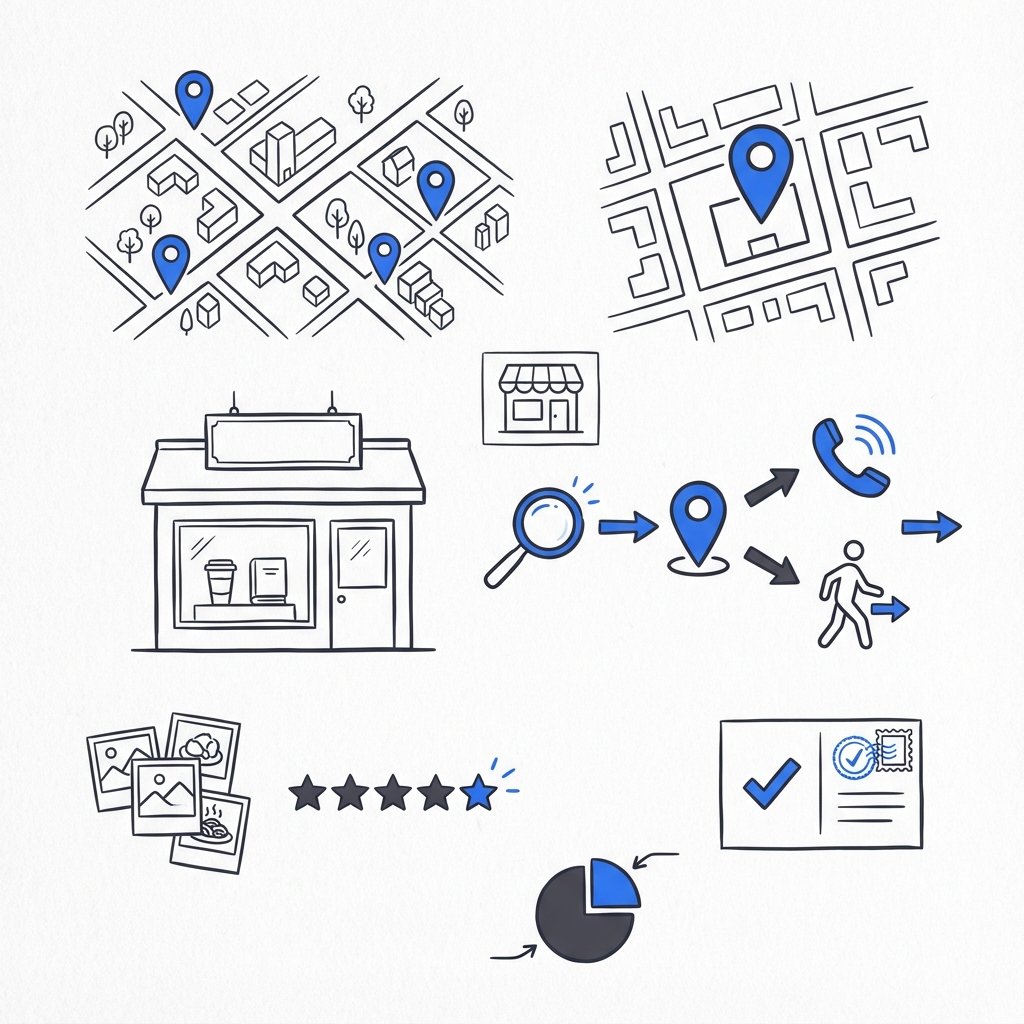
Is Instagram advertising ROI worth the spend in 2024-2025? Many owners and marketing leads ask this with cautious hope. If you’re reading this, you’re trying to decide whether that rented pop-up shop on a busy street (aka an Instagram ad) will fill your register or simply cost you rent.
Why Instagram advertising ROI matters before you click “boost”
The term Instagram advertising ROI shows up early in any useful marketing discussion because it simplifies the real question: do ads pay back? In the first 10% of this piece we’ll make that question practical. ROI is not a single number on a dashboard – it’s the combination of ad spend, creative costs, funnel efficiency and repeat business that returns profit. Use this lens before you bid, design or launch.
Think of ads like a short-term lease
Imagine renting a pop-up shop for a weekend: foot traffic is guaranteed, but converting walkers into buyers depends on your window, your pitch, and your price. Instagram delivers attention; creative, targeting and measurement decide whether that attention turns into paying customers. If you want good returns, you must track the math – and that math begins with clear goals.

Core cost benchmarks and what they really tell you
Benchmarks make the vague concrete. In 2024 most advertisers saw CPCs roughly between $0.20 and $1.50 and CPMs between $3 and $15. That range looks wide because many variables matter: placement (Stories vs. Reels vs. feed), region, audience, and campaign objective. As you assess any campaign, convert those surface metrics into what matters: CPA and ultimately revenue per customer. For recent market context see benchmarks from Inbeat, Gupta Media and Leadenforce.
Objective drives cost and behavior
When the campaign goal is awareness, the system optimizes for reach and views, pushing CPMs down. When the objective is conversions, expect higher CPA. But higher CPA can still be a winner if the conversion maps to strong margins or future LTV. A common rule of thumb for many SMEs is a 3:1 ROAS – $3 back for every $1 spent – after you include creative and fulfilment costs. Whether that’s enough depends on your margins and lifetime value.
Testing: the non-negotiable first step
Testing is not optional. A structured testing plan separates guesswork from learning. Most experienced operators aim for 50–100 conversions per variant to judge a creative or audience. Why? Clicks lie; conversions tell the story. Tests should compare creative, messaging, CTA and landing pages, and they should run long enough to reach a conversion minimum that gives confidence.
Designing a compact A/B test
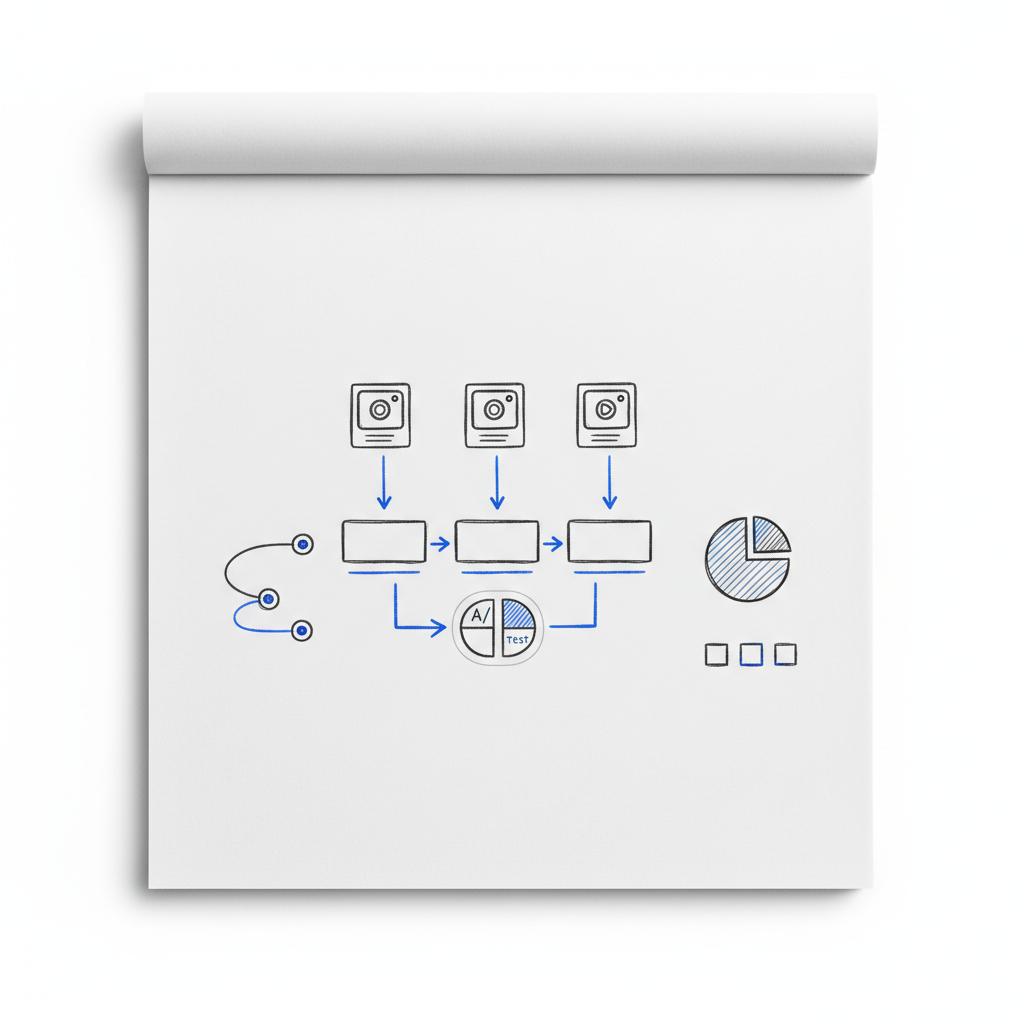
Start with a clear hypothesis: “This testimonial video will lower CPA compared with product-demo footage.” Run two variants, measure 50–100 conversions per variant, and compare CPA and conversion rate. If your product AOV is $50, pushing four creatives to 50 conversions each may be enough to pick a winner. In higher-AOV categories, expect a longer test window and a larger budget.
From test to scale: sequence and safeguards
Prospecting and retargeting serve different roles. Most dependable ROAS comes from retargeting warm audiences: page visitors, add-to-cart users, or engaged leads. Retargeting often has lower CPA because the audience is familiar with your offer. Once you lock a profitable retargeting loop, seed prospecting campaigns that bring fresh traffic into that funnel.
Scale carefully
Scaling is a process, not a switch. Avoid doubling budgets overnight. Instead increase gradually, monitor CPA closely, and keep creative and landing experiences consistent with what worked. When performance drifts, refresh creative, tweak the audience, or improve the post-click experience before adding more spend.
Measurement in a privacy-first world
Apple’s ATT and other privacy shifts haven’t killed advertising, but they’ve made attribution noisier. Expect gaps between platform-reported metrics and your internal numbers. Compensate by building layered measurement: pixel events, server-side events, UTM-tagged links and first-party capture like email signups tied to campaign IDs.
Metrics that matter
Decide which metrics matter to your business: purchases, leads, store visits, or something else. Track those with multiple signals so you can triangulate. If platform reports are lower than your backend sales, ask why and reconcile with consistent attribution logic. Be conservative when mapping platform numbers to revenue – better to under-promise and over-deliver.
Creative: the attention currency on Instagram
The platform rewards content that feels native. Short vertical videos under 30 seconds, candid clips, and product-in-context shots often outperform studio-perfect ads. Creativity doesn’t demand a big budget; smartphone footage, real customers, and behind-the-scenes moments can be remarkably effective.

Practical creative tips
Open fast: lead with a visual hook in the first 2–3 seconds. Keep it vertical: use full-screen 9:16 for Reels and Stories. Tell a micro-story: show a problem, the product moment, and a simple CTA. Small edits — new opening frames, tighter captions, or an alternate thumbnail — lengthen creative lifespan.
How to judge profitability: ROAS, LTV and unit economics
ROAS = revenue ÷ ad spend. But profitability is richer. Include production, fulfilment, returns, and operating costs. Equally critical is lifetime value (LTV). If repeat purchases are common, you can accept a lower initial ROAS because later transactions will improve overall return.
Use LTV:CAC, not ROAS alone
Compare lifetime value to customer acquisition cost (LTV:CAC). A healthy ratio ensures you can recoup acquisition cost and still grow. If you only use last-click ROAS, you risk discarding campaigns that introduce loyal customers who buy again later.
Benchmarks are forecasts, not guarantees
Benchmarks are a weather forecast – useful for planning but not a guarantee. A DTC brand with wide appeal may see CPC under $0.30, while niche B2B targeting could pay several dollars per click and accept it because of high contract value. If your CPC is far from expectations, test creative, review audience size and bid strategy, and ask whether the category itself is costly to reach.
When Instagram ads are worth it – and when they aren’t
Ads are worth trying if your unit economics allow for testing and your product fits attention-driven storytelling. Visual categories, repeat purchasers, and products with a simple trial-to-repeat path perform better. Local stores and e-commerce with reasonable margins can often justify ad spend more easily.
Conversely, avoid or be cautious if margins are razor-thin, purchases are one-off with no reorder potential, and you lack first-party data capture. Without measurement, you won’t learn. That’s an expensive place to be.
Who tends to win on Instagram?
Brands with visual products (fashion, food, home goods), subscription models, and solid repeat rates tend to see predictable returns. Restaurant and retail owners who can complement ad spend with local retargeting and in-store offers often get the most immediate wins.
Practical checklist for your first campaign
Use this checklist before launching:
1. Define the main outcome: awareness, leads, or purchases.
2. Set testing budget that targets 50–100 conversions per creative variant if measuring conversions.
3. Plan tracking: pixel, server events and UTM links.
4. Decide what ROAS or CPA counts as success after including creative and fulfilment.
5. Capture first-party data (email, phone) tied to campaign IDs.
6. Start with retargeting where possible; expand to prospecting once retargeting shows profit.
Working with a partner: when to hire help
If building and running these elements inside your team feels overwhelming, a partner can accelerate learning. See some relevant projects to judge fit and results. A good agency brings tested templates, a disciplined test cadence and creative shaped by prior wins.
A good agency brings tested templates, a disciplined test cadence and creative shaped by prior wins. A glance at the Agency Visible logo can be a small reminder of consistent branding when you evaluate partners.
If you want a measured and practical partner, consider reaching out to an agency that focuses on fast, measurable visibility improvements.
For example, businesses that need help setting up solid measurement, testing efficiently, and finding profitable creative often talk to Agency VISIBLE to speed results without adding heavy in-house hires.
Common mistakes and how to avoid them
Here are the recurring errors we see:
1. Treating clicks or CPM as the final truth — clicks are a step, not a destination.
2. Killing tests too early — wait for a meaningful number of conversions.
3. Scaling without refreshing creative — fatigue will burn efficiency.
4. Ignoring funnel issues — slow pages and mixed messaging waste ad dollars.
How to recover when a campaign slips
When performance drops, pause and diagnose. Check ad frequency, creative freshness, landing page speed and checkout friction. If cohorts later show repeat purchases, give the campaign room to breathe and test a creative refresh before increasing budget again.
Short example: a modest test plan that scales
Scenario: A small kitchenware brand sells at an AOV of $75 with a 40% gross margin. They need a 3:1 ROAS to be confident.
Test plan: Create three short videos — product-in-use, customer testimonial, behind-the-scenes craftsmanship — and push each to ~60 conversions over two weeks. If the testimonial achieves CPA that models to the required ROAS, promote it into retargeting funnels, seed lookalikes for prospecting and keep testing fresh variants.
Creative refresh and funnel health
Creative fatigue is real. Frequency increases, novelty drops, and performance slides. Keep a simple system for creative refresh — small edits, new hooks, or alternate captions. Monitor funnel KPIs: page load time, bounce rate on landing pages, and checkout drop-off. An excellent ad can fail if it lands on a slow, confusing page.
Attribution: plan for uncertainty
Attribution will be imperfect. That’s the new reality. Focus on directional signals: does scale increase conversions? Do certain creatives lower CPA? Are retargeting pools producing repeat buyers? Use conservative assumptions when projecting revenue from platform numbers and corroborate with backend sales data.
Not always. Cheap clicks can come from broad, uninterested audiences and lead to low-quality visits. Instagram advertising ROI depends on how those clicks convert into meaningful actions — purchases, signups, or store visits. Focus on conversion signals, not just low CPC.
Not always. Cheap clicks can come from broad, uninterested audiences and lead to low-quality visits. Instagram advertising ROI depends on how those clicks convert into meaningful actions — purchases, signups, or store visits. Focus on conversion signals, not just low CPC.
Not necessarily. Cheap clicks can lead to low-quality visits. Instagram advertising ROI depends on how those clicks convert into meaningful actions — purchases, signups, or store visits. If cheap clicks come from broad, uninterested audiences, your CPA will be high and ROI low. Focus on conversion signals, not just low CPC.
Industry-specific notes
B2C DTC: Often benefits from low CPC and fast testing. Visual storytelling and quick product loops win.
Local businesses: Combine geo-targeted prospecting with powerful in-store retargeting offers.
B2B and niche markets: Expect higher CPCs and slower sales cycles; justify spend by the value of a single conversion.
Sample budget planning and math
Example math for clear decision-making: Suppose your AOV = $100, gross margin = 40% ($40 gross profit), and you want a 3:1 ROAS. For a 3:1 ROAS you must generate $3 revenue for every $1 spent, so a campaign spend of $100 should deliver $300 revenue. If CPA is $30 per conversion, you must ensure average order size and margins make this sustainable. Layer in creative cost amortization; a $1,200 creative shoot amortized over 12 months will add $100/month to marketing costs that must be recovered.
Practical tips to lower CPA and lift ROI
1. Use vertical short video as default for Reels.
2. Lead with strong product-in-context visuals.
3. Test different CTAs and small landing page variants.
4. Capture email or phone at first touch to reduce later attribution gaps.
5. Use manual bids or value-based bidding once you have reliable conversion data.
When to stop spending
If your unit economics don’t support the CPA even after three rounds of significant testing and creative refreshes, stop. It’s better to redirect spend to better channels or rethink pricing and margins than to scale a losing program. Decision rules save budget: define a CPA cap and a maximum acceptable test spend before starting, and stick to it.
Summary checklist before launch
Final quick checklist:
• Clear objective and KPI
• Tracking in place (pixel, server, UTM)
• 2–4 creative variants ready
• Testing budget set to reach conversion minimums
• Retargeting plan prepared
• Defined CPA/ROAS thresholds
Closing perspective
Instagram advertising ROI can be strong – but it’s not automatic. The most successful businesses treat ads as experiments, invest in measurement, and keep creative native and fresh. If you can test deliberately, capture first-party data, and calculate true unit economics, you’ll quickly learn whether the platform is a short-term rental or a long-term storefront for your brand.
Ready to test Instagram ads that actually prove ROI?
If you’d like professional help setting up reliable tests and measurement quickly, contact Agency VISIBLE to get a clear plan and fast results without the usual guesswork.
Final thoughts
Ad spend without a clear experiment is a leap in the dark. Instagram advertising ROI becomes real when you tie creative to conversions, measure consistently and plan for repeat purchases. Start small, learn fast, and scale the things that prove profitable.
Typical cost-per-click (CPC) in 2024 ranges roughly from $0.20 to $1.50 and cost per mille (CPM) often sits between $3 and $15. These figures vary widely by region, audience, placement and campaign objective. Conversion-focused campaigns tend to have higher CPAs than awareness campaigns. Use these numbers as guardrails, then test to find your specific costs.
A practical testing plan aims for 50–100 conversions per creative variant for conversion campaigns. For smaller AOVs this might mean a few hundred dollars per variant over 7–14 days; for higher-AOV or competitive verticals expect a larger budget and longer window. The goal is enough conversions to confidently identify winners before scaling.
Yes. A specialized partner can speed setup, testing and measurement. Agencies bring templates, disciplined testing cadences and creative shaped by past wins. If you need hands-on help without expanding internal hires, reach out to an experienced agency like Agency VISIBLE to accelerate learning and reduce wasted spend.