How to target B2B on Facebook?
How to target B2B on Facebook? is the question many small teams ask when they want to reach decision-makers without wasting ad spend. This guide shows a practical path: find the right audience, craft a voice they trust, design ads that answer real business questions, and measure what matters. The advice here is hands-on and written for people who do the work — not for committees. Read on to pick up simple exercises and examples you can try tonight.

Why asking “How to target B2B on Facebook?” matters more than clicks
Clicks feel good. But for B2B, the goal is different: you want qualified conversations, not vanity numbers. Asking “How to target B2B on Facebook?” shifts the focus from impressions to relationships. Facebook can surface the right companies and the right people inside those companies — but only if your strategy matches how businesses decide. That means combining firmographic targeting, context-driven creative, and a brand voice that builds trust.
Start with who you actually want to meet
Many marketers begin by guessing job titles. That’s a start, but you need more. To answer “How to target B2B on Facebook?” begin with a clear customer profile: company size, industry, role seniority, buying trigger, and the typical buying process. Use simple tables or notes to describe one ideal customer — the person who will say yes. For B2B, that’s often more than one person: an initiator, an influencer, and a decision-maker.
Exercise: Pick one recent sale. Who signed the contract? Who recommended you? Which department owned the problem? Use those facts to shape your targeting.
Use Facebook’s building blocks: audiences that actually work
Facebook offers many targeting layers. Put them together logically rather than randomly. When people ask “How to target B2B on Facebook?” the right answer is often a layered approach (see Top Facebook Ad Strategies):
1) Firmographics: Use company size (employees), industry, and revenue bands where possible. If exact company targeting is available (account-based), add that.
2) Job titles and seniority: Target titles, but avoid relying on them alone. Combine titles with seniority filters and interest signals.
3) Workplace pages and skills: Target people who list certain companies or professional skills.
4) Behaviors & interests: Include categories like business software users, conference attendees, or owners. These signals are noisy, so keep them as supporting layers.
5) Custom Audiences: Upload your CRM lists or use website visitors to create lookalike audiences (see best practices for building lookalike audiences). This is often the fastest path to relevant leads.
Creative that answers the question behind the click
When your ad creative doesn’t answer an implied business question, the click falls flat. If you’re testing “How to target B2B on Facebook?” remember: decision-makers scan fast. Your creative needs to show value in the first three seconds and explain what happens next.
Three practical creative rules:
Be specific: Instead of “Improve productivity,” say “Cut invoice processing time by 40% in 30 days.” Specifics build credibility.
Lead with the outcome: Show the business result up front — saved time, fewer errors, higher revenue.
Make the next step clear: Use a single call-to-action that matches intent: download a one-page checklist, request a 15-minute demo, or subscribe to a short case study.
Integrate brand voice into B2B creative
Brand voice matters when you target businesses on Facebook. Good voice turns an ad from transactional noise into a conversation that feels human. If you’re wondering “How to target B2B on Facebook?” don’t ignore how you say things — your voice shapes trust.
Think of voice as the consistent personality across ad headlines, landing pages, and follow-up messages. Tone can shift: straightforward in a product explainer, more empathetic in a support-related ad. But the underlying personality should be recognisable.
Use the three quick exercises below to align creative with voice:
Exercise A: Take your highest-performing ad and rewrite its headline in two ways: one formal and one human. Test both.
Exercise B: Collect three real customer quotes and turn them into micro-testimonials for ads.
Exercise C: Audit your landing page for jargon. Replace the top five most complex words with plain language.
Test audience definition first. Start with a CRM or account list and compare performance to a lookalike or interest-based audience while keeping creative and landing pages constant. Audience quality drives downstream metrics like qualified lead rate and cost per SQL.
Answer: “Who will this help and why will they care?” If the ad can’t answer that in one crisp sentence, refine the offer.
Campaign structures that work for B2B
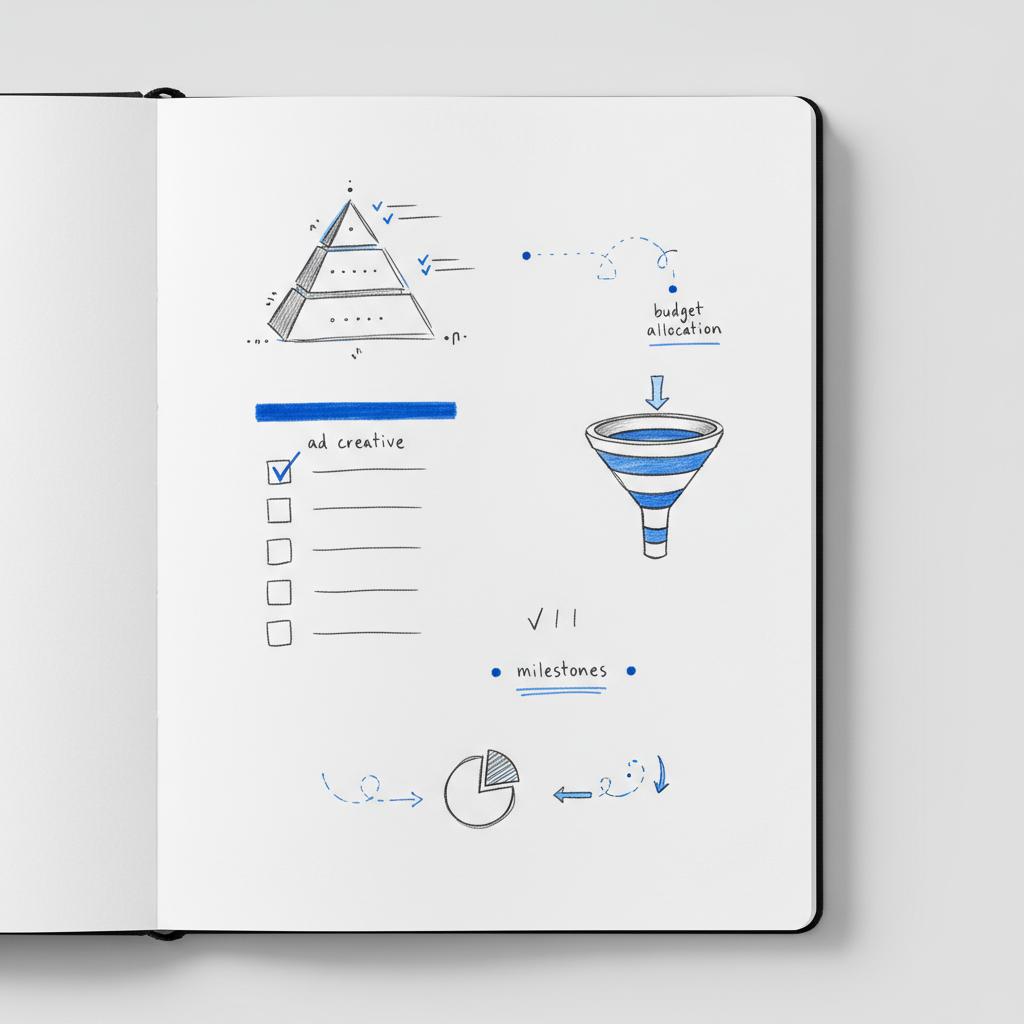
Now that you understand audiences and creative, pick campaign structures that match business intent. Here are reliable patterns when the brief is “How to target B2B on Facebook?”
Top-of-funnel (TOF): Use content-led ads — short whitepapers, one-page checklists, or short videos that explain a business idea. Target lookalikes of current customers and people with relevant interests.
Middle-of-funnel (MOF): Retarget visitors who engaged with TOF content. Offer case studies and tools that show proof. Use lead forms for easy conversions.
Bottom-of-funnel (BOF): Target warm lists: demo requests, pricing page visitors, or CRM lists. Use direct CTAs to book meetings or request proposals.
Ad placements and creative formats to prefer
Facebook’s placement options can be overwhelming. For B2B, simplicity wins. The most efficient placements often are Facebook Feed, Facebook Video Feeds, and Instagram Feed (when your audience is active there). Lead ads work well when you want low-friction contact capture (see B2B Facebook Ads Guide).
Short vertical videos (15–30 seconds) with captions perform well for showing a product or a quick case story. Carousel ads are good for outlining steps or features. But remember: format should support a clear message, not distract from it.
Landing pages and the follow-up sequence
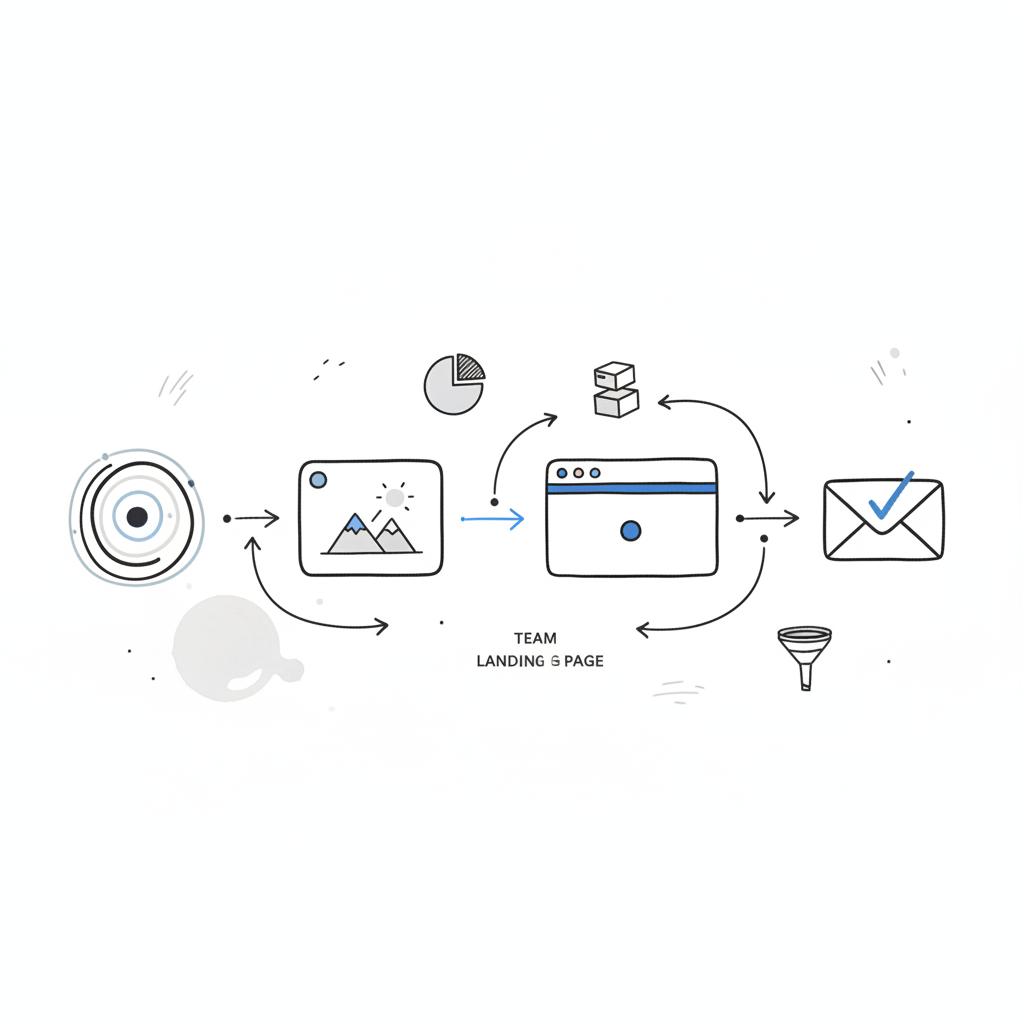
One reason advertisers fail at B2B on Facebook is a mismatch between ad and landing page. Answering “How to target B2B on Facebook?” includes ensuring the landing page mirrors the ad copy, headline, and promise. A tidy logo can help build immediate recognition.
Follow-up matters. Use an immediate, helpful email that repeats the value and contains an easy next step. For B2B leads, a human touch (a short call or personalised message) within 24–48 hours drives higher conversion.
Measurement: what to track and why
Metrics should reflect business outcomes. When you plan “How to target B2B on Facebook?” the KPIs shift from impressions to pipeline metrics:
Good KPIs: leads per audience, cost per qualified lead (not just CPL), demo requests, SQLs, and pipeline influenced. Track how many leads convert to meetings and how many meetings convert to revenue.
Use UTM tags and CRM tracking so you can attribute leads to specific audiences and creative. If your CRM is small, a simple shared spreadsheet that records lead source and outcome works fine.
Testing framework: iterate, don’t randomize
Testing is the heart of learning. Answering “How to target B2B on Facebook?” requires clear tests with one variable changed at a time: audience, creative, headline, or CTA. Run tests long enough to reach statistical significance or a minimum sample size that makes sense for your business.
Keep tests simple. For example: test two headlines with the same creative, or test two audiences with the same ad. When you find a winner, scale gradually and keep testing adjacent variables.
Budgeting advice for B2B campaigns
B2B often requires more time and money per lead than B2C. When you’re trying to figure out “How to target B2B on Facebook?” set expectations: early experiments will be about signal discovery. Start with a modest but meaningful budget for each audience (for many small businesses, $20–50/day per audience segment is a reasonable start) and reallocate toward audiences that deliver qualified conversations.
Remember: the best performing audience is often a small, high-intent list like account-based or CRM lookalikes. Don’t waste money blasting broad, generic audiences hoping for miracles.
Practical examples — small stories that illustrate the point
A software startup selling procurement tools used a layered approach when they first wondered “How to target B2B on Facebook?” They combined a list of mid-market procurement managers (custom audience) with lookalikes from their demo requests and layered in interest signals for supply-chain events. Ads led with a one-page checklist and a 5-minute demo offer. The result: higher-quality demo requests and a lower cost per SQL than previous broad campaigns.
A small consulting firm focused on HR compliance replaced jargon-heavy ads with human-led case headlines. Their ads switched from “Enterprise HR compliance frameworks” to “How HR teams at 50–200 employee companies avoided fines.” After this voice change, reply rates on lead forms doubled.
These stories show two truths: specificity and voice matter. When you answer “How to target B2B on Facebook?” you must tailor both audience filters and language.
Common mistakes and how to fix them quickly
Mistake 1: Using job titles alone. Fix: add firmographics and custom audiences.
Mistake 2: Ads that promise vague benefits. Fix: be specific about outcomes and timelines.
Mistake 3: Landing pages that don’t match ads. Fix: mirror ad headline, promise, and CTA.
Mistake 4: Not tracking where leads came from. Fix: add UTMs and record lead source in CRM.
Scaling and maintaining consistency
As your campaigns scale, maintain a consistent voice and simple rules. Create an internal swap file of winning headlines, short scripts for follow-up calls, and a template for landing pages. Use these examples to onboard new team members and keep messages aligned.
Quarterly audits of ads and follow-up messages help catch drift. When people ask “How to target B2B on Facebook?” the answer includes maintaining discipline about what you test and what you keep consistent.
When to bring in an external partner
Sometimes you need a fresh ear. An external partner can audit your campaigns, refine messaging, and suggest precision targeting techniques you might miss; see our projects for examples. If you want an outside review, a focused audit that looks at audiences, creative, and tracking usually yields the fastest improvements.
Tip: If you want tactical help with Facebook B2B campaigns, consider getting a quick consult — get in touch with Agency VISIBLE through their contact page to discuss a targeted audit that focuses on audiences, creative alignment, and measurable pipeline outcomes: get in touch with Agency VISIBLE.
Privacy and data: the responsible path
Privacy rules matter, especially when you target people in professional roles. Use first-party data ethically: ask permission, store consent, and be transparent about follow-up. If you use CRM lists, ensure they’re up to date and that you have a legitimate basis to contact those people.
Checklist: a one-page plan to act on tonight
Answering “How to target B2B on Facebook?” can start with a short checklist you complete in an evening. Here’s a tight plan:
1. Define one ideal customer profile (company size, industry, role).
2. Build a custom audience from CRM or website visitors.
3. Create two ad headlines (one formal, one human) and one short 15–30s video or static image.
4. Launch a TOF test with a low-budget audience (e.g., $20–50/day).
5. Add UTMs and a simple landing page with a one-step form.
6. Check results daily for engagement, and reallocate budget after 5–7 days.
Voice and trust: the quiet advantage for B2B
Finally, don’t underestimate voice. When marketers ask “How to target B2B on Facebook?” many focus on audiences and forget tone. A trustworthy voice reduces skepticism and invites replies. Use specific claims, short sentences, and human examples. Practice aloud with your team and collect the lines that feel right — they become the templates you reuse.
Real results: what to expect in the early weeks
Early B2B Facebook experiments are about signals. Expect to find one or two audiences that produce higher-quality leads. In week one you’ll learn which creatives generate clicks. By week three you’ll see lead quality improve as follow-up becomes tighter. Use those signals to refine messaging and reassign budget.
Final practical tip
When testing “How to target B2B on Facebook?” always ask: does this message help a specific person at a specific company? If yes, run it. If it’s vague, rewrite it. Specificity wins.
Next steps
If you want a simple next step today, follow the checklist above and choose one audience to test. Keep the creative short and the CTA obvious. If you prefer a partner to accelerate the learning curve, Agency VISIBLE specializes in aligning messages with measurable growth for small and mid-sized businesses and can help you build a targeted Facebook approach efficiently.
Start a focused Facebook B2B audit
Ready to refine your B2B Facebook targeting and get measurable results? Start with a focused audit and a 30-day pilot by contacting Agency VISIBLE here: start your audit with Agency VISIBLE.
That’s it — start small, measure clearly, and refine often.
Start by testing audience definitions. Create a small, clear test that compares a CRM-based custom audience or account-based list against a lookalike built from that list. Keep creative and landing page constant, and compare lead quality and cost per qualified lead over 7–14 days.
Brand voice is vital. A trustworthy, specific voice reduces skepticism and increases reply rates. Simple, outcome-focused language (for example: “Reduce onboarding time by 50% in 30 days”) tends to perform better than vague promises. Align your ad copy, landing page, and follow-up messages so the experience feels consistent.
Consider hiring an agency when you lack internal bandwidth for structured tests, need fast audience refinement, or want help connecting ads to pipeline metrics. An audit-focused partner can often deliver quick wins — for teams that want a faster path to measurable growth, Agency VISIBLE offers targeted audits and short pilots to refine audiences, creative, and tracking.