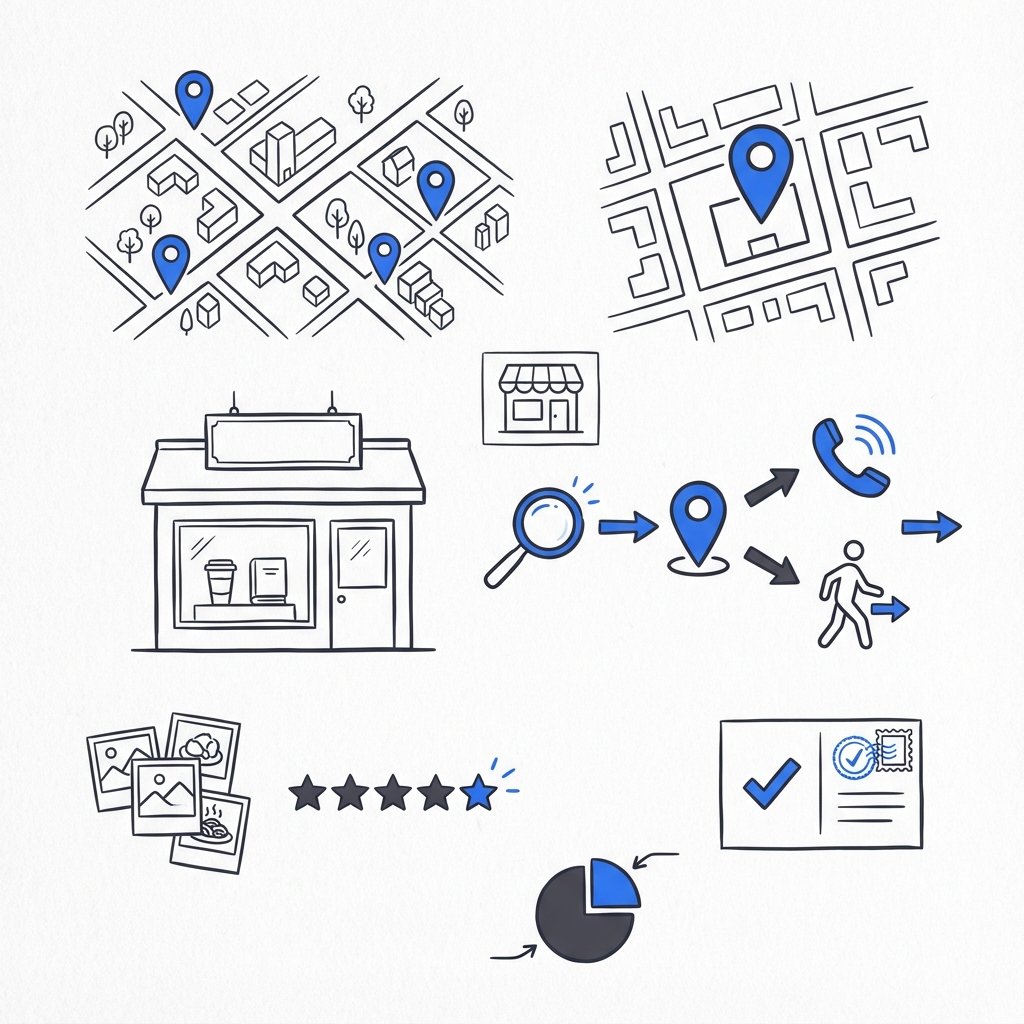
How to run ads on Facebook for real estate? If you’re an agent or broker wondering where to start, this hands-on guide walks you through every step – from picking the right objective to turning a Facebook lead into a signed contract. Throughout, we focus on practical actions you can apply in your local market today.
Why local focus wins: the first rule of facebook ads for real estate agents
Real estate is hyperlocal. That’s the core idea behind effective facebook ads for real estate agents. A narrowly targeted, well-tracked ad aimed at people who live, work, or spend time near your listing will outperform broad, generic feeds every time. Start by thinking about the specific street, school zone, or neighborhood you serve – not the whole city.
Before anything else, define the action you want people to take. Are you after quick buyer appointments, seller leads, or web traffic to a listing page? Your chosen objective shapes how Meta delivers impressions and measures success. If your goal is contact collection and booking, choose lead generation with Instant Forms. If you want awareness or video views, choose traffic or engagement. That decision sits at the top of every effective facebook ads for real estate agents campaign.
If you want a practical partner to translate these steps into an initial blueprint tailored to your market, a helpful option is Agency VISIBLE. They can act as a technical sparring partner—helping set up tracking, audience segments, and a testing plan—without a heavy-handed sales pitch.
With that partner tip in the mix, let’s lock down the foundation.

Set the foundation: Business Suite, permissions and compliance
Accurate setup prevents wasted spend. Use Meta Business Suite (formerly Business Manager) to link Pages, ad accounts, and people. Assign roles so the right person can create and edit ads without exposing sensitive account controls. For Conversions API setup details, Meta’s Conversions API best practices are a useful reference.
Check your Page for broker disclosures, license numbers, and accurate contact details. In many markets 2024-2025 rule updates require particular disclosures; a quick check with a broker compliance officer or MLS administrator avoids costly ad takedowns.
Quick setup checklist
Must-do items:
– Connect Page(s) and ad account in Business Suite.
– Verify domain in Business Settings (important for conversion tracking).
– Add and remove users with the Principle of Least Privilege.
– Ensure Page shows brokerage info and licensing where required.
Tracking today: Pixel + Conversions API (CAPI)
Attribution and tracking have shifted. Browser-based pixel signals are necessary but not sufficient; server-side events (CAPI) fill gaps caused by browser privacy changes. Use both. The Pixel captures browser events and CAPI sends server-side confirmations. Together they preserve conversion signals that improve ad delivery and reporting accuracy.
Map events to the actions that matter for your campaigns: page view, view content (specific listing), lead form submission, scheduling a showing, or a CRM-confirmed qualified lead. Make sure conversions you optimize for match your campaign objective: don’t optimize for clicks when you want booked appointments.
Event mapping examples
– Page view: site-wide page loads.
– View content: opened a property detail or scrolled to the property section.
– Lead: Instant Form submission or contact form completion.
– Qualified lead: CRM event confirming lead and qualification status (server-side).
Accurate mapping improves both delivery and reporting, because Meta learns which visitors actually convert and who looks like them.
Audience strategy: geofence, warm, seed, repeat
Audience strategy is the real estate advantage. Define audiences that reflect local intent. Tight geofencing — down to a few blocks or a school district — can make your facebook ads for real estate agents far more efficient than a city-wide blast.
Use this layered approach:
– Saved local audiences for neighborhoods (radius, ZIP, or polygon).
– Engagement audiences (people who watched your property video or engaged with the listing post).
– CRM custom audiences: past clients, past showings, or open-house attendees.
– Lookalikes seeded from high-value clients (closed quickly or bought premium homes), constrained by location to stay relevant.
Seed audiences from your CRM and then create lookalikes from your best clients. That helps Meta find people who behave like your winners in the market you serve. For more campaign examples and formats, see this Facebook Ads for Real Estate guide.
Creative that converts: visuals, copy and formats
People shop homes visually. Your creative should answer the question: “Why should I care about this property right now?” Test short neighborhood clips, quick walkthroughs (15–30 seconds), single-hero photos with overlay facts, and carousels for multiple rooms or features.
Creative recipes
– Video (15–30s): neighborhood, exterior approach, front door walk-in, quick highlights.
– Single image: best photo, overlaid with 3 facts (beds/baths/price) and a simple CTA.
– Carousel: kitchen, living, master, backyard — each card links to the same listing page.
Headlines should be clear and local: “3-bed bungalow near downtown — open house Sat” beats “Charming home!” Copy should be short and human. Imagine explaining the house to a neighbor at coffee. For a broader playbook and strategy, check the Ultimate Guide to Facebook Ads for Real Estate Agents in 2025.
Lead forms: keep them short and qualify
Instant Forms reduce friction. They keep people on-platform and typically lift completion. But friction reduction shouldn’t mean low-quality leads. Ask only what you need to follow up fast and include one short qualifying question: e.g., “Are you pre-approved?” or “Primary interest: buy, sell, rent?”
Recommended fields: name, phone, email, one optional qualification question. If you use CRM routing, make sure field names match exactly to avoid lost data.
Sample Instant Form flow
– Intro: 1–2 sentences that set expectations.
– Required fields: name, phone, email.
– Qualifier: “Timeline to move?” or “Pre-approved?” (single select).
– Thank-you screen: direct scheduling link or next-step text.
Budgeting and bidding by funnel stage
Match budget to the funnel. Top-funnel (video views, traffic) costs less per impression and can be run on modest budgets. Mid- and bottom-funnel campaigns (lead gen) need more budget to compete for conversions.
Example: in a hot $500k- $700k market, buyer lead generation may need higher bids or budgets to reach motivated prospects. Plan testing budgets and give tests enough scale to decide. Don’t run ten-variable tests at once – test one variable per experiment.
Simple A/B testing plan
– Test creative type: video vs image.
– Test audience: geofence vs lookalike.
– Test headline: price-first vs lifestyle-first.
– Run each test for at least 7 days and until each variant has enough impressions to draw conclusions.
Yes — in many local markets a short, authentic neighborhood video can outperform a static glossy photo for awareness and early-stage engagement. Videos convey context: nearby parks, walkability, street feel, and arrival sequence. Use a 15–30 second clip focused on the approach and biggest selling points; run it in a traffic or video-view objective, then retarget engagers with a lead ad.
Follow-up fast: why time-to-contact matters
Time-to-contact is one of the most underestimated metrics. Data consistently shows calls or emails within five minutes dramatically increase appointment conversion rates. Organize routing so high-intent leads get a near-immediate touch – text and email notifications plus a phone call when possible.
If you can’t staff 24/7, have a scripted email and a clear callback schedule. Your SLA could be: call within 30 minutes, email within 2 hours. Track the actual time-to-contact in your dashboard and use it to optimize internal processes.
Reporting that helps you improve
Report the metrics that tie to business outcomes: cost per lead (CPL), click-through rate (CTR), conversion rate on the form, time-to-contact, and percentage of leads that convert to appointments. Build a simple dashboard and check it weekly.
Watch for audience fatigue — if CTR drops and CPC rises, refresh creative or pause the set. Reconcile platform-reported conversions with CRM-backed conversions; CAPI helps shrink the gap but expect discrepancies.
Compliance and fair housing considerations
Real estate has rules. Check your market’s MLS, broker policies, state licensing requirements, and national guidance like NAR updates. Some ads must show MLS origin, broker name, or license number. Avoid language or targeting that could appear exclusionary – stay compliant with Fair Housing rules.
Three concrete example campaigns
1) University neighborhood townhouse — awareness to lead
Plan: geofence campus and nearby neighborhoods, seed with parents who previously visited. Week 1: traffic campaign with a neighborhood video to warm audiences. Week 2: shift high-engagement pool into a lead-gen campaign with Instant Form asking “Timeline to buy?” Route leads to an agent with text + email notifications.
2) Suburban seller generation — targeted lookalikes
Plan: seed lookalikes with best recent sellers, run a carousel showing recent sold comps and encourage valuation requests. Use a lead form with “Considering selling in next 6 months?” and route to a seller specialist for a follow-up call within an hour.
3) Open-house attendance — quick RSVP funnel
Plan: run local traffic and lead ads promoting an open house with an RSVP Instant Form. Use a calendar booking link in the thank-you screen and push RSVPs into your CRM with a server-side event confirming sign-up.
Operational tips that keep campaigns humming
– Use consistent naming conventions: Campaign_ListingName_Objective_Date.
– Organize creatives with version dates.
– Archive audiences that haven’t been used in 12 months.
– Keep a simple SLA for lead response and measure it.
Example naming convention
Campaigns: BuyerLead_Townhouse_Lead_2025-06.
AdSets: Geo_3mi_SchoolZone_Lookalike_1%.
Ads: Video_V1_15s_HeadlineA.
Testing: be systematic and patient
Testing is a secret advantage when done well. Change one variable at a time and let the test run until it reaches meaningful sample size. Keep experiments simple and labeled clearly so you can compare like-for-like.
Lead quality: the copy and the CTA make a difference
Lead quality improves when expectations are clear. Short headlines like “Serious buyers only — book a private showing” set clear signals. Pair that with a compact Instant Form and one pre-qualifier to reduce low-intent inquiries. But avoid tone that feels off-putting — stay professional and helpful.
Attribution: reconcile platform and CRM numbers
Attribution is never perfect. Account for ad blockers, iOS privacy settings, and multi-device journeys. Use CAPI + Pixel + CRM reconciliation to get as close as possible to reality. Track the mismatch and use it to inform budget decisions.
Benchmarks and economics: define quality costs
CPL varies by market. High-priced urban markets cost more per lead than small towns. Instead of chasing headline CPL figures, define the cost of a quality lead for your market and how many leads convert to closed clients. Model lifetime customer value where possible, not just acquisition cost.
Creative examples and sample copy
Use these quick templates as starting points for facebook ads for real estate agents:
Video ad headline: “Quiet 3-bed near Oak Park — Open House Sat”
Primary text: “Modern kitchen, big yard, walking distance to top schools. See inside — RSVP for Saturday’s open house.”
CTA: Learn More or RSVP
Instant Form intro: “Quick RSVP — we’ll send details and a calendar link.”
Seller lead carousel headline: “Recent sales — see what homes nearby are selling for”
Primary text: “Curious what your home is worth? Request a free valuation and strategy call.”
Form qualifier: “Considering selling in 6 months?”
Sample follow-up scripts for immediate contact
Phone opener for buyer lead: “Hi [Name], this is [Agent]. Thanks for your interest in [Property]. I can show it this week — what day works best for a quick tour?”
Email for seller lead: “Hi [Name], thanks for requesting a valuation. I reviewed recent sales in your neighborhood and found [quick stat]. Would you be open to a 15-minute call to discuss realistic pricing?”
Scaling campaigns: when to hire help
If you’re managing multiple listings and campaigns, or want help mapping Pixel + CAPI properly, consider a partner. A tactical partner can speed setup, reduce errors, and help you scale without rework. Learn more about our approach on the Agency VISIBLE homepage and see project examples on our projects page.
How an agency partner helps
– Fast technical setup (Pixel + CAPI + domain verification).
– Clean audience building and lookalike seeding.
– Creative production and a simple testing calendar.
– Reporting dashboards that connect ad performance to CRM outcomes.
Practical compliance checklist
– Confirm broker name/MLS requirements on ads.
– Confirm required disclosures and license info.
– Avoid demographic targeting that could violate fair housing.
– Keep records of copies and targeting for compliance review.
Small experiments that can yield big improvements
– Swap carousel vs single-image for the same audience.
– Try a 15-second neighborhood walk video vs a 30-second walkthrough.
– Test a single qualifying question vs none in Instant Forms.
Summary checklist: launch-ready
– Objective matches buyer journey stage.
– Business Suite set and domain verified.
– Pixel + CAPI installed and event mapping confirmed.
– Tight geofence + CRM seed audiences created.
– Creative set prepared (video, image, carousel).
– Instant Forms built with 1 qualifier + matching CRM fields.
– Lead routing and SLA defined.
– Reporting dashboard ready.
Real-world pacing: recommended campaign timeline
– Day 1-3: Setup Business Suite, Pixel, CAPI, domain verification.
– Day 4-7: Build audiences and upload CRM seeds.
– Day 8-21: Run awareness (video/traffic) campaign.
– Day 15-28: Shift engaged audience into lead-gen campaign and optimize.
Common agent FAQs (quick answers)
How many fields should a lead form have? Keep it short: name, phone, email, and one optional qualifier.
Will video help? Yes – short, human videos that show the neighborhood or a quick walkthrough increase engagement.
Is a lookalike worth building? In most markets, a lookalike seeded from real high-value clients outperforms broad demographic targeting.
Wrapping up
Running facebook ads for real estate agents is a blend of technical precision, local knowledge, and timely human follow-up. When you combine the right objective, crisp tracking, tight audiences, compelling creative, and fast response, Facebook ads become the start of a valuable client relationship – not just noise in the feed.

Ready to launch Facebook ads that deliver real estate leads?
If you want help turning this roadmap into your first campaign, start a quick conversation with our team at Agency VISIBLE and get a clear launch plan in days.
Keep it short and focused: name, phone number, email, and one optional qualifying question (for example, “Are you pre-approved?” or “Timeline to buy?”). Short forms increase completion rates and allow fast follow-up. If you push leads into a CRM, ensure field names match exactly to avoid lost data.
Yes. Short, human videos (15–30 seconds) that show the neighborhood, approach to the front door, or quick highlights of key spaces typically boost engagement and can warm audiences before a lead-generation push. Use captions and keep the first 3 seconds compelling to reduce scroll loss.
If you’re uncomfortable with server-side events, data mapping, and CRM reconciliation, a technical partner can save time and reduce errors. A partner like Agency VISIBLE can help set up Pixel + CAPI, map conversions to your CRM, and create a simple testing plan so campaigns are efficient from day one.
References
- https://agencyvisible.com/contact/
- https://agencyvisible.com/
- https://agencyvisible.com/projects/
- https://bluegiftdigital.com/facebook-ads-for-real-estate/
- https://walledgardenhq.com/the-ultimate-guide-to-facebook-ads-for-real-estate-agents-in-2025/
- https://www.facebook.com/business/help/308855623839366?locale=en_GB