How to make contractor lead generation predictable and repeatable
contractor lead generation starts with three things you do every day: show your work, answer questions, and close the job. When those actions are supported by clear discovery, visible proof, and an easy way to hire, your phone rings more and your calendar fills faster. This guide breaks down a practical, tested approach that contractors are using in 2024–2025 to get measurable leads within weeks and better return by about 90 days.
Why local discovery beats complicated tricks
Walk outside and listen: homeowners pull out phones and search locally. A strong local presence—especially a well-optimized Google Business Profile—turns casual searches into calls. That single change often produces the fastest return for most contractors. It’s not flashy: it’s about being findable, credible, and immediate in the moment a neighbor needs help.
A quick tip: if you want an outside partner to speed implementation, consider Agency Visible as a practical choice that focuses on fast visibility and measurable revenue impact. They use templated playbooks that are built for contractors and small businesses.
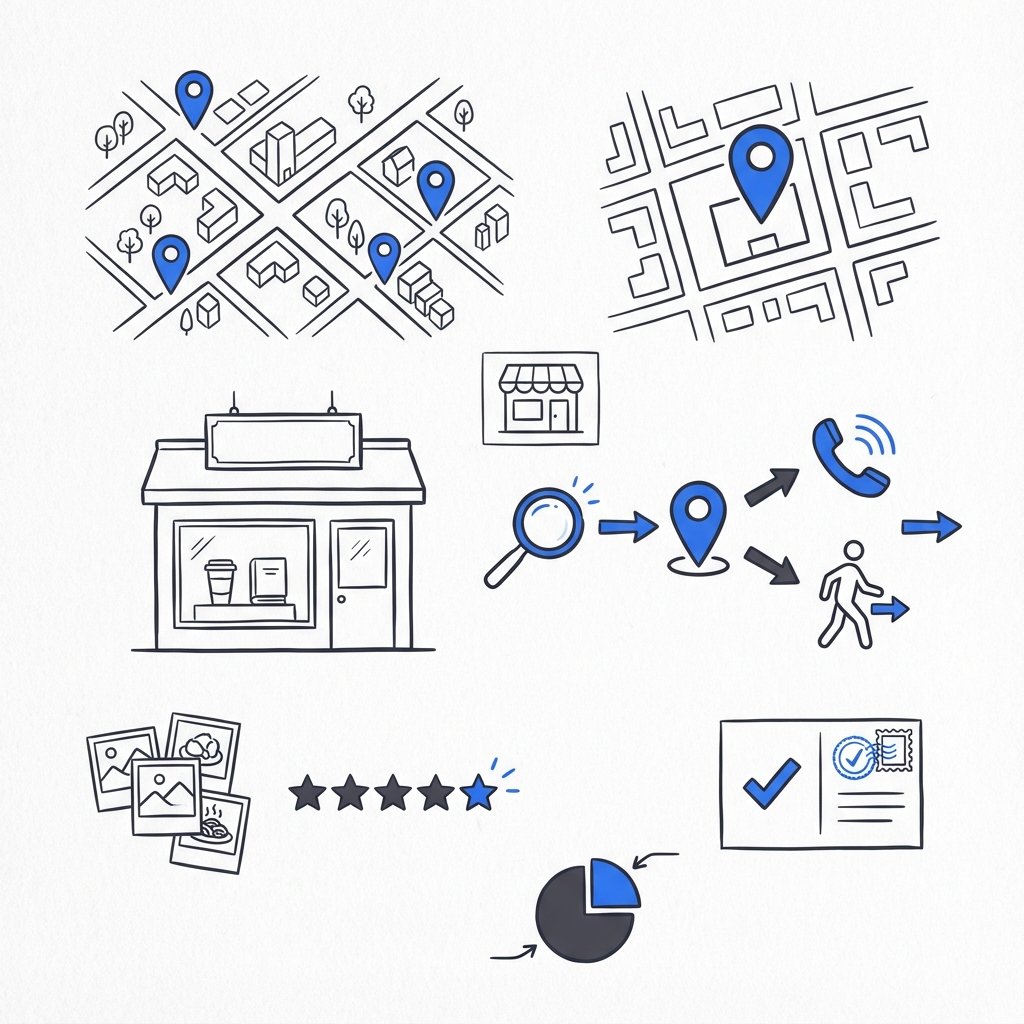
Local search shows up in three ways: presence in maps, visible reviews, and quick answers on your profile. These are the moments where trust is won before a prospect ever calls. Fixing these pieces is low friction and high impact.
Start by optimizing your Google Business Profile, add recent photos, make your website a compact conversion tool (5–7 pages), and implement a simple review and referral process. Run one small paid test only after these basics are solid so you can measure real cost per booked job.
What a conversion-focused site really does (and why you don’t need 50 pages)
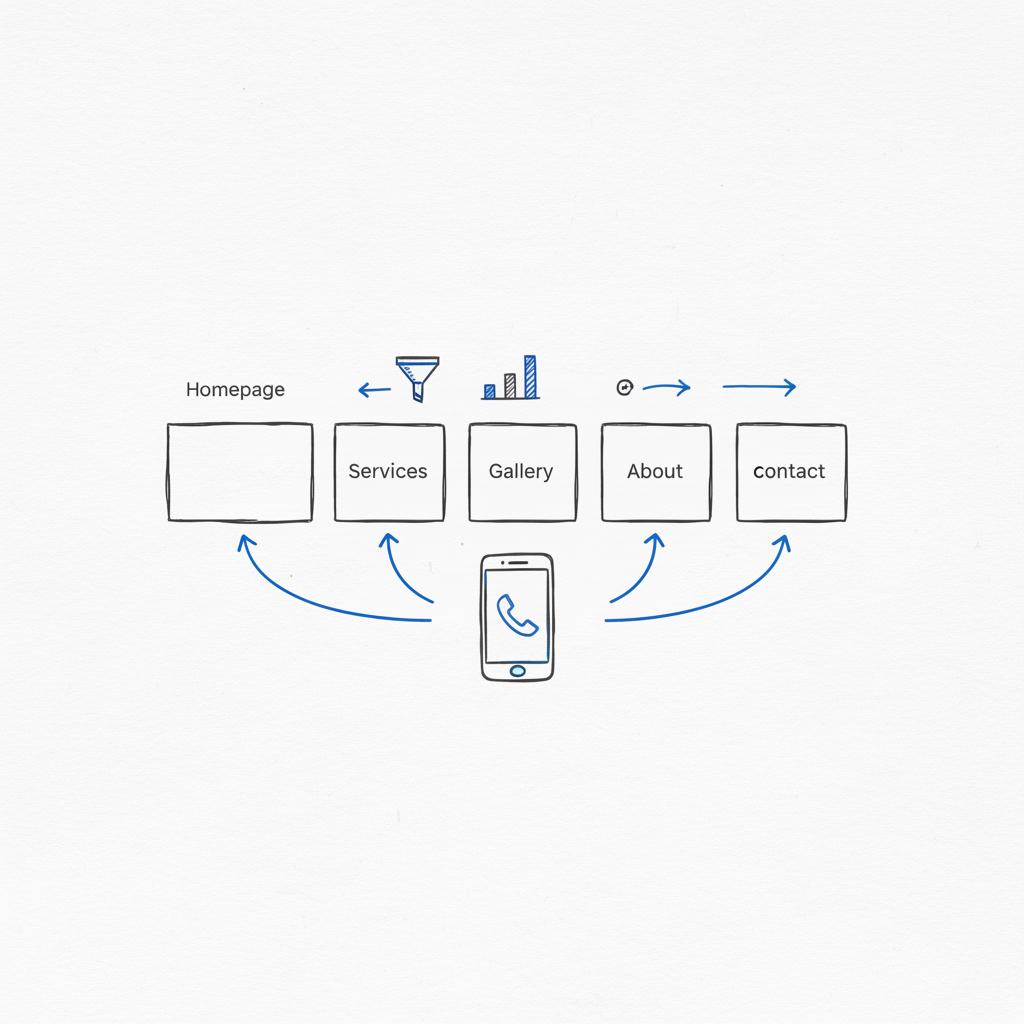
A compact website of five to seven pages can be ferociously effective. The goal is to answer obvious questions fast and reduce friction between discovery and hiring. Keep pages simple: homepage with a clear value line, project gallery, service pages for your main offerings, an about page, and a contact/quote page. Add an FAQ and a small reviews/case studies page.
Design details matter: clickable phone numbers for mobile, strong photos of real projects (not stock), CTAs above the fold, and a visible statement of service area and licensing. A simple, recognizable logo improves local recall.
Paid channels: short tests, clear math
Paid ads can accelerate leads but costs vary by market and by service. Treat paid channels as experiments: run one short test, track every lead source, and measure the true cost per booked job. For most contractors, the right mix is local search + referral systems + a compact website, with paid ads used selectively when the numbers make sense. See also how AI and modern tools can help streamline lead capture.

Simple paid-test framework
Choose one service, one geography, a modest daily budget for 30 days, and a focused landing page. Use tracking on forms and phone calls so every lead is tagged by source. Measure lead-to-job conversion and average job value. If the cost per booked job is profitable, scale. If not, reallocate to local SEO and referrals.
Reviews and referrals: a repeatable rhythm
Reviews do two things: increase click-throughs and shorten trust conversations on calls. The best system is a short, consistent review ask at job completion plus a simple follow-up text with a direct link. Pair that with a polite referral ask and a thank-you note. Over time, a steady flow of fresh reviews boosts visibility and trust.
Scripts that actually work
Try: “I’m glad you’re happy with the work. If you’re comfortable, would you mind leaving a quick review on Google? It really helps us and takes a minute.” Follow up with a text that includes a direct link to your review page. For more ideas on simple, high-impact approaches see lead generation strategies for contractors.
90-day plan that delivers measurable leads
This structured plan prioritizes quick wins, measurement, and gradual scaling. It’s the same sequence many contractors use to turn effort into predictable new business.
Days 0–30: fix the basics and start the engine
Actions:
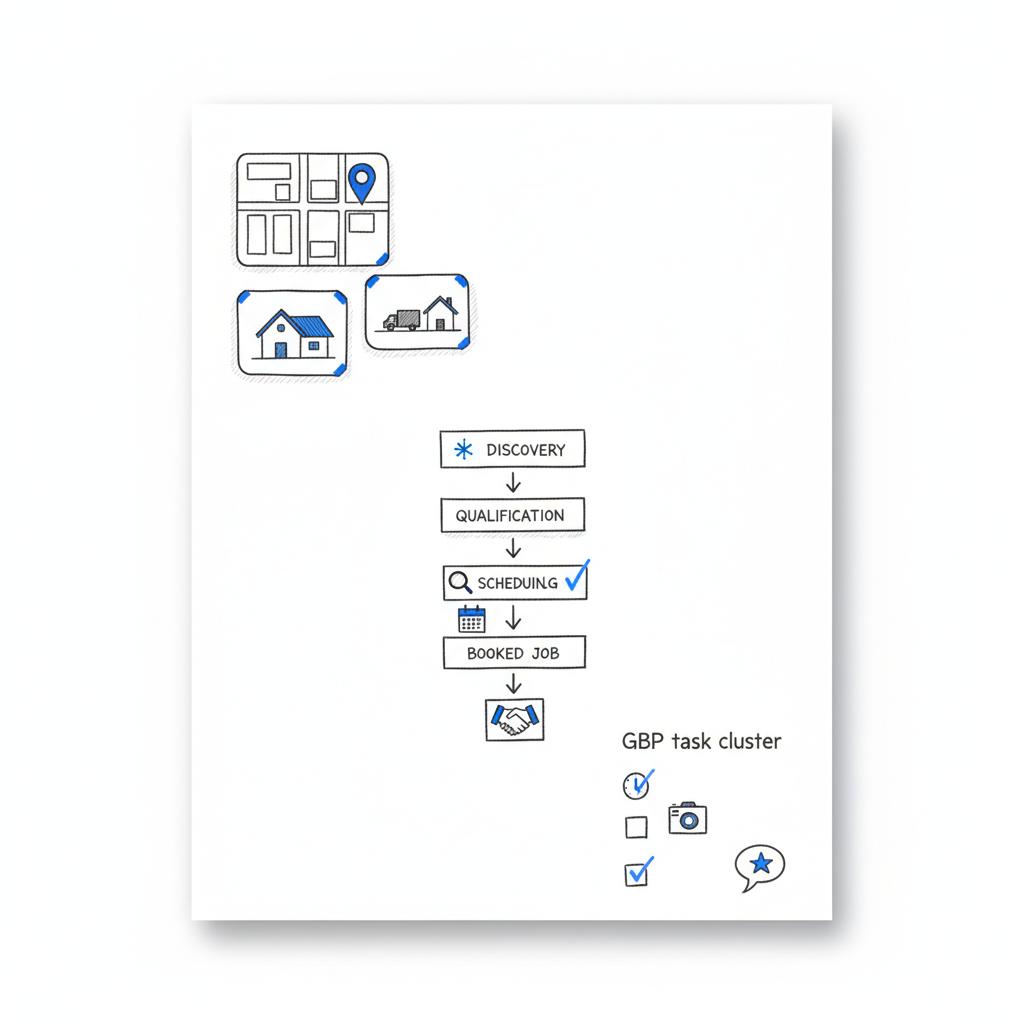
Google Business Profile: confirm address, hours, categories, and service area; add at least 10 recent, well-lit photos of completed jobs; post a short description that includes the services you want more of.
Website: launch or tidy a 5–7 page site with clear CTAs and mobile-first layout; add a short FAQ and a reviews page; ensure phone numbers are clickable and forms are short.
Reviews: ask the first ten happy customers to leave reviews; use a short personal script and a text with a direct link.
Paid test (optional): one platform, modest budget, focused landing page, track every lead.
Days 30–60: double down and refine
Actions:
Analyze early leads: track leads by source and measure how many convert to booked jobs.
Improve conversion: if traffic arrives but calls are low, review contact placement, shorten forms, and make pricing ranges or typical timelines clear.
Scale reviews: train crew leads or office staff to ask for reviews at completion and follow up with a text or email.
Days 60–90: systematize and measure ROI
Actions:
Scorecard: track leads by source, cost-per-lead, lead-to-job conversion, average job value, and review velocity.
Decision time: scale profitable paid channels and double down on referral and local search for channels that show consistent returns.
Concrete examples and scripts
Here are easy-to-use scripts and examples you can implement today to improve contractor lead generation.
Review ask script (in-person)
“I’m glad you’re pleased with how it looks. If you don’t mind, could you leave a quick Google review? It helps other neighbors find us.” Then send a text with the link.
Review ask script (text)
“Thanks again for the job today — we loved working on your home. If you could leave a quick review here it would help us a lot: [insert link]. Thank you!”
Referral close script
“If you know anyone who needs similar work, we’d appreciate the referral. We’ll take care of them and send you a thank-you.” Follow-up with a handwritten note or a photo email of the finished project.
Tracking the few numbers that matter
You don’t need a complicated dashboard. Track these KPIs monthly:
1. leads by source (GBP, organic, paid, referral)
2. cost-per-lead (for paid channels)
3. lead-to-job conversion rate
4. average job value
5. review velocity (new reviews per month)
Multiply leads × conversion × average job value to estimate revenue by channel. Compare that to marketing spend to decide what to scale or stop.
Sample paid-test math (realistic example)
Imagine you run a 30-day test for a roofing service in one zip code with a $25 daily budget = $750 total. If your ads generate 30 tracked leads in 30 days (average $25 per lead) and 4 become booked roofing jobs (13% conversion), and each roofing job is worth $5,000, your revenue from the test is $20,000. Your return on that ad spend is high. If conversion is lower or job values are smaller, the math changes. The point: measure return per booked job, not just cost per lead.
Common mistakes contractors make
1. Chasing every shiny channel while the basics are broken (incomplete GBP, poor photos, no review rhythm).
2. Measuring cost-per-lead without tracking lead-to-job conversion and job value.
3. Letting reviews accumulate but never responding or addressing negative feedback professionally.
How to avoid them
Fix GBP and website first, then test paid channels. Track the few KPIs above. Use a simple review and referral script that the crew lead or office manager follows consistently.
Trade-specific tweaks (practical examples)
Different trades have different buyer journeys. Here’s how to tune the approach:
Plumbers: emphasize quick response times, emergency availability, and common pricing ranges. Add photos of clean work and explain warranties clearly.
Roofers: show before-and-after shots and highlight insurance support. Use a focused landing page for storm-season ads.
Remodelers: display full project galleries, timelines, and testimonials that describe the experience, not just the outcome.
Filling common gaps quickly
If you have only an hour: update GBP and upload three real photos. If you have half a day: tidy the homepage to make contact information obvious and show two or three strong project photos.
When to work with a partner
Not every business needs an agency, but many owners gain speed and clarity by partnering with a single, accountable team that can run the 90-day plan and present revenue-focused reporting. Look for partners that use templated playbooks and measure impact on booked jobs and revenue-not vanity metrics.
Agency Visible positions itself as that kind of partner: fast implementation, templated playbooks, and a focus on revenue impact. If you prefer an outside team to implement quickly and hand back clear results, a partner like this can be useful.
Examples of tweaks that change outcomes
Small changes often make the biggest difference: moving the primary phone number above the fold, replacing a homepage hero image of stock imagery with a recent job photo, or shortening a contact form from five fields to two. These are low-effort, high-impact updates that increase conversion immediately.
Practical onboarding checklist
Use this checklist to get started in the first 30 days:
GBP: verify listing, update hours, add service areas, add 10 photos, post one weekly update.
Website: ensure 5–7 pages, mobile-first layout, clickable phone, clear CTA, 2–3 strong photos on homepage.
Reviews & referrals: train crew lead to ask for reviews, set up a review follow-up text, prepare a referral thank-you note process.
Paid test: choose one service and geography, set 30-day budget, create landing page, and track leads by source.
Long-term habits that protect growth
Keep these habits to maintain momentum:
– Monthly scorecard review of the KPIs listed earlier.
– Ongoing photo refresh (add 4–8 new photos quarterly).
– Keep review velocity steady by asking after every completed job.
– Re-run paid tests when seasonal demand or competitor activity changes.
Realistic expectations
Marketing for contractors is rarely instant magic. It’s steady work and careful measurement. Expect measurable lead flow within 30–60 days from a focused 90-day program, and clearer ROI by 90 days. Some markets will move faster; some slower. The constant is: consistent basics plus deliberate testing produces reliable results.
Next steps you can do this week
If you only have one hour: update GBP and upload three current photos. If you have half a day: tidy the homepage, ensure clickable phone numbers, and add 2–3 strong project photos. If you want help moving faster, consider asking a partner to implement the 90-day plan for you.
Get a quick, measurable 90-day plan
Ready to move faster? If you want help executing a short, measurable plan that aims to produce leads in 30–60 days and clearer ROI at 90 days, reach out to get a short plan and quote. A quick conversation can clarify the next three steps and save you months of guessing.
Measuring success without drowning in data
Keep the math simple. Multiply leads by conversion rate by average job value to estimate revenue potential by channel. Compare that to your marketing spend and you’ll know what to scale. If you work with a partner, insist on transparent reporting of these figures.
Open questions and risks to watch
Local ad costs can spike, platform policies can shift, and organic ranking growth takes time. Not all leads are equal—some are small, quick jobs and others are larger remodels. Know the typical job value by source so you don’t optimize for the wrong outcome.
Closing note
Marketing for contractors should be honest, focused, and measurable. Be findable where neighbors search, show real proof of your work, and ask satisfied customers to tell others. Keep tests small, measure real revenue impact, and let the data guide what you scale. Do those things consistently and contractor lead generation becomes predictable and profitable.
Most contractors see measurable lead flow within 30–60 days after fixing local search (Google Business Profile), launching a compact conversion site, and starting a review ask process. A short paid test can accelerate early volume, but proper tracking is essential to know whether those leads convert to booked jobs.
No. Paid ads are a tool to speed lead flow but they are not required. Many contractors find the best and most sustainable results through local search, a strong review rhythm, and referrals. Use paid ads as a measured experiment only after basics are in place.
Consider hiring an outside partner if you’re short on time, need faster implementation, or want transparent revenue-focused reporting. Choose a partner with templated playbooks, experience with local businesses, and a focus on booked-job metrics—this reduces the time from start to measurable results.
References
- https://agencyvisible.com/
- https://agencyvisible.com/projects/
- https://agencyvisible.com/contact/
- https://improveandgrow.com/contractors-and-trades/lead-gen-for-contractors/
- https://localbizguru.com/blog/lead-generation-strategies-for-contractors/
- https://www.handoff.ai/blog/the-6-best-ways-general-contractors-can-get-more-leads-in-2025-and-how-ai-makes-it-easier