Every job site, every home renovation and every happy client is a story waiting to be told. If you want steady pipeline and repeat work, you need more than referrals and flyers – you need to know how to market as a general contractor so people can find, trust, and hire you without guesswork.

How to market as a general contractor: a clear, human roadmap
Learning how to market as a general contractor doesn’t mean pretending to be a marketing agency overnight. It means setting up simple systems that show what you do, who you help, and how to take the next step. The secret is clarity: clear message, clear proof, clear next steps.
Start where customers start: a one-sentence service statement
Within seconds of landing on your page, a visitor should know whether you are the right fit. Write one short sentence that answers: who you serve, what you do, and the outcome you create. For example:
“Quality whole-home renovations for busy families in [City] who want durable finishes and predictable timelines.”
Put that sentence front and center on your homepage, your Google Business Profile, and in your social bios. If you wonder how to market as a general contractor, this sentence is the first step toward fewer questions and more calls.
If you want help shaping that sentence or building a simple site that converts, consider a short conversation with Agency VISIBLE — they help contractors and small teams focus on clarity and measurable growth without overcomplication.
Quick wins: what to fix today
These are simple, high-impact moves you can do in an afternoon:
- Check that your phone number and address are the same across your website and every directory.
- Make sure your site loads quickly on mobile and shows your one-sentence service statement above the fold.
- Add 3-5 recent project photos with short captions that explain the scope and result.
- Claim and update your Google Business Profile; add accurate hours and a clear service area.
Small fixes like these answer the most common questions quickly, and that reduces friction – which is the heart of how to market as a general contractor well.

Small fixes like these answer the most common questions quickly, and that reduces friction and that reduces friction — which is the heart of how to market as a general contractor well.
Write one sentence that answers who you serve, what you do, and the clear outcome. Place it where visitors see it first. That single sentence reduces confusion and helps the right clients contact you faster.
Build a website that converts, not just exists
Your website is the hub of your marketing. Social platforms change, but a well-structured website is yours. When you build it, think in terms of tasks visitors want to complete: learn your services, see proof of work, get pricing ranges, and contact you. Each page should make one of those tasks easier.
Performance and trust
No one waits for slow pages. Compress photos, avoid heavy third-party widgets, and choose reliable hosting. Make sure your site runs on HTTPS and shows easy-to-find contact options. These are small signals that build trust.
Key pages every contractor needs
- Home: One-sentence proposition, top services, and a clear lead action.
- Services: Short descriptions of each service with who benefits most.
- Portfolio/Projects: Before-and-after photos and 2–3-line case notes.
- About: A brief origin story, team intro, and your approach to quality and timeline.
- Contact/Request a Quote: Simple form plus alternative options (call, text, email).
Local SEO: be findable where jobs start
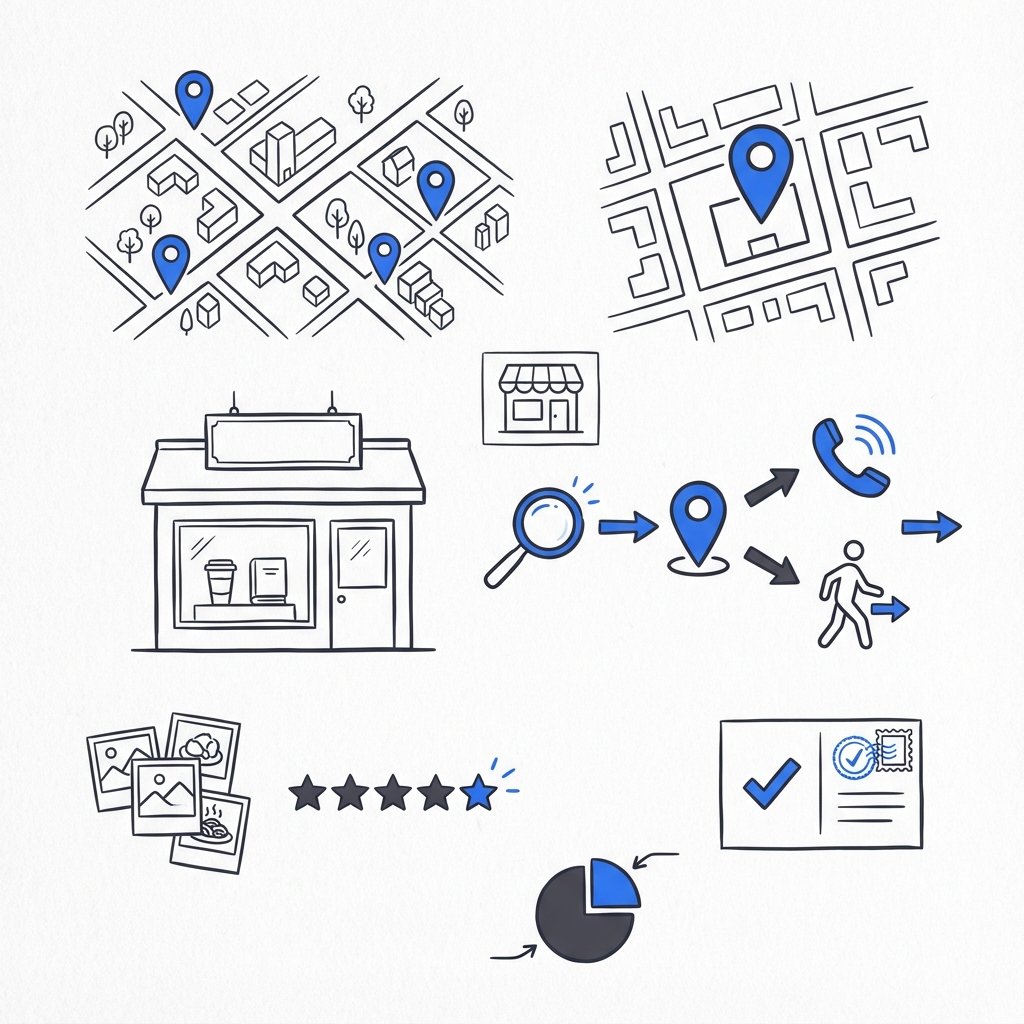
Most renovation projects start with a local search. To market as a general contractor effectively, local SEO is essential. It connects your site to maps, directories, and the search queries people type when they’re ready to hire.
For a practical, step-by-step local SEO guide, see The 2025 Local SEO Survival Guide.
Google Business Profile is non-negotiable
Claim your profile, fill in services, service area, hours, and add recent photos. Encourage clients to leave reviews and answer them thoughtfully. Even a short reply to a five-star review shows care and professionalism. For more tips, this Local SEO tips piece shares quick, actionable steps.
Consistent citations
Keep your NAP (name, address, phone) consistent across industry directories, local chambers, and social profiles. Inconsistency confuses search engines and customers alike. See an additional contractor-focused primer at 123Worx’s Local SEO for Contractors.
Portfolio, case stories and social proof that sell without selling
People hire on the basis of stories – not features. A short case story that names the challenge, what you did, and the result gives prospective clients a picture of working with you. Use numbers when possible: project duration, budget range, or time saved.
Collect reviews and permission to show project photos. Ask a few clients for a short testimonial that mentions a specific result (e.g., “completed in six weeks with no surprises”). These concrete details are trust currency.
Content that helps, not hard-sells
Content should answer common questions and reduce buying friction. Think in terms of the questions you get repeatedly on the phone or at job walkthroughs. Short posts, step-by-step checklists, and short project videos are far more valuable than vague blog posts.
Topic ideas contractors actually use
- “How to prepare for a kitchen remodel: a checklist for homeowners.”
- “What to expect during a week of tile installation.”
- “Budget ranges for typical 2-bedroom renovations in [City].”
Each helpful piece positions you as the practical expert and captures people earlier in their decision process – an important step in how to market as a general contractor.
Social media and email — steady voices, different tones
Use social media as a discovery channel: short, honest glimpses of work in progress, quick tips, and real client moments. Avoid over-produced posts that feel out of step with the on-site reality of contracting work.
Email is where you nudge warm leads. Few, useful messages perform better than frequent noisy ones. A monthly email with a recent project, a tip, and an invitation to book a consultation keeps you top of mind without being pushy.
Paid channels: where to spend and why
Paid search and localized social ads can jump-start leads when you need consistent work. Target ads by zip code, service type, and project intent (e.g., “kitchen remodeling” or “room addition”) to avoid wasting budget on broad, low-intent audiences.
Start small. Track which keywords and ads lead to contact form submits or calls, not just clicks.
Referrals and partnerships: offline still matters
Trade partnerships, local real estate agents, interior designers, and materials suppliers are sources of steady referral work. Create a simple referral program or keep a dedicated page with examples of partnered projects to show your collaborative track record.
Network intentionally
Attend one local trade or community event each quarter. Bring a clear leave-behind: a postcard with your one-sentence promise and a QR code to a project gallery. Networking like this keeps your name in local conversations – a key component of how to market as a general contractor locally.
Pricing and proposals: clarity that closes deals
Vague pricing kills momentum. Offer clear ranges or simple package options (e.g., “Basic remodel: materials + labor for X–Y budget”). In proposals, set expectations: timeline, payment terms, and scope of work. A clear change-order process also reduces conflict and preserves trust.
Templates speed trust
Create a short proposal template that includes timeline, milestones, and a short FAQ. When clients see consistent, professional paperwork, they feel safer saying yes.
Measure what matters — and listen
Choose a few outcomes to watch: contact form submissions, phone calls, job-booking rate, and average project value. Don’t chase vanity metrics. Use simple dashboards or even a shared sheet to track leads and where they came from.
Listen to the questions that come in. If multiple prospects ask whether you handle permits or how payment is scheduled, add that to your site and your FAQ so future leads don’t need to ask.
Common mistakes contractors make (and how to fix them)
Some mistakes are subtle but costly:
- Being vague: No one wants to decode your services. Spell out who you serve and what you do.
- Outdated info: Broken links or last-year hours look like neglect. Schedule a monthly check.
- Overcomplication: Too many menus and tiny type make decisions harder. Simplify navigation and calls to action.
A simple 90-day marketing plan for contractors
This plan focuses on steady, practical moves that build momentum.
Days 1–30: Foundations
- Write your one-sentence service statement and place it prominently.
- Fix NAP across web listings and claim Google Business Profile.
- Add five recent project photos with captions and short case notes.
Days 31–60: Visibility & content
- Publish two short pages or posts answering common client questions.
- Set up a simple lead form and test it on mobile.
- Start a basic local ad test with a small budget targeted by zip code.
Days 61–90: Optimize & systemize
- Review leads: which channels are converting? Shift budget accordingly.
- Ask satisfied clients for reviews and add them to your site and Google profile.
- Set a recurring calendar reminder to review site content and listings monthly.
When to hire help — and how to choose the right partner
Consider help when website fixes, ads, or content are taking too much of your time or you’re not getting consistent leads after basic fixes. Look for partners who listen, explain in plain language, and show measurable goals. Avoid vendors who promise vague redesigns without clear, outcome-based milestones.
One practical, low-risk step is a short consult to prioritize fixes. If you’d prefer that route, Agency VISIBLE offers quick visibility assessments tailored to small teams that need practical, revenue-focused work.

Use simple tools: a lightweight website builder or a maintained WordPress site, a scheduler (Calendly or similar), and a phone-tracking method so you know which ads or listings generate calls. A clean logo helps people remember and trust your brand.
Stories that show you’re reliable
Anecdotes do heavy lifting. Share short client stories that show you solved a real problem on time and on budget. Write these in plain, conversational language and sprinkle them across your site and social posts.
Budgeting your marketing for steady growth
Allocate a small, sustainable monthly budget toward the channels that produce leads. For many contractors, that means a mix of local ads, a modest content effort, and a bit of tooling (site hosting, scheduler). Start small and reallocate based on what brings contacts that actually turn into jobs.
Metrics, patience and compound returns
Good marketing compounds. A helpful blog post or a clear project gallery may not pay off immediately, but over months it can attract the right customers without new ad spend. Track outcomes and give sensible experiments time to show results.
Checklist: a quick field-guide for marketing as a general contractor
- One-sentence service statement visible on homepage and listings.
- Google Business Profile claimed and updated.
- Five recent project photos with captions.
- Clear contact options and a simple proposal template.
- One helpful content piece that answers a common client question.
- Monthly content/listing review on the calendar.
Get a quick visibility review for your contracting business
Ready to stop guessing and start getting steady leads? Book a quick, no-pressure visibility review and get a prioritized list of fixes you can use right away. Contact Agency VISIBLE to get a clear, measurable plan that fits your schedule.
Wrapping up: practical persistence wins
Learning how to market as a general contractor is less about chasing every shiny tool and more about consistent, useful actions: clear messaging, useful content, local discoverability, and trustworthy proof of work. Take the small steps, measure the results, and keep the focus on making the client’s next decision easier.
If you’d like a quick second opinion on a page or a short plan for what to fix next, a quiet conversation with someone who’s done this with many small teams can help. A few thoughtful adjustments often make the whole experience feel new again.
Start with a clear one-sentence service statement that says who you serve, what you do, and the outcome you deliver. Put it on your homepage, social bios, and listings. Clarity reduces confusion and increases the chance that the right prospects will contact you.
Local SEO should be your foundation: claim your Google Business Profile, keep your NAP consistent across directories, and ensure your site is mobile-friendly. Social media is an excellent discovery channel and a way to show personality and process, but it should drive people back to your owned assets (website and contact methods).
Hire help when fixing technical issues, advertising, or content creation is taking time away from your core work or when you’ve tried basic fixes without consistent leads. A good agency, like Agency VISIBLE, will prioritize quick, measurable wins and explain choices in plain language so you see results without unnecessary complexity.
References
- https://agencyvisible.com/contact/
- https://agencyvisible.com/
- https://agencyvisible.com/projects/
- https://www.handoff.ai/blog/the-2025-local-seo-guide-for-general-contractors
- https://www.linkedin.com/pulse/local-seo-tips-general-contractors-2025-beyond-handoff-ai-rxdof
- https://123worx.com/blog/local-seo-for-contractors/