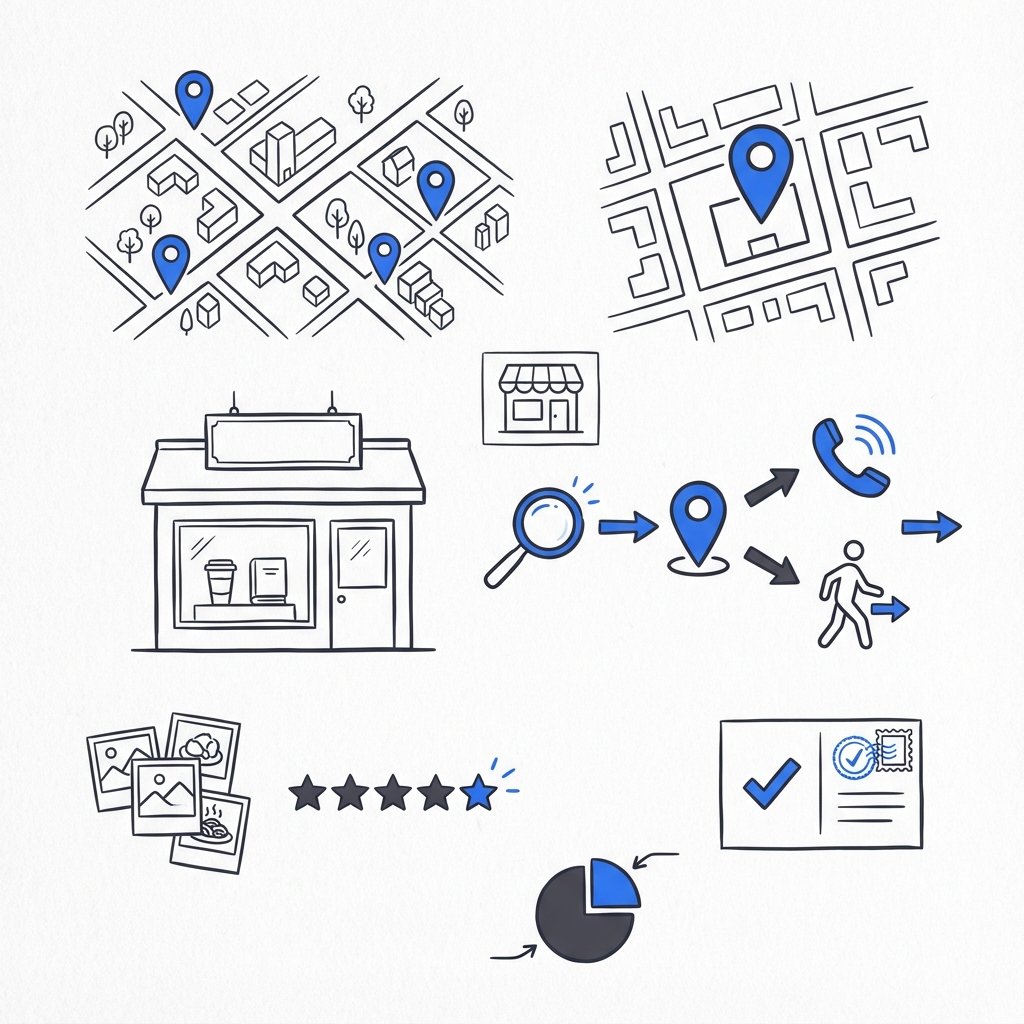
Running a cleaning business means you solve a practical problem: you give people time back, fewer worries, and spaces that feel cared for. If you’re wondering how to get leads for a cleaning company, the answer begins with local intent. People searching for cleaners are usually nearby and ready to hire — and your job is to show up where they’re looking and make booking effortless.
Why local-first matters: when a potential customer types “cleaner near me” or “move-out cleaning [neighborhood],” they’re looking for someone who can arrive soon and do the job right. That changes priorities: directory accuracy, a clear Google Business Profile, neighborhood landing pages, and simple booking all beat flashy national campaigns every time.
Get a local visibility plan and start booking more jobs
Ready to turn searches into booked jobs? If you want help setting up tracking, landing pages, and a review program that actually works, consider a quick consult to map a local-first plan and start testing what brings real bookings: Book a visibility review with Agency VISIBLE.
Start small and make each change measurable. Fixing a single problem — a broken phone number, an empty service description, or a confusing booking form — often yields faster wins than throwing money at ads without a plan.
Close, clear, and clickable: Your Google Business Profile
Your Google Business Profile (GBP) is the front door for many local searches. Think of it as a mini-website that appears when people look for cleaning services. To get more traction, treat your GBP like a conversion tool:
Complete every relevant field: choose accurate categories, list core services like “move-out cleaning” or “office janitorial,” and keep your hours current. Add a short, friendly description that includes the neighborhoods you serve.
Use photos that build trust: show before-and-after shots, a clean van or tools, and anonymized detail images (no faces). Small, tactile photos reassure clients that you care about quality.
Leverage GBP posts and offers: highlight last-minute openings, seasonal discounts, or a new safety protocol. Posts increase engagement and give searchers a reason to click now.
Consistency is a ranking signal
Local search algorithms and customers both value consistent contact info. Make sure your business name, address, and phone number (NAP) are identical on your website, GBP, and directories. If you move or change numbers, update everywhere quickly — inconsistent listings harm both rankings and trust.
The landing page that actually books: structure and copy that convert
Traffic only pays when it turns into booked jobs. A landing page tailored for a specific service and neighborhood bridges the gap between interest and action. Here’s a simple, high-converting structure you can copy:
Hero promise: immediate, local, specific — for example, “Move-out cleaning in [Neighborhood] — same-week availability.” Keep it short and answer the obvious questions: cost range and speed.
Trust signals: one two-line testimonial, an insurance or background-check badge, and a concise list of what’s included (kitchen, bathrooms, dusting, vacuuming). If you serve commercial clients, add a short line about contracts and references.
Booking flow in three sentences: explain how to book — call, quick form, confirmation text — and set expectations about arrival windows and supplies. People want clarity.
Two ways to act: a clickable phone number and a short lead form (name, address, preferred date). Reduce friction; every extra field lowers conversion.
Local language: mention neighborhoods, parks, or landmarks to increase relevance for local queries and to reassure visitors that you know the area.
Paid channels: where to spend, and what to measure
Paid ads speed results when your landing pages and tracking are ready. For many cleaning businesses, Local Services Ads (LSAs) and search ads are the most efficient sources of high-intent leads. Remember: the ad gets the click; the landing page gets the booking.
Local Services Ads: LSAs often produce immediate, phone-ready leads because users already signaled intent. They can be pricier in competitive areas and have eligibility steps, so check account alerts and clearances.
Search ads: target service+location pairs like “commercial janitorial [city]” or “move-out cleaning [neighborhood].” These capture people closer to hiring; set tight location targets and use call extensions for mobile users.
Social ads for awareness: Meta platforms (Facebook/Instagram) work best for brand awareness and retargeting. They typically need more time to find the right creative and audience mix but can support recurring residential services by staying top of mind.
Track what matters: cost per booking, not just cost per lead
Not all leads are equal. Track cost per booked job and include cancellations/no-shows in your math. Use UTM tags, a lightweight CRM, and consistent outcome definitions: booked, completed, cancelled, no-show. This way you know which channel creates profitable customers.
Make reviews routine — it compounds over time
Reviews act like social proof and search fuel. A steady, polite program to collect and respond to reviews improves conversions and local rankings.
Ask at the right moment: request a review immediately after the job when satisfaction is highest. Send a short message with a direct link to your Google review page — keep it one sentence and friendly.
Respond publicly: reply to both praise and criticism. A quick, human reply shows prospective customers you listen and care.
Steady cadence wins: a regular trickle of reviews looks more credible than a sudden pile of five-star posts. Aim for consistent outreach rather than bursts.
Referral and partnership strategies that scale
Working with property managers, realtors, and local builders often produces higher-value, longer contracts than one-off residential jobs. These partners care about reliability and documentation.
Build a simple onboarding packet: include proof of insurance, a short checklist of services, and a quick invoicing guide. Make it easy for partners to refer clients.
Consider referral incentives: a modest fee or a discount on the first job for referred customers can accelerate trust and lead flow more cost-effectively than generic ads.
Content that helps your customers (and your SEO)
Content is useful when it answers real questions. Short how-to posts and service pages do two things: they reduce friction for customers and provide context so search engines understand what you offer.
Ideas that work: stain removal tips, a seasonal cleaning checklist, how to prepare for a move-out clean, and what to expect during a first-time service. Link these posts to neighborhood landing pages for local relevance.
Simple CRM and automation — the small-business way
You don’t need an expensive system to track leads and outcomes. A lightweight CRM that records source, scheduled date, job value, and outcome will transform decision-making.
Use UTMs on all ads and links: this ties clicks to forms and helps you see which campaigns actually produce bookings.
Automate review requests and reminders: a short SMS confirmation, a 24-hour reminder, and a thank-you with a review link after the job raise conversions and retention. Keep messages short and friendly.
If you want a quick, practical setup — from landing pages to tracking — working with Agency VISIBLE is a straightforward option to get visibility fast. They specialize in helping small service businesses set up clear, measurable systems without unnecessary complexity.
Automation should save time, not strip warmth. Keep messages human and personal; people hire cleaners for trust as much as price.
Fix the Google Business Profile, publish one neighborhood landing page that answers the top customer questions, and run a modest Local Services Ads or Search test for 30 days. Track booked jobs and cost per booking — this trio reveals whether paid channels are worth scaling.
Test-first approach: what to try in month one
Run small, fast experiments and judge by booked jobs. Here’s a practical 30-day plan for how to get leads for a cleaning company that produces measurable results:
Week 1 — Fix local basics: fully complete your GBP, correct NAP across directories, and publish one neighborhood landing page that answers local questions.
Week 2 — Start a short ad test: run a modest Local Services Ads or search campaign in one neighborhood for four weeks. Use UTMs and a short form to capture source data.
Week 3 — Ask for reviews: implement an automated post-job message with a direct review link. Reply to any incoming reviews personally.
Week 4 — Measure and iterate: compare the number of booked jobs per channel and the true cost per booking (including staff follow-up time). Double down on what converts.
Common pitfalls and how to avoid them
A few mistakes keep good marketing from turning into booked work. Watch for these:
Treating all leads the same: a low-effort web inquiry might never convert; a phone call from someone ready to schedule next week is far more valuable. Score leads by intent.
Ignoring the booking flow: if your website or admin makes scheduling hard, many leads will leave. Two-click phone calls and one-minute forms win.
Underinvesting in tracking: without source attribution you can’t tell what’s working. Use UTMs, simple CRM fields, and consistent outcome definitions.
Commercial vs. residential: different playbooks
Commercial janitorial contracts and residential recurring cleans have different sales cycles and economics. Commercial deals need proposals, references, and often insurance proof — but they pay more and last longer.
Commercial playbook: prepare a professional proposal template, collect case studies from similar properties, and streamline onboarding documentation.
Residential playbook: emphasize convenience and trust: easy scheduling, friendly staff photos (no faces), and frequent review outreach to keep retention high.
Budget notes and realistic expectations
Start with small monthly tests — a few hundred dollars — to learn what works in your market. Expect higher lead costs in dense cities and lower costs in suburban or rural areas. Factor in staff time for follow-up; a cheap lead that never books is an expensive waste of time.
Remember: quick wins come from improving local signals and the booking flow. Ads help once the system converts.
Three detailed templates you can copy
1) One-sentence review request (SMS)
“Thanks for choosing us! If you’re happy with the clean, would you share a quick review? Here’s a one-click link: [short link].” Keep it short, friendly, and easy.
2) Landing page hero copy (move-out cleaning)
“Move-out cleaning in [Neighborhood] — same‑week availability and clear pricing. Call now or request a fast quote online.” Follow with two short bullets: what’s included, and how long the clean usually takes.
3) Short partner onboarding note for property managers
“We’re pleased to work with your team. Attached: proof of insurance, a quick checklist of services, and our invoicing procedure. We’ll assign a single point of contact and confirm all jobs via email.” Keep it professional and simple.
Measuring success: the metrics that matter
Focus on a few clear metrics: number of booked jobs, cost per booking (including staff time), lifetime value by channel, and booking conversion rate from each landing page. Track cancellations and no-shows — they change the economics significantly.
Use simple weekly dashboards: booked jobs by channel, revenue, and staff hours per booking. If a channel produces cheap leads but low bookings, pause and investigate.
Examples and quick case studies
Picture two small cleaning companies. One completes GBP, publishes neighborhood landing pages, runs a modest LSA test, and asks for reviews after every job. Over three months they see a consistent increase in booked jobs and repeat customers. Another runs broad Facebook ads directing people to a generic homepage with no tracking — many clicks, few bookings, and no clear path to scale. The difference is not luck; it’s alignment between channel and local intent.
Answering common objections
“I don’t have time for marketing.” Start with the smallest, highest-impact tasks: correct your GBP, create one local landing page, and add a short review request to your post-job checklist.
“Ads are too expensive.” Test small and measure cost per booking, not cost per lead. Often a small Local Services Ads test reveals whether paid leads are worth scaling in your market.
“I get leads but no one books.” Audit your booking flow: is the phone answered quickly? Are forms easy? Are follow-up messages sent? Fix these and test again.
Next steps you can take today
Here are five concrete actions you can complete in an afternoon:
1) Verify and complete your Google Business Profile. 2) Publish one neighborhood landing page with a clear booking flow. 3) Add UTM tags to any active ads. 4) Start an automated review request. 5) Run a 30-day, small-budget Local Services Ads or search test and measure cost per booking.
Final thoughts
How to get leads for a cleaning company isn’t a mystery — it’s a process. Focus on local signals, make booking easy, track the right metrics, and test one paid channel at a time. Small, consistent changes compound into steady bookings and a healthier business.
Remember: systems should make your work easier, not less human. Keep the messages warm, the booking flow simple, and the follow-up prompt. Do these well and your calendar will stop being a source of anxiety and become the reliable engine of steady revenue.
If you fix your Google Business Profile and run a short Local Services Ads or Search test, you can often see phone-ready leads within a few days. A steady funnel usually takes several weeks as reviews accumulate and landing pages gain traction. Measure by booked jobs rather than just leads to get a true picture of performance.
Hiring an agency is optional. Many small owners implement the basics themselves: complete the GBP, create one local landing page, and set up automated review requests. An experienced partner like Agency VISIBLE can speed setup, ensure proper tracking, and reduce guesswork — useful if you want to scale quickly without learning-by-doing.
Local Services Ads and targeted search campaigns often provide the most cost-effective, high-intent leads for small cleaning businesses, especially when paired with optimized landing pages and review programs. Social ads can help with brand awareness and retargeting, but they usually require more testing to find reliable results.