How to get clients for cleaning services? A practical roadmap for steady growth
If you’re wondering how to get clients for cleaning services, you’re in the right place. Local cleaning businesses win when they are both visible and trusted in the exact places customers search. This guide gives clear steps – from claiming your Google profile to running small ad tests, building referral pipelines, pricing to retain customers, and measuring what matters – so you can build a reliable pipeline in 90 days and scale over a year.
This article focuses on practical tactics you can start using this week: low-cost lead sources, paid channel tests that deliver fast feedback, easy pricing and packaging moves that lift lifetime value, and simple spreadsheets and habits that tell you whether a strategy is working.
Get visible fast—turn searchers into booked customers
Ready to focus your marketing so new customers actually find and choose you? If you’d prefer an experienced partner to set up local listings, test ads, and track the numbers while you run operations, consider getting in touch with a team that helps small businesses get visible quickly: contact Agency VISIBLE.
Start by understanding where customers look and then make your business unmistakable there. Below you’ll find step-by-step instructions, sample messages and scripts, measurement templates, and a realistic 90-day schedule you can follow. For more in-depth local SEO tactics see Backlinko’s local SEO guide, ZenMaid’s cleaning company SEO tips, or local SEO guidance from TwelveRays. If you’d like hands-on help, visit the Agency VISIBLE homepage.

Start where the customer is looking
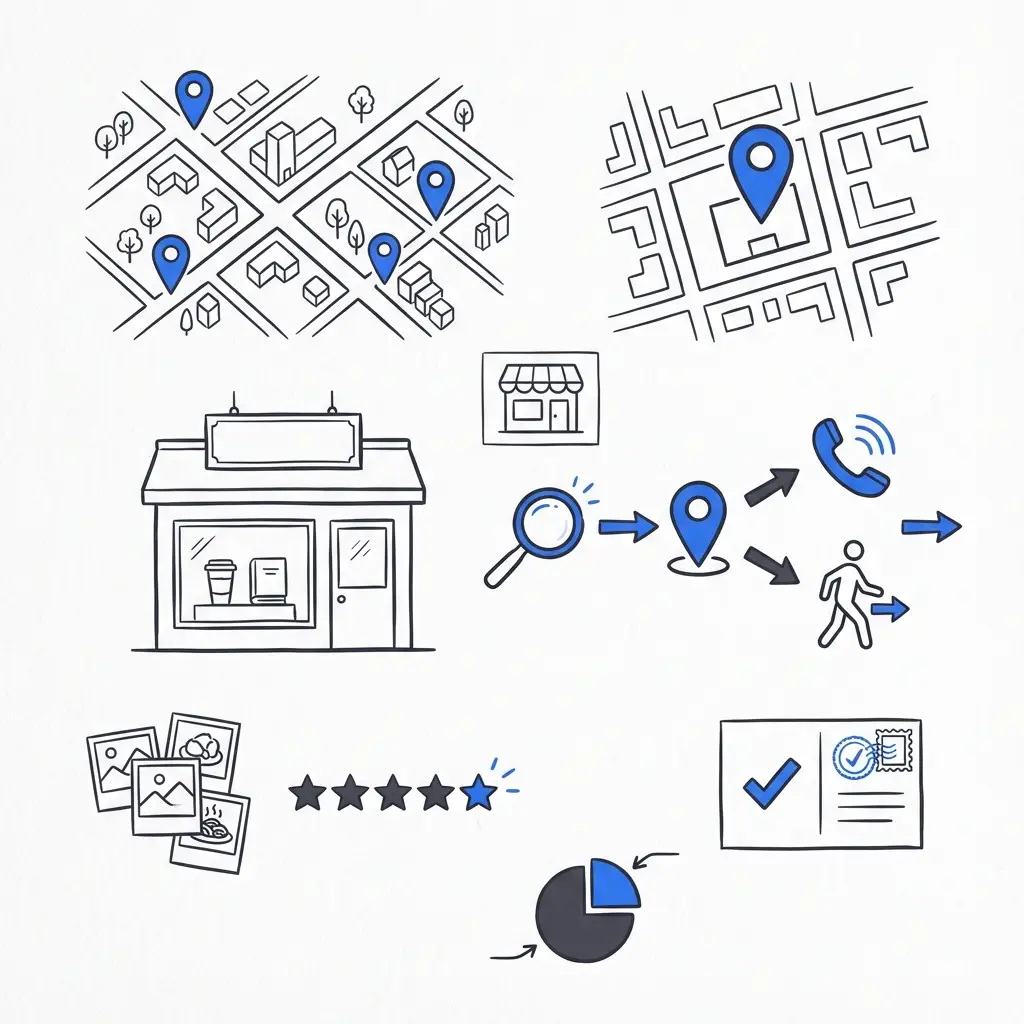
Most local service searches begin with a quick query or a recommendation. If you want to know how to get clients for cleaning services, you must be easy to find and easy to trust. The two biggest drivers for residential cleaning work are:
1. Local search visibility – A complete, actively managed Google Business Profile (GBP), accurate citations in local directories, and localized pages on your website. These create the shortest path from search to booking.
2. Word-of-mouth and referrals – Personal recommendations and partner referrals (property managers, real estate agents, vacation rental hosts) often convert faster and with less friction than cold digital leads.
Google Business Profile checklist
Complete these items right away: business name (consistent), service area, correct hours, polished photos, clear service descriptions, FAQ entries, and recent customer reviews. Every missing field is a lost trust signal.
Local webpages that convert
Create simple localized service pages – “Apartment cleaning in [Neighborhood]” or “Recurring office cleans near [Town]” – with clear pricing ranges, a short list of included tasks, and an easy booking button or phone number. When local ad clicks or GBP views land on a page that matches the search intent, conversion rates rise.
Trust wins the hire
Visibility gets people to your listing. Trust makes them call. Encourage social proof by asking for reviews directly after a job, and respond to every review. Offer short local partnerships – leave a stack of business cards with a property manager, or offer a discounted trial clean to an apartment complex in exchange for a testimonial.
Door-hangers and local flyers still work in many neighborhoods. Keep the design clean, the message simple, and the CTA obvious: a phone number, a QR code to your GBP, and a short line like “See our recent reviews on Google.” A modest, targeted print campaign can deliver steady leads in areas where digital channels are crowded.
Tip: If you want help with a clean local listing or a fast test ad setup, contact Agency VISIBLE – they specialize in helping small and mid-sized businesses become visible quickly and measurably.
Paid channels: fast feedback, controlled risk
Paid ads give quick volume but costs vary by city, season, and service. If you’re testing, use between $300 and $1,500 a month to get meaningful data. Focus on search campaigns targeted to your service area. Ads should point to either a well-maintained GBP or a short booking landing page that mirrors the ad message.
Ask for feedback and a Google review right after a job and then act on any issues quickly; that simple habit improves social proof, catches small problems early, and increases the chance customers become recurring clients.
How to set a sensible paid test
– Start with a small daily budget and a tight geographic radius.
– Use call extensions and local ad copy: mention the neighborhood, short service list, and a trust cue (“background-checked teams”)
– Track clicks to calls to bookings, and calculate cost-per-booking, not just cost-per-click.
One practical rule: pause a campaign that sends clicks but zero bookings after one week of reasonable volume. Rework the landing experience, change the CTA, or move the budget to a referral push instead.
Pricing and packaging to increase retention
Knowing how to get clients for cleaning services isn’t only about lead volume – it’s about keeping customers once you have them. Many owners find the most profit in recurring plans, not one-offs. Aim to convert one-off customers into recurring plans by offering a simple, clearly priced discount that feels fair to both sides.
Practical pricing examples
– One-off deep clean: $200-$400 depending on home size and local wages.
– Recurring biweekly basic clean: 20-30% less per visit than a one-off.
– Add-on pricing: carpet spot cleaning $35-$75, oven deep-clean $45-$95, window interior $20-$60 per window.
Use bundles: “Biweekly + quarterly deep clean” for a predictable revenue stream. Offer a small incentive – one free add-on after three months or a discounted first month – to make joining a recurring plan feel like a smart move.
Upsell without being pushy
At booking or during confirmation calls, present a clear, single upsell: “Would you like a quarterly oven deep-clean for $X extra?” Customers prefer simple choices and predictable billing.
Reputation: the local decision driver
Reviews influence whether someone hires you. Ask for feedback right after a clean and make the path to leave a review as simple as possible: direct link to your Google listing, a short message template, and a thank-you response from your business account.
Review request template (text or email)
“Hi [Name], thanks for choosing [Business]. If you’re happy with the clean, would you mind leaving a quick review on Google? It helps our small team a lot: [link to GBP] Thanks, [Cleaner name].”
Respond to negative feedback with a calm, solution-focused message: acknowledge, offer a fix, and invite a private conversation to resolve the issue. Prospective customers watch how you respond as closely as they read the review content.
Sales outreach and partnerships that build predictable pipelines
Direct outreach can pay fast. If you’re testing outreach, focus on a small list of high-value partners: property managers, local realtors, Airbnb hosts, small offices, and community housing groups. Ten meaningful conversations a week can convert into recurring accounts quickly.
Sample outreach email to property managers
“Hi [Name], I run a local cleaning team that works with several buildings in [Area]. We offer reliable recurring cleans and guaranteed coverage. Would you be open to a 10-minute call to explore a pilot? We’ll cover the first trial clean at a modest rate. Regards, [Your name & business].”
Deliver on reliability: partner accounts prize consistent service more than the lowest price. Offer flexible invoicing and a single point of contact so managers don’t have to chase updates. See similar case studies on the Agency VISIBLE projects page.
Onboarding and retention tactics that reduce churn
Retention starts at onboarding. A short welcome message that sets expectations reduces surprises and cancellations. Use scheduled invoices, simple service agreements that list included tasks, and a friendly check-in after the first two visits.
Sample onboarding email
“Welcome to [Business]. Here’s what to expect on your first three visits…” then list arrival window, tasks included, contact for adjustments, and how to request an extra service. End with “If something isn’t right, tell us within 24 hours and we’ll make it right.” That tone builds confidence.
Time your review request for the day after the second visit – when initial kinks are usually resolved. A quick satisfaction check-in after 30 days helps spot issues early so you can save the account.
Practical measurement: what to track and how
You don’t need expensive tools. Start with a simple spreadsheet or entry-level CRM and log the key metrics:
– Client acquisition cost (CAC)
– First 90-day retention rate
– Lifetime value (LTV)
– Average ticket size
– Lead-to-booking conversion rate
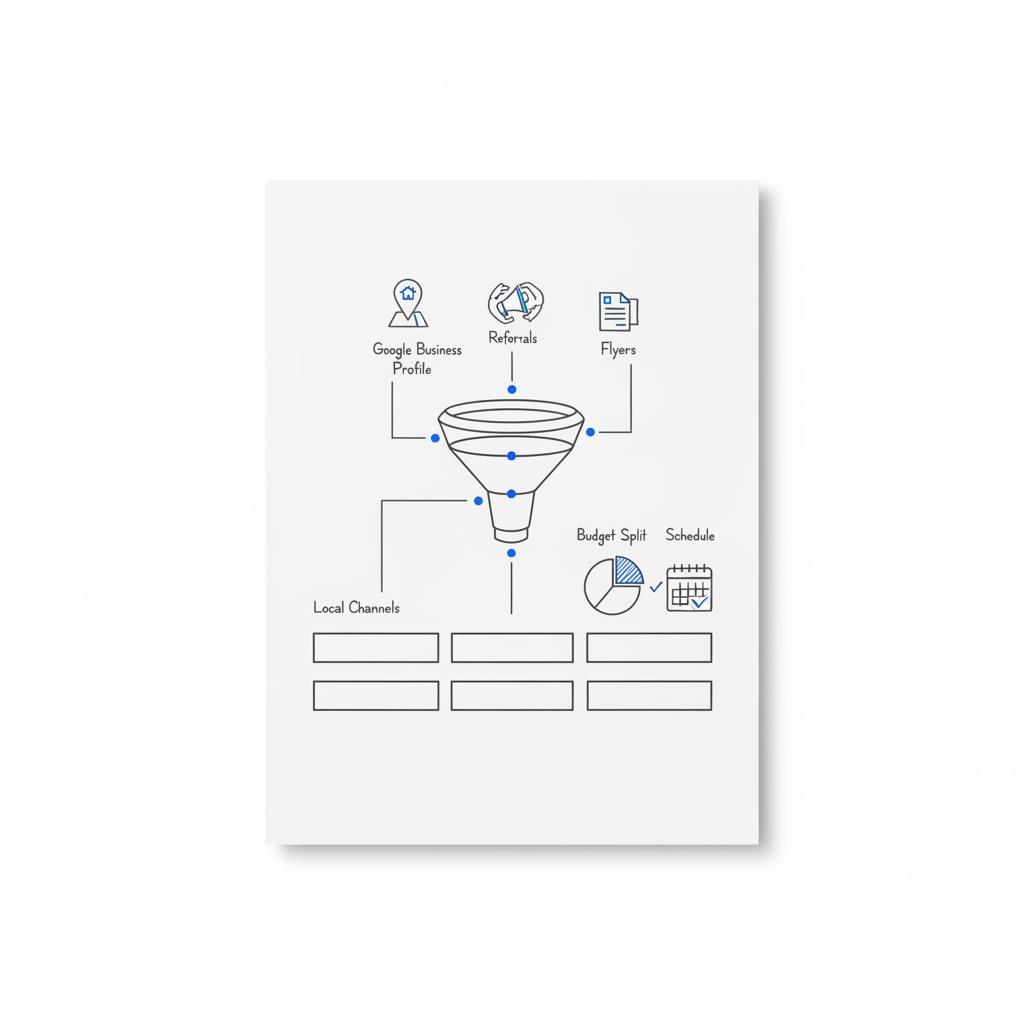
Tag each lead source when it arrives – Google, Facebook ad, referral, property manager, door-hanger – and follow whether the lead booked and whether they were active after 30, 60, and 90 days. That simple tagging habit is one of the fastest ways to know which channels bring real, retained revenue.
Quick tracking template
Columns to use: Date, Lead source, Lead contact, Booked? (Y/N), First visit date, Recurring? (Y/N), Notes, 30/60/90-day active. Update weekly and review monthly to guide budget shifts.
A focused 90-day plan
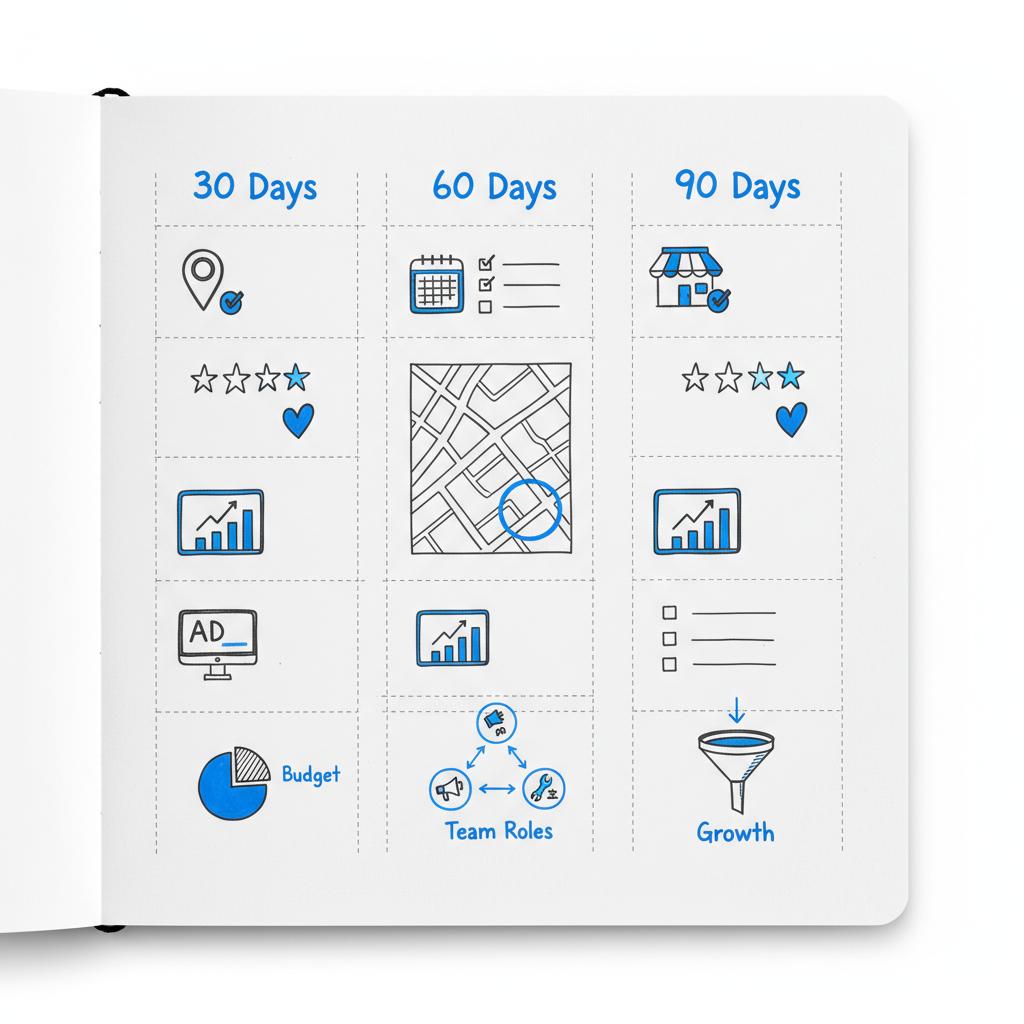
If you want a start-now plan that reduces risk and shows progress, follow this 90-day roadmap:
Weeks 1-2: Claim and complete your Google Business Profile, set up localized webpages with clear pricing ranges, consolidate client contacts into one list, and ask satisfied customers for reviews. Make a short script for staff to request reviews after each job.
Weeks 3-8: Run small paid tests (if budget allows) or invest in targeted direct mail and partner outreach. Reach out to 5-10 local partners. Standardize your booking script and onboarding messages so every lead gets a consistent experience.
Weeks 9-12: Review the data: which channels produced bookings, and which produced retained customers after 30 and 90 days? Scale effective channels and test simple offers to convert one-offs to recurring plans.
Testing, learning, and the year-long view
Keep testing small ideas: ad copy A/B tests, two different flyer designs, or a follow-up text versus an email review request. Over a year, your goal is to balance organic visibility (GBP and local pages), referral flows (partners and repeat customers), and paid spend (ads to scale when ROI is positive).
Ask this question every month: “Which channel made our most profitable retained customer this month?” Move budget toward the answer.
Employee retention: why it matters and simple experiments that work
Staff continuity affects the customer experience and your reviews. Try small retention experiments: predictable shift patterns, modest performance bonuses for punctuality or five-star feedback, and short training sessions that make work smoother and faster.
One Midwest owner reduced churn by focusing on punctuality. They asked customers one question after each visit: “Were we on time?” Improving that single metric improved reviews and retention.
Scripts, templates and quick wins you can use today
Here are short, copy-ready templates to start implementing immediately.
Booking confirmation SMS
“Thanks, [Name]! We’ll be there [Date] between [Time window]. If anything changes, reply to this message. See our reviews: [link to GBP].”
Review request follow-up SMS
“Hi [Name], glad you had us today—would you kindly share a quick review? Here’s the link: [link to GBP]. Thanks!”
Referral thank-you message
“Thanks for the referral, [Name]! We’ve applied a $20 service credit to your account as a thank-you.”
Real examples that show the pattern
Small tests and steady follow-up often beat one-off viral pushes. One owner who prioritized GBP, local partnerships and a $500 ad test converted three property manager accounts in a month. The recurring revenue from those three clients covered the owner’s ad tests and gave breathing room to improve operations.
Common mistakes and how to avoid them
– Chasing impressions instead of bookings. Measure calls and booked jobs, not just clicks.
– Ignoring reviews. Respond and fix issues quickly.
– Poor onboarding. Set expectations the moment someone books.
Fix these mistakes by prioritizing simple, repeatable systems: a clean GBP, a review flow, a partner outreach routine, and a one-page onboarding checklist for new customers.
How to staff for growth without breaking the bank
Hire for reliability: clear job descriptions, short training modules, and a simple pay-for-performance bonus (on-time arrival or five-star feedback). Consider using part-time teams to handle overflow rather than over-committing to full payroll before you have stable recurring revenue.
Measuring ROI and deciding when to scale
Scale a channel when cost-per-acquisition is less than your target and when 90-day retention looks strong. For example, if it costs $120 to acquire a recurring client that pays $80 per month with a 12-month average lifespan, the math supports scaling. If retention is weak, fix onboarding first.
Year one roadmap
Set quarterly goals: Q1 – GBP & local pages + referral outreach; Q2 – small paid tests + direct mail in one neighborhood; Q3 – scale winning channels and refine staffing; Q4 – optimize LTV with bundles and retention experiments.
FAQ: quick answers owners ask most
How much should I spend on ads to start? A modest testing budget between $300 and $1,500 is reasonable for many U.S. local markets. The point is to learn cost-per-lead and conversion to booked jobs.
What is the most reliable source of early work? Referrals and partnerships – property managers, real estate agents and repeat customers – usually produce reliable, higher-converting work.
How important are reviews? Extremely. Reviews on Google and other local listings are often the deciding factor for customers comparing two nearby services.
Putting it together: a simple action checklist
Week 1: Claim GBP, add photos, create 2 local pages, gather contacts.
Week 2: Ask top five customers for reviews; reach out to three property managers.
Week 3-6: Run ad test or targeted direct mail; follow-up with partner prospects.
Week 7-12: Measure bookings, 30/90-day retention; scale the channel with best ROI.
Final notes and confidence-boosting reminders
Getting steady clients is less about shouting and more about being the clearest, most trusted option where customers look. When you combine local listings, partner outreach, a simple paid test and a repeatable review and onboarding flow, you build a dependable pipeline that doesn’t require constant costly acquisition campaigns.
Start small, measure, and repeat what works. Make the first 90 days about visibility and consistent follow-up; make the rest of the year about retention and measured scaling.
Good luck – now go claim your listing, ask for that review, and try the first $300 ad test. You’ll learn more in a month than you might expect.
A modest testing budget between $300 and $1,500 per month is reasonable for many U.S. local markets. Use the test to learn cost-per-lead and the conversion to booked jobs. Track calls, bookings and cost-per-acquisition and pause campaigns that send traffic but no bookings.
Referrals and partnerships—property managers, real estate agents, vacation rental hosts and repeat customers—are usually the most reliable early sources. Direct, respectful outreach to a small list of high-value partners often converts into recurring accounts faster than cold digital leads.
If you want to focus on operations while someone else sets up local listings, tests ads and measures performance, a small agency can help. Work with an agency on short, goal-focused engagements so you can learn from their work. For many small operators, disciplined in-house effort and a simple spreadsheet go a long way; when you need speed or capacity, consider a partner like Agency VISIBLE.