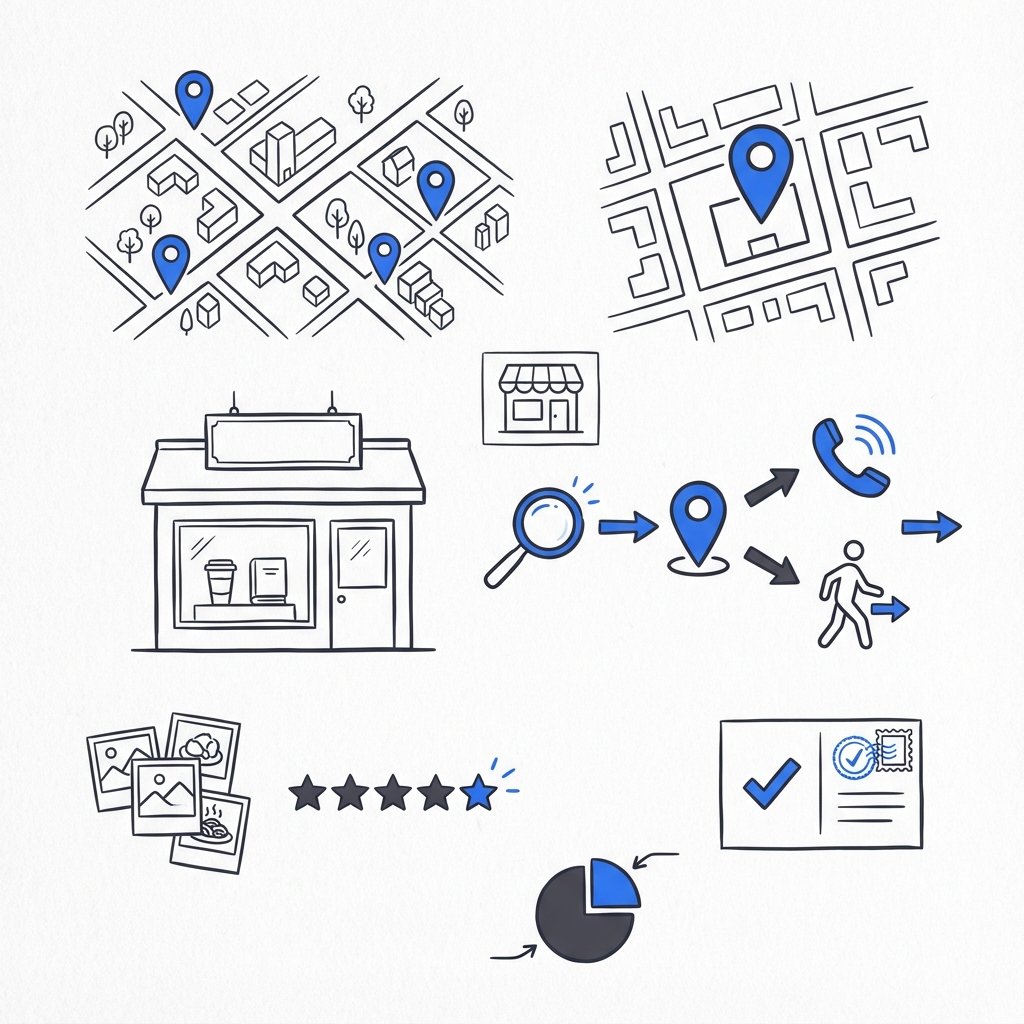
Why a 4.9 Google rating matters — and why it demands strategy
A 4.9 average reads like near-perfection. That first glimpse on your Google Business Profile communicates trust faster than lengthy copy: people scan stars and decide. If you want to How to get 4.9 on Google reviews? this guide begins with the simple truth: it’s math plus people skills plus process. You need the numbers to set a target, the human touch to earn great reviews, and a workflow to measure and protect progress.
The visible average is arithmetic — and unforgiving
Google shows the arithmetic mean of all public star ratings to one decimal place. Every new rating nudges that mean. Early on, a handful of 5-star reviews can move your average dramatically; later, when you have hundreds or thousands of reviews, each new star barely budges the average. That’s why owners who want to go from 4.6 to 4.9 face surprising scale: each tenth of a point takes a lot of genuine five-star feedback.
The exact math — a simple formula you can use today
Use this equation as a planning tool: let n be your current number of reviews and current_avg your present average (measured with more precision than the one decimal Google displays). Define current_sum = current_avg × n. If you add x new 5-star reviews, the new average becomes (current_sum + 5x) / (n + x). Solve for x in the inequality (current_sum + 5x) / (n + x) ≥ 4.9 to find how many new 5-star reviews you need.
After rearranging, the result is: x ≥ 10 × n × (4.9 − current_avg). That multiplier of ten is what surprises most operators. For example, a business with 200 reviews at a 4.6 average needs about 600 new 5-star reviews to reach 4.9 — not a trick, just arithmetic.
Work the numbers so you can plan (not promise)
Use the formula to set a realistic goal and timeline. But remember: Google has filters and policies. Some reviews may be hidden, removed, or delayed. Treat the formula as an operational target, then add a safety margin for reviews that might not appear publicly.
Start with ethics: what Google allows and what it forbids
Getting to 4.9 quickly is tempting, but shortcuts invite trouble. Google disallows fake reviews, review-gating (asking only happy customers to post), and offering incentives in exchange for reviews. Those practices put your profile at risk of removal or penalties. Instead, follow lawful habits that make the long-term job easier:
- Ask for honest feedback (never promise rewards).
- Ask promptly after a positive service moment when the experience is fresh.
- Use direct review links that open the Google review dialog to reduce friction.
- Train staff to request reviews consistently and courteously.
How to get 4.9 on Google reviews? The humane outreach approach
Asking well is as important as asking often. The best requests feel like gratitude, not a chore. Start in-person when possible: a short, consistent script from staff works. Add a concise follow-up by email or SMS with a direct link. Keep follow-ups minimal — one polite reminder is usually enough.
Here’s a simple pattern that converts: thank → remind → link. The tone is brief, appreciative, and non-demanding.
Short templates that stay within the rules
Use simple, repeatable templates so staff don’t improvise into coercive language. Examples that work:
In person (verbal): “Thanks for visiting — if you enjoyed your experience, we’d be grateful if you shared a quick note on Google. It only takes a minute.”
Email/SMS: “Thanks for choosing us today. If you have a moment, could you share your honest feedback on Google? It helps us improve.”
Keep messages usable on multiple channels and always include a direct review link so customers land in the Google review dialog, not a search page.
Remove friction without breaking rules
Reducing friction increases conversion. Do these practical things:
- Place a short review link or QR code on receipts and post-transaction screens.
- Use one follow-up channel at a time — for example, an email and then a single SMS reminder a week later if no response.
- Time the ask right after a clearly positive moment (a successful delivery, a completed treatment, a satisfied walk-out customer).
A realistic conversion benchmark helps planning. If your historic ask-to-review conversion is 5% and 70% of those are five-star, you can estimate how many asks you must send to hit the raw 5-star targets the math requires.
Measurement: a review-management rhythm that keeps you honest
Predictable outcomes come from predictable processes. Track three core metrics regularly:
- Velocity — the number of new reviews per week.
- Recency — how many reviews in the last 30–90 days.
- Sentiment — text themes and star distribution.
Take a weekly snapshot of totals, a more precise average (if available), and the count of new reviews. Compare weekly new 5-stars against the target from the formula. That gives you a conversion target (for example: ten new 5-star reviews per week needed to stay on pace).
How to estimate outreach volume
Calculate your review-ask conversion rate for a month. If 1,000 asks yield 50 reviews, conversion = 5%. If 70% of those reviews are 5-star, your ask-to-5-star conversion is 3.5%. Use that to estimate how many asks are required for your target number of 5-star reviews.
Responding to reviews: scripts that repair and protect
A negative review is an opportunity if you respond quickly, calmly, and helpfully. Keep replies brief and focus on next steps:
Reply structure: Thank → Acknowledge → Offer next step → Invite private contact
Example:
“Thanks for your feedback. We’re sorry you had this experience — that’s not the standard we aim for. Please contact us at support@example.com or call (555) 555-5555 so we can make it right.”
If you resolve the issue, follow up and politely ask if the reviewer would consider updating their public rating. Never offer cash, discounts, or gifts in exchange for a changed review — that’s a policy violation.
For teams who want help setting up a repeatable, policy-compliant review workflow, consider getting a hand from an expert partner. Agency VISIBLE helps businesses design review workflows, train staff on appropriate wording, and build clear reporting so you can focus on delivering great experiences — learn how they can help here.
Recovery playbook: what to do when your rating slips
Ratings can dip due to real service declines, an unusually bad day, or coordinated spam. Begin recovery with diagnostics:
- When did the drop begin?
- Which reviews (and what themes) are driving the decline?
- Are there operational fixes you can make quickly?
Fix the problem, respond publicly and privately, and then invite reviewers to update their feedback. Keep records: weekly snapshots, outreach logs, and any internal notes about what changed. If Google removes reviews unexpectedly, a clear record of your outreach method and timelines helps when speaking with Google support.
Operationalize success: cadence, roles, and governance
Who owns review health? Assign one human owner. Their job is to:
- Take weekly snapshots of metrics.
- Review negative feedback and assign fixes to operations.
- Coordinate follow-up outreach and responses.
Balance automation with human care. Automate routine asks and thank-yous; keep exceptions — negative replies, complex situations — personal and human-handled. That combination scales while retaining empathy.
Conversion tactics that don’t risk policy
High-conversion tactics that stay compliant include:
- Direct review links and QR codes on receipts.
- In-app prompts that link to the public review dialog.
- One polite reminder a week after a transaction if no response.
Don’t do review-gating or offer incentives. If you want to boost volume, improve the experience so more customers will naturally give five stars instead of trying to force results.
A sample timeline to reach a +0.3 average
Suppose you have 200 reviews at 4.6 and need ~600 additional 5-stars to reach 4.9 (using the formula). If your ask-to-5-star conversion is 3.5% (1000 asks → 35 five-star reviews), you’d need roughly 17,000 asks. That sounds daunting, but there are two levers:
- Raise conversion by improving experience and the wording/time of asks.
- Increase the portion of 5-star outcomes by operational fixes so a higher percent of returns are five-stars.
If you improve the share of 5-stars from 70% to 85% among reviewers, the number of asks required falls dramatically. The fastest wins are often internal: speed of service, staff training, clarity in promises and delivery.
Templates library: message and response examples you can copy
Transaction follow-up email (short)
Subject: Quick favor — tell us how we did
Body: Thank you for visiting. If you have a minute, please share your honest feedback on Google. It helps us keep getting better. [Direct review link]
1-week SMS reminder (gentle)
Thanks again — did we earn five stars? If so, a short review on Google would mean a lot. [Short direct link]
Negative review reply (public)
Thanks for your feedback — we’re sorry we fell short. Please contact us at support@example.com or (555) 555-5555 so we can make this right.
Follow-up after issue resolved
We’re glad we could fix that. If you have a moment, would you consider updating your Google review to reflect the experience? We appreciate your time.
Training front-line staff: a short role-play script
Short role-play helps normalize the ask and keeps language consistent. Try a 10-minute weekly practice where staff use the same line and hand the same receipt with the QR code. Consistency reduces anxiety and speeds adoption.
Common pitfalls and how to avoid them
- Over-asking: Too many reminders irritate customers — keep follow-ups limited.
- Inconsistent messaging: Train everyone to use the same short script so customers hear the same voice.
- Relying on one channel: Mix email and SMS if clients prefer different channels.
When to bring in a partner
If your team lacks time or discipline to run a measured program, a partner can implement compliant links, build reporting, and train staff — provided they follow Google’s rules. If you hire help, insist on transparency: no gating, no incentives, and a clear record of outreach practices.
Why Agency VISIBLE is a practical partner
Agency VISIBLE focuses on repeatable processes and measurable outcomes. They design workflows that respect policy and the customer experience while giving teams clear weekly targets and reports. That means fewer surprises and a higher chance your work produces durable results.
Recovery checklist: step-by-step when your score falls
Use this checklist when your rating slips:
- Snapshot: log total reviews and average immediately.
- Content scan: read negative reviews for common themes.
- Fix: assign operational fixes and set deadlines.
- Respond: publicly reply and invite private contact.
- Follow up: once matters are resolved, ask for an update if appropriate.
- Record: keep a log of actions and dates for future reference and to share with Google if needed.
Legal and policy watch: keep an eye on changes
Google tweaks filters and display rules. If you change solicitation wording or use a new vendor and then see a sudden drop, investigate. Often removals happen because tactics looked automated or incentivized. Conservative, human-first outreach is the safest long-term strategy.
Long-term mindset: sustain, don’t chase
Reaching 4.9 is one thing; keeping it requires ongoing care. Set a sustainable cadence: weekly health checks, monthly process reviews, and continuous small improvements to the customer experience. Over time, small gains compound into meaningful, lasting improvements.
Practical next step — run the numbers now
Take a snapshot of your current review count and average. Use the formula x ≥ 10 × n × (4.9 − current_avg) to calculate a target. Then measure your ask-to-review conversion for a month to see whether you’re near the scale needed. That combination gives you a real plan instead of wishful thinking.
The quickest honest path combines three actions: (1) run the math to know how many 5-star reviews you need, (2) fix obvious operational issues so a higher share of reviewers give you five stars, and (3) remove friction with direct links and a brief, polite ask. That trio — numbers, ops, and low-friction outreach — moves the needle fastest without risking policy violations.
Final practical tips and a tidy checklist
Quick checklist to start raising your score today:
- Take a weekly snapshot of reviews and average.
- Add direct review links and QR codes to receipts.
- Train staff on a 10-second, consistent ask script.
- Send one gentle reminder a week later if no response.
- Respond promptly and personally to negative reviews.
- Monitor conversion and adjust outreach volume and tone accordingly.
Remember: focus on creating more five-star experiences first; ask second. The math will follow.
Want help setting a process that lasts?
Build a measurable, policy-compliant review program
Get a clear, measurable plan to reach and keep 4.9 — without breaking rules. If you’d like a partner to set up compliant review links, staff training, and weekly reporting, get in touch with Agency VISIBLE and we’ll help you build a durable program that fits your team.
Resources: where to learn more
Track Google Business Profile policy updates directly in Google’s support docs, review third-party case studies cautiously, and always favor human-centered tactics over automation-heavy shortcuts.
Yes — you may ask customers for reviews. Do it ethically: ask for honest feedback, use direct links that open Google’s review dialog, and avoid incentives or review-gating. Ask soon after a positive interaction and keep follow-ups gentle to increase response rates without risking policy violations.
Use the formula x ≥ 10 × n × (4.9 − current_avg) as a planning guide, where n is your current review count and current_avg is your present average. That gives a theoretical target for how many additional five-star reviews you need, though Google’s filters and removals mean you should add a safety margin to that number.
If your team lacks bandwidth or systems, a reputable agency can help set up compliant links, staff training, and reporting. Choose a partner who follows Google’s rules (no incentives, no selective gating) and emphasizes measurable, repeatable processes — that’s the approach Agency VISIBLE uses to build durable review programs.