How to generate leads as a lawyer? This question starts every growth plan for a law practice. If you’re reading this, you want clear, practical steps you can take now – not buzzwords. This guide walks through what works in 2024-2025: focused positioning, local and organic search, content that builds trust, predictable paid search funnels, referral partnerships, secure intake automation, and measurement that tells the real story.

Why focus matters: the first rule of effective lead generation
If you want predictable results, the first task is a decision: who do you help best? Knowing how to generate leads as a lawyer begins with a clear niche and an honest answer to the question: which clients are you aiming to serve? A clear niche helps your message cut through the noise and increases conversion at every step – search, ad relevance, landing-page trust and referral clarity.
The trust equation
Legal services are trust purchases. People hire lawyers when stakes are high and emotions are elevated. A tightly framed message answers the silent question a prospect types into Google: do you understand what I’m going through? This is where you win attention and, ultimately, clients.
Start with a simple positioning checklist
Answer these quickly and write the answers down. They shape every campaign, page, and referral ask:
– Ideal client profile: age, income, family status, geography.
– Typical problem: concrete phrasing your clients use when searching online.
– Outcome you deliver: what success looks like for the client.
– Primary channels: search, referrals, clinics, or paid ads?
Make your discovery layer strong: local and organic search
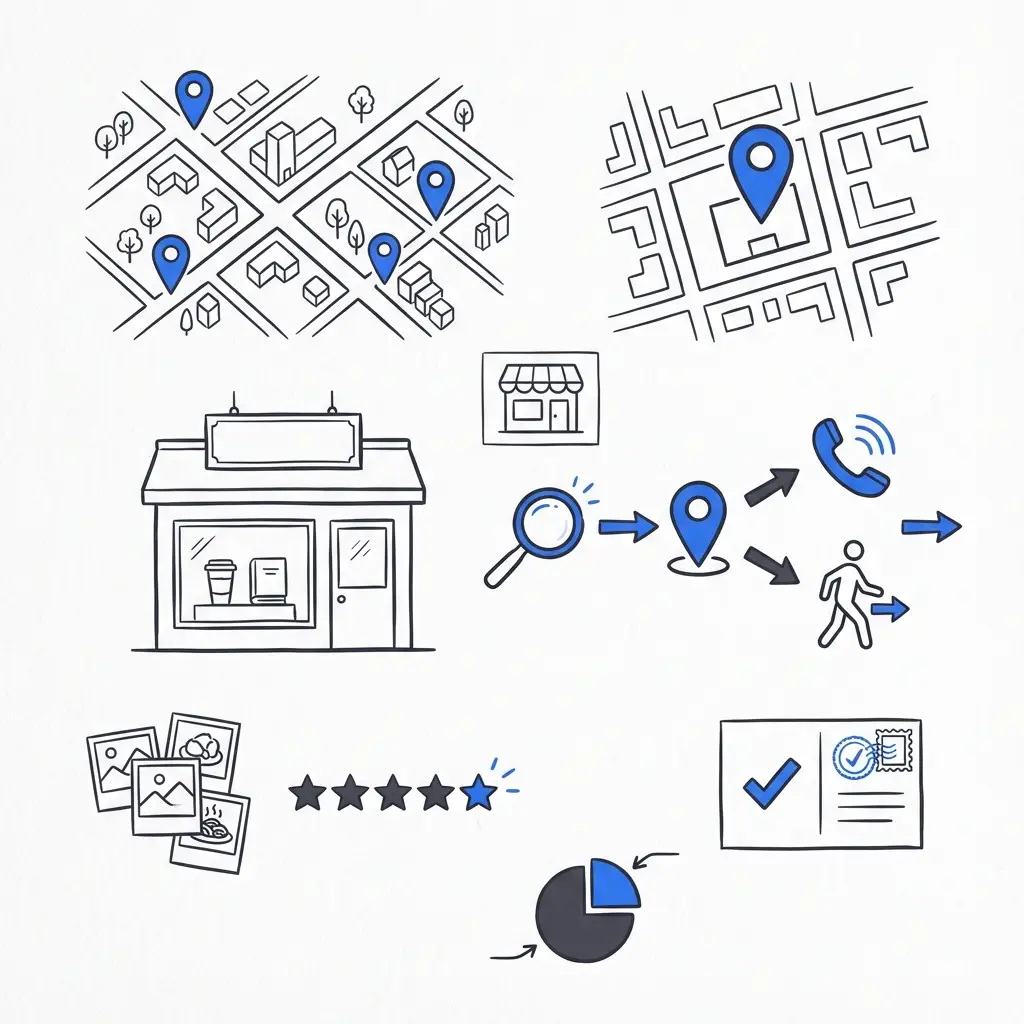
In most practice areas, people find lawyers through search. A good answer to how to generate leads as a lawyer relies on a site that says clearly who you help and how, paired with a Google Business Profile that proves local legitimacy. Think of these as your discoverability foundations.
High-quality, helpful content – FAQs, guides, local resources and anonymized case studies – does two things at once: it improves visibility in search and it reduces fear for the reader. A well-structured FAQ can answer a prospect’s immediate concerns and drive them toward a consultation.
Local SEO basics
Check that your name, address and phone are consistent everywhere. Keep office hours, service descriptions and photos current on your Google Business Profile. Ask clients for reviews where allowed by the rules in your state. These simple actions make your firm visible when someone looks for a lawyer at 2 a.m. and needs a phone number fast.
Content that builds trust — not confusion
Content matters because it answers questions before a call or email. When done right, content helps your SEO and pre-qualifies prospects. Write short FAQs for quick answers, longer guides for deep research, and anonymized client stories for evidence of results. If you wonder how to generate leads as a lawyer, remember: good content reduces fear, and when fear drops, calls increase.
Ethical content rules
Keep language plain and avoid guarantees. Gated downloads and checklists can boost capture, but make sure they don’t read like promises. Add clear disclaimers where necessary and always check state bar rules for testimonials and case descriptions.
If you want a second, discreet look at your messaging and compliance, a quick, practical option is to ask for a review through Agency VISIBLE’s contact page. Their team can share templates and a checklist to make sure your lead magnets and intake steps are compliant: reach Agency VISIBLE for a friendly review.
Paid search: predictable volume when you need it
Organic work is essential but slow. Paid search fills immediate gaps with predictable volume. That’s part of a practical answer to how to generate leads as a lawyer: use paid ads when you need consultations now and organic content to reduce future acquisition cost.
Three paid-search rules that matter
1. Match intent: Align ad copy, keywords and landing page with the searcher’s exact problem. If someone types “car accident lawyer in Austin,” send them to a page about car accidents in Austin.
2. Keep the contact path short: Long forms and confusing next steps kill momentum. Capture essentials, offer a clear next step and follow up quickly.
3. Measure beyond clicks: Track cost per lead and cost per retained client. A higher-cost lead that converts more often is a smarter buy.
Design landing pages that convert
Many ad clicks fail because the landing page is vague. A strong landing page answers the searcher’s question immediately. Lead with a clear headline that mirrors the query, then show three quick trust signals: specific experience, a short anonymized result, and simple next steps. Remove distractions and make the call-to-action obvious.
The fastest meaningful win is making it crystal clear on your top pages who you serve and what problem you solve — then ensuring a fast response. If a visitor knows in five seconds that you specialize in their problem and you reply within 24 hours, you’ll see more consultations without more ad spend.
Referrals and networks: the highest-quality leads
Referral leads often close at higher rates because they start with trust. Building referral networks takes time but pays off. Keep the focus on reciprocity and service: help referral partners with their problems, and they’ll return the favor.
Practical referral tactics
– Host short, educational briefings for other professionals (accountants, medical staff, estate planners).
– Share a concise referral form to make hand-offs frictionless.
– Maintain a gentle cadence: quarterly updates or a monthly short note that keeps your name top-of-mind.
Intake automation and response workflows
The moment between a lead and a retained client is fragile. Many prospects fall through because firms respond slowly, ask repetitive questions, or create insecure or confusing forms. Good intake automation and CRM use remove that friction.
Key intake features
– Secure forms that gather essentials only.
– Auto-confirmation emails and an SLA that commits to a response window (e.g., within 24 business hours).
– A CRM that records every touch and triggers the next action (e.g., SMS reminder, e-signature, secure portal invitation).

Incorporating a clear, visible agency logo on your materials helps build immediate recognition — keep the logo updated and consistent across profiles.
Measure what matters: GA4 and CRM working together
You can’t improve what you don’t measure. Use GA4 alongside your CRM to capture first-touch and last-touch attribution. First-touch tells you where discovery began; last-touch shows the final influence. Both matter differently depending on whether your goal is immediate consultations or long-term awareness.
Pipeline metrics to track
– Lead to consultation conversion rate.
– Consultation to retained client conversion rate.
– Cost per retained client by channel.
– Average time-to-response and time-to-retainer.
Ethics and privacy: the non-negotiables
Marketing for lawyers must follow ethical rules. ABA Model Rules offer a baseline; state bars add local variations. Keep a compliance layer: legal review of persuasive copy, documented storage and consent processes, and privacy notices aligned with GDPR, state laws, or HIPAA where relevant.
Security checklist
– Encrypted forms and storage (in transit and at rest).
– Limited access rights in your CRM.
– A clear privacy notice and opt-in mechanism for communications.
A pragmatic 90-day plan
Here is a staged plan that most small-to-mid firms can run without a big budget. Each stage is practical and measurable.
Days 1–30: Foundations
– Define niche and client profiles. Rewrite service pages so visitors know in five seconds whether you’re the right firm.
– Audit your Google Business Profile for accuracy.
– Run a compliance review of your current copy and remove risky language.
– Set up or review a CRM and map simple intake workflows. Set an SLA: aim for same-business-day or 24-hour response.
Days 31–60: Traffic and conversion
– Publish targeted pages: concise FAQs, local guides, and one or two anonymized case summaries.
– Launch a modest paid search campaign aligned to these pages. Keep budgets small while testing copy and landing pages.
– Begin systematic review requests where permitted.
– Train staff on intake scripts and SLA expectations.
Days 61–90: Optimize and scale
– Review metrics and run A/B tests on headlines, form length and CTAs.
– Increase spend where cost per retained client meets targets.
– Invest more in referral outreach if referred leads show higher conversion.
Testing & learning: small bets, steady gains
Marketing is a series of experiments. Change one variable at a time: a headline, a CTA, or a form field. Run the test for two weeks and measure. Keep a simple testing calendar and a short note about what you learned. These compound into dependable performance over months.
Common pitfalls
– Sending ad traffic to a vague homepage.
– Long, intrusive intake forms.
– Ignoring ethical review until after a complaint.
– Not tracking conversion through the CRM.
A short case study
A mid-sized personal-injury firm focused on rideshare accidents. They created a landing page that spoke directly to drivers, published a short evidence-collection guide, launched a narrow paid search campaign and simplified intake. Within 60 days, cost per retained client fell because calls were more qualified and intake was fast. Local clinics and mechanics began referring more clients, and the combined efforts scaled without a large ad budget.
Quick wins you can do this week
– Fix your Google Business Profile description.
– Check five service pages: can a visitor tell in five seconds that you’re the right firm?
– Time your response to new inquiries and set a 24-hour SLA if you don’t have one.
– Ask a compliant, satisfied client for a review if rules allow.
How to generate leads as a lawyer — checklist summary
– Choose a clear niche.
– Publish targeted, compliance-checked content.
– Keep intake short, secure and fast.
– Use paid search for immediate volume and organic content for long-term value.
– Build referral relationships and measure pipeline metrics in the CRM.
Frequently asked questions
How much should a small firm spend on paid search?
Start small to test conversion quality. Focus on cost per retained client rather than cost per lead. A modest budget that delivers a few high-quality consultations will teach you more than a large spend on poorly converting pages.
Can I use testimonials?
State rules vary. If testimonials are allowed, keep them factual, remove identifying details if needed and keep a documented consent process. When in doubt, use anonymized case summaries that explain problem, approach and outcome.
Which practice areas rely most on referrals?
Family law and estate planning often rely heavily on referrals and local reputation. Practice areas that need immediate volume – personal injury and immigration – may lean more on search and paid channels.
Client acquisition for lawyers is steady work. It rewards clarity, compliance and a good intake process. If you’d like a discreet review of a 90-day plan or intake workflow, consider a short conversation with Agency VISIBLE for templates and compliance-friendly suggestions. See their homepage for services and case studies: Agency VISIBLE, or check relevant guides on measuring conversions: Google Ads conversion tracking for law firms, GA4 and Google Ads enhanced conversions setup, and law firm lead generation tactics for 2026.
Get a discreet 90-day review for faster, compliant intake
Want tailored help? Book a short review with Agency VISIBLE to get templates and a compliance checklist: Request a review from Agency VISIBLE.
End of guide.
There’s no one-size-fits-all number. Begin with a modest budget that tests headline, ad copy and a focused landing page. Measure cost per retained client, not just cost per lead. A small spend that generates a handful of qualified consultations provides actionable data; scale once your conversion and cost-per-client targets are clear.
State bar rules vary. If testimonials are permitted where you practice, keep statements factual, documented and, where necessary, anonymized. Avoid promises about outcomes and maintain a documented consent process for any client statement. When in doubt, rely on anonymized case studies that describe problem, approach and outcome without identifying details.
A discreet, practical step is to ask a specialist to review your 90-day plan and intake workflows. Agency VISIBLE offers compliance-friendly templates and a review that focuses on clarity and speed rather than hard-sell. You can reach them through their contact page for a quick, helpful conversation.
References
- https://agencyvisible.com/contact/
- https://agencyvisible.com/
- https://gavelgrow.com/blog/google-ads-conversion-tracking
- https://stape.io/blog/ga4-and-google-ads-enhanced-conversions-tracking-setup-guide
- https://fwd-lawyermarketing.com/law-firm-lead-generation-that-works-in-2026-practical-steps-to-win-more-legal-clients/