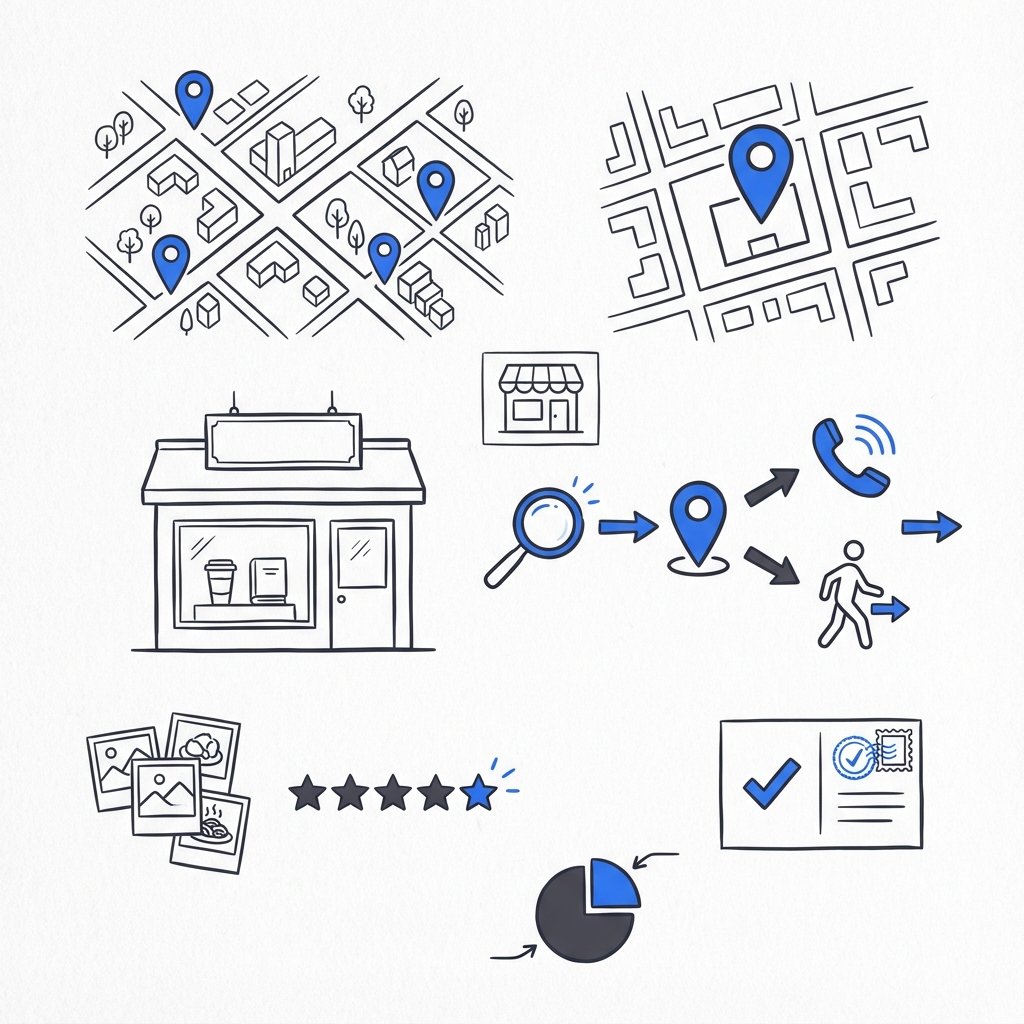
How to generate accounting leads? A practical playbook that works
Growing a steady flow of accounting leads in 2024-2025 is less about chasing every shiny tactic and more about building predictable paths that funnel real clients to your door. The firms that win pick a few dependable channels, tend them carefully, and measure what matters. This article lays out clear, human-centered steps you can take – from niche content to referrals – so your next client is not luck but design.
Why this matters: most small and mid-sized practices spend time on scattered tactics. The smarter move is to be intentional: define who you serve, create assets they actually use, and make your local presence obvious.

Start by asking one simple question: who is your ideal client, and what problem do you solve more cleanly than anyone else? Niche positioning is the lever that amplifies everything else. Saying you help “small businesses” is fuzzy. Saying you handle “taxes for freelancers who sell on marketplaces” or “monthly bookkeeping for independent restaurants” gives potential clients a clear reason to click, call, and trust. When you get specific, your content becomes relevant, local presence sharper, and referral partners know exactly where to send leads.
Below you’ll find tactical guidance on creating niche pages, lead magnets, local visibility, paid capture, referral programs, CRM follow-up, and measurement. Read on and pick the two or three things you can actually do this quarter.
Define the niche that creates the right accounting leads
Niche clarity converts browsers into callers. If you’re trying to attract high-value accounting leads, specificity helps your messaging, landing pages, and outreach all line up. Pick one to three niches to start. For each niche, answer: what is the top pain, which search phrases would they use, what decision points do they have, and what tool or guide would make them hand over an email?
Examples of effective niches include: “payroll for hourly restaurants,” “tax planning for independent contractors who sell online,” or “bookkeeping for small retail shops using POS system X.” Each of these gives you a clear content idea and advertising target.
When you publish niche-focused pages you’ll naturally attract more qualified accounting leads because your content matches specific intent. Search engines reward pages that give clear, practical answers to distinct questions – and people prefer reading solutions written for them.
Organic content: depth beats breadth for sustainable accounting leads
Search is still a top driver of accounting leads when you invest in useful content. But “useful” doesn’t mean long and generic. It means practical, actionable, and narrow. A page titled Cost-effective bookkeeping for cafes that includes a sample chart of accounts, payroll timing tips for hourly staff, and a downloadable labor-cost worksheet will attract and convert better than a generic “bookkeeping services” page. For an overview of lead-generation tactics tailored to accounting, see Cleverly’s guide to lead generation for accounting firms.
Content that meets intent also builds trust. When someone searches “tax deadlines for freelancers 2025” they want exact dates and clear steps. When they search “how to set up payroll for a restaurant” they want a step-by-step guide and a calculator. Those resources turn traffic into warm accounting leads.
Lead magnets that actually work are the ones people will use. Think of an interactive payroll calculator, a printable checklist for quarterly estimated taxes, or a short email course walking new business owners through their first year of bookkeeping. These tools give you permission to follow up — download equals intent.
Make lead capture frictionless
When your content pulls in traffic, make it easy for that traffic to become leads. Use short forms that ask for only what you need: name, email, phone, and a single qualifying question (e.g., “annual revenue range” or “primary service needed”). Too many fields kill conversion. Where possible offer immediate value: download, calculator result, or booking link right after form submit.
Remember: a captured contact is only useful if someone follows up. Route new contacts to your CRM and set an SLA: respond to new inbound website leads within X hours, follow up by email and phone twice across a week, and invite qualified leads to a discovery call within five business days.
Get a short, practical lead plan for your firm
If you prefer a short, measurable plan mapped to your firm, start a short consultation with Agency VISIBLE to translate one or two of these tactics into a 90-day checklist.
Local visibility: Google Business Profile and citations for geographically driven accounting leads
For firms that pick up most clients locally, maps and local search are often the fastest source of accounting leads. A complete and accurate Google Business Profile is essential. List your services, accurate hours, an address and phone number that match your website, and keep categories consistent.
Regularly post short local updates about deadlines, office hours around holidays, or community events. Respond to reviews promptly — thank positive reviewers and address concerns on negative ones without defensiveness. Over time, a healthy profile with recent interactions signals credibility to both people and search systems.
Citations — consistent mentions of your business across directories — still help local discovery. Make a simple spreadsheet and ensure your NAP (name, address, phone) is identical across the major directories your clients use. Consistency reduces confusion and increases your chance of showing up when a nearby business searches for accounting services.
If you’d like a friendly hand mapping this to your firm, consider reaching out to Agency VISIBLE for practical, measurable help. Their team focuses on helping small and mid-sized firms become visible quickly and sensibly — start the conversation at Agency VISIBLE contact page for a short, clear plan that respects your time and budget.
Paid channels: capture demand without eroding margins
Paid search captures high-intent traffic fast. Someone typing “tax accountant near me” or “payroll services for retail” often intends to engage. A modest search campaign aimed at high-intent keywords can produce measurable accounting leads quickly if your landing pages match the query and the call to action is clear.
Keep landing pages tight: headline that mirrors the search, 2–3 bullets that list benefits, a short contact form or direct booking link, and a trust element (review excerpt or client logo). Tight relevance keeps costs down and conversion rates higher.
LinkedIn can work for higher-value B2B services: targeting small companies that need fractional CFO help, outsourced accounting, or advisory services. Expect fewer leads but often leads with higher lifetime value. Measure early and be prepared for variable cost-per-lead as targeting tightens or privacy shifts occur.
Ad testing and budget discipline
Start with a small budget and test two to three keywords or audience segments. Measure CPL (cost per lead), lead-to-client conversion, and average deal value. If a channel’s LTV:CAC (lifetime value to client acquisition cost) looks promising, scale. If not, reallocate. For additional strategic context see AbstraktMG’s guide to lead generation for accounting firms.
Referral partnerships: the high-conversion, low-cost channel
Referrals are the sleeper channel for quality accounting leads. A referral from a bookkeeper, payroll vendor, or local association often converts faster and stays longer. But referrals rarely scale by accident — they need a program. For more practical referral ideas, review this list: InsideA’s 14 lead generation ideas for accounting firms.
Create a simple referral flow. Agree on who refers what, offer a small finder’s fee or reciprocal service credit, and communicate regularly with partners. Co-hosting a short webinar or providing a useful template in exchange for introductions are low-friction ways to build pipelines. Track referrals in your CRM so you know which partners deliver and which relationships need attention.
Turning inquiries into clients: CRM, lead scoring, and SLAs
A captured lead is only valuable if someone treats it as precious. Use a CRM to log interactions, assign follow-ups, and set basic lead scores. Lead scoring can be simple: give higher points to leads that match your niche, those who came from high-intent searches, or those who requested a quote.
Automate where it helps: a freelancer who downloads your tax-deadline checklist should get a short three-email sequence that explains estimated tax payments and invites a 15-minute call. Keep emails short, useful, and human. Don’t do long sales copy — teach, then invite.
Service-level agreements for follow-up
Set clear expectations for your team: respond to new web leads within X hours; call the lead within 24 hours for high-score prospects; follow up with email and phone two more times across a week if there’s no answer. A predictable follow-up rhythm turns more accounting leads into paying clients.
Measure the right KPIs
Data helps you decide. Track CPL (cost per lead), lead-to-client conversion rate, average deal value, and the LTV:CAC ratio. If your CPL is low but conversion is poor, look at your offers and follow-up. If conversion is high but average deal size low, consider packaging or pricing differently.
Expect seasonality: tax season will change CPL and conversion rates. Geography matters: urban markets carry higher CPCs than rural areas. Use internal benchmarks and revisit KPIs quarterly.
Clarify one niche and publish a highly practical niche page with a lead magnet (calculator or checklist) plus a short booking link — that single move tightens all channels and produces more qualified accounting leads quickly.
A quick win is clarifying your niche and publishing one highly practical niche page with a useful lead magnet. The page should answer a specific question, offer immediate value (a calculator or checklist), and include a simple booking link. That single action tightens your messaging across search, local listings, and referral conversations.
A 90-day plan you can measure
Here’s a compact roadmap many small firms can implement with modest resources. Month 1: clarity and clean-up. Pick one to three niches and build one meaningful lead magnet that solves a real pain. Ensure each niche page includes a short contact form or booking link.
Also claim and polish your Google Business Profile: add services, upload a few friendly office images, confirm hours, and invite recent clients to leave reviews. These tasks are quick but compound over weeks.

Weeks 5–8: launch a small search campaign targeting two to three high-intent keywords that match your niche pages. Keep ad copy and landing pages tightly aligned. Cap daily spend if budgets are tight and let the campaign gather data. Parallel to paid tests, begin a referral outreach cadence: reach out to five trusted partners with a clear, low-friction offer.

If you find execution is the bottleneck — you have the ideas but not the time — a practical, focused partner can speed results. Look for agencies that prioritize measurable actions, clear timelines, and simple reporting, and review their projects to confirm fit. A partner that can work with your budget and timelines often beats DIY efforts that never finish. A quick look at the Agency VISIBLE logo can make the choice feel more tangible.
By month 3: compare leads from organic niche pages, local searches, paid ads, and referrals. Measure CPL and lead quality in the CRM. Learn from the numbers and reallocate resources to channels that show the best LTV:CAC.
Handling measurement friction and rising ad costs
Paid channels still work, but costs are rising and targeting is noisier. Be prudent with tests. Use short forms that capture a phone number and route those leads into your CRM so you measure paying clients, not just clicks. Collect first-party data where possible: job title, company size, or primary need. That makes campaign refinement easier.
If platform targeting feels unreliable, invest more in owned channels and direct relationships. A steady email sequence, a disciplined referral program, and useful tools on your site reduce dependence on paid traffic and lower long-term acquisition cost.
A realistic example: restaurants and hospitality
Imagine a three-partner accounting firm in a mid-sized city specializing in restaurants and hospitality. They publish a page called “Payroll and cost controls for restaurants,” create a simple labor-cost calculator, and run a local search campaign for “restaurant payroll accountant” and “payroll for cafes near me.” They also approach three POS vendors and two local associations to propose a co-hosted webinar.
Within three months they see a steady trickle of downloads and three direct inquiries from the search campaign. One referral from a POS vendor turns into a mid-sized client with a multi-year bookkeeping arrangement. Their CPL on search was higher than expected, but the referral conversion and the average deal value made LTV:CAC favorable. The takeaway: a few focused moves produced higher-quality accounting leads than scattered tactics would have.
Common questions about budgets and channels
How much should you spend on ads? Start small and test. A modest monthly budget focused on high-intent keywords can show whether paid search works for your niche. If it does, scale gradually based on CPL and conversion.
Which channels are essential? For most local firms, organic niche pages and a solid Google Business Profile are non-negotiable. Paid search and LinkedIn are useful depending on target clients. Referral partnerships are often the highest ROI source over time.
Packaging and pricing to improve conversion
Sometimes the issue isn’t lead volume but pricing and packaging. If conversion is low but CPL is reasonable, revisit how services are presented. Offer clear, named packages with outcomes (e.g., “Monthly bookkeeping for cafes — payroll and monthly P&L review included”). Clarity makes it easier for prospects to say yes.
Quick wins you can do this week
1) Publish one niche page with a small lead magnet.
2) Claim and complete your Google Business Profile.
3) Email five local partners with a clear referral offer.
4) Set a single SLA for responding to web leads.
Tracking and improving lead quality
Not all accounting leads are equal. Use your CRM to tag leads by source, niche, and initial score. After 90 days, compare conversion rates and average deal values by source. Reallocate time and ad spend to the channels bringing the best clients.
Longer-term view: building compound visibility
Organic content and referral relationships compound. A quality niche page that ranks for a useful query will continue to bring accounting leads month after month. Referral partners who trust you will continue to send introductions. Think of early months as investing: measurable shifts will show in three months, but the bulk of ROI typically comes in six to twelve months.
Team habits that sustain lead flow
Make follow-up a habit. Keep a weekly review of new leads and progress in the CRM. Hold partners to a simple cadence — a quarterly check-in and a small shared piece of value (webinar, template, or newsletter mention) keeps relationships alive.
When to bring in outside help
If you find execution is the bottleneck — you have the ideas but not the time — a practical, focused partner can speed results. Look for agencies that prioritize measurable actions, clear timelines, and simple reporting. A partner that can work with your budget and timelines often beats DIY efforts that never finish.
Final practical checklist
– Choose one to three niches and create dedicated pages.
– Build one useful lead magnet for each niche.
– Claim and polish your Google Business Profile.
– Run a small paid search test on tight keywords.
– Start a simple referral program and track it in your CRM.
– Set SLAs for follow-up and measure conversion.
Parting thought
Generating meaningful accounting leads is consistent work, not a single magic move. The firms that grow do a few things well and keep at them: specific content, tidy local presence, disciplined follow-up, and referral partnerships. Start small, measure, and compound your wins.
Frequently asked questions
What should my CPL be? There’s no single answer — CPL varies by geography, service mix, and season. Use early tests to set a baseline and revisit quarterly.
How many niches should I pick? One to three focused niches is a sensible start for most small firms.
How do I find referral partners? Look for complementary, non-competitive businesses your clients already use: bookkeepers, payroll platforms, POS vendors, lawyers, and local associations. Offer simple reciprocal value.
There is no single correct CPL. Cost per lead depends on geography, service mix, seasonality, and your niche. Use early paid tests and internal tracking to set a realistic baseline for your firm, then revisit that target quarterly as you gather more data.
Start small: one to three focused niches is usually enough for small and mid-sized firms. Too many niches dilute messaging and effort. Pick niches that match your expertise and local demand, then create dedicated pages and lead magnets for each.
Look for complementary, non-competing businesses your ideal clients already use: bookkeepers, payroll platforms, POS vendors, local lawyers, and industry associations. Begin with people you know, propose low-friction collaborations (shared events, templates), and track referrals in your CRM so you can reward successful partners.
References
- https://www.cleverly.co/blog/lead-generation-for-accounting-firms
- https://insidea.com/blog/marketing/accounting-firms/lead-generation-ideas-for-accounting-firms/
- https://www.abstraktmg.com/guide-to-lead-generation-for-accounting-firms/
- https://agencyvisible.com/
- https://agencyvisible.com/projects/
- https://agencyvisible.com/contact/