How to find leads for lawn care?
If you run a lawn care or landscaping business, the question of how to find lawn care leads is one you hear every spring – and for good reason. The busiest weeks are short, homeowner intent is local, and the businesses that win are visible, fast to respond, and easy to book. This guide lays out a practical, low-cost plan that combines organic local presence, smart paid tests, neighborhood outreach, and a follow-up system that turns interested homeowners into booked jobs.

Why local organic channels are the foundation for lawn care leads
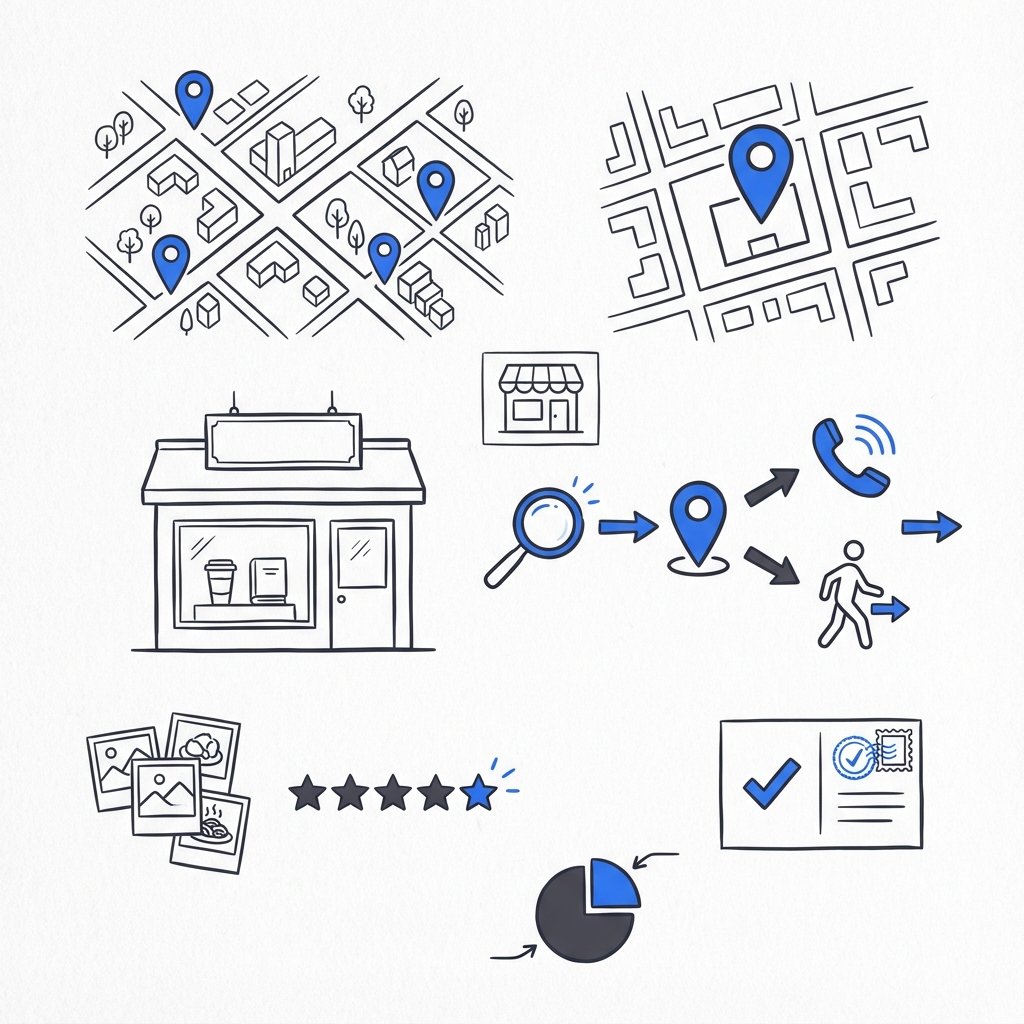
Not every marketing tactic works the same for yard work. Most homeowners start with local intent: they search for “lawn care near me,” check reviews, and pick a provider who looks real and nearby. For that reason, Google Business Profile (GBP), neighborhood landing pages, consistent citations, and active review handling are the cheapest, most intent-driven sources of lawn care leads.
Think of your GBP as a tidy storefront on the busiest street in town. It needs accurate hours, clear service area notes, recent photos of actual jobs, and a steady flow of reviews. When a homeowner searches late on a Sunday – “lawn care near me” – they’ll often call one of the top three profiles they see. If you’re not there, you’re invisible to a large set of ready-to-hire prospects.
See industry resources and case studies for more tactics: 17 ways to get more leads – RealGreen, Landscaping marketing case studies, and LawnSavers SEO case study.
How to shape local pages that attract real callers
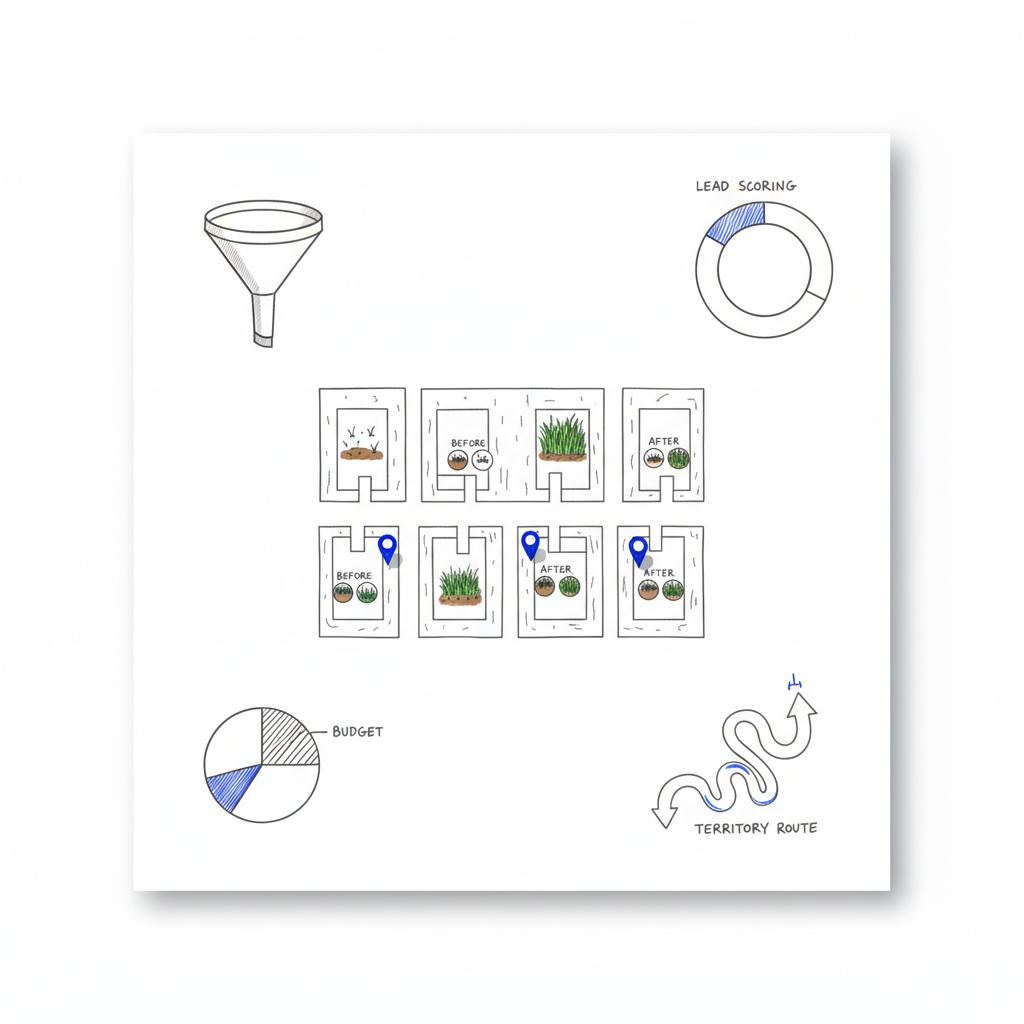
Local landing pages should feel like helpful neighborhood guides, not long sales pages. Create one page per service area with a few vivid images of nearby properties you’ve serviced, a short description of what you do there, and a clear call to action—call, text, or schedule. These pages often beat a generic “services” page at converting local searches into lawn care leads.
Keep NAP (name, address, phone) consistent across directories. Citations reassure search engines that you’re a real, local operation. And never underestimate photos: a clear before-and-after shot with a short caption – what you did, where, and when – shortens a prospect’s trust gap and drives clicks to call.
Reviews: the high-leverage tactic most owners ignore
A steady stream of recent five-star reviews plus short, human responses to both praise and criticism builds trust quickly. Reviews not only improve organic visibility but also raise your conversion rates—people confronted with recent, specific praise are more likely to call and accept an estimate. Ask satisfied customers for short, sentence-long reviews that mention the job, punctuality, and whether they’d hire you again.
Paid channels: use them to add volume at peak demand
Paid search and localized social campaigns have a clear job: they drive volume when your organic pipeline needs a boost. The key is to use each channel for what it does best and to ensure every ad points to a job-level landing page.
In well-structured tests, Google Search often delivers higher-intent leads (and higher cost per lead), while Meta platforms tend to produce lower-cost prospects who need tighter follow-up to convert. For many small lawn businesses, a balanced approach—organic plus small, highly targeted paid tests—gives the best return.
How to run a low-risk paid test
Start small. Try a $20–$50 daily cap for two weeks in one service area. Track cost per lead, booked-job rate, and average ticket. If the numbers match your payback window, scale; if not, pause and iterate on the landing page and creative.
Ad scheduling matters: run budgets heavier during early spring and the first warm stretch after winter. Limit geotargeting to neighborhoods you can actually serve. Use ad copy and landing pages that match the job and place precisely—for example, an ad for “spring cleanups in Maplewood” should point to a Maplewood page with a clear headline, three photos, an estimate range, and a click-to-call button.
Offline tactics—still valuable when tied to digital tracking
Door hangers, neighborhood flyers, and yard signs still produce responses in the 1–5% range. That’s not a huge percentage, but in a well-chosen neighborhood this can create multiple jobs – and often higher-ticket work – because you’re reaching homeowners who trust local word-of-mouth.
The trick is to connect offline to online: use neighborhood-specific QR codes that land on a trackable page, or use a local phone number that routes to your business and lets you measure response. A flyer that references a nearby yard you recently serviced – “We just finished 24 Oak Street – call for a free quote” – is far more persuasive than a generic flyer.
Neighborhood plays that increase conversion
Referrals and neighbor-to-neighbor suggestions are gold. Encourage referrals by offering something simple—a credit on a future service or a modest gift card—anything that sparks a conversation between neighbors. Platforms like Nextdoor are built for that neighborhood-level trust and often bring better-qualified leads than broad social campaigns.
Partnerships with property managers, HOAs, and realtors are another reliable source of repeatable jobs. Those relationships can convert into steady contracts and higher average values.
Process matters: immediate follow-up and a field-synced CRM
One of the single biggest differences between businesses that win and those that don’t is response speed. Homeowners often contact several providers; the one that answers quickly and sounds human usually books the job.
An effective workflow looks simple but must be consistent: an automated SMS acknowledges the inquiry within two minutes, a staff member follows up by phone within the same business hour, and all contact details plus the quoted price range are logged in a CRM that syncs with the field schedule. This reduces lead drop-off and keeps crews from arriving cold to a job.
Tip: your quoting template should be short: job address, scope in one sentence, estimated window for service, and a ballpark price or range. Transparency about price reduces sticker shock and increases appointment bookings.
The tools you actually need
You don’t need enterprise software. Look for a CRM with SMS automation, mobile access, and tagging by lead source. Even inexpensive systems can save time and stop leads from falling through the cracks when paired with a clear quoting structure and field visibility for crew leaders. For examples of agency work, see Agency VISIBLE’s projects.
Need a little help putting the system together? For a practical, fast-start conversation about local lead generation and follow-up systems, consider reaching out to Agency VISIBLE’s contact team to discuss how to make your business easier to find and faster to book.
What metrics actually tell you whether a channel works
Don’t be seduced by vanity metrics. Cost per lead is a start, but the real story is lead-to-booked-job rate and average job value. From there you can calculate customer acquisition cost (CAC) and payback period – the time it takes for a customer to cover the cost of acquiring them.
Track these four metrics by source: cost per lead, conversion rate to booked job, average ticket, and months to payback. For many lawn care businesses, a payback period under three months is reasonable, but that depends on margins, services offered, and your ability to sell recurring work.
Seasonality, capacity, and scaling safely
Seasonality is real: temperate zones have big spring spikes, while year-round markets require ongoing attention. Labor capacity is often the limiting factor. If you can’t staff extra crews, a surge in leads becomes a liability. Grow within your operational limits – hire, subcontract, or prioritize jobs before you scale ad spend.
Quick, actionable examples you can implement this month
Imagine a three-crew business serving a suburban county. Here’s a sequence that produces measurable results fast and increases the number of lawn care leads coming in.
Step 1: Audit your local presence
Update your Google Business Profile—hours, service areas, phone number, and two recent job photos. Ask three recent customers for short, specific reviews and reply to every review with a human thank-you. This will often produce a visible uptick in calls within two to six weeks.
Create one page for your main town and another for a nearby suburb you want to grow in. Use before-and-after photos, a short paragraph about the neighborhood, and a click-to-call number. Link these pages from your GBP so searchers find them easily. These pages will convert more organic traffic into real lawn care leads than a general services page.

Step 3: Run a tightly targeted paid test
Set up a 14-day Google Search test targeting “lawn care near me” + town name at $30/day and a $20/day Meta test limited to a three-mile radius. Point each ad to a job-specific landing page. Measure cost per lead and the booked-job rate. If the results look good, scale slowly and keep monitoring CAC and average ticket.
Step 4: Use door hangers with trackable CTAs
Drop door hangers in a neighborhood you recently serviced. Use a QR code to a neighborhood page and a unique phone number. Run this at the same time as your ads to see how offline and online combine to generate lawn care leads.
Audit and improve your Google Business Profile, ask three recent customers for short reviews, and publish one geo-specific landing page—taken together these actions are the fastest, lowest-cost way to increase visible, high-intent local leads.
Follow-up scripts and templates that work
Scripts should be short, human, and helpful. Here are three templates you can copy and adapt.
Immediate SMS (automated)
“Thanks for contacting [Business Name]. We’ll call shortly to confirm availability. If you need immediate help, call [number].”
Voicemail if you reach an answering machine
“Hi, this is [name] from [Business Name]. We received your inquiry about [service]. We can give a ballpark for that neighborhood—call us at [number] or we’ll try you again shortly.”
Booking confirmation (SMS after appointment set)
“Thanks—your appointment is booked for [date/time]. Our crew will text when en route. If you need to reschedule, reply to this message or call [number].”
Common mistakes that waste time and money
There are a few repeatable traps: running broad paid campaigns without geotargeting, pointing ads to generic pages, ignoring review management, and not tracking which channel produced a booked job. Overbooking without staffing is another common error – quality falls, reviews suffer, and your best source of new lawn care leads dries up.
Focus on quality over quantity. Test in small buckets, measure conversion by source, and expand channels that produce profitable customers you can actually serve.
Measuring success and making adjustments
Run small, quick tests and measure the handful of metrics that matter. If a campaign brings many low-value leads, consider adjusting your ad creative, increasing price transparency on landing pages, or tightening geotargeting. If referrals and Nextdoor posts yield higher average tickets, double down on those neighborhood plays.
How to calculate payback
Take the average ticket for customers from a channel, multiply by expected margin, and divide by CAC. That gives you months to payback. Use that to decide whether to increase ad spend, hire an extra crew, or focus on referrals.
Real-world checklist to bring in more lawn care leads
Use this checklist to convert the article into action:
Week 1: Audit GBP, request 3 reviews, post 2 job photos, publish 2 geo pages.
Week 2: Launch 14-day Google test ($30/day) and Meta test ($20/day). Print and drop door hangers in one neighborhood.
Week 3: Turn on SMS automation, ensure same-day call follow-up, track lead sources in your CRM.
Week 4: Review conversion by source, adjust bids/creative, and scale the best performers.
Frequently asked questions (short answers)
How quickly will I see results from organic local work?
Organic improvements usually take weeks. Cleaning up your GBP and publishing local pages often increases calls within two to six weeks. Paid ads can produce calls immediately but cost more per lead.
When should I use Google Ads versus Meta?
Use Google Search when people have clear intent; use Meta to create demand or reach homeowners not searching yet. Treat Meta as a volume driver that needs tight landing pages and fast follow-up.
What’s a reasonable ad test budget?
Start with 14-day tests at $20–$50/day per channel to gather conversion and average-ticket data. Scale only when the numbers show a profitable payback window.
Wrap-up: the simple core of a repeatable lead engine
To bring more lawn care leads: be findable in local search, respond fast with a human voice, and run small, measurable paid tests that point to job-level pages. Combine online visibility with neighborhood outreach, track everything, and grow only as your crews can serve more work. Treat every customer as a potential referrer and keep your processes simple and consistent.
Get predictable lawn care leads fast
Ready to make your business easier to find and faster to book? Talk to someone who helps local businesses build predictable lead engines: Contact Agency VISIBLE to get started.
Final note
Start small, measure what matters, and be consistent—if you make it easy for people to find you, trust you, and book you quickly, the phones will start to ring. Good luck out there, and remember: steady, visible steps beat flashy, unfocused spending every time.
Organic local improvements—like cleaning up your Google Business Profile, publishing geo-specific pages, and collecting recent reviews—typically take weeks rather than days. In practice you’ll often notice more calls within two to six weeks. Paid search and social tests can generate calls in hours or days, but they usually cost more per lead and need tuned landing pages and immediate follow-up.
Use Google Ads for clear intent: when homeowners search phrases like “lawn care near me” they are closer to hiring. Use Meta (Facebook/Instagram) to create demand and reach homeowners who aren’t actively searching yet. Meta can produce lower-cost leads, but those leads need job-level landing pages and fast human follow-up to convert at strong rates.
Yes. A practical agency partner can help you set up tracked landing pages, configure SMS and CRM automation, and run disciplined paid tests. If you want a fast, actionable conversation about making your business easier to find and faster to book, consider contacting Agency VISIBLE via their contact page for a tailored plan.