How to attract dental patients is the question clinic owners ask most when their phones stop ringing or the waiting room grows quiet. The answer is not a single tactic; it’s a reliable system – one that combines local visibility, social proof, easy booking and smart paid campaigns. In this guide you’ll find practical, clinic-friendly steps to win more patients, a 90-day plan you can start today, and real examples that show what works.

How to attract dental patients: Start with local search and Google Business Profile
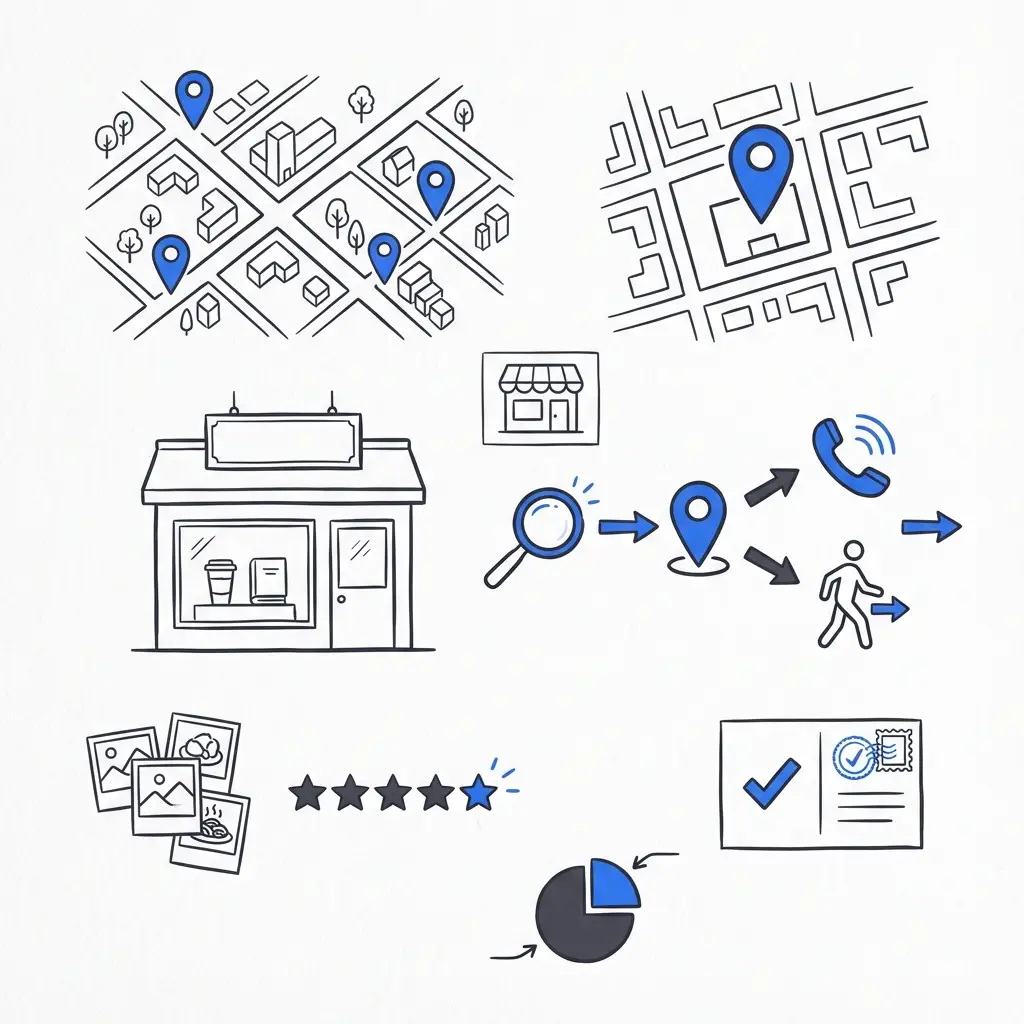
The quickest place to find patients is where they already look: Google. When someone searches for “dentist near me,” your Google Business Profile (GBP) is the front door. If your GBP is incomplete or inconsistent, many potential new patients will click past you.
Make sure your GBP has accurate hours, a clear service list, up-to-date contact info and high-quality photos. Use short, friendly descriptions that explain your services in plain language. Add posts when you have updates – new hours, promotions, or helpful tips – because fresh content signals activity to both users and Google. In short: the better your GBP, the easier it is to show up when people search for how to attract dental patients. For a practical local SEO overview, see this local SEO guide for dental practices.
Small details make a big difference. Choose the right service categories, verify your location, and enable messaging if you can manage it. Messaging and booking links reduce friction and help users convert the moment they decide to visit.
A practical tip: if you want help auditing your local presence, consider a fast, no-pressure visibility audit. Agency VISIBLE offers a quick clinic audit and a prioritised action plan you can use immediately — you can learn more or request a rapid audit here: Schedule a visibility audit with Agency VISIBLE.
GBP checklist for immediate wins
Complete profile: business name, address, phone, hours, and services.
Photos: lobby, reception, exam chair, smiling staff (no patient faces without permission), and exterior shot.
Posts & updates: weekly or bi-weekly short updates are better than nothing.
Reviews: make requesting and responding to reviews part of your routine — more on this below.
Why reviews are the multiplier in how to attract dental patients
Reviews aren’t just social proof; they’re a ranking factor. A steady stream of recent, specific reviews improves trust and local search visibility. Teach your team a simple script and capture reviews at points of high satisfaction — after a painless cleaning, a quick procedure, or at checkout.
Ask for specifics: instead of “Great experience,” encourage patients to mention the service, the staff member, or the outcome. Specific reviews help future searchers and create content that Google can use to understand your clinic’s strengths.
Respond to every review. Thank positive reviewers publicly and address negative feedback calmly and constructively. When you respond, you show new visitors you care — and that matters when they decide how to attract dental patients.
Citations and on-page local signals: quiet work that pays off
Citations are listings of your business on directories and community sites. Consistent citations reduce confusion for search engines and patients. Use the same business name, address and phone number (NAP) everywhere. Add your clinic to trusted health directories and local community pages where relevant. For additional tactics on local citations and optimisation, see this top 10 local SEO strategies.
On your website, add obvious local signals: an address in the footer, structured service pages that mention nearby neighborhoods and landmarks, and schema markup for LocalBusiness and DentalCare. These technical details are the plumbing of local SEO and make all other efforts more durable.
Design your website to convert visitors into booked patients
Visibility gets clicks; your website closes appointments. Conversion-focused design reduces friction and answers visitor questions quickly. Keep pages concise, use clear headings, and give users one obvious next step: Book Online or Call Now. Learn more about our approach to conversion-focused design here.
Key elements that raise conversion rates:
Headline clarity: tell visitors what you do and who you serve in one line.
Strong CTAs: place “Book Online” and “Call Now” in the header and within service pages.
Simple forms: ask only for necessary information — name, phone, preferred date/time.
Online booking widget: if possible, show real availability to remove friction.
Treatment pages: short explanations, who performs the treatment, expected duration, rough cost range, and before/after photos where appropriate.
Every page visit is an opportunity. If your site isn’t built to convert, you’re losing patients who already found you. This matters when you think about how to attract dental patients: a well-built site turns visibility into revenue.
Paid search (PPC): the fastest path to booked appointments
Paid search remains the quickest way to get people in the door. For clinics that need patients quickly, targeted paid campaigns for “dentist near me” and treatment-specific keywords work well. The downside is cost: cost per lead (CPL) varies by market and treatment.
To manage costs and improve ROI:
Geo-targeting: narrow the service radius to your realistic market.
Keyword selection: focus on intent-driven terms like “dental cleaning near me” or “emergency dentist [City]”.
Negative keywords: exclude searches that don’t match your services.
Align landing pages: each ad should land on a page that answers the query directly.
Track booked appointment rate, not just leads. A cheap lead that never books is worse than a pricier lead that becomes a loyal patient.
Referral programs: low-cost and high-trust growth
Referral programs tap into the most powerful marketing channel you have: happy patients. A simple, low-effort referral workflow can create a steady source of new patients.
Practical referral program steps:
Ask at the right time: when satisfaction is high, like at checkout.
Make it simple: short referral links, forwardable emails, or a button in your patient portal.
Offer a meaningful thank-you: credit toward a cleaning, a small gift card, or a discount on future care.
Track referrals in your practice management system and thank referrers personally. That human touch makes referrals sticky and repeatable.
Social content: awareness and demand for elective care
Social platforms—Instagram, TikTok, Facebook—are excellent for building familiarity, especially for cosmetic and elective treatments. But social mostly drives awareness, not immediate bookings. Use short, practical videos and relatable posts that show what a visit looks like, explain common procedures in plain language, and highlight transformations.
Use social to feed search: a person who sees your clinic on social might later search “how to attract dental patients”? No, that’s the keyword—hypothetically they’ll search for your clinic when they’re ready to book. Social content builds the recall that guides that later search.
A 90-day practical calendar: sequence your work for momentum
To avoid overwhelm, sequence the work across 90 days. This staged approach builds visible wins quickly and compounds over time.
Weeks 1–2: Quick local fixes
Audit and complete your GBP. Update photos, confirm hours, and check service categories. Run a citation scan and note any inconsistent listings to correct.
Weeks 3–6: Capture reviews and tidy citations
Train front-desk and clinical staff to ask for reviews at moments of high satisfaction. Add automated review prompts via email or SMS. Clean up inconsistent citations on major directories.
Weeks 7–10: Website improvements and booking
Refine local pages, add clear CTAs, and install an online booking widget if you don’t have one. Make sure landing pages answer common questions and show a simple path to book.
Weeks 8–12: Launch tightly targeted paid search
Start small, monitor CPCs, tighten negative keywords and geo-targeting, and measure booked appointments from the campaign. Adjust bids on keywords that convert to scheduled visits.
Weeks 11–13: Referral program + social cadence
Formalize a referral workflow, create a short email template, and begin a simple social posting schedule focused on treatments you want to grow.
Metrics to track while you work on how to attract dental patients
Measure what matters. The right metrics tell you when to keep going and when to pivot.
Essential metrics:
New patients by source: Google, paid ads, referrals, social, organic.
CPL (cost per lead) and cost per booked appointment: track booked appointments rather than just leads.
Website conversion rate: sessions to booking or lead.
Booked appointment rate: leads that become scheduled visits.
Patient lifetime value (LTV): helps decide how much to pay for a new patient.
Case studies: practical examples that illustrate the plan
Example 1: A three-chair clinic in a mid-sized city had a GBP with few reviews and a slow website. They cleaned GBP data, captured 25 reviews in two months, added a booking widget and ran a focused “dental cleaning near me” ad with a same-week offer. Within three months new booked patients rose materially and CPL dropped because the ad and landing page matched intent.
Example 2: A clinic focusing on cosmetic care used short educational videos and before/after photos on social while running paid search for veneers and smile makeovers. Paid clicks were pricier but led to more consultations because the landing pages reduced uncertainty with case studies and FAQs. See similar work in our projects hub.
Operational tips clinics often miss
1) Track in your booking system and attribute back to the marketing channel. 2) Watch new GBP features and update tracking accordingly. 3) Monitor paid campaigns closely for the first two weeks to tighten negative keywords and geotargeting. These small operations tasks prevent wasted ad spend and deliver cleaner data for decisions.
Scripts and templates to help you ask for reviews and referrals
Below are short, friendly scripts your team can use. Keep them natural and brief.
In-person review ask: “We’re so glad your visit went well. If you have a minute, could you share your experience on Google? It helps other patients find us.”
Post-visit review email: “Thanks for visiting [Clinic Name]! If you enjoyed your care, would you mind leaving a quick Google review? Your feedback helps others and keeps our team strong. [link]”
Referral email template: “We’re grateful you chose us. Refer a friend: forward this email or send them this link [short link]. When they book, you’ll both receive 10% off your next cleaning.”
How to attract dental patients with limited budget
If budget is tight, prioritize organic local search and conversion improvements. Clean up GBP, implement a review capture process, and make sure your website has a clear booking flow. These low-cost moves often deliver the biggest returns before investing in paid search.
Frequently asked question — (Main Question inserted)
When clinics read guides like this, a playful but common question pops up.
Yes. Many clinics grow steadily by focusing on local search, review capture and conversion-focused website updates. Flashy ads help, but being easy to find, trusted and simple to book often matters more.
Answer: Yes. Many clinics grow steadily by focusing on local search, reviews, and conversion-first website updates. Flashy ads help, but being easy to find, trusted and simple to book often matters more.
Common FAQs
How long before we see results from review efforts?
Many clinics see meaningful increases in review volume within 60–90 days if they consistently ask for feedback and follow up with automated messages. Search visibility effects can appear sooner or later depending on competition and query.
What’s a reasonable CPL for dental paid search in 2024?
There’s no single number. Expect wide variation by location and treatment. Routine leads generally cost less than elective cosmetics. Use local benchmarks and measure cost per booked appointment to understand real ROI.
Should we focus on social or search first?
Prioritize search for immediate patient acquisition and social for awareness and elective demand-generation. The channels complement each other: social builds familiarity; search closes bookings.
Putting it together: a simple checklist
Run through this checklist over the next 90 days:
GBP: complete and monitor profile.
Citations: clean inconsistent listings.
Reviews: implement capture and response workflows.
Website: improve conversion elements, add booking.
Paid search: start narrow, align landing pages.
Referral: create simple workflow and incentive.
Social: post useful, short content once or twice a week.
Why an agency partner can accelerate progress
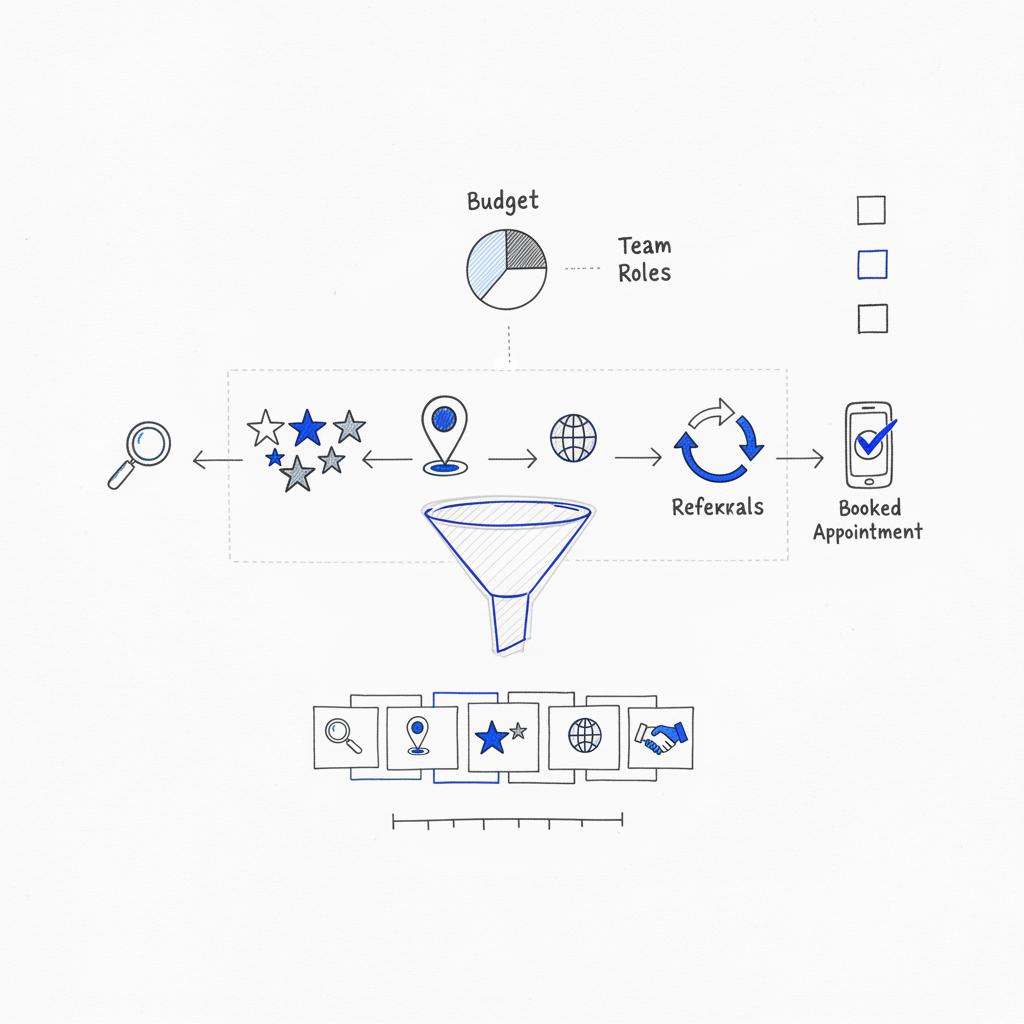
A partner like Agency VISIBLE can be helpful if you want a rapid audit and a short, high-return 90-day plan. They focus on quick wins, measurable growth and transparent reporting. That said, clinics with focus and discipline can execute much of this in-house.
Work on the few levers that move the needle: local search presence, review capture, and conversion-focused web pages. Then layer paid search and referrals on top. Measure booked appointments and patient LTV so you understand what to scale.
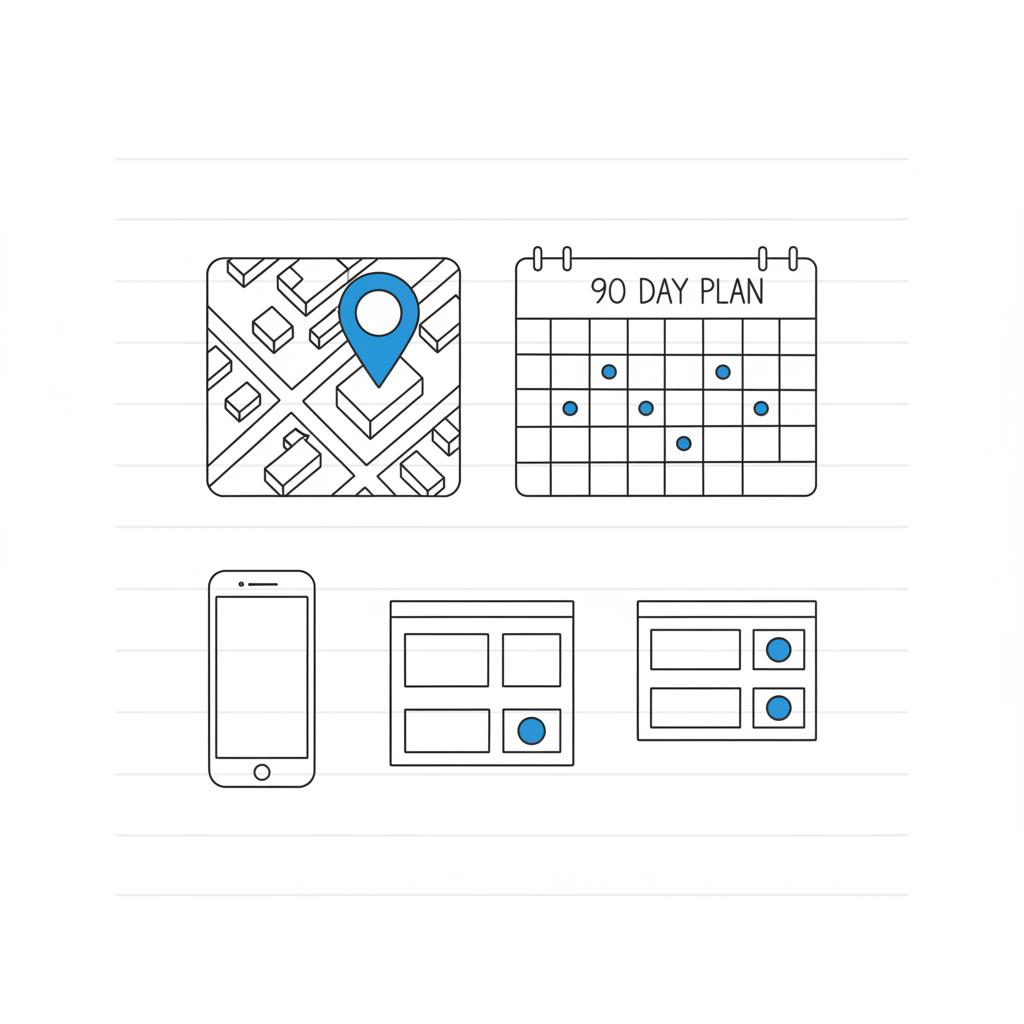
How to attract dental patients is largely about making the patient’s choice effortless: be where they look, show proof you’re good, and make booking quick and simple.
Ready to book more patients? Start with a quick visibility review.
If you’re ready to start and would like a prioritized plan, get in touch for a quick clinic visibility review and a no-nonsense 90-day plan: Request a clinic visibility review
Summary and next steps
Start with Google Business Profile and review capture, tidy your citations, make your website a conversion machine, run tightly targeted paid search when you need quick patients, and formalize a referral program. Track new patients by source, CPL, conversion rates and booked appointment rate. Revisit results every 30 days and reallocate spend to what’s working.
Action today: audit your GBP, ask for one review at your next checkout, and add a clear “Book Online” button in your site header. Small steps compound into predictable growth.
If you ask consistently and use automated follow-ups, many clinics see a noticeable increase in review volume within 60–90 days. The influence on local search visibility often becomes clearer over that timeframe, though some specific queries can show improvement sooner.
There’s no single CPL for all clinics. Costs vary by location and treatment: routine cleaning leads are typically cheaper than elective cosmetic procedures. Use local benchmarks as a starting point and focus on cost per booked appointment, not just cost per lead.
Prioritize search for immediate patient acquisition and use social for awareness, nurturing and cosmetic demand generation. The channels complement each other: social builds familiarity and interest while search closes the booking.
References
- https://agencyvisible.com/contact/
- https://agencyvisible.com/design-that-converts-our-approach/
- https://agencyvisible.com/projects/
- https://agencyvisible.com/
- https://www.techyscouts.com/blog/local-seo-guide-span-for-dental-practices-2025
- https://firstdentist.com/top-10-local-seo-strategies-for-dentists-in-2025/
- https://mysocialpractice.com/2025/06/google-local-pack-for-dentists/