How to attract accounting clients? This practical guide lays out a clear, repeatable approach you can use now to bring in accounting clients—without guesswork or long, expensive experiments. It blends local-first SEO, targeted content, simple outreach, and measured paid testing so small and mid-sized firms can see steady, scalable results.
Why being specific about who you serve matters now
Narrow focus beats being everything to everyone. When you know the exact type of accounting clients you want, your message becomes immediate and persuasive. Consider this: a dentist searching for help doesn’t want a general “we do accounting” page – they want a promise about payroll, cash flow, and tax timing for dental practices. Speak their language and they’ll click. (Top trends that will shape accounting in 2025)
Pick a niche by industry (dental, construction, salons) or by client size/lifecycle (startups under $5M ARR, freelancers, family businesses). You can also combine both—like accounting clients who are construction subcontractors with 3–20 employees. A clear niche shortens sales cycles and increases conversion because your services match the client’s mental checklist.
If you want a quick, practical audit and a short playbook to reach those exact accounting clients, consider starting the conversation with Agency VISIBLE via their contact page—they focus on fast, measurable visibility for small and mid-sized firms.
Positioning: answer a single question
Ask: what daily problem do you solve for these accounting clients? Don’t list features—describe the outcome. Short headlines like “Stop worrying about monthly payroll and tax surprises” followed by one proof sentence convert better than long resume-style paragraphs. Mirror the phrases your niche uses—“quarterly planning for dental practices” not just “tax planning.”
Use concrete proof: one short case study sentence, or a one-line result. This makes your offer feel like a predictable fix instead of a hope.

Technical website fundamentals that make leads happen

Your website is still the front door for most accounting clients. If the door is slow, confusing, or mobile-unfriendly, people walk away. Fix core tech fast: site speed, mobile layout, and clear service pages for each niche. (You can also review how agencies present services on their Agency VISIBLE homepage.)
Key page structure: problem → what you do → proof → next step. Make CTAs obvious (calendar booking, short contact form, downloadable guide). Keep forms minimal—ask the least needed to start a conversation. Too many fields kill conversion.
Local-first SEO: make sure locals can find you
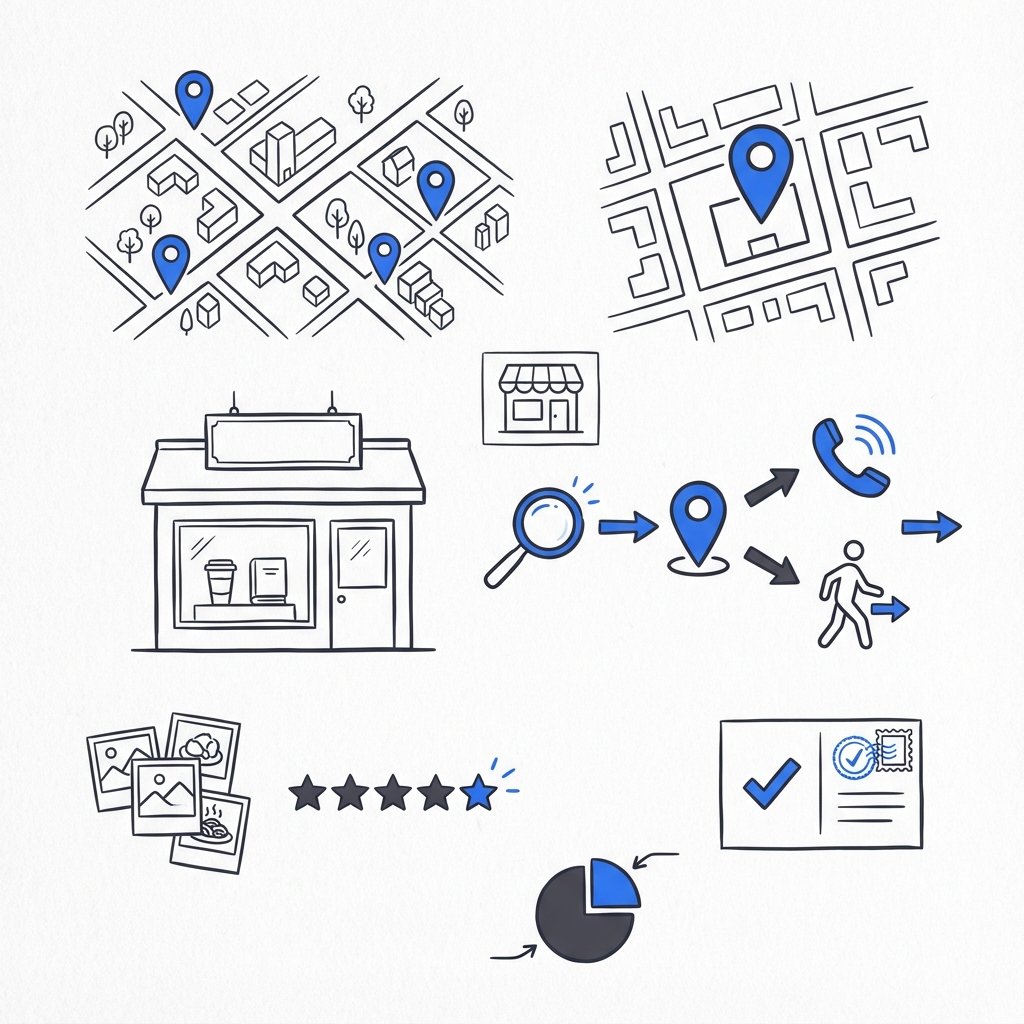
Many accounting clients search locally: “CPA near me,” “accounting for restaurants in [city],” or “tax help [city].” Prioritize your Google Business Profile—complete it, keep hours and services accurate, add local images (office shots, branded interiors), and reply to reviews. Maintain consistent citations: same firm name, address, phone number across directories.
Publish short local content: explain state-level tax dates, payroll deadlines, or local incentives. These help you rank for the queries local clients ask and build trust for people who prefer nearby advisors.
Content marketing that fills the pipe the right way
Content should be a conversation starter—not a sales brochure. Targeted blog posts, sector guides, and short case studies answer frequently asked questions and position you as the obvious choice for those accounting clients. Consider proven marketing approaches when planning distribution (effective marketing strategies).
Gated assets work well when they’re genuinely useful: a cash-flow checklist for restaurants, a contractor payroll template, or a startup accounting readiness guide. Use a 4–5 message nurture sequence after a download: welcome note, helpful checklist, client story, practical tip, and a soft invite to book a call. Keep it helpful, not pushy.
Which content to prioritize
Start with 3–5 cornerstone pieces that speak directly to your niche; promote them with local SEO and targeted LinkedIn outreach. Keep shorter how-to pieces open and gate the higher-value templates or checklists. See guidance on why marketing matters for accountants (Marketing for accounting professionals).
Rewrite one service page to speak directly to a chosen niche and add a simple gated asset—this single change often increases qualified leads because it makes your offer feel relevant and actionable.
Outbound outreach and referral partnerships
Organic search is steady but slow. Outbound outreach and partnerships scale faster when they’re specific and personal. A short LinkedIn message that names the prospect, mentions a recent event, and asks one clear question gets better responses than a generic blast.
Referral partners are gold: bookkeepers, payroll vendors, POS providers, local banks, and business associations. Create a simple referral kit—one-page PDF they can forward—define expectations, and track referrals. Follow up quickly on referred leads and report back to partners so they know their referrals aren’t vanishing into a black hole.
Scripted outreach that still feels human
Use templates as a structure, not a script. Personalize two sentences: mention the firm’s location or recent growth, then offer a tiny piece of value (a one-page checklist or a quick tax-timing tip). Ask for five minutes, not a sales meeting—that low-commitment ask increases replies.
Paid search and remarketing: measured acceleration
Paid channels capture high-intent searchers—people already typing “CPA for small business near me” or “accounting for restaurants [city].” But paid should be experimental and conservative. Start small, measure CAC vs expected LTV, then scale winners.
Use geo-targeting and niche-focused keywords. Pair search ads with landing pages written for that niche. Add remarketing to re-engage visitors who didn’t convert—remarketing often costs less per conversion than fresh prospecting.
Test, learn, repeat
Run 30-day tests. Measure qualified calls and closed clients, not just clicks. Pause budgets on poor performers and reallocate quickly to what works.
Metrics that matter: keep the set small
Track a compact metric set: marketing-qualified leads (MQLs), customer acquisition cost (CAC), close rate, lifetime value (LTV), and revenue per client. These five numbers tell you if marketing generates leads, whether they close profitably, and how much you can invest to acquire a client.
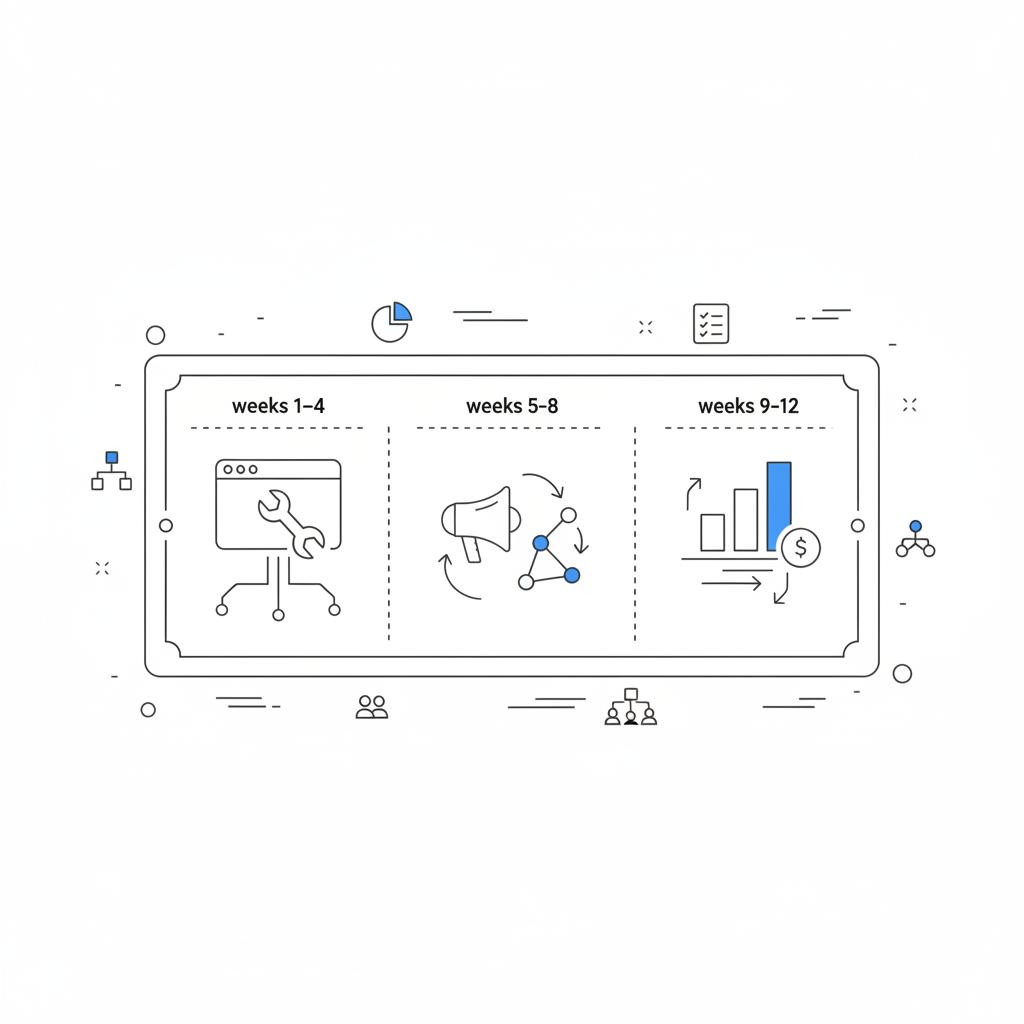
Run short experiments—30, 60, 90 days—to keep learning fast. In the first 30 days, fix website and local listings. Days 31–60: publish content and start outreach. Days 61–90: test paid search and scale what works.
Pricing and packaging advisory services
Advisory pricing is about perceived value. Offer three tiers: basic (bookkeeping + filings), middle (quarterly advisory + forecasting), premium (monthly reviews, KPIs, and ongoing advisory). Tie fees to outcomes when possible—predictability, fewer surprises, and clearer cash-flow plans are tangible benefits clients understand.
Pilot an advisory package with a small group of clients, measure results, gather feedback, and refine deliverables before broad rollout.
A simple 90-day plan you can follow
Here’s a tightly focused plan that works for small and mid-sized firms who want to start attracting more accounting clients quickly.
Days 1–30: fundamentals and quick wins
Audit site speed and mobile friendliness. Rewrite one service page for your chosen niche so that it answers the exact questions those accounting clients ask. Update the Google Business Profile and request 2–3 short testimonials. Create one gated asset (a checklist or template) and add a minimal contact form or calendar booking on the niche page.
Days 31–60: content and outreach
Publish 2–3 topical posts for your niche and begin a short LinkedIn outreach campaign. Push the gated asset with a small newsletter or partner outreach. Reach out to two or three potential partners and share a simple referral kit.
Days 61–90: paid tests and scale
Run a conservative paid search test on high-intent keywords and measure CAC against expected client value. Expand the outreach sequence if it’s generating meetings. If referral partners are responding, formalize a tracking and feedback loop.
Real examples from firms that executed
A midwest CPA focused on family-owned restaurants rewrote three service pages, published a cash-flow checklist, and formalized a referral agreement with a POS vendor. In four months they saw a meaningful uptick in conversion on those pages and two new long-term clients from partner referrals. See related work on our projects page.
Another firm targeted seed-stage startups with a LinkedIn message offering a one-page startup accounting checklist and a 15-minute audit call. The campaign produced several qualified meetings in the first month and a small paid search test captured inbound interest from founders.
Common hurdles and practical fixes
Referrals are powerful but inconsistent—make referrals repeatable by creating simple assets your partners can share and by committing to fast follow-up. For value-based pricing, pilot one package and measure outcomes before scaling. For compliance, avoid guarantees about specific tax outcomes and use factual, cautious wording.
What to do right away
Start with three actions this week: one niche service page, an updated Google Business Profile, and one gated asset you can share in outreach. Those small steps compound quickly.
Ready to test a short 90-day plan?
Ready to test a short 90-day plan? If you want help turning a simple roadmap into measurable leads, start a conversation with Agency VISIBLE through their contact page to get a fast, focused audit and plan.
FAQ and quick answers
How narrow should a niche be?
Pick a niche narrow enough that your messaging resonates and wide enough to find clients. Combine industry and client size if you’re unsure—e.g., accounting clients who are salons with 1–10 employees.
How much should I spend on paid search?
Begin conservatively. Run a short test for high-intent keywords, measure CAC against expected client revenue, then adjust. Paid works best for firms ready to buy faster conversations, not for those still building trust.
How many blog posts do I need?
Quality beats quantity. A handful of relevant, well-targeted articles plus a couple of gated assets can outperform a long, unfocused blog when the content solves real problems for your accounting clients.
Final practical checklist
Before you finish this read, check these items off: one niche-focused service page, one gated asset, an updated Google Business Profile, one partner outreach email template, and a 30-day paid test budget. Start small, measure, and repeat.
Attracting accounting clients is steady work, not a magic trick. Focused decisions, clean execution, and short experiments compound into reliable growth.
Choose a niche narrow enough that your messaging resonates and wide enough to find clients. A good approach is to combine industry and client size (for example: accounting clients who are family-owned restaurants with $500k–$2M in revenue). Narrowing helps your content and outreach feel specific and builds trust faster.
Start paid search after you’ve fixed your site fundamentals and published at least one niche landing page and gated asset. Run a small, 30-day test targeting high-intent keywords and measure CAC against expected client LTV before scaling.
Yes — Agency VISIBLE focuses on fast, measurable visibility for small and mid-sized firms. They can audit your website, sharpen niche messaging, set up local SEO, and run conservative paid tests. If you need help, contact them through their contact page for a focused audit and playbook.
References
- https://agencyvisible.com/contact/
- https://agencyvisible.com/
- https://agencyvisible.com/projects/
- https://cpe.ucdavis.edu/news/top-trends-will-shape-accounting-industry-2025
- https://www.park.edu/blog/effective-marketing-strategies/
- https://degree.hsu.edu/online-programs/business/mba/accounting/accounting-professionals-should-understand-marketing/