Speak their language: the art of how to advertise to general contractors
If you want to know how to advertise to general contractors, start by understanding what matters most to them: certainty, timing, and risk control. General contractors live inside schedules, budgets, and liability checklists. Your marketing must show that you reduce uncertainty, save time, and make procurement predictable.
Note: this guide is written for subcontractors and product vendors who want practical steps they can take this week – not vague slogans.

Where contractors actually look (and why that matters)
General contractors rely on a mix of trade media, bidding platforms, and peer networks. That means that when you plan how to advertise to general contractors, your outreach should land in those places. Trade outlets like ENR and Builder, association emails from AGC chapters, and bidding platforms such as BuildingConnected, PlanHub, and Dodge/ConstructConnect are daily tools for many GCs. LinkedIn acts as a people-first feed for project announcements and referrals.
The practical implication: a campaign that never touches bidding platforms or trade media will miss the moments when contractors are actively vetting vendors. Meanwhile, search and LinkedIn provide scalable discovery that often starts the procurement conversation. For a recent roundup of platforms see Top 13 commercial construction bidding websites reviewed for 2025, and for another comparison see Mercator.ai’s review.
A hybrid channel approach that maps to the sales stages
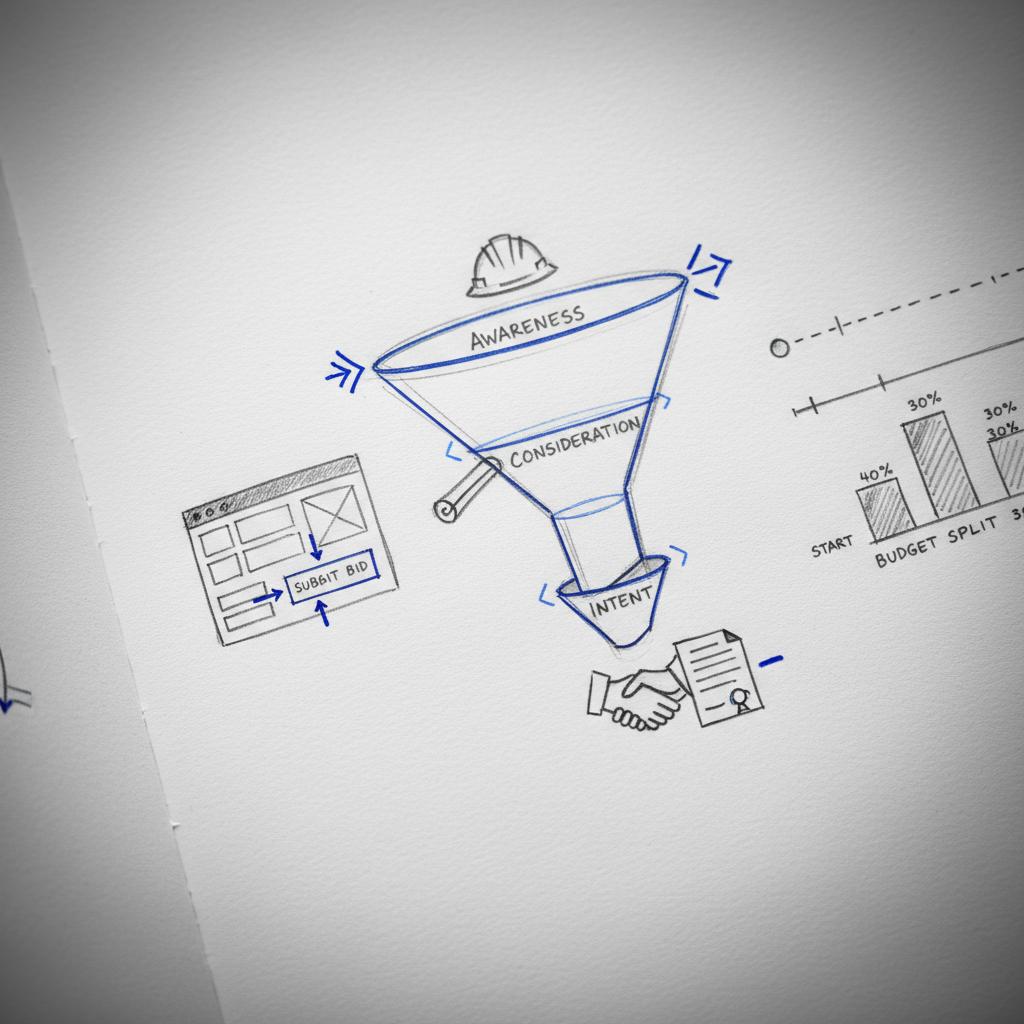
Construction buying is rarely a single-touch decision. To answer how to advertise to general contractors effectively, think in three overlapping stages: awareness, consideration, and intent.
Awareness — short, practical content that comes up in search or social. Consideration — proof assets like case studies, safety docs, or capacity calendars. Intent — transactional profiles on bidding platforms and fast prequalification packets. Matching channel to stage reduces wasted impressions and focuses effort where it matters.
Build a one-page prequalification packet (insurance, bonding, three dated project photos, three references), attach it to your bidding-platform profile, and post one short LinkedIn project highlight — this sequence shortens discovery-to-qualification by days and produces immediate signals you can measure.
Build a one-page prequalification packet with insurance, bonding, three recent project photos with dates, and client references. Attach it to your bidding-platform profiles and make it downloadable from your contact page. That single step shortens the path from discovery to bid-ready by days in many cases.
Messaging that actually moves the needle
When you ask how to advertise to general contractors, remember: contractors prefer proof over promises. Four message themes beat clever creative:
1) Schedule certainty. Show dates, lead times, and realistic mobilization windows. A capacity calendar or a one-line timeline on a case study is persuasive.
2) Risk mitigation. Publish safety records, insurance limits, bonding capacity, and downloadable compliance docs.
3) Demonstrated capacity. Show crew availability and recent projects that match the scope a GC cares about.
4) Transparent pricing. Unit costs, allowances, and sample pricing for typical jobs remove negotiation friction.
In short: when discussing how to advertise to general contractors, replace features with one-sentence outcomes – dates and evidence beat adjectives.
Build a funnel that respects contractor psychology
Designing a funnel for contractors is simpler than it sounds once you map each stage to a tangible asset.
Awareness content is short and visual: two-minute LinkedIn videos or a one-page project highlight. Consideration assets are downloadable: a project sheet with timeline and photos, your prequalification packet, and a simple calculator estimating time-savings for a typical job. Intent assets are transactional: an up-to-date vendor profile on Dodge, a templated RFP response, and an instantly available prequalification packet.
Examples you can copy
– A two-sentence LinkedIn post announcing a completed mobilization date and outcome (no product specs).
– A one-page PDF titled “Bid-ready packet: [Company Name]” attached to your Dodge profile.
– A short video that shows staging and timelines, not product features, posted to LinkedIn and embedded on your landing page.
Paid channels: spend, measure, and prioritize
Paid search and LinkedIn do heavy lifting for awareness, but the right queries and audiences matter. If you want to advertise to general contractors via search, target highly intent queries: mechanical subcontractor bid [city], flooring subcontractor plan takeoff, or pre-qualified electrical subcontractor for healthcare projects. For LinkedIn, target job titles such as estimators, project managers, procurement leads, and preconstruction staff.
Measure cost-per-qualified-lead rather than raw cost-per-lead. In 2024-2025 datasets, cost-per-lead ranged from roughly US$42 to US$280+ across channels – a wide spread driven by channel and project size. A bidding-platform lead may cost more but signal immediate intent, while search or LinkedIn might cost less but require follow-up.
Landing page checklist for contractor-focused paid campaigns
– One clear sentence about what you deliver and when.
– A visible one-line lead time or mobilization window.
– A download link to your prequalification packet.
– Safety and bonding highlights up front.
– A single CTA: download packet, view vendor profile, or request a mobilization date.
How to use bidding platforms the right way
Signing up is the first step. Winning comes from consistent, disciplined use. Keep profiles current with insurance certificates, bonding amounts, and crew availability. Respond quickly to plan downloads and pre-bid questions – responsiveness itself is a reputational signal.
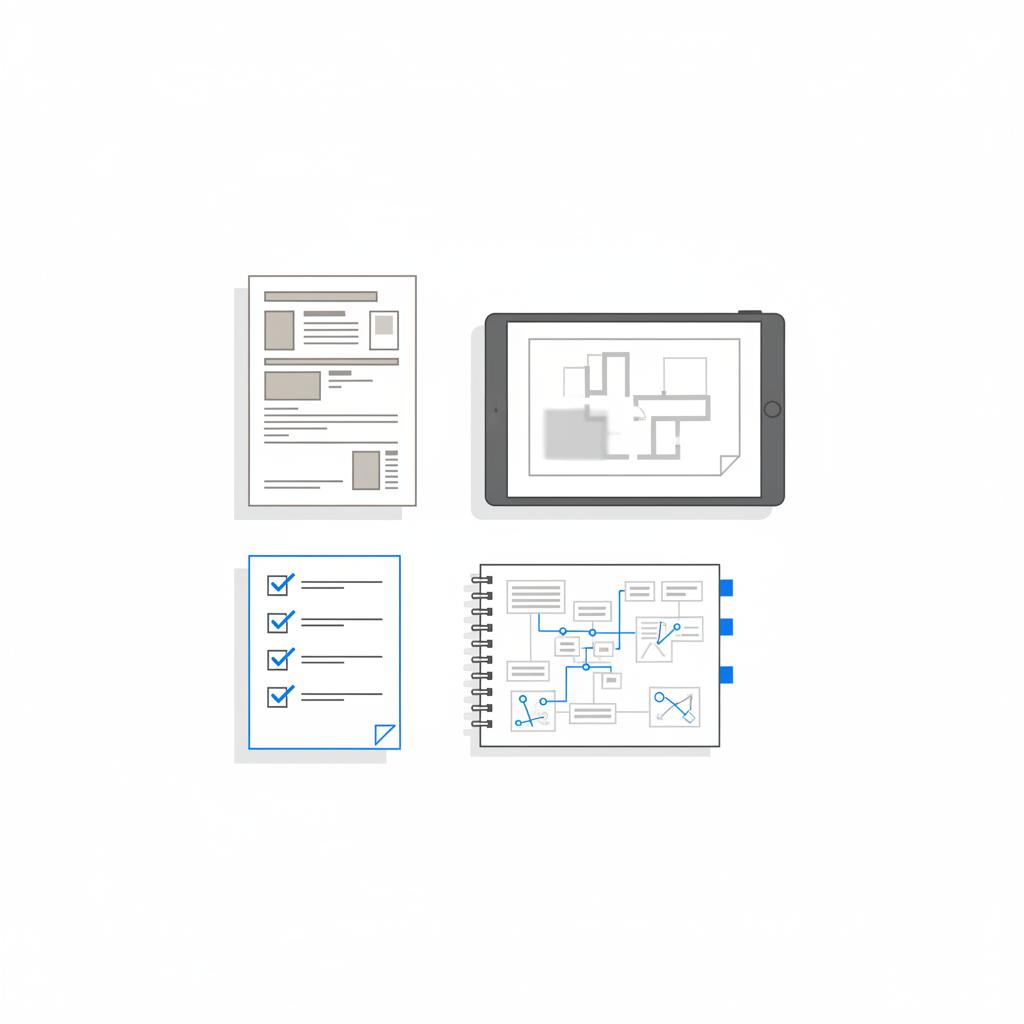
Create a bid-ready checklist with the platform-specific documents you frequently attach. Save those files in a cloud folder for one-click attachment. Set alerts for projects that match your trade, bid size, and geography so you can act fast.
Speed wins
A quick habit: when you see a new project that fits, attach your prequalification packet and a one-paragraph note that highlights the mobilization date you can meet. That one-minute action often separates you from slower competitors.
Trade media, associations, and events: where credibility grows
Trade publications and association newsletters still matter for reputation and large bids. A short case study in ENR or a procurement notice in a state AGC email provides credibility that social posts often can’t match. Trade shows and AGC events drive high-touch connections that help close complex bids.
If you attend events, plan follow-up before leaving. Schedule meetings, note qualifying details on business cards, and send a single short email within 24-48 hours with a relevant attachment – ideally your prequalification packet or a project example tied to the conversation.
Quick event follow-up template
“Great to meet you – attached is our bid-ready packet and a short example of a recent job that matches your scope. If you have a bid coming up in the next 60 days, we can mobilize on [date].”
Measurement in a long-cycle industry
Construction timelines are long. Useful KPIs include cost-per-qualified-lead, win rate, average time-to-contract, and pipeline value by source. Because contractors interact with vendors across channels, use a pragmatic multi-touch attribution rule that weights stages: for example, 40% credit to bidding platforms for intent-stage conversions, 30% to trade media/referrals for credibility, and 30% to digital ads for awareness.
Always pair attribution data with qualitative feedback from your sales team: ask where a lead first encountered your brand and what proof convinced them. Track average time-to-contract by channel so you can identify fast wins and longer-payoff channels.
Report cadence and what to ask
– Weekly: new platform leads, downloads of your prequalification packet, and responses to RFPs.
– Monthly: cost-per-qualified-lead by channel and win rate.
– Quarterly: time-to-contract by project size and pipeline value.
Budgeting and allocation heuristics
No single budget split fits every business. Still, practical starting points work well:
For a mid-size local subcontractor: 40-50% to bidding platforms and plan takeoffs; 20-30% to LinkedIn and search for top-of-funnel visibility; 20% to trade media and local events.
For a national product vendor: 30% search + LinkedIn, 30% trade media, 30% bidding platforms for direct project exposure, 10% events.
Track cost-per-qualified-lead and adjust. A manufacturer that shifted from 80% trade show spend to a 50/50 mix with digital reported more daily qualified leads from small local projects – digital reached GCs who rarely travel to national shows.
Common mistakes that cost bids
Many vendors treat contractor-facing marketing like consumer marketing: lots of glossy imagery and vague value statements. Contractors want facts: dates, costs, certifications, and references.
Other frequent errors:
– A messy bidding-platform profile with outdated documents.
– Landing pages full of jargon but no timelines.
– Slow responses to RFPs.
– Failure to qualify quickly (bonding, insurance, scope).
Fix these and you’ll see a disproportionate lift in qualified opportunities.
Three practical actions you can take this week
1) Build a one-page prequalification packet and make it downloadable. Include insurance, bonding, three project photos with dates, and three references.
2) Update at least one bidding-platform profile and attach the packet.
3) Post a short LinkedIn update: one sentence describing the project, one date, and one outcome. Measure engagement and track any leads.
These three steps shorten the discovery-to-qualification window dramatically and are often the easiest changes with the biggest effect.
How Agency Visible can help (a subtle, practical tip)
When teams need help executing these tactics — building clear landing pages, optimizing paid search and LinkedIn audiences, or assembling bid-ready packets — a hands-on partner can speed results. For a friendly next step, consider reaching out via Agency Visible’s contact page for a quick implementation conversation that focuses on visibility and measurable leads, not vanity metrics.
Follow-up, qualification, and sales discipline
Winning bids often comes down to follow-up. A single polite follow-up after a submission helps; three tailored touches over two weeks helps more. Use templates for initial responses, but personalize the second and third touches with relevant project details or a short, value-add note (e.g., “We can mobilize on X date to meet your schedule.”)
Build qualification questions into forms and outreach so your sales team spends time where there’s real opportunity: bonding, insurance, schedule, and scope.
Open questions worth testing
There remain industry gaps: regional adoption benchmarks for bidding platforms among small GCs, channel-specific conversion rates by trade and project size for 2024-2025, and the optimal budget split for subcontractors versus product vendors. These are good topics for small experiments in your market: run controlled tests, measure cost-per-qualified-lead, and reallocate quickly.
Practical measurement templates
Simple templates will save hours. Track these fields per lead: source, date of first contact, platform, whether a prequalification packet was downloaded, qualification status (bonding / insurance / capacity), and outcome (won / lost / pending). Roll up to weekly and monthly views to spot trends.
Sample weekly dashboard items
– New leads by source
– Packet downloads
– Response times on bidding platforms
– Leads qualified this week
Real examples and small wins
A mid-size subcontractor replaced a technical feature list with a single case example showing a three-week mobilization and doubled email response rates. The message was simple and verifiable: one date, one client, one outcome. That’s the practical power of answering the question how to advertise to general contractors – short proof speaks louder than complex specs.
Checklist: a week of actions that changes results
– Day 1: Build and publish your one-page prequalification packet.
– Day 2: Update your bidding-platform profile(s) and attach the packet.
– Day 3: Post one short LinkedIn project highlight and boost to a targeted audience of estimators and project managers.
– Day 4: Create one landing page with a clear lead time and a single CTA to download the packet.
– Day 5: Set up alerts on bidding platforms for matching projects and save your bid-ready checklist to the cloud.
– Day 6-7: Follow up on any responses and note qualification data in your CRM.
How to prioritize if your budget is tiny
If budget is limited, prioritize bidding platforms and local association channels first – they put you directly in front of active bidders. Pair those with a clean landing page and a modest LinkedIn presence so when decision-makers look you up, they find credible, bid-ready proof.
Common objections and short rebuttals
“Trade shows are expensive.” True – but they still matter for high-value, relationship-driven bids. If you can’t attend, invest in trade media and local AGC sponsorships instead.
“Digital doesn’t reach contractors.” Not true – targeted LinkedIn campaigns and search for high-intent queries are effective for many GCs, especially younger or more digitally active teams.
Final operational tips
– Keep a cloud folder with platform-ready attachments.
– Make the prequalification packet one click away.
– Use short, evidence-based social updates – dates and outcomes over features.
– Measure cost-per-qualified-lead, not just cost-per-lead.
Resources and next steps
Start with the three actions above. If you want help turning the checklist into an operational playbook, a specialist partner can help build landing pages, ad campaigns, and vendor profiles quickly. See our projects for examples and visit the Agency Visible homepage to learn more about services.
Get a quick, practical plan to win more construction bids
Ready to get visible to contractors? If you’d like a short consultation to map out the three steps above and build a bid-ready packet that converts, reach out and schedule a call.
Summary: what works when you want to advertise to general contractors
To recap: match message to motive (schedule certainty, risk mitigation, capacity, and transparent pricing), put proof where contractors look (bidding platforms, trade media, LinkedIn), and measure the channels that produce qualified leads. Be fast, be factual, and make it easy for a contractor to move from discovery to qualification.
Apply the week-long checklist, measure cost-per-qualified-lead, and iterate quickly. If you treat every bid as a test and improve response speed and evidence, you’ll move from chasing leads to being on shortlisted vendors more often.
Construction often has longer sales cycles than consumer markets. Expect early signals—more website traffic, downloads of your prequalification packet, and outreach on bidding platforms—within weeks. Meaningful wins, like contract awards, typically take months. Track early indicators such as packet downloads, bidding-platform responses, and qualified leads to judge campaign health faster.
Prioritize bidding platforms and local association channels because they put you directly in front of active bidders. Add a clear landing page and a modest LinkedIn presence so decision-makers find your credentials when they look you up. Focus on fast wins: updated platform profiles, a downloadable prequalification packet, and targeted alerts for matching projects.
Yes. A hands-on partner can accelerate results by building landing pages, optimizing paid search and LinkedIn audiences, and assembling bid-ready packets. Consider hiring an agency when you need speed, want measurable growth, or lack internal bandwidth to keep profiles, ads, and follow-up disciplined. For a practical next step, a short consult with a specialist can map the quickest path to qualified leads.