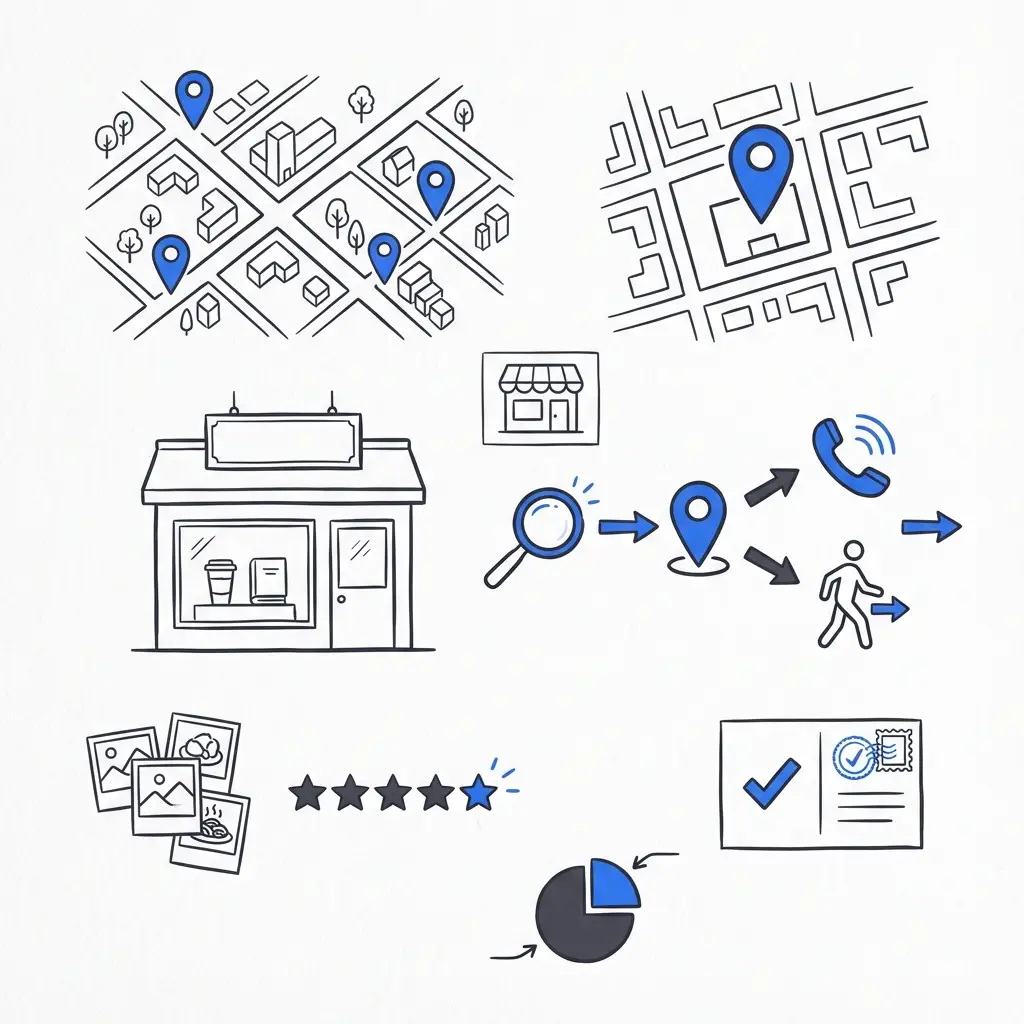
Where can I advertise my plumbing business? If you want straightforward answers without marketing fluff, you’re in the right place. This guide explains how to advertise a plumbing business locally in ways that actually bring calls, bookings, and repeat customers. You’ll get a step-by-step plan, practical scripts, tracking checklists, and real-world examples you can use in the next 7, 30, and 90 days.
Why phone-first local search beats broad awareness for plumbers
Most plumbing jobs start with a person who needs help right now. That means the highest-value prospects are the ones who call, not just click. So when you examine how to advertise a plumbing business locally, prioritize channels that deliver phone-first intents – the complete guide to Google Local Service Ads for plumbers and call-focused Google Search Ads. These formats put your verified business front and center for people searching “plumber near me,” “emergency plumber,” or “water heater repair today.”
Quick reality check: intent matters
Imagine two people: one scrolling Instagram at night, the other calling because a pipe burst. Your ad strategy should capture the caller. That’s why anyone learning how to advertise a plumbing business locally should start with channels built around immediate intent and phone contact.
Tip: If handling marketing feels like a second job, a local specialist can help set up LSAs, run call-focused ads, and build proper tracking. For a friendly, results-driven partner, consider Agency Visible’s local marketing help—they focus on measurable gains that keep your phones ringing.
Here are quick steps to consider before you book help.
Get a 90-Day Local Marketing Plan
Need help getting started fast? If you want a quick review and clear next steps, book a short consult and get a 90-day plan tailored to your service area. Contact Agency Visible today to make your visibility count.

Before we go deeper, here’s the single, practical question most plumbers ask first, and a short answer.
Many businesses begin seeing an increase in inbound calls within days after LSAs are fully verified and active. The exact timing varies by market and how well the business profile, reviews, and call handling are set up. Expect to test offers and call scripts across the first 30–90 days to move callers into booked jobs consistently.
Where to advertise your plumbing business: prioritized channels
1. Google Local Services Ads (LSAs) — Phone-first, high intent
LSAs are essentially built for service businesses that need phone-first leads. They show at the top of Google for searches like “plumber near me” and make it easy for users to tap-to-call. When exploring how to advertise a plumbing business locally, LSAs should be near the top of your list.
Yes, Google’s verification takes work – licenses, insurance, background checks – but that verification is also a trust signal. Verified businesses get higher-quality callers who are comfortable hiring a verified provider quickly.
2. Google Search Ads (call-only & call-focused campaigns)
Search ads let you target keywords with clear intent signals. For immediate work, run call-only campaigns and calls extensions on high-intent keywords: “emergency plumber near me,” “burst pipe repair,” and similar phrases. Keep landing pages minimal—phone number on top, 2–3 trust signals, and a clear promise (same-day window, fixed trip fee). For practical ad setup tips see 3 Google Ads best practices for local services.
3. Google Business Profile (GBP) — your free, essential hub
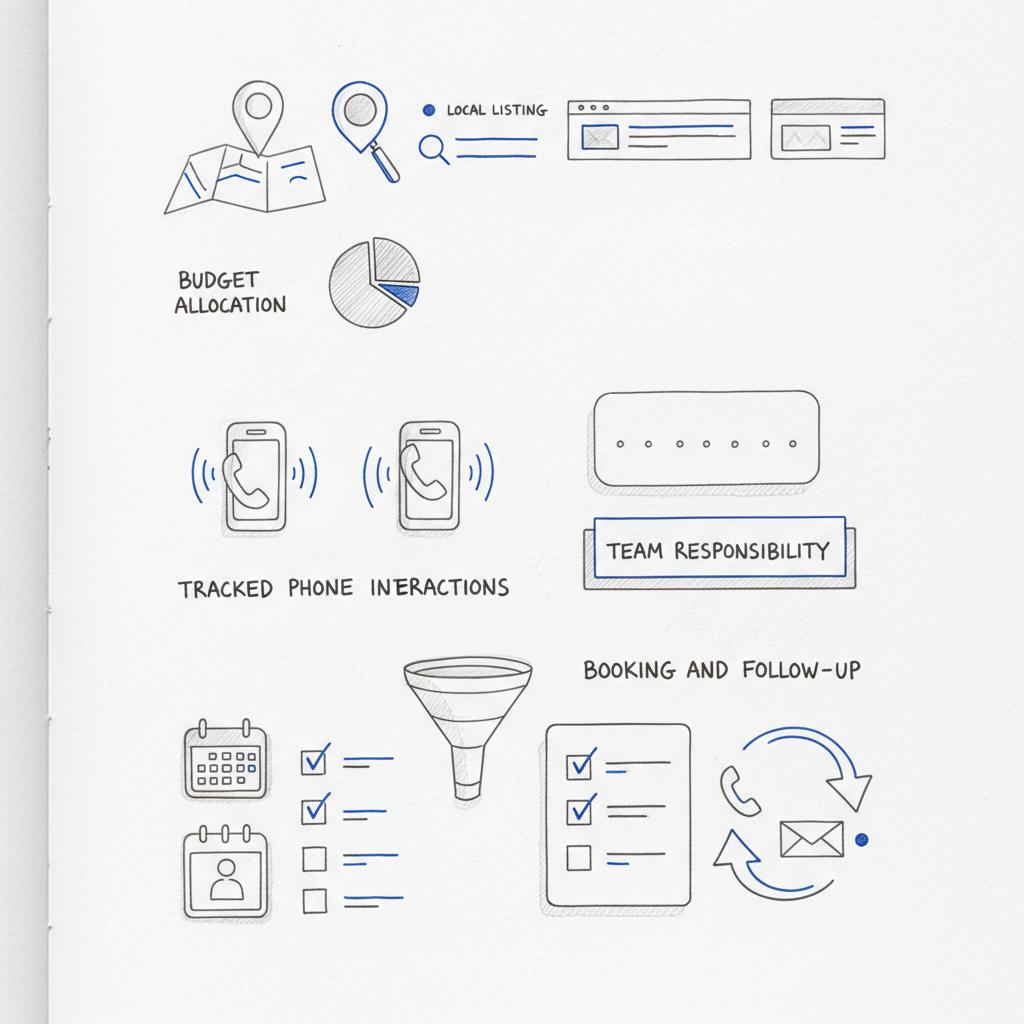
Your Google Business Profile is where many calls start. Keep hours accurate, list service categories, add photos of trucks and uniforms, and respond professionally to reviews. Enable messaging and make sure your primary phone number is a tracked number. If you’re researching how to advertise a plumbing business locally, a polished GBP is low-cost and high-return.
4. Directories & Marketplaces — volume with mixed ROI
Platforms like Angi, Yelp, and HomeAdvisor still send leads. The trade-off: higher volume but lower conversion rates. Treat these as a volume engine and track each lead source carefully. If a directory sends many calls that don’t become jobs, shift that spend to LSAs or search ads. For an overview on plumbing ad approaches see Google Ads for plumbers.
5. Social & Hyperlocal (Meta, Nextdoor) — awareness and retargeting
Social platforms aren’t usually where emergency callers come from, but they’re ideal for staying top-of-mind and encouraging repeat business. Use Meta and Nextdoor for promotions, customer stories, seasonal reminders, and retargeting visitors who didn’t book after their first call.
6. Offline channels that still work
Direct mail, vehicle wraps, door hangers, and local sponsorships remain effective when tracked properly. Use unique promo codes or phone numbers for each offline tactic so you can measure ROI. Vehicle wraps are a slow-burn brand play; direct mail (EDDM) can boost neighborhood awareness and prime locals to call when they need service.
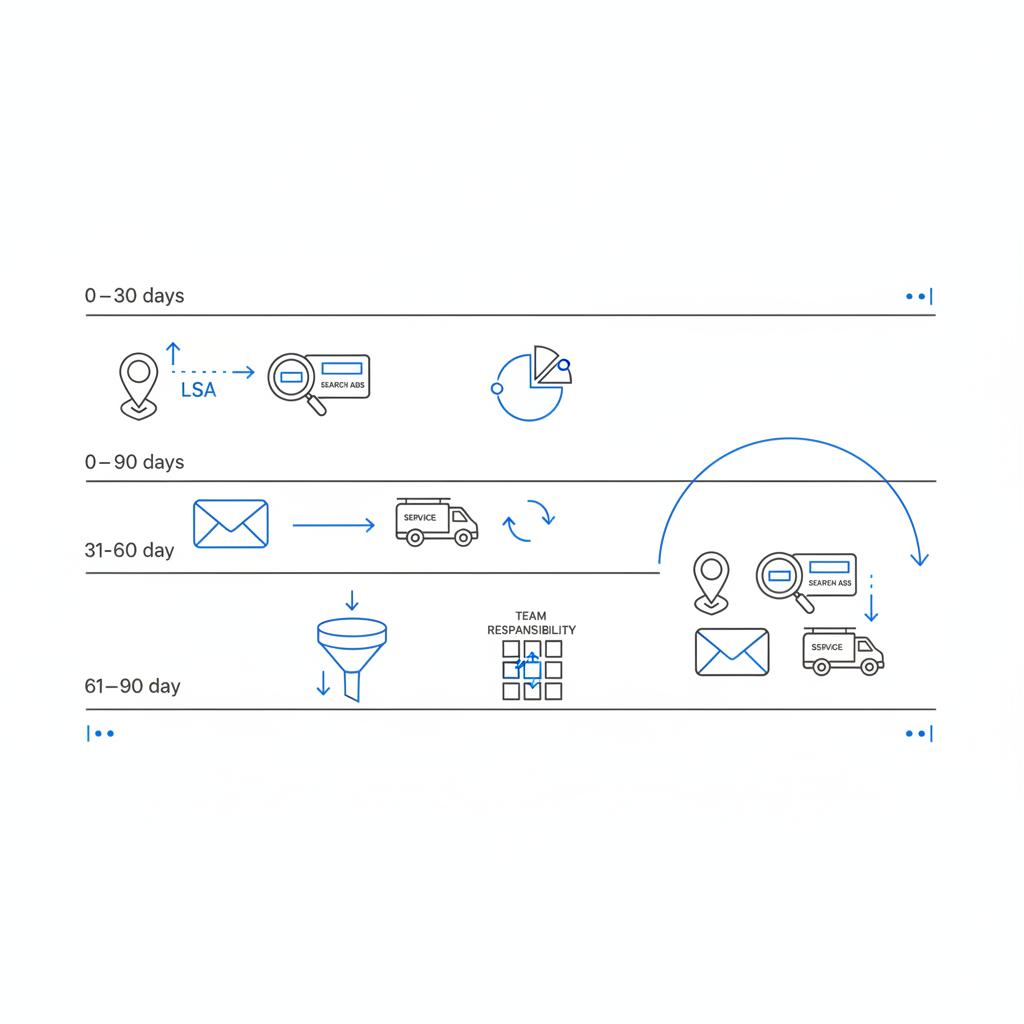
Month-by-month: an actionable 0–90 day plan
Days 1–7: quick wins and verification
Focus on setup: claim and polish your Google Business Profile, ensure a tracked phone number is live, and start the LSA verification. If you already run search ads, switch a portion of budget to call-only campaigns targeting urgent phrases. If you’re wondering how to advertise a plumbing business locally immediately, these steps typically produce the fastest visible impact.
Days 8–30: learning and refining
Run small-budget LSAs and search tests. Track everything: which keywords call, call length, booking rate, and job value. Train your dispatch to capture source and outcome. Start collecting more reviews and post photos and updates to your GBP weekly.
Days 31–90: scale, layer, and test
Use the CPL data from your first month to guide spend. If LSAs and search ads are producing acceptable CPLs and good job margins, scale them. Add retargeting on Meta and Nextdoor, start a small EDDM mailer in neighborhoods where you’ve worked, and test offers such as same-day windows or flat diagnostic fees. Continue to refine call handling and technician presentation—the human side of conversion often moves the needle more than ad tweaks.
Offers and promotions that convert callers into bookings
Replace vague discounts with offers that reduce perceived hiring risk. Examples that work when learning how to advertise a plumbing business locally include: guaranteed arrival windows, flat-rate trip fees, senior plumber phone consultations, and bundled maintenance plans with priority access. For emergency work, a credible time guarantee – “We’ll be there within two hours or the trip is free” – can convert well if you can reliably deliver.
Sample limited-time offer
“Book a same-day visit and get a fixed diagnostic fee of $49 (redeemable if we perform the repair). Priority scheduling for maintenance plan members.” This frames value and reduces risk for the caller.
Scripts and phone handling that increase bookings
Great call handling is simple: be quick, empathetic, and clear. Train dispatch to answer within a set number of rings, verify the address, confirm the immediate safety of the caller, and offer a clear next step with a time window. Example call flow:
Open: “Thanks for calling [Business Name]. This is Alex — how can I help?”
Diagnose: “Can you tell me where the leak is and whether it’s active now?”
Close: “We can be there between 2–4 p.m. The tech will call 15 minutes before arrival. The trip fee is $49, and if we do the repair today it’s credited to the job.”
Tracking that separates guessing from investing
Combine call tracking, UTM-tagged landing pages, and CRM entries. Use a different tracking number for each major channel: LSAs, Search Ads, Meta retargeting, Nextdoor, each mailer, and vehicle wrap campaigns. Record call length, booking outcome, job value, and whether the customer later returned for more work.
Measure CPL over 30- and 90-day windows and track lifetime value where possible. A customer who returns for a new water heater or a maintenance plan often makes a higher-CPL channel worthwhile.
Simple tracking checklist
– Unique phone numbers per channel
– UTMs for landing pages
– Form capture for scheduled work
– Weekly reconciliation of dispatch and ad platform reports
– Monthly lifetime value calculations
Directories and when to use (or stop) them
Directories can be great for volume and discovery, but they’re often noisy. If you’re testing how to advertise a plumbing business locally and a directory delivers many calls with low booking rates, pause and reallocate budget to LSAs and search. If a directory sends good customers in a specific neighborhood, keep it – use tracking so you can compare apples to apples.
Social and neighborhood networks that build recall
Social platforms are ideal for non-urgent touchpoints: seasonal maintenance reminders, customer testimonials, and targeted promotions. Use lookalike and retargeting segments to keep your name top-of-mind for people who visited your site or called once but didn’t book. Nextdoor is particularly useful for local reputation and hyperlocal offers.
Offline tactics that still pay off when tracked
EDDM mailers, door hangers, and vehicle signage work best when paired with unique offers and tracked numbers. A one-time mailer to a neighborhood where you recently completed jobs can reinforce your presence and lead to higher booking rates when those homeowners search and call later.
Pricing, CPL, and lifetime value—how to think about numbers
CPL alone isn’t enough. Evaluate channels by how much revenue and lifetime value they return. If a channel brings a higher CPL but customers often buy high-margin installations later, that channel can be a winner. Always balance CPL with average job margin and the probability of return work.
Testing plan: what to A/B and why
Test things that change behavior: promises (two-hour arrival vs. free second opinion), call-script wording, and headline copy for search ads. Run creative and offer tests in 30-day windows, but measure booking and revenue outcomes over 90 days for larger-ticket jobs. Track not only clicks and calls but call duration and booking outcome.
Seasonal planning: shift your spend when demand changes
Plumbing demand moves with the seasons. Winters spike burst-pipe emergencies in cold climates; spring and fall often see sewer and storm-related calls; summer and fall can be for remodel-related installs. Shift budget to phone-first search in peak emergency months and to retargeting and maintenance offers in slower months.
When to hire an agency
If you’d rather spend your time running trucks than managing ad accounts, an experienced local marketing partner can set up LSAs, run call-focused search, implement tracking, and help you test offers. Look for clear reporting, transparent access to accounts, and a focus on measurable outcomes. See examples of work on the Agency Visible projects page or visit the Agency Visible homepage to learn more.
Real-world examples and lessons
Example 1: A two-truck company moved spend from untargeted display into LSAs and call-only search and increased calls by 28% in three months. They paired ad spend with a tracked mailer in a neighborhood with older homes and saw overall booking rates improve.
Example 2: A coastal family business stopped wasteful directory spend and reinvested in retargeting and a simplified booking flow. Their booked-job conversion rate rose because they reduced friction between the first call and dispatch.
Checklist: what to do this week
1) Audit and update your Google Business Profile with accurate hours, photos, and a tracked phone number. 2) Start LSA verification if not already verified. 3) Set one call-only Search campaign targeting emergency keywords. 4) Add a unique tracking number to your vehicle wrap or mailer if you use them. 5) Ask satisfied customers for reviews mentioning the service type and promptness.
Common owner questions answered
How much budget do I need?
Start with enough to collect meaningful data. For many small plumbing businesses, that means a few thousand dollars a month focused on LSAs and call-focused search, with a small retargeting budget for social. If budgets are tight, prioritize GBP, LSAs, and call-only campaigns.
Do reviews matter?
Yes. Reviews increase trust and click-through rates. Encourage short, specific reviews that mention service speed, the technician, and problem resolution. Always respond politely to negative reviews—people notice how you handle feedback.
Are directories worth it?
They can be, but only if you track lead quality carefully. If a directory generates many leads that rarely convert, redirect that spend to higher-quality, phone-first channels.
Longer-term growth: converting callers into lifetime customers
Focus on follow-up and retention. A simple maintenance plan, clear technician presentation, and reliable scheduling can turn an emergency call into a long-term relationship. Track which channels bring customers who return for bigger jobs and adapt your budget accordingly.
Final quick advice
Make phone-first local search your top priority, and make tracking non-negotiable. Nail your Google Business Profile, apply for LSAs, and ensure every marketing touch has a tracked phone number or promo code. Test offers and call scripts, and let the data tell you where to scale.
Want a tailored 90-day plan for your service area? Agency Visible helps small teams translate local data into clear, repeatable actions. No hype—just steady work, clear numbers, and practical next steps.
Thanks for reading—now get visible, answer the phone, and let your work speak for itself.
The fastest route is phone-first local search—Google Local Services Ads and call-only Google Search campaigns. LSAs appear above other listings and bring high-intent callers after verification. Pair LSAs with a polished Google Business Profile and tracked phone numbers to measure results quickly.
Directories can provide volume, but lead quality varies. Use directories as a supplement while tracking each source with unique phone numbers. If a directory produces many calls that rarely convert, reallocate that budget to LSAs, search ads, or retargeting that produce higher-quality bookings.
Consider hiring an agency if you prefer focusing on service delivery rather than ad management. Choose a partner that emphasizes tracking, transparency, and local knowledge. For hands-on local support, Agency Visible offers measurable setup and ongoing optimization—ask for clear reporting and access to raw data.
References
- https://agencyvisible.com/contact/
- https://agencyvisible.com/
- https://agencyvisible.com/projects/
- https://www.mammothforplumbers.com/the-complete-guide-to-google-local-service-ads-for-plumbing-companies-in-2025/
- https://www.smartsites.com/blog/3-google-ads-best-practices-for-local-services/
- https://www.plumbingwebmasters.com/google-ads/