How to advertise a flooring business? – Local-first playbook
Running a flooring business means competing for attention in neighborhoods – not just in a showroom. When someone types a query on their phone while standing on a worn hallway or kitchen floor, they expect answers fast. That’s why a local-first approach wins more often than a national, spray-and-pray strategy. In this guide you’ll find practical steps to generate steady, affordable leads for your flooring business, including measurement tactics, channel tests, sample budgets and clear follow-up rules.
Why local matters for a flooring business
For homeowners, floors are a local decision: they want trusted contractors who work nearby, show local reviews and have real photos of jobs in the same style and setting. A flooring business that ranks well locally or appears in Local Services Ads will be contacted more often – and the leads will usually be higher intent. Local visibility reduces friction: homeowners prefer to call someone who can come by quickly for an estimate or show nearby references.

Core idea: prioritize local signals first – Google Business Profile (GBP), local search ads, Local Services Ads (LSA), neighborhood-targeted social, and tracked offline touchpoints – then layer in marketplaces and broader organic content.
First things first: clean and optimize your Google Business Profile
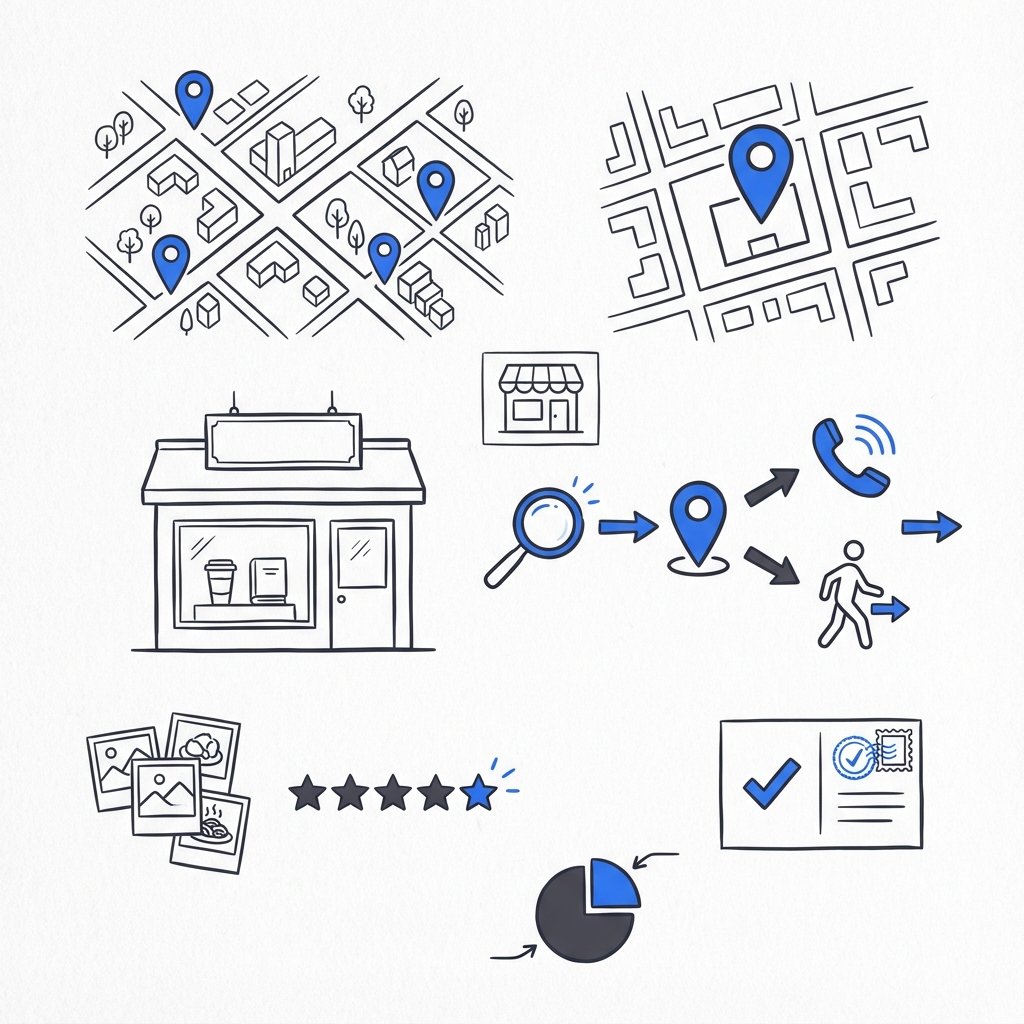
Your GBP is often the first thing a potential customer sees when they search for a flooring business. It appears above organic results on many mobile searches and acts as a quick credibility check. Make GBP optimization a weekly habit.
Checklist for GBP:
– Keep business hours, service areas and phone numbers accurate and consistent across online listings.
– Add project-focused photos (before/after, close-ups of seams, crew at work) and rotate them regularly.
– Use service categories and attributes that match real offerings: hardwood installation, vinyl plank, refinishing, repair.
– Post short updates: recent jobs, special offers, or quick tips about maintenance.
– Manage reviews actively. Ask customers for a review after each job, and encourage photo uploads in reviews.
Visual proof matters: short installation clips or a quick before/after reel on your GBP card will increase clicks and time on listing – both signals that push more visibility for a flooring business.
Paid search, Local Services Ads and where to spend for volume
Paid search still converts well for home services when the campaign is aligned to intent. For a flooring business, focus on high-intent queries like “hardwood floor installation near me” or “vinyl plank replacement [city name]”. Keep landing pages tightly matched to the ad and include clear contact routes: click-to-call, chat, and a short estimate form.
Local Services Ads operate differently and often deliver lower cost-per-lead (CPL) with strong intent – users click to call or message directly. For many flooring businesses, LSAs are the fastest route to quality calls. Expect CPL ranges to vary by city and job type; track lead-to-sale conversion closely and be strict about qualification. See this Google Local Service Ads Guide for a detailed overview of how LSAs work and cost benchmarks.
Paid search and LSA tests together give fast insight on demand and lead quality – pair them with tight landing pages and clear qualification scripts.
Social channels: show real floors, not stock photos
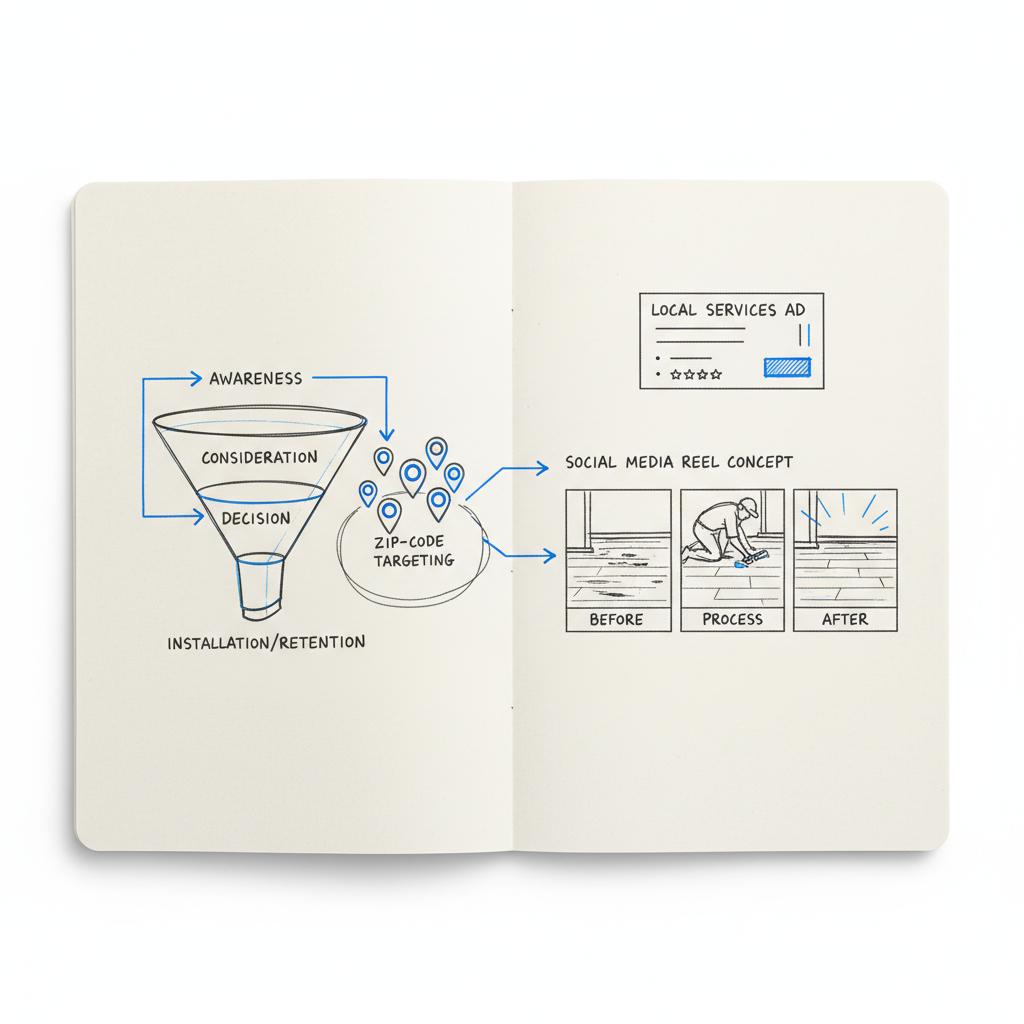
Social platforms like Facebook and Instagram are discovery tools – they’re great for showing project reels, time-lapses and short testimonials. For a flooring business, social is a top-of-funnel channel that warms neighborhoods so when a homeowner sees your search ad or LSA, they already recognize your brand.

Target locally by zip code and homeowner interests (home improvement, renovation, DIY). Use the same creative across GBP posts, social ads and landing pages to keep the message consistent. Short videos that show a messy room becoming a finished floor have higher engagement and help lower CPL when combined with search campaigns.
Short, authentic install reels that show a messy start, the team working, and a quick reveal — 15–30 seconds — often outperform polished stock imagery because they build trust and show real capability quickly.
Answer: a 15-30 second “day-in-the-life” install reel – the dirt, dust, the team working fast, then the reveal. Authenticity sells.
Marketplaces: quick volume, watch the margin
Platforms like Houzz, Thumbtack and similar marketplaces can deliver quick leads for a flooring business, especially when you need to fill crews quickly. But marketplace leads often expect competitive quotes and may lower your average ticket if you don’t qualify them properly. Use marketplaces to supplement owned channels, not replace them.
Track the close rate and average job value by source. If marketplace leads close at a lower AOV or require more discounts, reduce spend there and reallocate to LSAs or targeted search in your best zip codes. For guidance on how much contractors typically invest in ads, see this note on how much flooring contractors should spend on ads.
Organic local SEO: durable traffic for your flooring business
Paid channels fill the funnel quickly; organic local SEO builds lasting advantage. Expect 3-6 months to see meaningful traction when you consistently publish local content, galleries and service pages that answer common homeowner questions.
Recommendations for organic content:
– Create separate service pages for each major flooring type (hardwood, engineered, vinyl plank, tile, refinishing).
– Publish short, local project write-ups (one case study per job). Include photos, timeline, materials and honest pricing ranges.
– Maintain a clear FAQ: timelines, sample costs, typical disruption, how you protect homes during installs.
These pages help homeowners searching for “best hardwood installer near [neighborhood]” and will bring more informed, higher-converting leads to your flooring business over time.
Offline tactics that still move the needle
Offline channels remain effective when tracked and integrated. Targeted direct mail campaigns with a clear offer can produce response rates between 2.7% and 4.4% if well segmented. Vehicle wraps and branded trucks create continuous local impressions that build recognition and lift conversion when paired with digital ads.
Always track offline: use dedicated phone numbers, unique landing pages, or UTM-coded URLs so you can see which mailer or flyer produced the lead. Then compare lead-to-sale conversion and average job size across channels to decide what to scale.
Lead cost and quality: benchmarks that help decisions
Benchmarks give you a frame to make decisions, but local data is the authority. Still, these national reference points are useful:
– Paid-search conversion for home services: ~6.9% (when campaigns and landing pages are aligned).
– Typical LSA CPL range: $25-$45 (varies by market).
– Direct mail response: 2.7-4.4% depending on targeting.
To be practical, run a small paid test in selected zip codes, gather clicks and call data, and calculate CPL by neighborhood. Combine CPL with average job value and close rate to understand maximum efficient acquisition spend. For practical contractor-focused LSA examples and tactics see this article on how contractors are leveraging Local Service Ads.
Quick tests you can run this week
Measurement is the foundation. If you don’t track lead source, you can’t optimize. Set up call tracking numbers per channel, use UTMs on links, and aggregate leads into a simple CRM or spreadsheet. Tag each lead with its source and track close rates and job value.
Run focused tests: pick two zip codes where you already have jobs or strong referrals. Run a Google Search campaign and a matching social campaign for two weeks. Turn on LSA in those areas if possible. Use the same visual reel across GBP, social, and your landing page.
Sample small test budget: $500-$1,500 for two weeks of search + social in one market. Use an additional $300-$800 for a small direct mail run or one marketplace test. The goal is to learn, not to go all-in.
Common mistakes that waste money
Many flooring businesses fall into the same traps. Be mindful of these pitfalls:
– Slow or inconsistent follow-up. Leads go cold when phones aren’t answered or callbacks lag.
– Treating all leads the same. Marketplace leads, LSA calls and web form submissions require different qualification scripts.
– Neglecting reviews. Paid campaigns underperform if listings show outdated or unresolved reviews.
– Poor landing page alignment. If an ad promises “vinyl plank installation” and your landing page is generic, conversions will drop.
Phased plan: 90 days, 6 months, 12 months
Days 1-90: Measurement, quick wins, and small tests
– Verify GBP details and add 15-30 recent project photos.
– Set up call tracking and a basic lead log or CRM.
– Run a two‑week search + social test in a high-potential zip code with a $500-$1,500 budget.
– Try LSA in one or two zip codes and track lead quality.
– Run a one-off marketplace test and a small direct mail drop with a dedicated phone number/URL.
Months 3-6: Refine and build content
– Analyze early tests and allocate budget to the best-performing channels and neighborhoods.
– Publish service pages and project write-ups, and build a gallery to support local SEO.
– If direct mail worked, scale it slightly with improved targeting and tracking.
– Start A/B testing landing page elements: hero images, CTAs, and form length.
Months 6-12: Scale, protect margins, and optimize LTV
– Expand organic content across neighborhoods and flooring types.
– Tighten lead qualification to protect margins and avoid low-AOV jobs from marketplaces.
– Double down on LSAs and search in zip codes with strong LTV; reduce marketplace spend if it drags down margins.
Case vignette: a small shop that filled winter crews
Picture a three-person crew in a midsize city. They had few reviews and a basic website. Their goal was simple: keep two crews busy through winter. They cleaned up their GBP, added 30 recent photos and asked three recent customers for reviews. They ran an LSA in three zip codes and matching social ads showing a kitchen before/after and a short install clip. They used a unique phone number on a direct mail postcard that linked to a landing page with financing options.
Results within six weeks: LSA produced higher conversion and larger jobs; social generated smaller, awareness-driven inquiries; one marketplace brought volume but low-margin jobs. With that data they scaled LSA in the best zip code, reused the social creative on the website gallery, and paused the expensive marketplace campaign. Over months they saw organic traffic improve and paid dependence fall.
Working with a partner: If you hire an outside partner to help your flooring business, expect them to set up measurement, run the first tests, and present clear dashboards with CPL, close rate and AOV by channel. A good partner will train your team on follow-up scripts and help optimize landing pages and GBP. They should act as an extension of your crew, not a black box. See Agency VISIBLE’s projects for examples of local work and results, and their homepage for services and approach.
Tip: if you want a tactical partner that builds local tests and reporting without the fluff, check out Agency VISIBLE’s contact page to ask about a quick local-first test. Their approach focuses on measurable results and getting visibility fast for small and mid-sized businesses.
Practical checklist before you spend another dollar
– Is your GBP accurate and populated with recent photos?
– Are calls tracked per channel and tagged in your CRM?
– Do you have a short A/B test plan for two zip codes?
– Does your team answer calls quickly and follow a qualification script?
– Are you asking every happy customer for a review with photos?
Simple reporting dashboard to set up this week
Track these fields in a spreadsheet or CRM: lead date, source, zip code, campaign, close status, AOV, follow-up time, and notes. Summarize by week and by zip code to spot where you should scale spend or pull back.
Funny but useful hiring note
Want a quick morale booster? Give your install crew a camera and a small bonus for the best before/after photo of the month. You’ll get better visual content and a happier team – a low-cost win for a flooring business.
Summary: the steady, local-first habit wins
There’s no single silver bullet. The flooring business that wins consistently treats lead generation as an ongoing local habit: keep GBP fresh, tell real project stories, run small tests for search and LSA, use social for awareness, and supplement with marketplaces or mail when you need volume. Track everything and protect your margins by qualifying leads. Over time you’ll shift more leads to owned channels and see a healthier, predictable pipeline.
Next steps you can take right now
– Clean up GBP and add 10 recent photos.
– Set up a call-tracking number for one zip code and run a two-week search + social test with a $500-$1,000 budget.
– Use one unique phone number on any direct mail to test offline attribution.
– Ask three recent customers for reviews with photos today.
Ready to get visible and fill crews consistently?
Ready to make your business visible? If you want help setting up a local-first test and simple reporting, reach out and we’ll show you how to get clear results fast: Contact Agency VISIBLE.
Friendly close: keep measuring, keep photographing, and follow up fast – your next booked crew is probably a single good photo and a fast callback away.
The fastest action is to clean up your Google Business Profile: update hours and service areas, add recent project photos (before/after), and ask satisfied customers for reviews with photos. These changes are quick to implement and immediately improve visibility across search, maps and paid channels.
Both can work, but LSAs often deliver higher-intent calls and lower CPL for home services. Start an LSA trial in your top zip codes and run a tightly matched Search campaign in parallel. Measure CPL and lead quality for each and allocate budget to the channel that produces better close rates and higher AOV for your flooring business.
Expect meaningful organic traction in about 3–6 months with consistent local content: service pages, project case studies, and updated galleries. Organic takes longer than paid channels, but it delivers lower-cost, better-informed leads over time.
References
- https://ppc.io/blog/google-local-service-ads
- https://flooringmarketer.net/how-much-flooring-contractors-should-spend-on-ads/
- https://adaptdigitalsolutions.com/how-contractors-are-leveraging-google-local-service-ads-for-more-leads-google-guaranteed/
- https://agencyvisible.com/
- https://agencyvisible.com/projects/
- https://agencyvisible.com/contact/