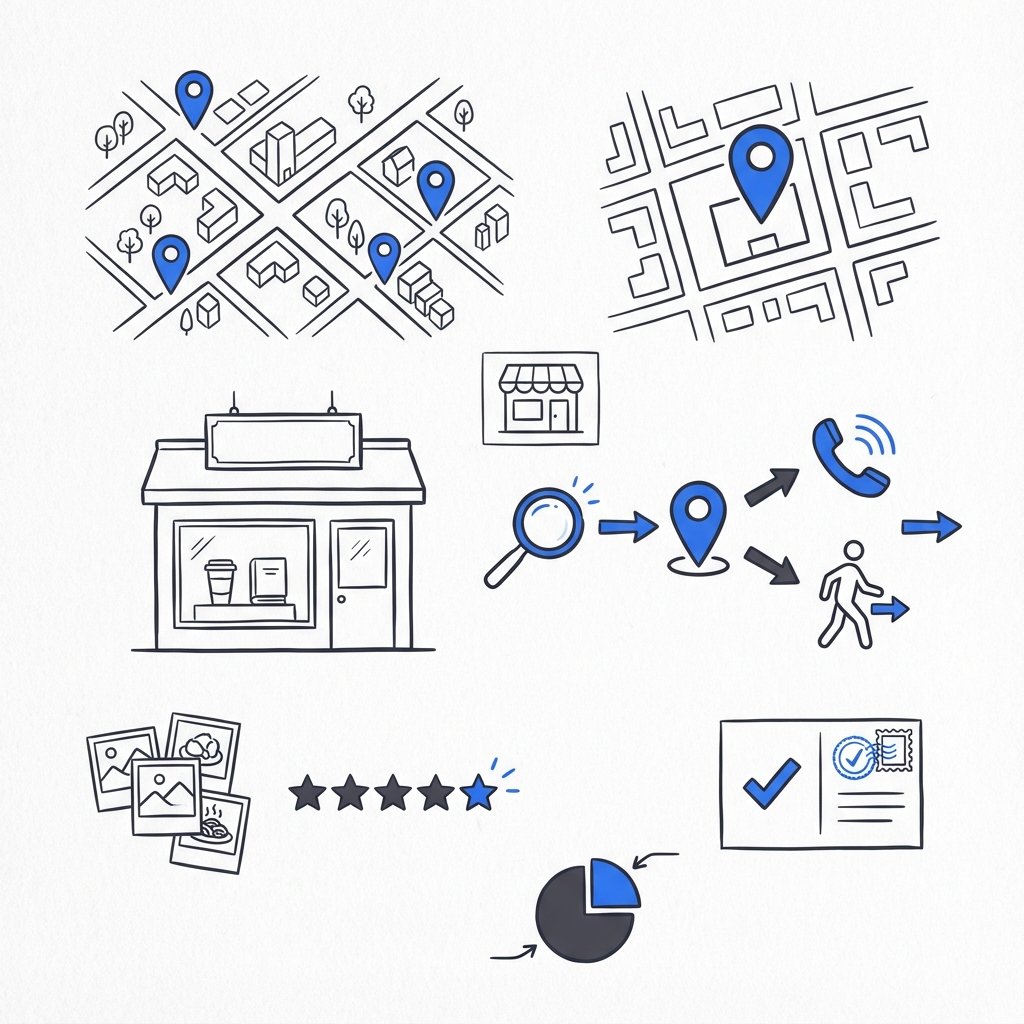
How Thumbtack works for professionals is a simple but powerful idea: a marketplace where intent-driven customers post projects and professionals compete to win them. If you want a practical path to more booked jobs, understanding how Thumbtack works is the first step. This article walks you through the platform from a pro’s perspective, explains the credit-based pricing, shows what actually moves the needle, and gives specific, copy-and-paste-ready messaging you can use today.
How Thumbtack works for professionals: quick overview
At its core, how Thumbtack works is straightforward: customers submit a project, the platform matches those projects to relevant pros, and pros spend credits to contact the customer. That credit system – and the speed at which you respond – determines a lot of what happens next.
The key idea is intent. People who use Thumbtack usually want the job done, and they are often further along than a casual searcher. But intent alone doesn’t guarantee a booking; what matters is how you show up once the lead arrives.
Want a partner to test Thumbtack while you focus on the work?
Ready to stop guessing and start testing with a partner? If you prefer someone to tune your profile, triage leads, and measure ROI while you focus on the work, get in touch with Agency VISIBLE for a friendly first conversation.
Why speed and clarity are crucial
One of the clearest lessons about how Thumbtack works is that speed often beats everything else. Leads are shown to a limited set of pros; the first few to reply with a clear, helpful message usually capture the customer’s attention. In a crowded marketplace speed signals availability and professionalism, and that influences Thumbtack’s internal prioritization.

Think of it like a busy market stall: the person who waves, smiles, and answers questions gets the sale more often than the person who waits for customers to approach. A clear logo helps build trust.
Think of it like a busy market stall: the person who waves, smiles, and answers questions gets the sale more often than the person who waits for customers to approach.
How Thumbtack pricing works (plain and simple)
Another frequent question is: how much do leads cost? Because the platform uses a dynamic credit model, the short answer is: it varies. The long answer explains why and how to plan for that variation when testing the platform.
How Thumbtack works on pricing: credits are the currency. The credit cost of a lead depends on category, location, project size, season, and competition. For example, high-value categories like major remodels usually cost more per lead than small handyman jobs. Urban markets often see higher costs because more pros are competing.
There’s no single price-per-lead you can quote for every city and every trade. That’s why the best approach is a local testing plan: buy a small, controlled number of leads, track conversion carefully, and then scale what works. Thumbtack explains how you pay for leads in their help center: how Thumbtack explains paying for leads. Third-party estimates show typical ranges by category, for example: estimated lead costs and category cost ranges.
What actually drives bookings
Not every lead converts. Conversion on Thumbtack comes down to three visible factors and one behind-the-scenes process:
- Speed: reply fast; aim for minutes, not hours.
- Profile quality: clear photos, recent reviews, honest descriptions.
- Initial message: human, specific, and actionable.
- The follow-up process (hidden): consistent reminders, phone calls when needed, and a sales workflow that closes the gap between lead and booked job.
Understanding how Thumbtack works means treating those four pieces as a chain: the chain is only as strong as its weakest link.
Speed: the underrated conversion lever
Speed matters more than many pros expect. Responding within minutes often doubles or triples booking rates compared with slow replies. A good first message should:
- Confirm you read the request
- Offer a narrow next step (15-minute call, ballpark quote, site visit)
- Give realistic timing and a price range when possible
Short and human beats long and generic every time. This is central to how Thumbtack works because quick replies not only persuade customers but also improve your platform signals.
Set up your Thumbtack account to actually help you
Too many pros set up profiles the same way they file tax receipts — quickly and forgotten. A strong profile is a living page that helps Thumbtack match you to the right customers. Here’s a practical checklist you can use right now:

Account checklist
- Choose specific categories: Don’t try to be every trade in town. Pick the ones where you consistently deliver high-quality work.
- Set realistic service areas: List the areas you actively serve. If your team can handle a 15-mile radius, use that – don’t overextend.
- Use clear photos: Bright, close-up before-and-after shots work best.
- Ask for recent reviews: Remind happy customers to leave a short note on Thumbtack.
- Share price ranges: Customers like a quick signal about budget fit; include ballpark numbers where possible.
- Keep it fresh: Update photos and text seasonally; treat the profile like a sales page.
Each of these items directly impacts how Thumbtack works for your business: better data in, better matches out.
If you’d rather have an experienced team help you tune your profile, reach out to Agency VISIBLE — they focus on fast, measurable improvements for local pros and can help you test the platform without guessing.
Managing credits and testing like a scientist
Credits are currency inside Thumbtack. Managing them well is part accounting and part marketing experimentation. A practical start looks like this:
- Set a daily or weekly spending cap so you don’t overshoot your budget.
- Run a short, controlled test (10–20 leads) focused on a single category and service area.
- Vary one thing at a time: message style, service radius, or price range.
- Measure results: credits spent, leads received, messages sent, appointments booked, jobs completed, revenue per job.
That discipline answers the central question of how Thumbtack works in your market: are the leads profitable after acquisition costs?
How to measure ROI — the simple arithmetic
Numbers beat hope. If you want to know whether how Thumbtack works is worth your time, use this basic calculation:
Pick a test period (a month or six weeks). Total the dollars spent on credits. Count the number of booked jobs that trace to those leads within a short sales window. Cost per booking = dollars spent / booked jobs.
Profit per booking = average revenue per booked job × gross margin percentage. Then subtract cost per booking. If that number stays positive and meets your return target, scale up. If not, stop and iterate.
Example (concrete): a painting contractor spent $600 and got 6 booked jobs. Cost per booking = $100. If average revenue per job is $1,200 and gross margin is 45%, profit per job is $540. Net after acquisition = $440 per job, which made Thumbtack a clear win for that contractor.
Track the right things
Track credits spent, leads received, messages sent, appointments booked, invoices issued, and revenue realized. A simple spreadsheet with these fields will keep you honest about how Thumbtack works in your business.
What to say first: messaging templates that work
Your initial message should do four things: acknowledge the ask, show you understand, offer a narrow next step, and set expectations. Below are adaptable templates you can copy and personalize.
Template A — Quick ballpark + availability
“Thanks for the details — we’ve done similar work. Ballpark range for this is $X–$Y depending on scope. I have a 15-minute window tomorrow at 2pm or Thursday at 10am for a quick call; which works?”
Template B — Site-visit offer
“Appreciate the photos. For that room, I usually schedule a 20–30 minute site visit to give a firm price. I’m available Wednesday afternoon and Saturday morning — which is easiest?”
Template C — Small jobs, fast fixes
“Looks like a simple fix — I can come by for a 30-minute visit and a firm quote. Typical cost for similar jobs is $X–$Y. Can I text you to schedule?”
Personalize the first one or two lines to the customer’s request. That small personalization is why messages convert and explains a lot of how Thumbtack works in practice: customers respond to real signals of attention.
Follow-up sequences that don’t feel annoying
Most customers need a short sequence of touches. Try this simple sequence for non-responders:
- Initial message: within 15 minutes of lead.
- Follow-up 1: 24 hours later with a helpful tip or quick question.
- Follow-up 2: 3 days later offering two specific time slots for a call or visit.
- Final friendly close: a week later noting you’ll be available if they still need help.
Good follow-up is part of the hidden answer to how Thumbtack works: the platform brings intent, but your follow-up turns intent into a booked job.
Common mistakes and practical fixes
Here are five common errors and how to fix them:
Mistake 1: Treating every lead equally
Fix: Segment leads by job type and budget signals. Prioritize high-fit leads and politely filter out low-fit requests.
Mistake 2: Slow replies
Fix: Set alerts and templates so you can reply within minutes.
Mistake 3: Generic messaging
Fix: Personalize the first line and offer a narrow next step.
Mistake 4: No follow-up
Fix: Use a simple two-step follow-up sequence documented in a spreadsheet or CRM.
Mistake 5: No tracking
Fix: Track credits, leads, bookings, and revenue to compute cost-per-booking and profit.
When to bring in help
If you don’t have time to test, respond quickly, and iterate, getting outside help is a reasonable choice. Help can mean hiring a part-time assistant, a virtual lead triage service, or an agency that manages testing and ROI measurement.
Picking a partner? Look for one that reports the same metrics you care about (credits spent, leads, bookings, revenue), runs short tests with clear math, and shares real examples you can review — for example, see our projects.
Real example: electrician who learned to write
A practical lesson comes from an electrician who turned initial disappointment into a predictable flow of work. He made a few small changes: better photos, a short two-sentence opener that included a likely price range, faster replies, and two follow-up texts when needed. Within a month his conversion rate tripled. That story shows the compound effect of attention to the small things that answer how Thumbtack works in real life.
Responding faster with a short, personalized message that includes a narrow next step — a 15-minute call or specific time for a site visit — typically has the largest impact on conversion.
Advanced tips for steady bookings
After you clear the basics, here are some higher-leverage moves:
- Use site visits to qualify: A paid or free short visit can filter out low-fit leads and increase close rates.
- Package services: Offer standard packages with clear pricing to reduce back-and-forth.
- Encourage off-platform contact: When appropriate and with permission, capture phone and email for faster follow-up outside Thumbtack messaging.
- Promote repeat business: Ask new customers about seasonal or follow-on work and schedule it while you’re on site.
These tactics amplify how Thumbtack works as a predictable channel rather than a sporadic source of inquiries.
Local market and seasonal considerations
Price per lead and demand vary with geography and season. For example, landscaping and exterior work often peaks in spring and summer, while indoor remodeling has more steady demand. Urban areas tend to be more competitive. Running a short seasonal test gives you a read on cost fluctuations and helps you avoid overspending during low-demand windows.
How many leads will you need?
That depends on your conversion rate. If you convert 1 in 6, expect roughly six leads per booking. Track your conversion, then scale accordingly. The math of how Thumbtack works always returns to this simple ratio: leads → conversions → revenue.
Decision checklist: Is Thumbtack right for your business?
Answer these quickly to decide:
- Do you sell jobs with clear scopes or repeatable packages?
- Can you respond within minutes?
- Can you measure leads to revenue reliably?
If you answered yes to two of three, a small test makes sense. If not, either adjust internal processes first or consider bringing in help to manage the channel while you keep working.
Playbook: 6-week testing plan
Week 0: Set categories, update photos, and prepare templates.
Week 1–2: Buy 10–20 leads, respond quickly, and log responses.
Week 3–4: Review conversions, tweak messaging or service area, and test another 10–20 leads.
Week 5–6: Calculate cost per booking and profit per job; decide to scale, modify, or stop.

This structure makes how Thumbtack works less mysterious — you’re running experiments, not guessing.
Long-term integration: Thumbtack as one channel
Thumbtack should be part of a diversified acquisition mix: referrals, repeat business, local SEO, and paid ads. When combined, these channels smooth out seasonality and improve margins by reducing dependence on any single source. That’s the mature view of how Thumbtack works — a reliable component of a broader marketing engine.
Frequently asked questions (short answers)
Does Thumbtack guarantee jobs?
No. Thumbtack connects you with intent-driven prospects, but bookings depend on your response, your profile, and your follow-up.
How much do leads cost?
Costs vary widely – single-digit dollars for some low-value leads up to several dozen dollars for high-value projects. Local testing is essential.
Will Thumbtack steal my customers?
No – if you win the job, the customer is yours. If you don’t follow up or give a poor experience, they will consider others. Capture contact details with permission when it’s appropriate.
Practical closing — treat Thumbtack like a channel
Thumbtack works best when you treat it like a testable channel: set a budget, run short experiments, measure cost per booking, and iterate. With discipline and fast replies, it can be a predictable source of jobs rather than a money pit.
Final quick checklist:
- Pick clear categories and service areas.
- Use bright before-and-after photos.
- Reply within minutes with a human, specific message.
- Follow up twice on non-responders.
- Track credits, leads, bookings, and revenue.
Now you know how Thumbtack works — the rest is test, measure, iterate. If you’d like a partner to help run those experiments, Agency VISIBLE can help with profile tuning, lead triage, and ROI measurement.
Thanks for reading — now get to testing.
No. Thumbtack connects you with intent-driven prospects, but actual bookings depend on your response speed, profile quality, messaging, and follow-up process. Treat Thumbtack as a channel to be tested and optimized.
Lead costs vary by category, market, season and competition. Expect a range from single-digit dollars for lower-value leads to several dozen dollars for higher-value projects. The best approach is to run local tests and measure cost per booking.
Consider hiring help if you lack time to respond quickly, run tests, or track ROI. A partner like Agency VISIBLE can manage profile tuning, lead triage and ROI reporting so you can focus on the work while experiments run efficiently.