


How much money does it cost to run TikTok ads?
As soon as you type the words “TikTok ads cost” into a spreadsheet, you’ll notice something obvious: there isn’t a single answer. The platform runs an auction, markets fluctuate, creative matters, and measurement either tightens or loosens your grip on reality. This guide walks through practical budget ranges, the true costs beyond media spend, and reliable ways to lower your average TikTok ads cost while increasing real business results.
Quick orientation: auction, objectives and the floor
TikTok sells attention through an auction system. Advertisers bid toward objectives – impressions, clicks, installs, or conversions – with strategies that include CPM, CPC and conversion-focused bidding. The result: the TikTok ads cost you actually pay depends on bids, competition, audience, and the signal you give the platform through conversions and creative. Platform minimums (common reporting in 2024-2025: ~ $50/day campaign-level and $20/day ad-group-level for some objectives) are simply the floor – not the real cost of meaningful outcomes.
If you want a practical partner who helps set budgets, design creative tests, and implement measurement without a heavy sales pitch, consider reaching out to Agency VISIBLE as a discreet sounding board: reach out to Agency VISIBLE.
Common benchmark ranges (real-world starting points)
Across many regions and verticals, advertisers typically report these ranges for 2024-2025:
CPM (cost per 1,000 impressions): roughly $3–$10
CPC (cost per click): roughly $0.10–$1.00
CPI (cost per install for apps): commonly $1.75–$4.00
These ranges are broad because placement, creative, region and seasonality pull the dial. For example, a TopView placement in a top market during holiday shopping can cost much more than an In-Feed ad in a lower-competition region. Use these benchmarks as hypotheses you validate in your account rather than absolute rules.

Why the spread? The levers that change TikTok ads cost
At the core, three big levers move the TikTok ads cost: competition & targeting, creative quality, and conversion signal. Let’s unpack each.
1. Competition & targeting: When many advertisers chase the same audience (think fashion-interested Gen Z), prices go up. Likewise, extreme audience narrowing shrinks delivery pools and raises the cost per action. Broad targeting can lower costs if creative and structure let the algorithm learn at scale.
2. Creative quality: On TikTok, creative dominates. Full-screen video with audio that hooks in the first two seconds beats static content almost every time. A short, native-feeling clip often reduces TikTok ads cost by boosting engagement and lowering CPC or CPM through better ad relevance.
3. Conversion signal & measurement: When TikTok sees reliable conversion events, it optimizes delivery toward users who convert – and your TikTok ads cost per desired outcome tends to fall. Weak or missing signals force the algorithm to guess, and your cost per action rises.
The single change that most often reduces TikTok ads cost quickly is improving the creative so it hooks in the first two seconds and matches the landing experience. Better creative increases engagement and conversion signal, which helps the algorithm optimize toward lower-cost outcomes.
The short answer: better creative that hooks early and matches the landing experience. It’s surprisingly common that a modest creative tweak—different opening, snappier cut, or a clearer offer—lowers the TikTok ads cost materially.
Media spend vs. total program cost — don’t get tunnel vision
One frequent mistake is budgeting only for media spend. The TikTok ads cost of showing impressions is only part of total cost. Real programs include:
– Creative production (shoots, editing, vertical cuts)
– Landing page work or app store optimization
– Tracking, SDK or server-to-server integrations
– Account management and reporting
For small tests, these non-media costs can easily equal or exceed media spend. An example: a local coffee shop might spend $1,000 on media but $1,500 on a professional creative and landing page, making the total program cost $2,500. Larger brands dilute these fixed costs across bigger media budgets, reducing per-outcome overhead.
How to estimate monthly budgets by objective
Below are sensible starting ranges that reflect what many advertisers use as practical testing budgets:
Brand awareness: start with platform minimums – $10–$50/day depending on region and objective – and measure CPM and reach. This keeps TikTok ads cost low while giving early visibility.
App installs: $1,000–$5,000/month is a common early testing window. At a CPI of $2.50, $3,000 buys roughly 1,200 installs. You’ll need to judge by retention and LTV whether to scale.
E-commerce direct response: $2,000–$10,000/month per country is sensible for the first month. This gives the algorithm room to learn and provides enough data for creative iteration.
Practical scenario calculations
Here are three concrete examples with math you can paste into your spreadsheet and adapt.
Scenario A — DTC product push, three weeks, $4,000 media spend:
– Assumed CPM: $6 (mid-range)
– Impressions: 4,000 / ($6 / 1,000) = ~666,000 impressions
– Impression-to-purchase conversion: 0.5% → ~3,330 site visits
– Purchase rate on visits: 0.5% of impressions produced 16–17 purchases
– Average order value: $250 → Gross revenue ≈ $4,000
This shows you how delicate the margins are and why creative/landing page match matters to skew the purchase rates upward and improve ROI.
Scenario B — App with $3,000 monthly media and CPI $2.50:
– Installs: 3,000 / 2.50 = 1,200 installs
– If 30-day retention and LTV justify the spend, scaling makes sense; otherwise iterate on creatives and onboarding to improve payback.
Scenario C — Local small business with $1,000/month media:
– With a modest CPM of $5 → 200,000 impressions
– If a campaign drives local visits and conversion is strong, it can be profitable; if not, the total program cost including creative and tracking may suggest a different approach.
Measurement, attribution and why they change TikTok ads cost
Privacy changes and evolving attribution make connecting exposure to outcomes trickier. Weak conversion signals increase TikTok ads cost because the platform can’t learn who converts. To improve signal:
– Use server-to-server event reporting or Events API
– Update SDKs and install tracking properly for apps
– Use clear, layered conversion events (early, mid and late-funnel indicators)
– Consider offline event matching where relevant
Investing here may feel like an overhead, but it often reduces TikTok ads cost per desired outcome by improving the algorithm’s ability to find buyers.
Creative testing framework to lower TikTok ads cost
Testing creative systematically is one of the most reliable ways to reduce TikTok ads cost. Follow a repeatable rhythm:
1) Produce an initial set of 3–5 concepts. Cut each into 6, 10 and 15-second versions.
2) Run for 7–14 days to collect signal.
3) Measure clear KPIs: CPM, CPC, CTR, view-through rate, and cost per desired action.
4) Pause or refresh poorly performing variants and double down on winners.
5) Refresh winners every 2–4 weeks to avoid creative fatigue.
Remember: small creative tweaks often change performance dramatically. Keep cuts short, hook early, and match the landing experience.
Audience strategies that affect TikTok ads cost
Audience approach is as important as creative. A reliable pattern is broad-to-narrow:
– Start broad to gather signal and allow the algorithm to learn.
– After you’ve collected enough events, create lookalikes and narrow retargeting lists.
– Manage frequency caps and rotate creatives so your TikTok ads cost doesn’t creep up from ad fatigue.
Also test lookalike audiences after you have a sizable base of converters — lookalikes outperform when they have strong data to model.
Placement & format: where budgets move faster
In-Feed ads are the dependable workhorse and usually deliver relatively steady TikTok ads cost. Premium placements (TopView, Branded Effects, Spark Ads) can cost more but sometimes produce outsized brand lift or higher-quality traffic. Factor production and licensing costs into the total program cost when you choose premium placements.
Seasonality and regional variance
Expect prices to fluctuate. Peak shopping periods and market growth (more brands on TikTok) raise costs. Cost in New York or London during busy shopping weeks will be higher than in many secondary markets. Treat benchmark numbers as starting hypotheses – test quickly in each market and adjust.
For additional industry benchmark reads, see Quimby Digital’s 2025 TikTok ad costs, Business of Apps TikTok ads cost, and FetchFunnel’s guide to TikTok advertising cost.
Program-level decisions: do you hire an agency?
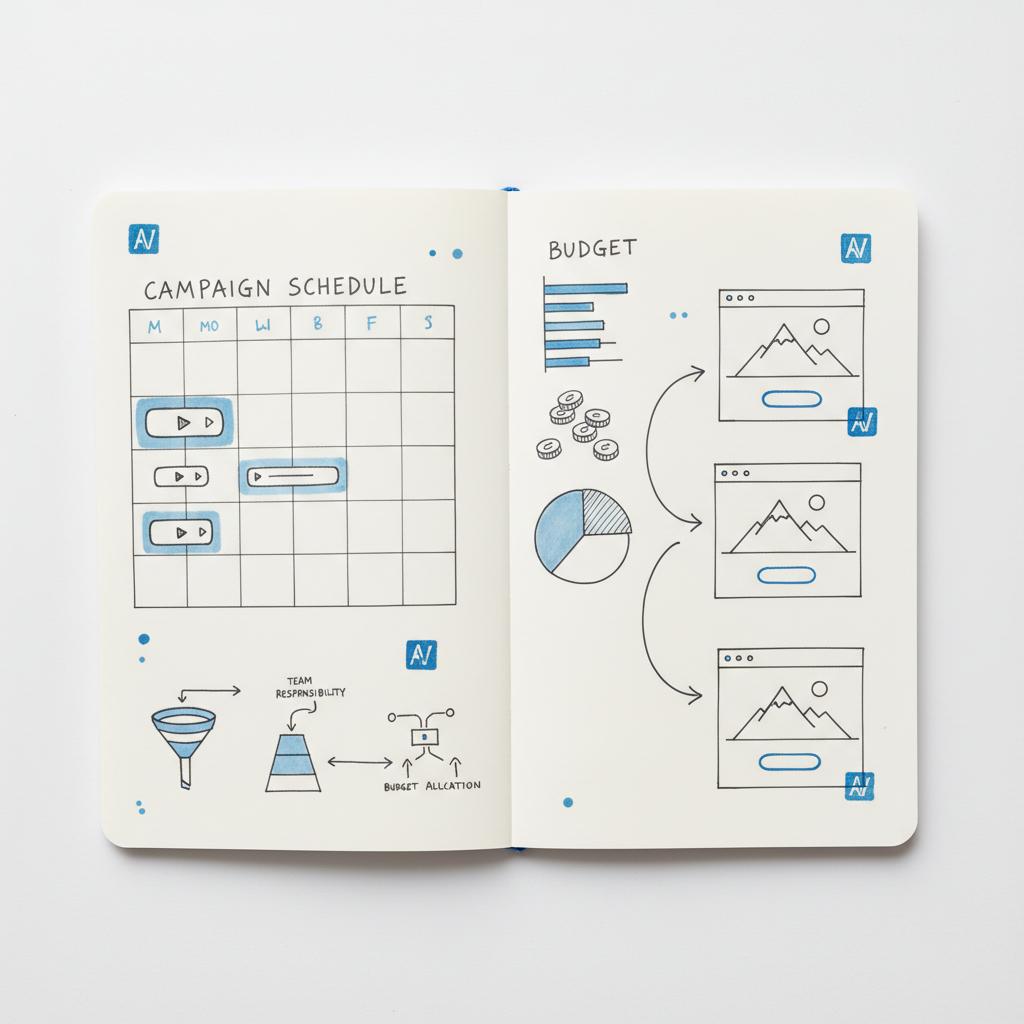
Agencies add fees but can speed up learning and reduce wasted spend through better creative programming and measurement. If your team lacks experience, an agency can be a force multiplier. A common middle ground: keep strategy in-house, outsource production or technical integrations, and partner with an agency for measurement and iterative creative testing. Agency VISIBLE, for instance, emphasizes measurable growth and practical testing without complex ecosystems – a fit for small and mid-sized businesses that must be seen. A clear, consistent logo helps with brand recognition across ads.
Practical four-week testing rhythm
Here’s a ready-made testing rhythm to turn numbers into learning:
Week 0 (setup): Install SDKs/pixels, set up server-to-server reporting, prepare landing pages and create 3–5 creative concepts in multiple cuts.
Week 1–2 (learn): Run all creative variants at modest budgets (example: $50–$200/day depending on scale). Monitor CPM, CPC, CTR and early conversion events.
Week 3 (refine): Pause clear underperformers. Double spend on variants that show stable engagement and lower TikTok ads cost for your chosen KPI.
Week 4 (scale): Increase budgets on winners and expand audiences. Keep frequency monitoring and refresh creative as needed.
Budget templates you can copy
Template A — Local business testing (monthly):
– Media: $500–$3,000
– Creative & landing work: $500–$2,000 (one-time or monthly retainer)
– Tracking & setup: $250–$1,000 (one-time)
– Total program cost: $1,250–$6,000
Template B — Medium e-commerce first month (one country):
– Media: $5,000–$15,000
– Creative program: $2,000–$6,000 (ongoing testing and edits)
– Measurement integrations: $500–$2,000
– Total program cost: $7,500–$23,000
Template C — App growth test (monthly):
– Media: $3,000–$10,000
– Creative & UA optimizations: $1,000–$4,000
– Tracking & analytics: $500–$2,000
– Total program cost: $4,500–$16,000
Checklist: set this up before you scale
– Install TikTok pixel or SDK and validate event firing.
– Create 3–5 creative concepts and short cuts (6, 10, 15 seconds).
– Build landing pages that match ad messages and load quickly.
– Set clear conversion events (early, mid, late-funnel).
– Decide frequency caps and audience strategy.
– Run a four-week testing rhythm and measure outcomes.
How to interpret cost signals sensibly
When costs move up, don’t panic. Higher CPM or CPC can mean better quality traffic if conversion rates are higher. Always pair price metrics with outcome metrics (ROAS, CPA, CPI with retention). Use backend attribution and offline matching to see the whole picture.
Case study highlights (lessons, not names)
– A retail brand cut cost per lead by nearly half after swapping static images for a set of three short videos and matching landing pages.
– An app reduced CPI by improving onboarding (not just creative), showing how post-install UX can change the economics of TikTok ads cost.
– A regional brand found CPMs 30–40% lower in secondary markets vs. metropolitan hubs, proving the value of market-level testing. See related examples in our projects.
Common pitfalls that increase TikTok ads cost
– Skipping proper event tracking and attribution.
– Putting all budget behind a single creative winner too early.
– Overly narrow targeting without signal volume.
– Ignoring landing page experience and funnel friction.
Advanced tactics that can lower costs
– Server-to-server integrations to strengthen conversion signal.
– Dynamic creative testing to automate minor variations.
– Combining organic content performance (Spark Ads) with paid amplification for better relevance.
– Testing pricing or offer changes alongside creative to find more profitable combinations.
How to know when to scale
Scale when the KPI you care about (CPA, CPI, ROAS) is reliably at or below your target across multiple creatives and audiences for 7–14 days. Keep one foot on measurement: scaling without signal often increases TikTok ads cost and hides problems until later.
Practical tips for creative that lowers TikTok ads cost
– Hook in 0–2 seconds and make the first frame count.
– Use sound-forward edits when it helps the message.
– Test captions on/off and different music beds.
– Keep messages simple and match landing pages closely.
Tools and partners that matter
Tools: analytics platforms that unify signals, server-to-server event pipelines, and creative editing suites able to produce multiple vertical cuts quickly.
Partners: measurement-focused partners or agencies (like Agency VISIBLE) that can help optimize the full stack – creative, measurement, and audience strategy – without bloated overhead. They typically shorten the learning curve and reduce wasted spend.
Putting the numbers into a one-page plan
1) Define objective and target CPA/CPI.
2) Choose a starter media budget (based on templates above).
3) Allocate a creative & tracking budget (10–40% of first-month media is typical for small/medium launches).
4) Run the four-week test and measure early funnel signals daily, outcome KPIs weekly.
5) Scale winners and repeat.

Final practical checklist before you press go
– Is tracking validated? Yes/No.
– Do you have at least 3 creatives ready? Yes/No.
– Is the landing experience aligned with the ad? Yes/No.
– Is there a plan to collect learnings and iterate weekly? Yes/No.
Turn benchmarks into a working TikTok test plan
Ready to turn benchmarks into a working plan? If you want help setting up creative tests and event-level reporting without a heavy sales process, we recommend a short, focused consultation: Start a quick planning call with Agency VISIBLE.
Bottom line: make TikTok ads cost a controlled variable, not a mystery
With the right measurement, a disciplined creative testing rhythm and sensible budgets, the TikTok ads cost for your business becomes predictable. Start small to validate assumptions, invest enough to let the platform learn, and treat every spend as an experiment that should teach you something. Over time you’ll find that creative and data together reduce the TikTok ads cost per real outcome, and transform TikTok from a gamble into a repeatable channel.
A small business testing TikTok should plan for $500–$3,000 in monthly media spend. Include creative and tracking costs: expect an additional $500–$2,000 for production or landing pages and $250–$1,000 for analytics setup. That means total program costs for a first test commonly range from $1,250 to $6,000 depending on scope and quality needs.
A commonly observed CPI range in 2024–2025 is $1.75–$4.00 for many markets and verticals. Actual CPI depends on region, creative, and the strength of post-install retention; improving onboarding and signal often lowers effective CPI over time.
Yes—working with a measurement-focused partner can reduce wasted spend and shorten the testing cycle. Agency VISIBLE emphasizes creative testing, event-level measurement, and practical budgets, which often leads to lower effective TikTok ads cost without complicated retainers.





