How much is a 30 second ad on TV? A practical breakdown for every budget
How much is a 30 second ad on TV? If you’re asking that question, you’re not alone – businesses from corner bakeries to national brands wrestle with the same numbers. The truth: the 30 second TV commercial cost varies wildly depending on market, daypart, inventory scarcity and production choices. This article walks through the real numbers, explains the levers that move price, and gives clear tactics small and mid-sized advertisers can use to make TV work without wasting dollars.
Key idea: think of the 30 second TV commercial cost not as a single price tag but as a set of options you can design around your goals.

Quick anchors: the price spectrum
At the low end, local remnant or tiny market spots can run for tens of dollars per 30 second spot. Mid-tier local and regional buys commonly range from the hundreds to several thousand dollars. National network prime-time 30 second TV commercial cost typically starts in the five-figure range per airing and can climb into the six figures. The extreme example is the Super Bowl: expect headline prices near $7 million for a single 30-second spot (see CBS News and USA Today).
For context on typical spot ranges across dayparts and markets, see the full cost guide from Simulmedia.
Why the huge range?
Three basic forces explain the variation in 30 second TV commercial cost: reach, scarcity, and audience value. National prime time gives huge reach and limited inventory – so prices are high. Small local cable offers limited reach and abundant inventory – so prices are low. Between those poles sit cable niches, syndicated packages and remnant inventory, each with their own pricing logic.
How to read the numbers: CPM, CPP and GRPs
Any time you compare offers, translate them into standard metrics. CPM (cost per thousand impressions), CPP (cost per rating point) and GRP (gross rating points) are the most common. These let you compare a local buy against a regional lineup or a network package more fairly.
When you hear a station rep quote a price for a 30 second TV commercial cost, ask for the CPM and the guaranteed impressions. If they won’t provide CPM or historical ratings data, ask for inventory reports or walk away – transparent metrics are a basic sign of a professional deal.
Daypart matters – hard
Not all 30 second TV commercial cost is created equal by time of day. Prime time is the priciest per impression, while daytime, late-night and early morning are cheaper. But lower cost dayparts reach different audiences. If your customers are evening viewers, a cheap daytime spot is wasted. Match daypart to audience, not just price.
Seasonality and events
High-demand windows – Q4 holiday season, major sports (NFL playoffs, Super Bowl), awards shows – inflate 30 second TV commercial cost because many advertisers compete for the same viewers. If your campaign can be flexible outside peak windows, you can save a lot. If you must be present during peak shopping, budget a premium.
Production: the other side of the price tag
We often talk about media costs and forget production. Yet production affects both cost and creative performance. Typical ranges:
– Low-budget local spot: $1,000–$10,000
– Mid-range commercial: $20,000–$150,000
– High-end national spot: $250,000–$1,000,000+
Decide early how much of your total budget you will dedicate to production versus media. A $50,000 media buy with a $150,000 production spend is often a poor balance unless the creative is likely to generate outsized earned media or long-term brand value.
Small business playbook: how a local advertiser can afford TV
Small advertisers don’t have to match national budgets. Several proven strategies reduce the effective 30 second TV commercial cost for small budgets:
1) Targeted local cable and syndicated buys. Niche cable channels or syndicated packages often deliver specific audiences at lower CPMs.
2) Remnant inventory. Stations sell leftover inventory at steep discounts. Remnant buys are cheap per spot but can be inconsistent in placement.
3) Narrow daypart targeting. Buying the evening block for a restaurant or weekend morning for a home service can concentrate impressions on your likely customers.
Use remnant and targeted buys when flexibility and immediate value matter more than perfect placement.
If you’d like tactical help turning a modest budget into a targeted TV flight, consider a media partner like Agency VISIBLE—they specialize in helping small and mid-sized businesses translate budgets into visible, measurable campaigns.
Example paths for different budgets
– Under $10,000 media budget: Focus on remnant local cable, short-flight syndicated buys and low-cost production. Expect a small number of targeted impressions per airing but good cost control.
– $20,000–$80,000 regional: Syndicated packages across adjacent DMAs plus targeted cable can deliver repeated reach in key areas. Production can be modest and still effective.
– $100,000+ national: Network packages, higher production values and multi-market planning. Media and production both deserve meaningful pieces of the budget.
Negotiation levers that actually move price
When negotiating 30 second TV commercial cost, remember sellers have levers you can use:
– Volume and length of flight: Commit to more spots or a longer flight to lower unit CPM.
– Daypart flexibility: Allow the station to shift some spots to adjacent dayparts for better pricing.
– Makegoods and guarantees: Ask for guaranteed impressions and remedial makegoods if ratings fall short.
– Bundling across stations: Buying a package across multiple markets often unlocks discounts.
Always ask for the inventory report that underpins the offer. A single price without the assumptions is a red flag.
Creative choices that improve ROI
A simple, clear spot often outperforms a high-art film that confuses viewers. For most local and regional buys, conversational scripts, clear calls to action, and a direct offer work best. For national work, you do need stronger creative and production values because you’re competing in a noisy field.
Scripts and CTAs that convert
Use trackable CTAs: unique promo codes, dedicated landing pages or phone numbers let you measure response. Tie a TV flight to a digital landing experience so viewers can act quickly after seeing your spot.
Measurement: how to know a buy is worth it
Don’t rely solely on CPM. Measure audience quality and outcomes. Tactics:
– Conversion tracking: Use unique URLs, promo codes and call tracking linked to your TV flights.
– Lift studies: Compare sales, foot traffic or search volume during flights versus baseline periods.
– Cross-channel signals: Look for spikes in branded search and social traffic after airings.
Simple formula for quick ROI sense:
If you know your average order value (AOV) and conversion rate from a tracked landing page, you can estimate how many conversions a TV flight needs to break even. For example, if a 30 second TV commercial cost $3,000 in media and $10,000 in production (total $13,000) and your tracked landing page converts at 2% with AOV $100, you need 6,500 visits from TV to break even (0.02 * 6,500 * $100 = $13,000). Use CPM to estimate how many impressions will generate those visits.
Real world examples to make the math tangible
– Local dentist, mid-sized DMA: $200–$1,500 per 30 second spot in daytime/late night. Production $2,000–$10,000. A $5,000 media budget can buy a run that generates steady local awareness.
– Regional retailer across adjacent DMAs: Syndicated/cable package at a few thousand dollars per 30 second spot. Media $30,000–$80,000 for a noticeable regional presence; production $20,000–$75,000.
– National consumer brand: Network prime-time might cost $100,000+ per 30 second spot. National campaigns often include multiple networks, pushing media into the millions and production into six figures.
Remnant inventory: bargain or gamble?
Remnant buys are a classic way to lower the effective 30 second TV commercial cost. The trade-off: inconsistent scheduling and uncertain impressions. Use remnant for short promotions or tests where the cost savings outweigh perfect placement.
When to avoid remnant
If you need precise daypart placement, consistent frequency, or high-profile events, remnant is not the right choice.
Reach vs. frequency: which should you chase?
For awareness, reach matters. For action – sales, sign-ups, visits – frequency often wins. If you have a limited budget and a clear target audience, concentrate impressions to increase frequency among a defined group rather than scattering impressions widely. That often improves conversion rates and lowers effective acquisition cost.
Yes. With targeted buys—remnant cable, syndicated packages and narrow dayparts—plus simple tracking (promo codes, landing pages, call tracking), small businesses can keep 30 second TV commercial costs manageable and measure real impact.
Can a small coffee shop afford TV and actually see customers walk in?
Short answer: yes – if you target right. A small coffee shop can use local cable remnant or narrow daypart buys (morning commute windows) plus a clear offer (“show this text for a free pastry with purchase”) to measure response. Keep production simple and create a tracking mechanism like a promo code or in-store mention. The total 30 second TV commercial cost (media + basic production) can be kept low if the plan focuses on immediate return.
Data sources you should use
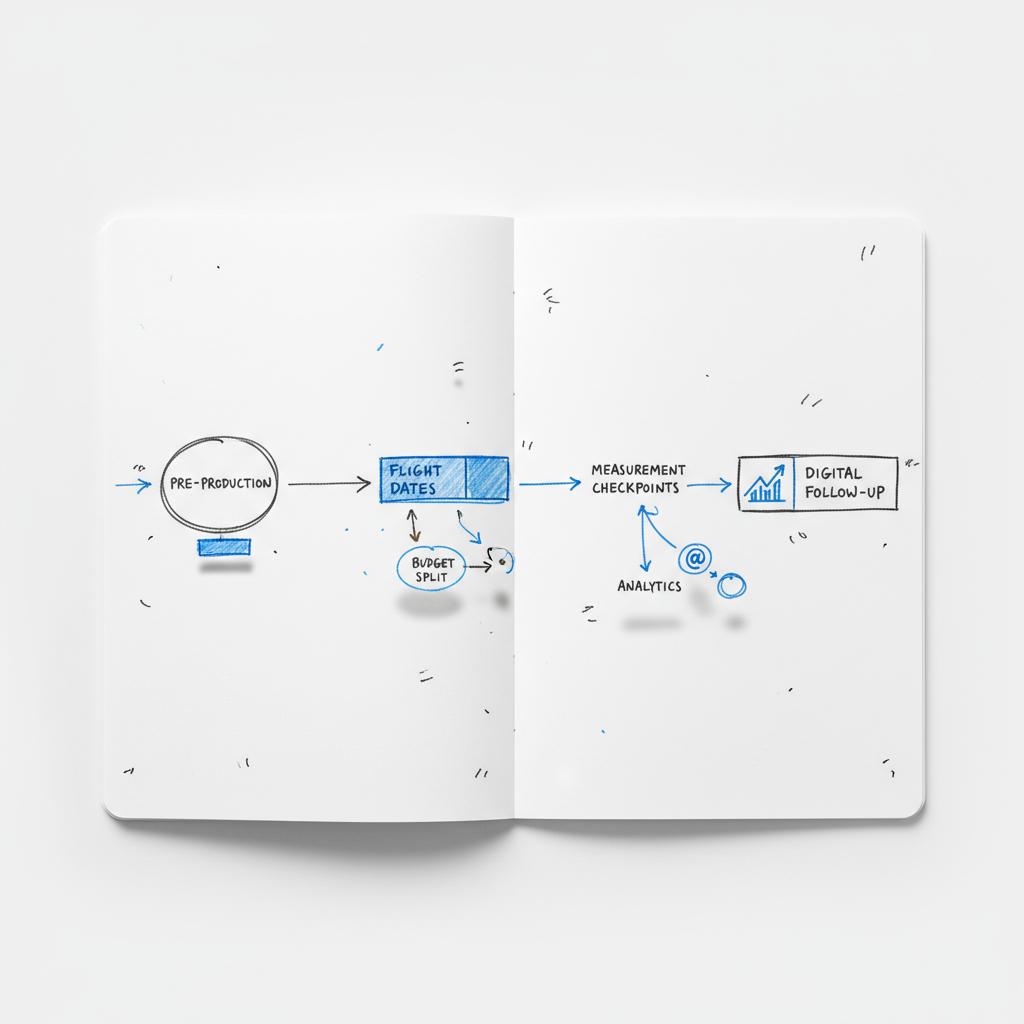
Always ask for up-to-date inventory reports. Reliable data sources include station inventory reports, iSpot, Nielsen and Comscore. Those reports show available spots, historical ratings and remnant levels – critical inputs when estimating the 30 second TV commercial cost for your markets.
Checklist: steps to plan a TV buy
1. Set objectives: awareness, response, store traffic or brand lift?
2. Define target audience: demographics, behaviors, DMAs.
3. Gather inventory reports: for your DMAs and target programs.
4. Ask for CPM/CPP and guaranteed impressions: don’t accept a headline number alone.
5. Match creative to budget: align production spend to media plan.
6. Negotiate makegoods and volume discounts: reduce risk and unit price.
7. Measure outcomes: use promo codes, landing pages and call tracking.
Creative checklist for local & regional spots
– 10–15 second hook that names the problem and your solution
– Clear offer (discount, limited time, unique code)
– Strong call to action (visit, call, book)
– Easy-to-remember URL or phone (prefer vanity or CTA-specific landing pages)
Advanced tips for national buyers
National buyers must balance creative, audience planning and cross-network guarantees. Use multi-network packages to spread frequency, negotiate audience guarantees, and plan a digital amplification strategy to capture post-air interest.
Cross-channel: how digital makes TV more measurable
Pair TV with search and social. A landing page optimized for the campaign can catch viewers while interest is high. Use consistent creative language and track branded search uplift, social engagement and landing page conversions to estimate TV impact. That coordination reduces the mystery behind the 30 second TV commercial cost by tying spend to measurable outcomes.
Common myths and realities
Myth: TV is only for national brands. Reality: Local and regional advertisers can find efficient 30 second TV commercial cost using remnant, syndicated and narrow daypart buys.
Myth: Production must be expensive to work. Reality: Simple, clear creative often outperforms expensive spots for local objectives.
Final negotiation checklist
– Ask for inventory and historical ratings reports.
– Demand CPM and CPP calculations.
– Negotiate makegoods and volume discounts.
– Understand daypart and remnant availability.
– Get guarantees in writing and define makegood terms.
When to invest in a partner
If you don’t have time to gather inventory or negotiate across markets, a partner can be cost-effective. A partner like Agency VISIBLE will consolidate reports, model reach/frequency scenarios and handle negotiation so you can focus on creative and measurement. For small teams, that speed and clarity often justifies the fee – especially when every media dollar must produce visible impact.

Summary and next steps
The 30 second TV commercial cost is flexible: it can be tuned to fit budgets from a few hundred dollars per spot in small markets to millions for national spectacle. What matters most is clarity on objectives, up-to-date inventory data, balanced media and production budgets, and smart negotiation. Start with objectives, gather reports, and measure results. If you want hands-on help, a brief call with a media partner will show how your budget can map into impressions and frequency.
Turn your TV budget into measurable visibility
Ready to translate your budget into a targeted TV plan? Talk to an expert who can pull current inventory, model reach and frequency, and negotiate terms for the best possible 30 second TV commercial cost. Get a consultation with Agency VISIBLE and start turning visibility into measurable results.
Resources & further reading: iSpot, Nielsen, Comscore and station inventory reports are essential for real-time pricing. For a personalized plan, gather your target DMAs, budget and objectives before contacting a media partner. See Agency VISIBLE’s projects for examples of work.
Local 30 second TV commercial cost varies widely by DMA and daypart: in very small markets or remnant inventory you might find spots for tens of dollars, while prominent local dayparts often cost hundreds to a few thousand dollars per airing. Production is separate and can range from $1,000 to $10,000 for basic local spots.
No—production is usually a separate budget line. Production for a 30 second commercial ranges from roughly $1,000 for very basic local spots to $250,000+ for high-end national spots. Match production spend to how much media you can buy: don’t outspend media if your goal is reach.
Yes. Small businesses can use remnant inventory, targeted syndicated packages and narrow daypart buys to lower the 30 second TV commercial cost and drive local results. Track with promo codes, dedicated landing pages and call tracking to measure response and optimize future flights.
References
- https://www.cbsnews.com/news/how-much-do-2025-super-bowl-commercials-cost-heres-the-price-tag-on-ads-this-year/
- https://www.simulmedia.com/blog/how-much-do-tv-ads-cost
- https://www.usatoday.com/story/sports/ad-meter/2025/02/09/how-much-does-super-bowl-commercial-cost-2025/78371882007/
- https://agencyvisible.com/
- https://agencyvisible.com/projects/
- https://agencyvisible.com/contact/