Yelp ad pricing: the broad picture
If you’ve asked yourself “How much does it cost to put an ad on Yelp?” you’re not alone. Yelp ad pricing is a practical question with a few moving parts: auction dynamics, geography, category, and the quality of your listing. The short answer is that Yelp typically charges on a cost-per-click basis, and small-business pilots commonly start from modest monthly budgets. But the smarter answer is built on numbers and a test you can run tomorrow.
In this guide you’ll get clear, usable steps to estimate costs, design a test, measure outcomes, and decide whether the investment delivers real customers – not just clicks. Throughout, we’ll use concrete examples that map spend to results so you can quickly see whether the math works for your business.

Because advertising is an experiment, approach Yelp ad pricing as a testable channel. Expect to set a daily or monthly budget, watch CPCs move, and then change tactics based on what the data tells you.
How Yelp charges: CPC and placement types
Most Yelp ad programs use an auction and charge on a cost-per-click (CPC) basis. That means you generally pay when someone clicks your sponsored placement or promoted listing. The ad formats vary—sponsored search placements, profile enhancements, and display placements across the network—but the pricing outcome you’ll see is shaped by which format you choose. Wherever possible, lean toward placements that intercept intent (search results) if your goal is bookings or leads.
Typical costs and market ranges
Reports from 2023–2024 and advertiser feedback suggest a common CPC range between $1 and $5, with many local markets bunching around $2–$4. To be explicit: Yelp ad pricing commonly falls between $1–$5 per click, but dense metros and high-value categories often push that higher. A single phrase – “$1–$5 per click” – doesn’t tell the whole story, but it gives you a realistic baseline for budgeting a pilot. For more context on typical ad costs you can review Yelp’s ad cost guide.
Why prices vary so much
Several practical forces shape what you’ll actually pay:
Geography: Big-city searches are more competitive than small-town queries, so CPCs can increase with population density.
Category competitiveness: Trades, medical specialties, and legal services often see higher CPCs because the lifetime value of a new customer is high.
Seasonality: Demand spikes (for example, home improvement in spring) can push up CPCs.
Listing quality: Yelp often weights listing quality—ratings, photos, responsiveness—when deciding which ads to show. A weak listing can make your clicks more expensive per customer.
Platform demand: When more businesses chase the same audience, auctions get competitive and CPCs rise. Yelp reported ad revenue growth through 2023, which means demand can push prices up over time. For an overview of Yelp’s pricing tiers see Yelp Local Business Pricing.
What really matters: clicks versus customers
Click counts are easy to track, but the real test is whether clicks become paying customers. Focus on Cost Per New Customer (CPNC), not just Cost Per Click (CPC). Here’s a simple example:
If your average click costs $3, and you buy 100 clicks for $300, how many paying customers arrive? If two customers result, your CPNC is $150. Compare that to your average customer lifetime value (LTV) to decide if this channel is profitable.
Quick ROI examples using Yelp ad pricing
Example 1 – Dental practice: CPC = $4, monthly pilot = $300 -> ~75 clicks. Conversion = 1 new patient per 25 clicks -> 3 patients. Cost per patient = $100. If average first-year revenue per patient is $1,000, the pilot looks attractive.
Example 2 – Quick repair shop: CPC = $2, monthly pilot = $300 -> ~150 clicks. Conversion = 1 sale per 50 clicks -> 3 customers. Cost per customer = $100, but revenue per customer = $20 -> this doesn’t work.
These examples show how sensitive decisions are to both conversion rates and customer value. Yelp ad pricing is useful only when you map clicks into real revenue.
How to set a sensible starter budget
Industry practice and advertiser reports suggest starting budgets in the range of $150–$500 per month. That range gives enough clicks to learn without risking too much. A practical starting plan:
1. Pick $150–$300 if you want a low-risk, data-gathering test.
2. Pick $300–$500 if you need faster statistical confidence or your unit economics allow it.
3. Run the test for 4–8 weeks – shorter windows are unreliable because booking patterns and search behavior change by day and week.
Plan the test like a scientist
Keep variables controlled. If you refresh photos, update service descriptions, and change pricing all at once, you won’t know which move produced the effect. Make one primary change at a time, or use the first test purely to measure baseline performance.
How to track outcomes (and which metrics matter)
For any Yelp experiment, track both quantitative and qualitative signals:
Quantitative: CPC, clicks, click-through rate (CTR), calls, messages, bookings, coupon redemptions, cost per booking, and cost per new customer.
Qualitative: What questions do callers ask? Do leads cite Yelp specifically? What objections appear? Capture this with a quick phone question or booking form field: “How did you find us?”
Attribution tips
Use call-tracking numbers, booking links with UTM parameters, or single-use coupons to tie customers directly to Yelp. If you can’t track everything perfectly, at least estimate conversion using sampled phone calls and booking data. If you want a quick comparison of ad platforms see Google Ads vs. Yelp Ads for a high-level view of trade-offs.
Refine the listing before you scale
Before increasing spend, optimize the free parts of your Yelp presence. These low-cost actions often lift conversions more than additional ad spend:
Photos: Add fresh, high-quality images that show services, staff, and a clear product context.
Reviews: Ask happy customers for reviews and reply to recent feedback to show responsiveness.
Contact clarity: Make phone numbers, booking links, and hours obvious.
Improving these elements typically improves the return from any given CPC you pay.
Practical step-by-step: run an 8-week Yelp ad test
Here’s a practical 8-week plan you can follow:
Week 0 – Prep: Audit your Yelp page, collect five strong images, add a short booking link, set up a tracking phone number, and decide on a test budget.
Weeks 1–2 – Baseline: Run ads at a modest level ($150–$300). Track CPC, clicks, calls/messages, and redemptions.
Weeks 3–4 – Optimize: Make one change (e.g., add a special offer or update images). Continue tracking.
Weeks 5–8 – Scale or stop: If cost per new customer looks healthy, cautiously increase budget and monitor diminishing returns. If not, stop and reallocate spend.
What to avoid during the test
Don’t change too many variables simultaneously. Don’t scale aggressively without improving the listing. And don’t rely on short-term results from less than four weeks – random variation hides true performance.
Common pitfalls and how to avoid them
Many advertisers make similar mistakes when they first use Yelp:
1. Measuring clicks, not customers. Track sales and bookings first.
2. Starting with an incomplete listing. A weak profile converts more poorly.
3. Over-interpreting averages. Industry averages can mislead your specific market’s reality.
4. Scaling before fixing conversion leaks. If the listing doesn’t convert at $300/month, it won’t at $1,000 either.
Comparing Yelp ad pricing to other local channels
Comparisons are useful if you keep the same unit of measurement: cost per new customer. Some channels buy intent (people actively searching), others buy discovery (audiences who may not be ready). Yelp tends to skew toward intent because many users search for immediate local services. When you compare channels, run parallel tests and use the same attribution methods so you’re comparing apples to apples.
When Yelp ads make sense
Yelp ads typically make sense when the lifetime value of a new customer comfortably exceeds the cost to acquire that customer. That’s why dental offices, many home-service businesses, medical specialties, and legal practices frequently find Yelp ads worthwhile – one new client can pay for many clicks. If your model depends on many tiny, one-off purchases, the math often doesn’t work without very high conversion rates.
How to tilt the math in your favor
Increase conversion by improving the listing, adding clear calls-to-action, offering booking incentives, and responding quickly to messages and reviews. Lower perceived risk for the buyer – show pricing ranges, post recent reviews, and highlight your busiest times for immediate scheduling.
Scaling: when and how to increase budget
Scale gradually. If your 4–8 week test produces a sustainable cost per new customer below your target LTV threshold, increase monthly spend in steps – 25%–50% at a time – while watching conversion rates. Track whether cost per new customer rises as you scale; if it does, inspect the listing and targeting for weaknesses before increasing further.
Real-world example: a bakery that refined rather than rushed
A neighborhood bakery used a small test budget and initially saw clicks but few walk-ins. Instead of increasing spend immediately, the owner updated photos, added a morning pastry bundle offer, and replied to messages faster. On the second test their conversions rose significantly without much higher CPCs. This classic example shows that improving the destination often produces better ROI than paying for more clicks.
Checklist: should you run a Yelp ad test?
Before you start, answer these questions:
• What is a new customer worth to you in the first 12 months?
• Can you track conversions cleanly (phone tracking, coupons, booking links)?
• Is your Yelp listing ready to convert (photos, reviews, hours, contact)?
• Do you have a modest test budget ($150–$500)?
If you can answer “yes” to most of these, a controlled test will quickly tell you whether Yelp is worth more of your marketing budget.
FAQ recap and quick answers
Below are short answers to the most common questions business owners ask about Yelp ad pricing and practical testing.
How much does it cost per month? A small-business test often runs $150–$500/month.
What is Yelp cost per click in 2024? Typical CPCs most often fall between $1 and $5, with many markets around $2–$4.
How long should I run a test? At least four weeks, preferably eight, to smooth weekly variation.
Can I forecast ROI precisely? Not before testing. Auction dynamics and local competition make precise pre-tests unreliable.
Final decision framework
Think in three steps: (1) Estimate expected clicks from a modest budget using local CPC ranges. (2) Run a 4–8 week instrumented test. (3) Compare cost per new customer to your LTV. If it’s favorable, scale carefully. If not, reallocate the budget.
Use qualitative feedback from callers and booking forms to refine messaging during the test. That human detail often points to a small change that yields outsized improvement.
Long-term view: how Yelp ad pricing may shift
Because Yelp ad pricing is auction-driven, platform demand and advertiser competition shape long-term trends. If more local businesses invest in review-based ads, CPCs will tend to rise. That’s why regular testing and close measurement are essential: what works this quarter might need tuning the next.
Additional resources and next steps
To get started: audit your Yelp page, set up a tracking phone number, choose a $150–$300 pilot budget, and run for 4–8 weeks. Capture calls and notes on objections and booking friction. If you’d rather get outside help to save time, consider a short consulting engagement to set up the test properly and hand off measurement. A clear agency logo on your page often reinforces trust. You can learn more about Agency VISIBLE on their homepage or review recent work in their projects gallery.
Ready to test Yelp ads without the guesswork?
If you want practical help scoping or running a Yelp ad pilot—complete with tracking and clear ROI reporting—get in touch and we’ll outline a simple, no-nonsense plan to test whether Yelp works for your business.
Measuring Yelp ad pricing matters because the platform can either buy attention or buy customers – your job is to make sure you’re buying customers. Run a properly instrumented pilot, measure the cost per new customer, and make decisions from that number. The cash you invest should buy revenue, not just clicks.
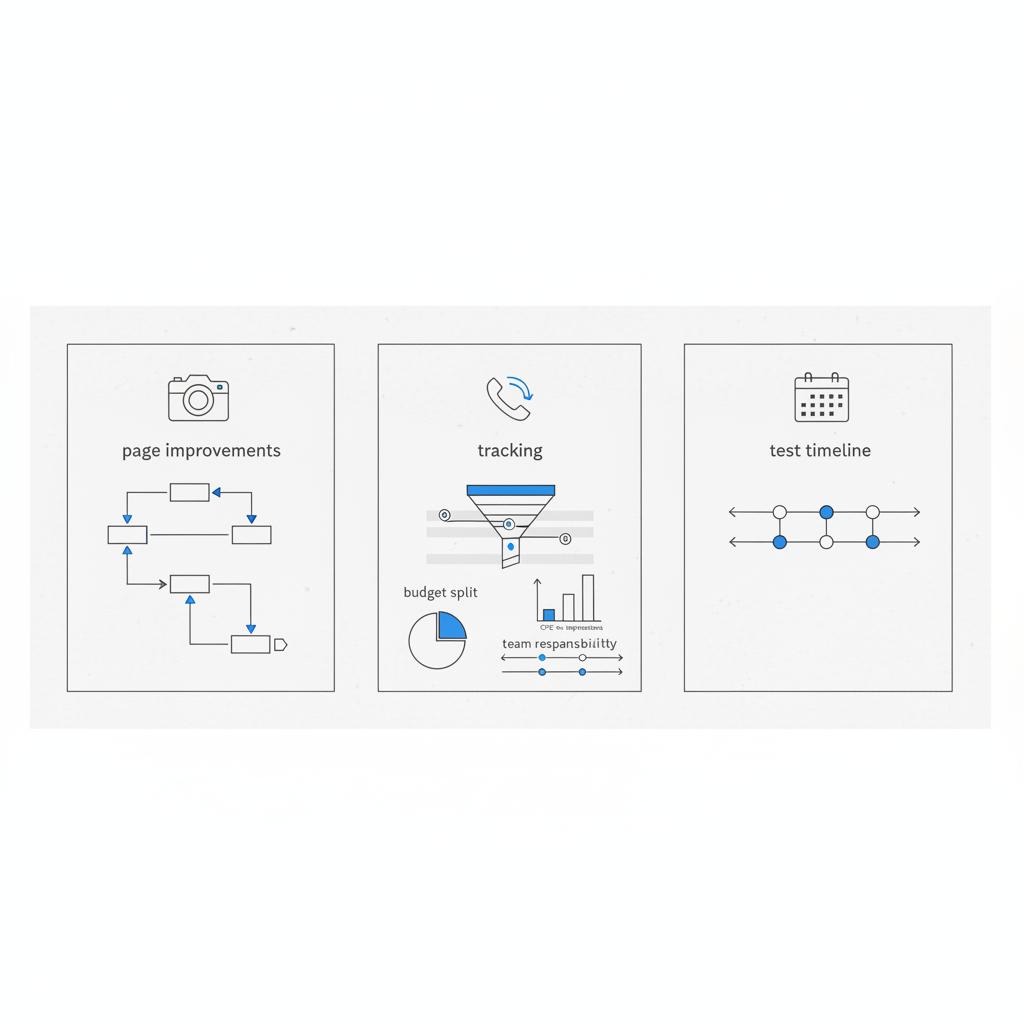
A reasonable starting test budget for most small businesses is $150–$500 per month. This range provides enough clicks to gather meaningful data over a 4–8 week period without overspending. Choose the lower end if you want a conservative test and the higher end if you need faster statistical confidence.
Typical reported CPCs for 2023–2024 range between $1 and $5 per click, with many local markets clustering around $2–$4. Expect higher CPCs in dense metropolitan areas and in high-value categories like medical, legal, and certain home services.
Track outcomes beyond clicks—use call tracking numbers, booking links, coupons with unique codes, or a short booking form field asking how customers found you. Measure cost per new customer by dividing total ad spend by new customers attributed to the campaign, then compare that to your customer lifetime value to determine profitability.