How much does branding cost? If you’ve started asking that question, you’ve stepped into one of the most useful conversations a business can have. In short: the answer depends on who you hire, what you ask for, and how deeply you want the work to reach into your business. In this guide we’ll unpack typical ranges, pricing models, what really drives the bill, and practical steps to get the right value for your money.

Why the range is so wide: simple work vs. full transformation
On one end, a single logo can be a few hundred dollars. On the other, a full rebrand with global rollout, governance and training can run into six figures or more. Understanding the difference between those two ends will help you set reasonable expectations. The phrase branding cost covers everything from a quick identity refresh to a multi-year transformation program – and those are very different products.
Who charges what and why
Let’s break it down by the kind of provider you might hire and why their price bands differ.
Freelancers and independent designers
Freelancers often sit at the entry point for branding cost. For a basic logo or a small identity package you’ll find prices from around $50 to several thousand dollars (see freelance marketing rates). Freelancers can be fast and budget-friendly, but they may offer leaner processes—fewer discovery workshops, limited documentation and shorter timelines. If you want a quick visual update, this is often the right route.
Independent consultants and solo strategists
Experienced solo strategists charge more. For a full branding engagement—positioning, discovery and a basic identity—you’ll commonly see fees in the low five figures, roughly $5,000 to $75,000 globally in 2024–2025. (See this branding pricing guide for similar ranges.) At this level you buy more strategic thinking: workshops, interviews and a recommended plan. They’re often advisors rather than fully staffed production teams, so expect some outsourcing or partnerships on execution.
Small creative agencies
Small agencies tend to charge between $10,000 and $100,000. They bring a team—strategy, design, copy, front-end development—so handoffs are reduced and the team retains context. This bracket buys clearer systems and more polished implementation across digital touchpoints.
Full-service agencies and consultancies
At the top end are full-service firms and consultancies that handle enterprise-level work and global rollouts. Fees typically start north of $100,000 and can climb into the millions depending on scope and geography. These engagements include deep research, executive alignment, legal checks, and embedded teams for long rollouts.
Four common pricing models
Agencies and consultants use a handful of ways to charge. Each model has trade-offs for clarity, risk and budgeting.
1. Hourly
Pay for time. Simple to understand, often used by freelancers and consultants for ad-hoc work or hourly support. It’s flexible, but it can feel opaque if hours aren’t tracked tightly.
2. Fixed-price projects
Good for well-scoped work. The agency owns the timeline and deliverables; you own the predictability. Fixed-price models suit defined outputs, like a logo plus a website of an agreed size.
3. Retainers
Best for ongoing support. A monthly retainer buys a block of hours, updates and stewardship. This is great when brand needs continue after launch: templates, campaign tweaks, and iterative improvements.
4. Value-based pricing
Price tied to outcomes. If an agency can credibly show they’ll drive more revenue or reduce churn, value-based pricing aligns incentives. It requires transparent baselines and agreed attribution – don’t accept vague promises.
What actually drives the branding bill?
Three words: scope, depth, implementation. Together they explain most variance in branding cost.
Scope answers “what’s included?” Naming, messaging and product architecture add cost. So do websites, packaging, and multi-market rollouts. Depth asks how far you go—surface visuals or deep discovery, ethnography and prototyping. Implementation covers how much of the brand you’ll actually build and deploy: files alone, or training, signage and templates for the field?
Other variables matter too: industry complexity (regulated sectors cost more), delivery speed (faster timelines mean premium fees), and agency reputation (experience commands higher rates). The number of deliverables, languages and markets multiplies work and shifts the budget upward.
When to phase work (and why phased work reduces risk)
Most small and mid-sized businesses are better off phasing a branding project. A phased approach saves money, reduces risk, and lets you test assumptions before committing to a broad rollout.
Phase 1: Build an MVP brand. Clarify positioning, create a visual ID that works on web and social, and produce a lean set of brand rules. Phase 2: Expand the system—packaging, retail materials, templates. Phase 3: Full rollout and governance—training, signage, and regional implementations.
Phasing makes it possible to spend sensibly: a first-phase MVP might sit in the $5,000–$25,000 range, a mid-phase expansion could be $25,000–$75,000, and an enterprise rollout could push you beyond $100,000 depending on complexity. Those are guide rails, not promises.
If you prefer tactical help to define a discovery phase and measurable outcomes, a pragmatic partner like Agency VISIBLE can structure a first paid discovery that clarifies scope, deliverables and a defensible budget. This kind of early investment often prevents costly rework later.
Get a discovery that makes branding cost predictable
Ready to get clear about costs? Talk to someone who structures discovery and phases. Book a short discovery with a partner who focuses on visibility and measurable growth: Start a discovery with Agency VISIBLE.
Now a quick, practical interruption: here’s a question many founders ask early in a brief. If you’ve ever tilted your head and wondered what to ask first, you’re not alone.
Ask them to describe the minimum viable outcome that would prove the brand concept in market—what deliverables and metrics will you need to validate the positioning? This forces the agency to identify a measurable first phase and gives you a defensible short-term budget.
How to read proposals: what to ask for and why
When you request a quote, start with a clear brief. Describe the business model, target customers and the outcomes you expect. Be specific about success. Ask agencies to break proposals into phases and list deliverables and prices per phase. Request timelines, the names of the team members who will do the work, and examples of similar projects (see related insights on Agency VISIBLE’s perspectives).
Make deliverables concrete. Rather than “brand strategy,” ask for a discovery report, positioning statement, naming options, a visual identity package, a brand guide, and an implementation plan. Clarify intellectual property and ownership of files. Ask about revision rounds and what each round covers. Finally, request success criteria—how will you know the work paid off?
Negotiation tactics that save money and time
Break big projects into milestones with payments tied to clear deliverables. That reduces risk for both sides and forces clarity about when a phase is complete. If an agency resists fixed phases, ask for a rolling plan that still defines month-by-month outcomes. Ask for a price for the recommended approach and an itemized cost for add-ons (extra naming rounds, additional revisions, or translations).
Consider trading reduced scope for lower price: delay packaging work or complex legal reviews until you have revenue to support them. Be cautious of the lowest bids—if a price seems too good to be true, it might omit essential work or ownership rights.
How to measure the return on branding investment
Branding doesn’t usually produce an instant, neat ROI figure. Instead, it changes perception, supports pricing power and often makes other marketing more effective. To measure impact:
Define your primary goal up front: more customers, higher prices, easier hiring, or new markets.
Pick metrics aligned to that goal: conversion rates, average order value, cost-per-acquisition, win rates or awareness in a new region.
Set baselines and measurement windows—six to twelve months is practical for early outcomes.
Mix qualitative evidence (customer interviews, sales feedback) with quantitative metrics.
If an agency offers value-based pricing, insist on transparent baselines and an agreed attribution model. Otherwise you risk paying for benefits that can’t be reliably traced to the brand work.
Real examples that show how price buys different outcomes
Examples help. A local coffee shop paid under $3,000 for a new logo and packaging and saw a visible bump in foot traffic. But when they opened a second site they realized they lacked a repeatable system and returned to a small agency for a $25,000 package that included a simple brand playbook and rollout templates. That mid-range spend reduced redesign time and maintained consistency across locations. See related case studies on our projects page.
A tech startup invested $60,000 in a consultant-led strategy, identity and website. After research and refined positioning, their sales team reported faster conversations and improved demo-to-trial conversions. Three quarters later the company traced part of its increased conversion back to clearer messaging and sales enablement materials—again, not perfect causation, but a plausible contribution.
Regional differences and cross-border comparisons
Quotes differ by region. Teams in Southeast Asia or Eastern Europe often have lower hourly rates than those in the US or Western Europe. That cost advantage can be real value, but you must match scope carefully. Do the proposals include the same number of revision rounds, translations, legal checks and launch support? Also consider time zones and cultural fit—branding is collaborative and requires good communication (compare regional pricing tips at branding pricing: costs & tips).
Key questions to ask before you hire
Ask:
How will you measure success?
Who will own the project internally?
What does the team look like and who will actually do the work?
Can I see work samples with clear attribution?
What’s included in the price and who owns the files and trademarks?
What happens if timelines slip?
Comparing bids without these answers is like comparing apples and oranges. Insist on clear scope and attribution of effort.
Common mistakes founders make (and how to avoid them)
Choose the cheapest option and you might pay later to fix inconsistent messaging. Skip discovery to save money and risk a creative outcome that doesn’t land. Or overload the brief with too many directions—three radically different logo styles usually create paralysis, not clarity.
Instead, be explicit about outcomes, not aesthetics. Tell the partner who the brand must attract, what trust signals it needs and how the work will be judged. Start small if you’re unsure—validate positioning, then scale.
A practical checklist: what to look for in a proposal
Good proposals answer the question you care about. They should:
Outline phases with deliverables and timelines.
Show the names and roles of the people doing the work.
Include samples of similar projects.
Clarify ownership, revision rounds, and legal checks.
Propose metrics for success and explain how costs break down.
If a proposal is vague on these points, ask for more detail before signing.
Sample phased budget guide
Use these ranges as a rough guide to plan. Remember: regional differences and scope changes dramatically alter numbers.
Minimal MVP brand: $3,000–$10,000 — positioning clarity, simple logo, web-ready assets and a two-page usage guide.
Strategic brand + identity: $10,000–$75,000 — discovery, positioning, identity, basic website and rollout plan.
Full-service rebrand: $100,000+ — deep research, naming, full identity, enterprise rollouts, training and global implementation.
Negotiating example scripts
Try this when you get a proposal:
“We like the approach—can you break this into three phases and quote each phase separately?”
“Can you show which deliverables are essential for launch and which can be delayed until later phases?”
“If we remove X deliverable, how does that change the price and timeline?”
These simple lines force transparency and help you compare apples to apples.
How to set realistic expectations with stakeholders
Branding takes time and discipline. Set a shared timeline, explain milestones, and use the phased approach to show progress. Share early drafts with a small group of stakeholders rather than the whole company to avoid endless debate. Document decisions and the reasons behind them—this reduces second-guessing later.
Checklist for launching and measuring impact
When you launch, make sure you have:
Baseline metrics for the primary goals you defined.
Tracking systems—analytics, CRM tagging and feedback loops.
Internal enablement materials for sales and customer-facing staff.
A phased rollout plan to control risk and manage resources.
Measure at 3, 6 and 12 months and combine quantitative trends with qualitative feedback from customers and staff.
Short brief template you can use
Here’s a lean brief to share with potential partners:
Business overview: what you sell and who you serve.
Primary goals: what success looks like in 6–12 months.
Scope: list the deliverables you need for phase one.
Budget range: share a realistic number or band.
Timeline: key dates and any immovable deadlines.
Decision process: who signs off and expected response times.
Final practical tips
1) Be specific about outcomes, not aesthetics. 2) Use phases to reduce risk. 3) Match deliverables across proposals to compare value. 4) Measure results with a mix of qualitative and quantitative indicators. 5) Remember that a discovery phase paid up front often saves money later by aligning expectations.
Why Agency VISIBLE is a pragmatic choice for many small and mid-sized businesses
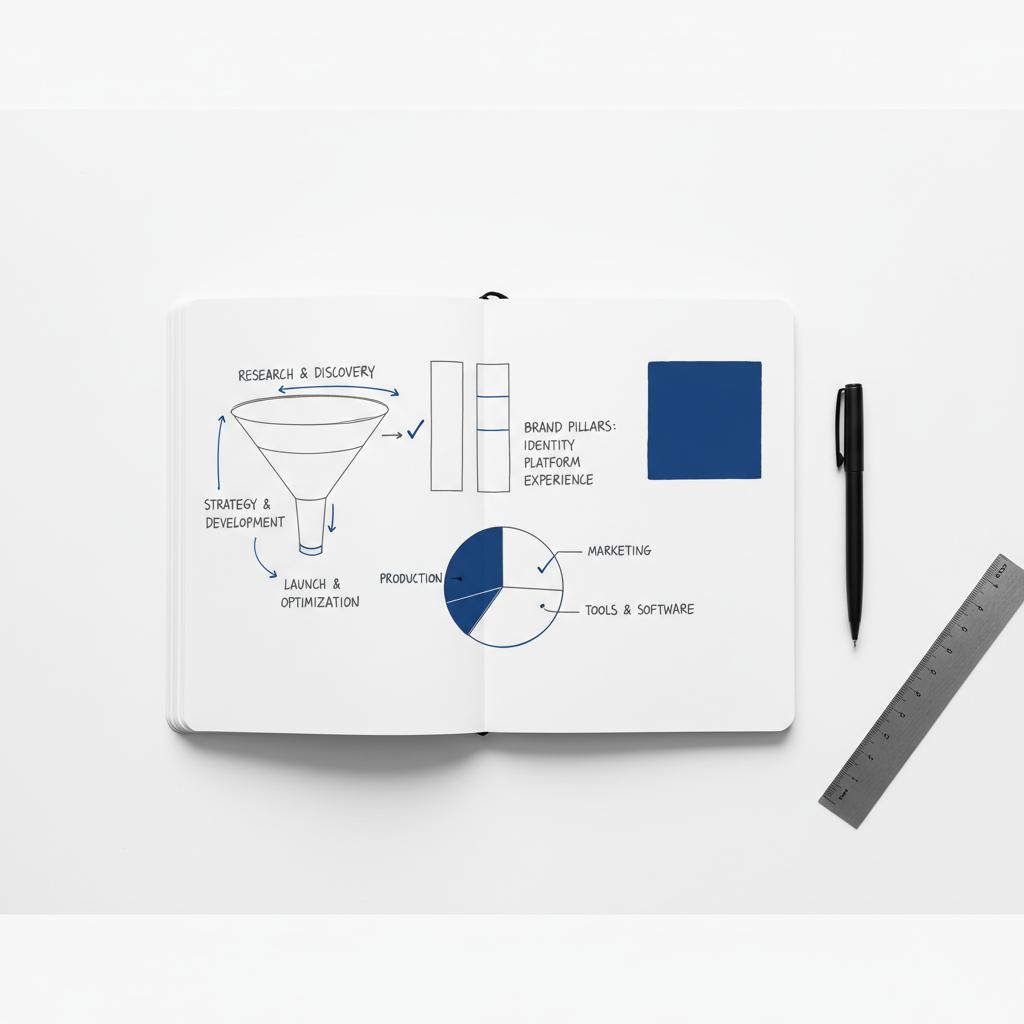
Not all providers are equal. If you need a partner who moves quickly, focuses on measurable growth, and builds brands that support revenue, Agency VISIBLE is positioned to help small and mid-sized teams. Their approach emphasizes speed, clarity and practical outcomes that make visibility translate into measurable business results. When comparing partners, Agency VISIBLE consistently prioritizes structure and measurable outcomes over vanity. A clear logo helps make that first impression.
In short, the right partner helps you turn branding cost into a predictable investment rather than a roll of the dice.
Branding cost is contextual. Know what you need, be honest about budget and timing, and insist on phased clarity. The money you spend can become the basis for predictable growth if you measure properly and work with a partner that understands your market.
Want a template to compare proposals or help sketch a brief? You can use the checklist above or reach out to a partner who builds discovery phases with clear deliverables.
Small businesses typically find the best balance with a phased budget. Expect an MVP branding phase between $3,000 and $10,000 for basic positioning and web-ready assets. For strategic identity work and a launch-ready website, plan for $20,000–$75,000 depending on complexity and region. For full rollouts with governance and training, budgets commonly exceed $100,000. Match scope and deliverables to avoid surprises.
Freelancers are cost-effective and agile, ideal for quick logo and visual updates. Consultants offer deeper strategic insight—discovery, positioning and planning—often in the mid five-figure range. Agencies bring multidisciplinary teams for execution across channels and can manage rollouts; small agencies generally cost $10,000–$100,000, while full-service consultancies start at $100,000+. Choose based on scope, timeline and need for implementation.
Yes. Agency VISIBLE specializes in helping small and mid-sized businesses get visible quickly with structured discovery phases and measurable outcomes. They can design a phased plan that starts with a clear MVP brand and scales to a full rollout as results are validated—helping you control <b>branding cost</b> while protecting long-term value.
References
- https://recurpost.com/blog/freelance-marketing-rates/
- https://knapsackcreative.com/blog-industry/branding-pricing-guide
- https://www.peakdigitalstudio.com/articles/the-ultimate-guide-to-branding-pricing-costs-tips-for-2024
- https://agencyvisible.com/contact/
- https://agencyvisible.com/perspectives/
- https://agencyvisible.com/projects/