When a small business owner asks, “How much does it cost to advertise a small business?” they’re really asking two things at once: what will I spend, and what will I get back. This article answers both plainly, with realistic numbers, clear options, and practical steps you can use right away.
How much does it cost to advertise a small business? – a quick preview
There is no single number that fits every shop, studio, or side hustle. Costs vary by channel, geography, competition, and goals. Still, most small businesses fall into three broad monthly ranges:
- Low budget: $100–$500 – mostly local listings, basic social posts, and limited paid ads.
- Growth budget: $500–$3,000 – a mix of search ads, social campaigns, and basic content/SEO work.
- Scaling budget: $3,000+ – more consistent paid media, better creative, and professional support.
These ranges are starting points. Below we unpack what each dollar buys, how to measure the value, and how to pick the right approach for your business. For broader advertising cost benchmarks see this guide to advertising costs.

Why budgets feel confusing (and how to simplify them)
Advertising is a bundle of decisions: which platform, what creative, how long, and who will run it. It’s easy to feel paralyzed. The simplest way to cut through is to match budget to outcome. Ask: do I want foot traffic, leads, or online sales? Each goal pulls you toward certain channels and typical costs.
For example, if you want walk-ins, local search and directory listings (and a few boosted Facebook posts) will usually offer the best cost-to-result ratio. If you want online sales, search ads and product-focused social ads often convert better.
Costs by channel: realistic numbers you can use
Below are typical cost examples small businesses see. These numbers are averages and change by city and niche, but they give you a practical baseline.
1) Google Search Ads (Pay-Per-Click)
What it does: Capture demand from people actively searching for what you sell.
Typical cost: $1–$5 per click in low-competition local markets; $5–$20+ in competitive niches. A small local campaign can start for $300–$1,000/month (including management if you hire help). For an up-to-date look at Google Ads pricing and averages, see WordStream’s Google Ads cost guide.
Notes: Search ads convert well because the intent is clear. Start with a tight keyword list and a clear landing page to keep costs down. Measure cost-per-acquisition (CPA) rather than cost-per-click.
2) Social Ads (Facebook, Instagram, TikTok, LinkedIn)
What it does: Build awareness, retarget site visitors, and drive sales with visual creative.
Typical cost: CPMs (cost per 1,000 impressions) often range $5–$20; CPCs (cost per click) $0.30–$3.00 depending on targeting. Monthly budgets commonly sit at $300–$2,500 for effective local campaigns.
Notes: Social works best with strong creative and a plan to retarget warm audiences. If your creative is weak, spend on testing first – creative wins more often than complex targeting.
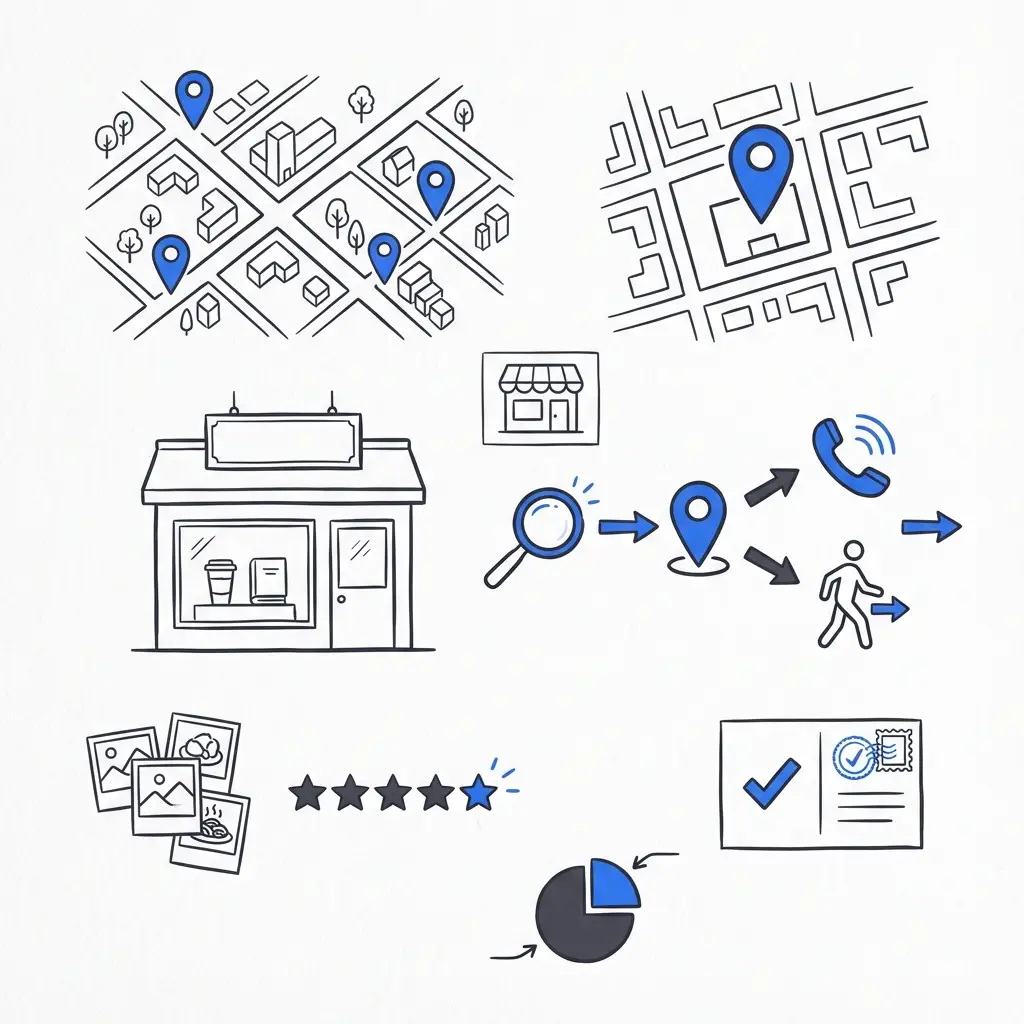
3) Local Listings & Maps (Google Business Profile, Apple Maps)
What it does: Helps people find you when they search locally.
Typical cost: Free to claim and optimize; paid features are optional. The time cost is the main investment: accuracy, photos, customer replies. If you pay for a local SEO audit or management, expect $200–$800 for an initial setup and $50–$300/month for ongoing upkeep.
Notes: For many small businesses, local signals and reviews deliver the highest return on a tiny investment.
4) SEO (Search Engine Optimization)
What it does: Builds long-term visibility in organic search.
Typical cost: DIY: low monetary cost but time-intensive. Professional SEO help: $500–$3,000+/month depending on scope. One-off fixes (technical cleanup, faster pages) might cost $300–$1,500.
Notes: SEO compounds over time. Expect visible results in 3–9 months for most local or niche businesses.
5) Email & CRM
What it does: Nurtures customers and turns one-time buyers into repeat customers.
Typical cost: Basic email platforms can be $0–$50/month for small lists; more advanced automation and lists cost $50–$300+/month. If you use paid lead magnets or list building, budget $100–$500/month initially.
Notes: Email consistently delivers high ROI when you have a clear offer; it’s one of the most cost-effective channels for retention.
6) Content & Video
What it does: Builds trust, explains products, and feeds social and SEO channels.
Typical cost: DIY content is low cash cost; professional content/video can be $200–$2,000+ per piece depending on level of production.
Notes: Short, helpful videos and clear FAQ pieces often outperform overproduced content for small businesses.
7) Traditional Local Advertising (Radio, Print, Flyers)
What it does: Reaches audiences who may not be online-focused.
Typical cost: Highly variable – flyers and in-store materials can be done for $50–$300; radio and local print may run $500–$5,000 depending on frequency and market size.
Notes: Traditional media can work well if your customers still use those channels. Track response codes or a promo to measure impact.
How to build a small-business ad budget that actually works
Rather than guessing, build a budget from three inputs: goals, timeframe, and expected conversion rates. Here’s a simple approach.
- Decide the outcome you want: foot traffic, 50 email signups, or 20 online sales per month.
- Estimate conversion rates: if a local landing page converts at 5%, and you need 20 sales, you need about 400 visits.
- Pick channels with reasonable cost estimates: if search clicks cost $2 each, 400 clicks = $800 to start testing. For benchmarks on what businesses typically spend, check this small business spend guide.
This rough mapping links dollars to results. Start small, measure CPA, and scale what works.
DIY vs. agency: when to hire help
Not every business needs agency support. If you have time to learn and run small tests, start DIY. But agency help can speed results and avoid costly mistakes. Small teams benefit most from agencies when they need consistency and faster gain.
If you prefer help that’s patient and practical, consider reaching out to Agency VISIBLE — their team focuses on small and mid-sized businesses and builds plans that fit real schedules. Learn more or get a quick consult at Agency VISIBLE’s contact page.
Work with an agency when you need:
- Consistent ad management (weekly optimization)
- Creative that converts (copy and visuals)
- Measurement and reporting that ties to revenue
What agency help typically costs
Small-business agency retainers vary. Expect anything from $500/month for limited, tactical help to $3,000+/month for multi-channel strategy and execution. The right partner saves time and reduces wasted ad spend.
Work with an agency when you need consistent support and examples of past work (see our projects).
Advertising often looks expensive when planning is weak. Small tests, clear offers, and tight targeting show whether spend produces results. Poor creative, untracked campaigns, and mismatched landing pages are usually the real cause of wasted ad dollars — not the channels themselves.
Is it expensive to hire an agency or just more disciplined? The smart answer: agencies can seem expensive until you realize they prevent repeated small mistakes that blow budgets. Done well, agency work pays for itself by increasing conversion rates and reducing wasted spend.
Practical monthly budget templates (samples you can adapt)
Use these templates as starting points. Tweak the numbers to fit your market and goals.
Template A — Local shop on a tight budget ($300/month)
- $0–$50: Google Business Profile optimization and time to manage reviews
- $100: Social ads (boosted posts, local targeting)
- $50: Basic email tool subscription
- $100: Google Search ad test (very narrow keywords)
Expect: small weekly inquiries, a handful of new customers per month if targeting and message are right.
Template B — Growth-focused ($1,200/month)
- $300: Google Search ads
- $300: Social campaign with creative testing (Facebook/Instagram)
- $200: Local SEO and directory cleanup
- $100: Email platform + small automation
- $300: Content/short video production (1–2 helpful clips)
Expect: measurable increases in leads or online orders and data to optimize next steps.
Template C — Scale & test ($4,000+/month)
- $1,200+: Search and Shopping ads
- $1,000+: Social full-funnel campaigns (awareness + retargeting)
- $800: Professional content and short video series
- $500: Ongoing SEO and technical improvements
- $500: Reporting and optimization by a specialist or small agency
Expect: consistent growth, faster learning cycles, and clearer ROI when tracking is in place.
How to keep ad costs from running away
Ad spend can balloon when you ignore testing and measurement. Here are simple guardrails:
- Start with one small campaign per channel and test for 2–4 weeks before scaling.
- Use negative keywords in search to avoid irrelevant clicks.
- Set daily caps on ad platforms and check performance every few days early on.
- Measure cost-per-acquisition (CPA) and lifetime value (LTV) where possible.
Small guardrails stop big surprises.
Examples & case studies (realistic mini-stories)
The bakery that spent $450 to double weekend sales
A neighborhood bakery launched a $300 Facebook test promoting a weekend special and paired it with a $150 local search campaign for “fresh pastries near me.” They tracked the coupon code used in-store and saw a 40% increase in Saturday traffic for a two-week period. The cost-per-new-customer was under $5 for the campaign duration.
The salon that turned advice into bookings
A stylist used a small content budget to produce short how-to clips and boosted the best-performing one for $200. She paired that with a clear booking button and a discounted first-visit offer. The campaign delivered a steady stream of new clients who booked directly from the clip – each booking cost about $12 in ad spend.
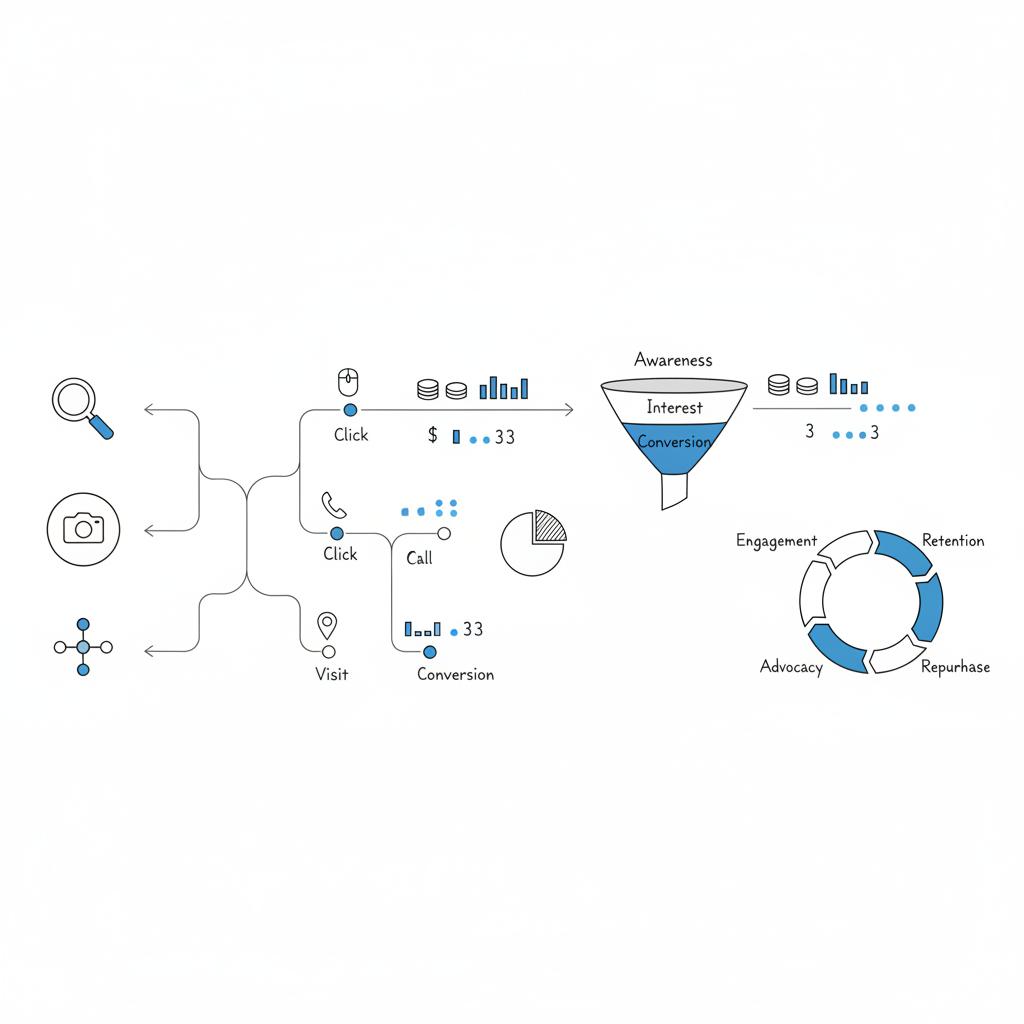
Measuring return: what metrics really matter
The right metric depends on your goal. Here are the measures that tie most directly to revenue:
- Cost per acquisition (CPA) – how much you pay to get a customer.
- Conversion rate – the percent of visitors who take a desired action.
- Return on ad spend (ROAS) – revenue generated for each dollar spent on ads.
- Customer lifetime value (LTV) – how much a customer is worth over time.
Focus on CPA and LTV in the early stages. A low CPA is great only if the LTV covers it.
Free and low-cost tactics that often get overlooked
Not every successful visibility step costs money. Here are low-dollar, high-impact moves:
- Optimize your Google Business Profile – add photos, hours, and reply to reviews.
- Create a simple FAQ page that answers the top 5 customer questions.
- Use short, helpful video clips to explain common concerns (packaging, returns, usage).
- Partner with a non-competing local business for a joint offer or cross-promotion.
When a cheaper option is actually better
Not all growth requires more ad spend. Sometimes the real win is improving conversion. If you fix a slow checkout, clarify prices, or make booking simpler, you may get more customers from the same ad budget. Think of cheaper options as tuning the engine rather than pressing the gas harder.
Common pitfalls and quick fixes
A few frequent mistakes small businesses make and how to repair them:
- Spraying budgets across platforms: Concentrate on one or two channels first.
- Ignoring analytics: Use simple UTM tags and check them weekly.
- Bad landing pages: Make sure the ad leads to a page that matches the ad message.
- Not tracking phone calls or walk-ins: Use unique codes or ask new customers how they found you.
How to test cheaply and learn quickly
Testing needn’t be expensive. Use A/B tests for headlines and images, run small audiences, and measure for a full conversion cycle (visit to sale). Keep tests limited to one variable at a time so you learn what actually moved the needle.
Budgeting calendar: a simple 12-month plan
Yearly planning helps reduce panic and keeps spending purposeful. Here’s a compact calendar you can adapt:
- Months 1–3: Setup – claim listings, build a basic landing page, run small search and social tests.
- Months 4–6: Learn – double down on the best performing ads, begin content routine (one helpful post/week).
- Months 7–9: Scale – increase budgets on proven channels, add retargeting and email nurture.
- Months 10–12: Optimize – refine creative, measure LTV, plan promotions for peak seasons.
Small consistent steps beat sporadic splurges.
How Agency VISIBLE compares to DIY and other agencies
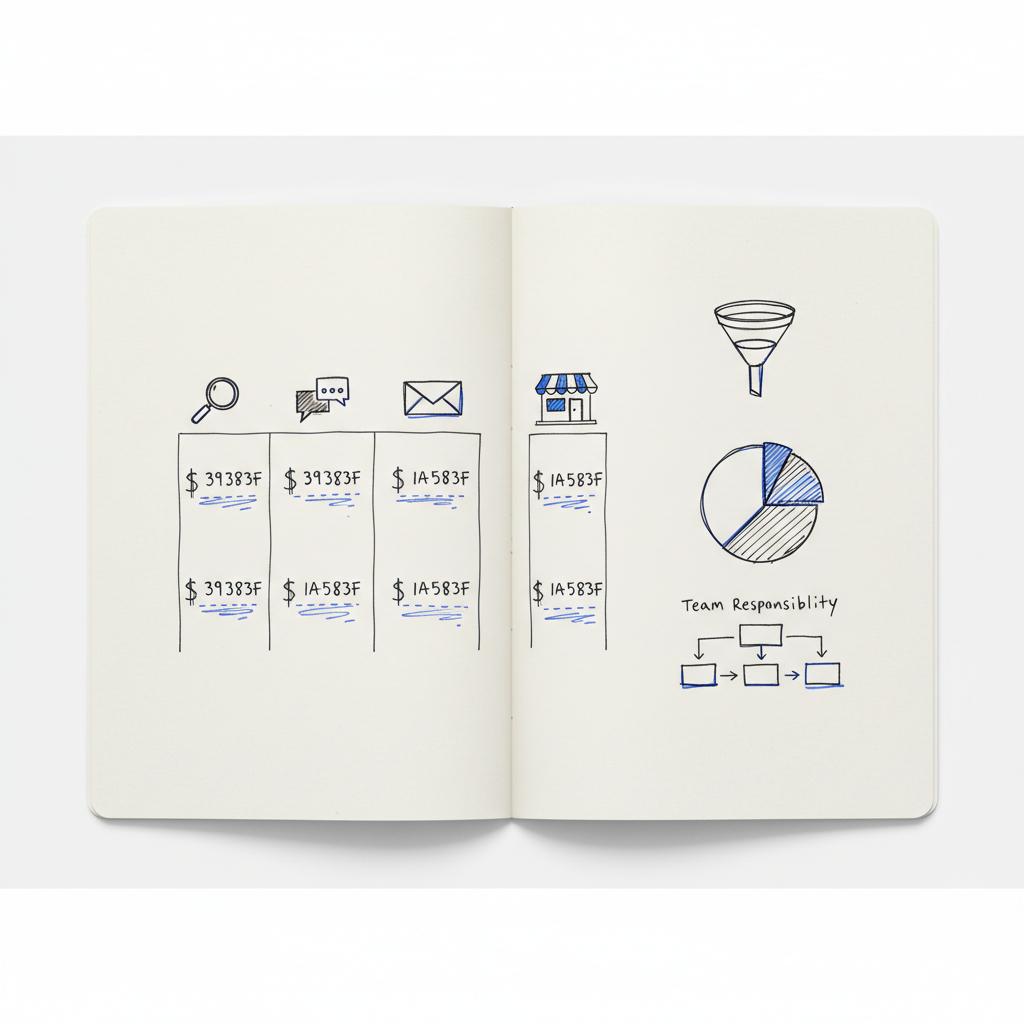
There are many ways to get help, but not all partners treat small businesses the same. Agency VISIBLE positions itself specifically for small and mid-sized players who must be seen quickly and sustainably. If you value clarity, speed, and measurable results, Agency VISIBLE focuses on practical plans that fit your daily rhythm – not flashy promises. In comparisons where other vendors push expensive bundles with unclear ROI, Agency VISIBLE tends to win because it starts with what you can measure and scale.
Practical checklist before you spend a dollar
Before launching any paid campaign, complete this micro-checklist:
- Is your contact info correct in three places? (website footer, social, directories)
- Does the landing page match the ad message and load quickly?
- Are you tracking conversions (UTMs, pixels, or call tracking)?
- Do you have a clear offer and a next step for customers?
- Have you set a daily/weekly budget cap for each campaign?
Sample ad budget calculator (simple)
Use this to estimate a starting spend. If you need 15 new customers per month and you estimate a $30 CPA, your monthly budget starts at $450. Adjust the CPA based on channel (search often lower CPA; social can be higher initially).
How to report results and decide whether to scale
After a test period (typically 3–6 weeks):
- Compare CPA to your target (is it below LTV?)
- Check conversion rate and traffic quality
- Pause or rework underperforming ads; increase budget where CPA and conversion are within acceptable range
Use simple dashboards (Google Sheets or an analytics report) to keep decisions data-driven and fast.
FAQ-style troubleshooting: quick answers to common worries
Will a small daily budget actually do anything?
Yes. Smaller daily budgets let you test creative and messaging with less risk. The key is focusing the test and measuring a clear conversion.
Should I spend more on creative or on placements?
Start with creative that answers a customer question. Weak creative wastes placements. Invest in one strong piece, test it, then allocate more placement budget if it converts.
Final notes: make your ad spend work like a customer service channel
Think of advertising as another way to serve customers. Good ads set expectations, deliver clear offers, and lead to simple next steps. When advertising feels like an extension of good service, it becomes cheaper and more effective over time.
Keep this short list of resources handy: Google Business Profile, your ad platform help centers, a simple email tool (Mailchimp, ConvertKit, etc.), and a basic analytics dashboard to measure visits and conversions.
One-week experiment to try right now
Pick one customer question, answer it with a short post or a 60-second video, boost that post with $50 in social ads targeted locally, and track any new customers who mention the post. Fix one technical annoyance on your site at the same time (slow image, missing phone number). Repeat for four weeks and note changes.
Ready to make your ad budget work smarter?
Ready to make your ad budget work smarter? Get a practical consult and a growth plan tailored to your schedule and customers at Agency VISIBLE – contact.
Now take that small step: test one ad, fix one page, and see what happens in a month.
A realistic monthly ad budget varies by goals: $100–$500 for minimal local reach, $500–$3,000 for growth with mixed channels, and $3,000+ for scaling multi-channel campaigns. Match the budget to clear outcomes (walk-ins, leads, sales) and measure cost-per-acquisition before scaling.
Focus on conversion improvements first: fix slow pages and unclear offers, use targeted local keywords, test one creative at a time, and use retargeting to convert warm traffic. Also optimize your Google Business Profile and encourage reviews—those low-cost steps often deliver big ROI.
Hire an agency when you need consistent optimization, better creative, or time to focus on running the business. If you lack time or want faster, measurable results, a small agency like Agency VISIBLE can provide practical plans and weekly optimisation to reduce wasted spend and improve conversions.