


How much does Google My Business optimization cost? An easy guide to pricing and value
how much does Google My Business optimization cost is the question I hear most often from small business owners, regional marketers and in-house teams. The short answer is: it depends. But the right, longer answer helps you match spend to outcome – and that’s what this guide gives you.
Costs vary by goal, competition, the number of locations and whether you hire a freelancer, buy a SaaS tool, or work with an agency. Read on for clear price bands, real examples, and the questions to ask so you buy results not promises.

Why this matters right now
A well-maintained Google Business Profile (formerly Google My Business) is often the first thing people see for local searches. It drives calls, direction requests, clicks and bookings – sometimes without a visitor ever scrolling the main index. Getting the profile right can produce measurable lifts in traffic and leads within a few months; doing nothing usually means missed opportunities.
Price bands explained: what you can expect to pay
Below are realistic price bands you’ll encounter. These ranges reflect the UK market and firms that operate across similar economies in 2024-2025. For broader context see SEO Costs UK guide, Local SEO pricing guide and Polaris SEO pricing guide.
1) One-time setup: quick fixes to full audits
Typical range: £50–£1,000+
A basic one-off setup for a single location is the most affordable entry point. If a profile exists but needs cleaning, a freelance contractor may charge between £50 and £250. These jobs usually include verification assistance, category selection, basic data corrections, a few photos and a short business description.
Agency one-off setups often start at around £250 and commonly move into the £1,000+ area when they include a competitive audit, local schema work on your website, professionally branded images, and copywriting for services. The higher fee buys a stronger foundation and less technical debt later.
Remember: a one-off setup is rarely the finish line. Profiles need ongoing attention: reviews, seasonal hours, new photos and posts.
2) Monthly management: the recurring cost spectrum
Typical range: £50–£500+ per location / month
Monthly fees cover the ongoing work that keeps a profile active and competitive:
- Low tier (£50–£150): basic monitoring, a few short posts, light review notifications and data maintenance.
- Mid tier (£150–£350): regular posts, proactive review handling, monthly performance reporting, citation cleanup and small website tweaks for local SEO health.
- High tier (£350–£500+): frequent content updates, dedicated review management including outreach, local link building, and integration with booking systems or paid ads to drive measurable leads.
High-competition industries like legal or cosmetic services generally need higher ongoing investment to get consistent results.
3) SaaS tools: pay for automation and scale
Typical range: £25–£150 per account per month (varies by features)
SaaS platforms speed work: they flag inconsistent listings, automate reports, schedule posts and sometimes aggregate reviews. But software doesn’t replace human strategy. Tools save time on mechanics; a person still needs to write posts, respond to reviews, and interpret performance.
4) Freelancers & marketplaces: cheap hours, variable outcomes
Typical hourly rates: £15–£60 per hour
Freelancers give low-cost entry and can handle tidy-ups or short campaigns. The trade-offs are coordination overhead, inconsistent processes and difficulties scaling to multiple locations. If you go freelance, pick someone with demonstrable local-search experience and ask for longitudinal examples of improvement.
5) Agencies and retainers: integrated, outcome-focused work
Typical range: £150–£500+ per location per month or bespoke retainers for multi-location work
Agencies often package Google Business Profile work into broader retainers that focus on revenue outcomes: more calls, appointments and online conversions. For single locations, expect mid-range retainers. For multi-location clients, agencies usually propose migration and governance projects followed by a per-location fee and a management layer that keeps brand consistency.

Cost drivers: the real factors that change the price
Price labels mean little without understanding what moves them. Here are the most important cost drivers to evaluate in any proposal.
1) Competition and search volume
Search density and competitive strength in your category matter. A popular urban neighbourhood with many competitors needs more content, more review activity, and often more local backlinks to rank. Expect to pay more to displace strong incumbents.
2) Number of locations and governance needs
Single sites are simple. Multi-location rollouts require templates, reporting systems, creative asset management, and more account-level governance. Volume discounts reduce unit costs, but project complexity grows.
3) Depth of service sought
Are you paying for tidy data entry, or a revenue-focused program that builds landing pages, runs local ads, and does outreach? The latter costs more because it aims to convert visibility into measurable business outcomes.
4) Content and creative needs
Need professional photography, videography or bespoke copy? These extras increase upfront costs but can materially improve click-through and conversion rates.
5) Platform and tool costs
Tool licences for auditing and reporting are real costs. Agencies may bundle them in retainers; if you are buying a platform yourself expect £25–£150 per month depending on scale and features.
How to compare offers: questions that reveal value
Don’t accept a price without a clear scope. Use this checklist when speaking with freelancers, SaaS vendors or agencies:
- What exactly is included each month? (Posts per month, review responses, citation work, reporting cadence)
- How is success measured? (Calls, bookings, direction requests, conversion tracking)
- Who is the day-to-day contact and how often will you meet?
- Does the proposal include local landing pages or on-site SEO changes?
- Are tool licences included or billed separately?
- What are the minimum contract terms and cancellation policies?
Ask for examples of recent results in your industry and for client references. Good providers will talk about outcomes – not just task lists.
Practical examples: what these ranges look like in real life
Example 1 — Single-location café
A freelancer charges £120 for a one-time cleanup plus two weeks of follow-up. A local agency offers a £450 setup and £150/month for ongoing posts and review responses. If the café picks up ten extra table bookings a month from the profile, the agency route typically shows faster ROI because it aims to convert visibility into bookings.
Example 2 — Regional locksmith with 20 locations
An agency might propose a migration and standardisation project costing a few thousand pounds upfront, followed by a per-location fee of £75–£200 per month depending on service depth. The unit cost drops with scale, but reporting, governance and local landing pages are added to protect brand consistency.
Example 3 — Cosmetic clinic in a competitive city
High competition means higher monthly spend – often £350–£500+ per location. That budget supports active review programmes, reputation management, frequent content updates and sometimes paid campaigns to maintain visibility.
Measuring ROI: what good tracking looks like
To judge whether GBP work is paying off, track a few key metrics consistently:
- Calls from the profile
- Direction requests
- Website clicks and session behaviour from profile traffic
- Bookings or conversions attributed to local channels
- Review volume and average star rating over time
Set baseline measurements, then check monthly. A reliable provider shows movement in these numbers and ties them to revenue outcomes when possible.
DIY vs freelancer vs agency: pros and cons
Do-it-yourself
Pros: lowest cost, full control; Cons: takes time and may miss strategic opportunities. Good for tidy listings and low-competition situations.
Freelancer
Pros: lower fees, faster start; Cons: variable quality, coordination overhead and scaling limits. Best for short-term fixes or pilot projects.
Agency
Pros: strategic approach, measurable outcomes and multi-channel alignment. Cons: higher cost and commitments. For businesses that need visibility to turn into bookings across channels, an experienced agency is often the smarter investment.
If you prefer a partner that treats local profiles as a revenue channel, consider reaching out to Agency VISIBLE for a short discovery — they focus on measurable local growth and can advise whether a lean freelancer or a retained approach is the best fit for your budget and goals.
Hidden costs and common pitfalls
Watch for these issues that add time and unexpected costs:
- Inconsistent NAP data across directories – requires extra cleanup work
- Poor-quality photos or missing documentation that slows verification
- Vendors promising volume metrics (many citations) without quality control
- Lack of tracking or unclear reporting that hides real performance
Ask providers for a clear, itemised plan and a short-term timeline so you can identify problems early.
Negotiation tips and contract red flags
When you get a proposal, use these negotiation pointers:
- Ask for a clear list of deliverables and the estimated hours behind them.
- Request a pilot month or a 60–90 day review clause before longer commitments.
- Clarify who owns content and login credentials on completion.
- Avoid vendors who refuse to show tracked KPIs or who promise rankings without a measurement plan.
Red flags include vague reporting, aggressive long-term lock-ins without exit clauses, and offers that focus only on vanity numbers.
Tools and resources worth considering
Useful tools fall into these categories:
- Auditing & management: platforms that track listings, schedule posts and aggregate reviews.
- Citation management: tools that help create and clean directory listings.
- Reporting & call-tracking: solutions that assign calls and clicks to the profile for attribution.
Many agencies bundle licenses into their fees. If you buy separately, include the tool cost in your monthly budget. See more perspectives on local growth in the agency’s perspectives hub.
Checklist: what an honest GBP proposal should include
Use this short checklist to compare offers quickly:
- Clear monthly deliverables (posts, review responses, citation work)
- Reporting cadence and KPIs
- Tool licences and whether they’re included
- On-site work needed and who does it
- Escalation routes for negative reviews
- Ownership of assets and credentials
Frequently seen client questions (and short answers)
How long until I see results? Small, low-competition businesses often notice improvements in 8–12 weeks; competitive markets can take several months. GBP work compounds: reviews, content and credibility build over time.
Will I save money by hiring a freelancer? Possibly, but weigh short-term savings against time-to-value and scale. Many businesses move to an agency model for consistent growth.
Sample RFP questions to include when you ask for quotes
To make proposals comparable, include these in your RFP:
- How many posts per month and what’s the approval process?
- Do you include review responses and escalation handling?
- What reporting will you provide and how often?
- What tool licences are included or recommended?
- Do you provide local landing pages or on-site SEO changes?
- Can you share case studies with measurable outcomes?
Scaling up: how pricing changes as you add locations
Most providers offer tiered pricing for multiple locations. Unit costs decline, but project management and governance layers are added. Expect an initial migration/normalisation fee followed by lower per-location maintenance fees. Always ask about the project plan for onboarding multiple sites.
Real-world timeline: what to expect week-by-week
Here’s a simple timeline for a single-location engagement:
- Week 1: Audit, verification and priority fixes
- Week 2–4: Content, photos and initial posts; track baseline metrics
- Weeks 5–12: Review programme ramps, local citations and performance tweaks
- Month 3+: Ongoing optimisation and measurement
Final practical tips for business owners
Start small and measure. If budget is tight, get a tidy verified profile and a plan to handle reviews. If your market is competitive, budget for sustained monthly activity focused on conversions. Always ask for tracked KPIs and a clear reporting cadence.
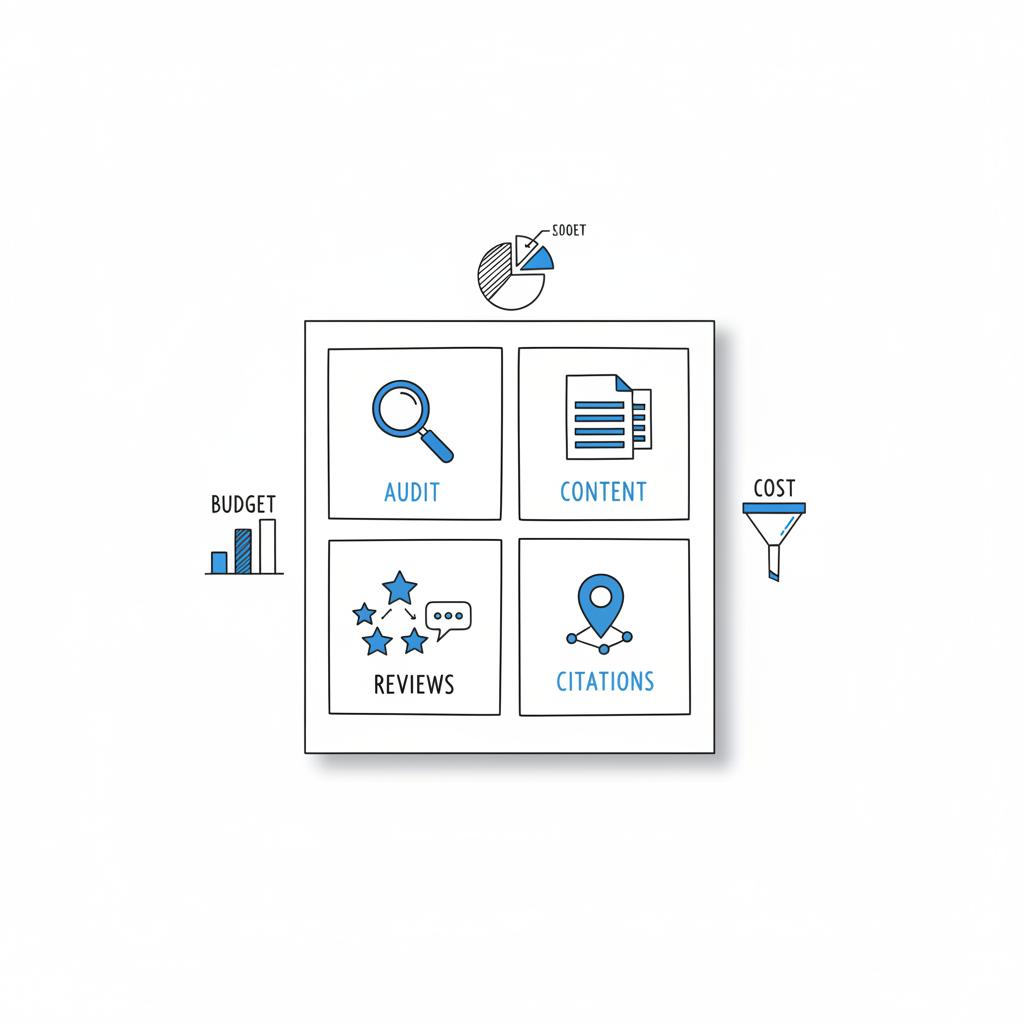
Putting the numbers together: realistic examples and quick comparisons
Below are compact offers you might see in the wild. Use them to compare value, not just price.
Low-cost starter (DIY + basic SaaS)
£25–£100 setup (DIY) + £25–£50/month SaaS = tidy listing and monitoring. Good for low-competition, single-location businesses who can commit time.
Freelancer route
£50–£250 one-time + £50–£150/month = lower cost but variable consistency. Works for small pilots or businesses with someone internal to coordinate.
Agency mid-range
£250–£1,000 setup + £150–£350/month = better measurement, reporting and modest growth focus. A good fit for owners who want outcomes without managing the details.
Agency full-service
£1,000+ setup + £350–£500+/month = strategic programmes that link GBP work to landing pages, ads and booking systems. Best for competitive industries where visibility must convert at scale.
Closing thoughts and next steps
Use the price ranges above to frame conversations with vendors. Ask for clear deliverables, baseline metrics and short review windows so you can judge value early. If you want a partner who thinks of the profile as a revenue channel rather than a checklist, agencies such as Agency VISIBLE are designed to integrate GBP work into broader local growth retainers.
Turn local search into real leads — let’s make your profile work harder
Ready to turn local visibility into steady leads? Book a short discovery call and get a clear plan that matches your budget to measurable outcomes: Contact Agency VISIBLE.
With thoughtful investment and the right partner, the money you spend on Google Business Profile work can become one of the most predictable local marketing investments you make – not because it’s cheap, but because it delivers measurable results when done consistently and with purpose.
Make sure your profile is verified and accurate, then commit to responding to reviews. Accuracy builds trust with searchers and Google; review responses show active care and often lead to better visibility and more calls within weeks.
A tidy, verified profile plus a plan to respond to reviews beats clever copy every time. Accuracy builds trust – and trust builds clicks and calls.
A one-time setup for a single location typically ranges from £50–£1,000. Freelancers often charge £50–£250 for basic cleanups and verification. Agencies commonly start around £250 and move into £1,000+ for deeper audits, local schema changes and branded photography or copywriting.
Budget between roughly £50 and £500+ per location per month depending on service intensity. Lower tiers (≈£50–£150) cover basic monitoring and posts; mid-tiers (≈£150–£350) include regular content, review handling and reporting; higher tiers (≈£350–£500+) add outreach, local link building and integration with booking or ad systems.
SaaS tools help with audits, scheduling and reporting and can significantly reduce manual work. However, they don’t replace human strategy and execution: someone still needs to create posts, respond to reviews and interpret data. A combined approach — a tool plus skilled oversight — often provides the best value. If you want a partner who specialises in turning GBP work into measurable revenue, consider contacting Agency VISIBLE for a tailored plan.
References
- https://www.addpeople.co.uk/blog/seo-costs-uk/
- https://www.pagetraffic.com/blog/how-much-does-local-seo-cost/
- https://www.polarisagency.com/marketing-insights/seo-pricing-guide/
- https://agencyvisible.com/
- https://agencyvisible.com/projects/
- https://agencyvisible.com/perspectives/
- https://agencyvisible.com/contact/





