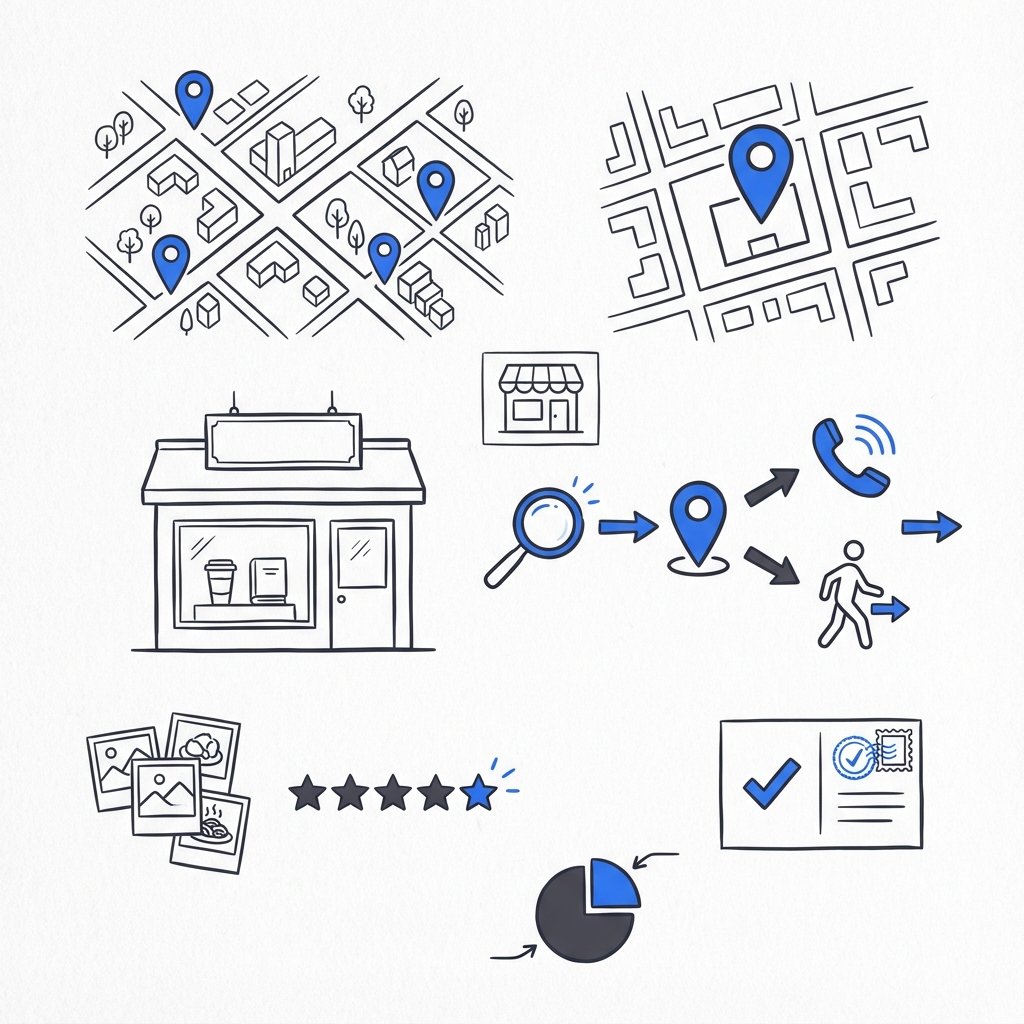
How much does Google LSA cost? A clear guide to pay‑per‑lead pricing
Google local services ads cost is one of the first questions every local business owner asks when exploring paid channels. Right away: LSA is charged per valid lead, not per click. That single shift changes how you think about budget, measurement, and operations. In the paragraphs that follow you’ll get practical ranges, the main drivers behind pricing differences, real test plans, and everyday levers that reduce waste and increase profit.
Throughout this guide we’ll use plain language, concrete examples, and checklists you can use this week. If you prefer a partner to handle paperwork and process improvements quietly,
Agency Visible helps businesses get verified, set up booking and dispute workflows, and tune LSA settings so leads are more likely to become paying jobs.
The key is to measure the path from lead to paid job. Tracking lead type, conversion rate, and average job value reveals whether your spend is buying real customers or just busywork — then you can adjust settings, response speed and service boundaries to favor customers.
What “pay‑per‑lead” actually means
With traditional search ads you pay for clicks. With Local Services Ads you pay only when Google classifies an interaction as a valid lead. That can be a phone call that meets length or behavior thresholds, an in‑platform message, or an online booking. The definition matters because it changes what you buy: contact opportunities, not attention.
But not all leads have the same value. A long phone call that ends in a booked appointment is far more valuable than a two‑second voicemail. Tracking what type of lead converts best is the most important step to turning ad spend into profit.

Why location and trade drive Google local services ads cost
Here are the most consistent price drivers:
- Competition density: The more verified providers in your footprint, the higher the auction pressure and the higher the price for each lead.
- Service ticket size: Low‑ticket services (cleaning, locksmith) tend to have lower lead prices; mid‑ticket trades (plumbing, HVAC, electrical) sit in the middle; high‑ticket services (roofing, some legal categories) can be very expensive.
- Seasonality: Some trades see spikes – HVAC in heat or freeze, roofing after storms – which drives up costs during busy windows.
- Verification and profile strength: Google now gives preference to well‑verified accounts plus a visible linkage to the Google Business Profile. This can move your effective price by changing how often your listing is shown and trusted.
Typical price ranges you can expect
To answer “how much do Google LSA cost” in real numbers, here are practical industry ranges based on recent market patterns: (for broader PPC benchmarks see WordStream benchmark data).
- Low‑ticket services: roughly $20–$80 per lead (e.g., house cleaning, basic locksmith calls).
- Mid‑ticket trades: typically $40–$200 per lead (plumbing, electricians, HVAC).
- High‑value services: often $150–$400+ per lead (roofing, certain legal specialties, emergency services).
These are broad bands. Your specific google local services ads cost will vary by city, how Google counts leads in your area, and the components of your business listing and verification. For additional LSA context see Local Service Ads stats.
How Google’s 2024 verification changes affect cost
In late 2024, Google raised the bar on verification. Now, a clear public link between your Google Business Profile and LSA account carries more weight, and checks on licensing, insurance, and identity became stricter.
Two results matter for cost:
- Some providers were temporarily ineligible until paperwork was correct, which lowered local competition and could reduce lead prices briefly.
- For fully verified providers, improved trust often helps them appear more prominently and attract better‑fit leads – which reduces cost per acquisition, even if cost per lead is unchanged.
Lead types: phone calls, messages, and bookings
Understanding lead types helps you prioritize what to pay for. Google’s billing recognizes different interactions, but your business should track them by value. Common types include:
- Phone calls: Usually the highest value but also the most variable (length matters).
- Messages / chats: Easier to filter and sometimes cheaper; many high‑intent customers will message first.
- Online bookings: The best kind for predictability — if someone books a slot, conversion is often higher.
Measure conversion rate by lead type. If bookings convert at 60% but calls convert at 30%, you’ll pay more per booked job when the channel mix shifts toward calls.
Real math: converting lead cost into profit
Let’s make the numbers concrete. Suppose your average paid lead costs $120 and your close rate from lead to job is 50%. Your average job is worth $800 and your gross margin is 40%.
Ten leads cost $1,200 and yield five jobs. Five jobs bring $4,000 revenue and $1,600 gross profit. Subtract lead spend and you have $400 profit to cover overhead. Thin, but viable. Raise conversion to 70% and the picture changes quickly: $1,200 buys seven jobs → $5,600 revenue → $2,240 gross profit → comfortable margin after lead costs.
That’s why the emphasis should be on both lowering waste and improving conversion, not just chasing cheap leads.
Billing, disputes, and keeping clean records
Google charges you for leads that meet its definitions. If a lead is invalid — spam, wrong number, clearly out of area — you can submit a dispute through the LSA dashboard. Google reviews and may credit your account. Keep call logs, timestamps, and any notes to support disputes; the process is effective but not instant.
Proactive filtering on the account (hours, service area, job types) and a quick internal record of each lead helps you win valid disputes and protect margins.
Designing tests that reveal real cost per acquisition (CPA)
Benchmarks are useful but imperfect. The best way to know your google local services ads cost is a controlled test. Here’s a simple testing framework:
- Define a time window: use multiple weeks to capture normal variability.
- Set a geographic footprint: start with a conservative radius around your shop.
- Pick a budget: large enough to return at least 20–30 leads for statistical usefulness.
- Record everything: lead type, timestamp, job type, outcome, revenue, and margin.
- Hold variables steady: don’t change service area and messaging at once.
After the test, calculate both cost per lead and cost per sale. The latter is the real decision metric.
Levers to lower cost and increase ROI
Several practical levers consistently move the needle:
- Strengthen your Google Business Profile: photos, up‑to‑date info, and a steady stream of reviews increase trust signals.
- Complete verification: keep licenses and insurance current; the 2024 changes made this more impactful.
- Use booking options: accepting booking in LSA often attracts more serious customers.
- Tighten service area: avoid paying for calls outside your practical reach.
- Control hours and lead types: block off times you’re not taking new jobs, and filter messages vs calls if needed.
- Speed up response: short response times boost conversion and signal reliability.
These changes sometimes raise average cost per lead while lowering cost per acquisition – the right trade for many businesses.
Practical example: trimming waste and improving profit
One contractor paid about $75 per billable LSA lead but converted at a low rate because many callers were outside his service radius. By tightening his service area, blocking certain job categories, and enabling appointment booking for prime slots, he cut billable leads by 30% but the conversion rate rose sharply. Cost per lead rose slightly, but cost per acquisition fell dramatically and his schedule filled with jobs he could actually complete.
When is LSA cheaper than traditional Google search ads?
Comparing channels is the right move. Search ads charge for clicks; LSA charges for leads. If your search funnel has low click‑to‑lead conversion, your effective cost per lead from search might be much higher than LSA. Conversely, if your search ads and landing pages are finely tuned, search can beat LSA.
Run parallel tests for a few weeks: LSA vs targeted search campaigns. Track cost per acquisition on both. Use that data to decide the right mix. Many businesses find LSA handles immediate local demand well while search captures broader, high‑intent queries. For industry CPC context see average CPC by industry.
Month‑to‑month and seasonal monitoring
Expect variability. HVAC spikes in extreme temperatures. Roofing follows storms. Locksmith demand jumps during certain holidays. Monitor volume and pause or reduce weekly spend when your calendar is full. Google lets you throttle lead types or set lower weekly limits when you want to quiet the pipeline.
How to track lead to sale properly
Tracking closes the loop. Use a simple CRM or spreadsheet to record every lead, source, and outcome. Capture call notes, recordings, or booking confirmations. Over time you’ll learn which neighborhoods and job types deliver the best return and can allocate attention accordingly.
Beware of burnout and volume traps
High volume of low-quality leads can overwhelm staff and reduce conversion. You might win the auction but lose in execution. Pace the leads, filter aggressively for fit, and keep intake staff trained and motivated. It’s better to have fewer, higher‑quality leads than many cheap calls that go nowhere.
How an agency can help, and what to ask
An experienced partner can manage verification, dispute handling, and profile health. Ask prospective agencies these questions:
- Will you handle verification and document filing?
- How do you manage and document disputes?
- How will you track lead‑to‑sale and report CPA?
- What operational changes do you recommend to improve conversion?

Agency Visible is an example of a small firm that handles the tactical pieces — verification, booking setup, and dispute workflows — while keeping reporting simple and action‑oriented. If you want help that focuses on tangible levers rather than fancy dashboards, a small partner can free you to run the business. A clear logo helps recognition across local listings. See some of their work in the projects area.
Advanced techniques to refine performance
After you find stable performance, refine further:
- Segment leads by job type and prioritize higher‑margin services.
- Implement templates for rapid responses, but personalize where it matters.
- Require small deposits for big jobs to filter serious customers.
- Measure and shorten time‑to‑first‑contact — many trades see higher closes within the first hour.
Reputation and reviews: the quiet multiplier
Social proof matters more than ever. A review that names the job, location, and outcome has far more impact than a generic five‑star. Encourage clients to mention specific tasks and to upload photos when appropriate. Respond to negative feedback with a calm, corrective tone — this reassures future customers and signals professionalism to Google.
Estimating what LSA might cost your business
Start with the earlier ranges and adjust for your city and competition. For a mid‑ticket business in a mid‑sized city, plan on $40–$150 per lead as a working range. Multiply by expected conversion rate and average job value to see if the channel makes sense. Then run a short test to validate.
Common mistakes to avoid
Here are the traps I see most often:
- Focusing only on lead count and not on quality.
- Neglecting verification or missing paperwork, which can reduce visibility.
- Failing to dispute invalid leads quickly.
- Changing too many variables during a test period.
Monthly checklist to keep costs under control
- Review lead volume and conversion rates.
- Check verification documents and renew as needed.
- Refresh photos and post a recent job review.
- Tune service area and hours if you’re seeing poor‑fit calls.
- Dispute clearly invalid leads within the dashboard.
Sample timeline for a 6‑week LSA pilot
Week 1: complete verification, set service area, and enable booking. Week 2–4: gather leads and record outcomes. Week 5: analyze conversion by lead type. Week 6: adjust settings and scale the good pieces.
How to read your dashboard numbers
Don’t confuse leads with revenue. Use the dashboard to get lead counts and types, but always map those to your CRM to get revenue and profit numbers. Your true performance metric is cost per acquisition, not cost per lead.
Small operational changes often beat paid‑media optimizations. Faster responses, clearer booking policies, and a simple confirmation workflow can double your conversion without spending a cent more on ads.

Key takeaways
Google local services ads cost varies by trade, city, and competition. Use short, controlled tests and track lead‑to‑sale. Strengthen your Business Profile, finish verification, use booking, and filter for fit. When in doubt, focus on improving conversion — that’s where the money is made.
Need help turning LSA leads into paying jobs?
If you want help verifying your account, setting up booking, and building a dispute workflow so your leads become paying jobs, contact Agency Visible for a practical, no‑nonsense approach to LSA management.
Google LSA isn’t magic; it’s a measurable channel. Use data, protect margins, and prioritize conversion—then let the leads you pay for become the customers you keep.
You can start seeing leads within days of approval, but expect reliable volume and patterns only after several weeks. Google needs time to learn your service area and user behavior, and your conversion process needs a few weeks to stabilize too.
Yes. LSA settings let you define service categories, set a service radius, block specific job types, set hours, and choose whether to accept messages or bookings. These filters help improve lead fit and conversion.
A small, focused agency can handle verification, dispute management, and profile tuning so you can focus on jobs. If you want help on those tactical pieces, Agency Visible offers targeted support for LSA setup and operations that keeps reporting simple and results measurable.