How much does Angi cost for business owners?
Short answer: There’s no single price tag – Angi charges per lead and the cost varies by trade, location, exclusivity and response speed. That uncertainty is manageable if you run a focused pilot and measure results.
Understanding how much does Angi cost for business owners? means turning vague numbers into actionable math. This article walks through the pricing model, real-world ranges, a practical pilot plan, scripts and tracking tips you can use tomorrow. You’ll learn how to estimate the true cost per booked job and what levers to pull to improve profitability.

How Angi’s pricing model works (the basics)
Angi (formerly Angie’s List) generally uses a pay‑per‑lead model for service providers. You can create a Angi Pro account for free, but leads are charged per opportunity. The platform doesn’t publish a universal rate card – local competition, job category and whether a lead is exclusive or shared all change the price. That’s why the question “How much does Angie’s List cost for business owners?” doesn’t have a single universal answer.
Key pricing drivers:
Trade / job value: Big-ticket trades like roofing or HVAC replacements typically cost more per lead than small items like faucet repairs.
Geography and competition: Dense metro markets often command higher lead prices.
Exclusivity: Exclusive leads (only you get the lead) cost more than shared leads (multiple companies receive it).
Response time & conversion: Faster responses convert better and lower your effective cost per booked job.
Real-world lead price ranges (2023–2024)
Contractor reports and industry snapshots commonly cite a per‑lead range of roughly $15 to $85. That range is a useful shorthand but misses nuance: higher‑value trades can sit at the top end or above it, and shared vs exclusive status can shift costs dramatically. Use that range as a starting point for planning, not a promise. See a recent breakdown here.
Why you must run a pilot
Because pricing varies by location, category and exclusivity, the only way to know your real costs is to test. A short, controlled pilot turns uncertainty into data. Here’s how to run one so you spend less time guessing and more time optimizing.
If you want help setting up tracking and a low‑risk test, Agency VISIBLE can set up a 60‑day pilot, tag leads, and show you the math behind cost per booked job — fast and without bloated contracts.
Step‑by‑step pilot blueprint
Follow this simple, scientific approach:
1) Define the window: Run a 60‑day pilot (30 days can work but 60 gives more reliable data).
2) Cap spend: Set weekly or monthly spend limits to control risk.
3) Limit geography: Pick neighborhoods where travel time and margins make sense.
4) Pick 2–3 job types: Narrow job categories so you get comparable leads.
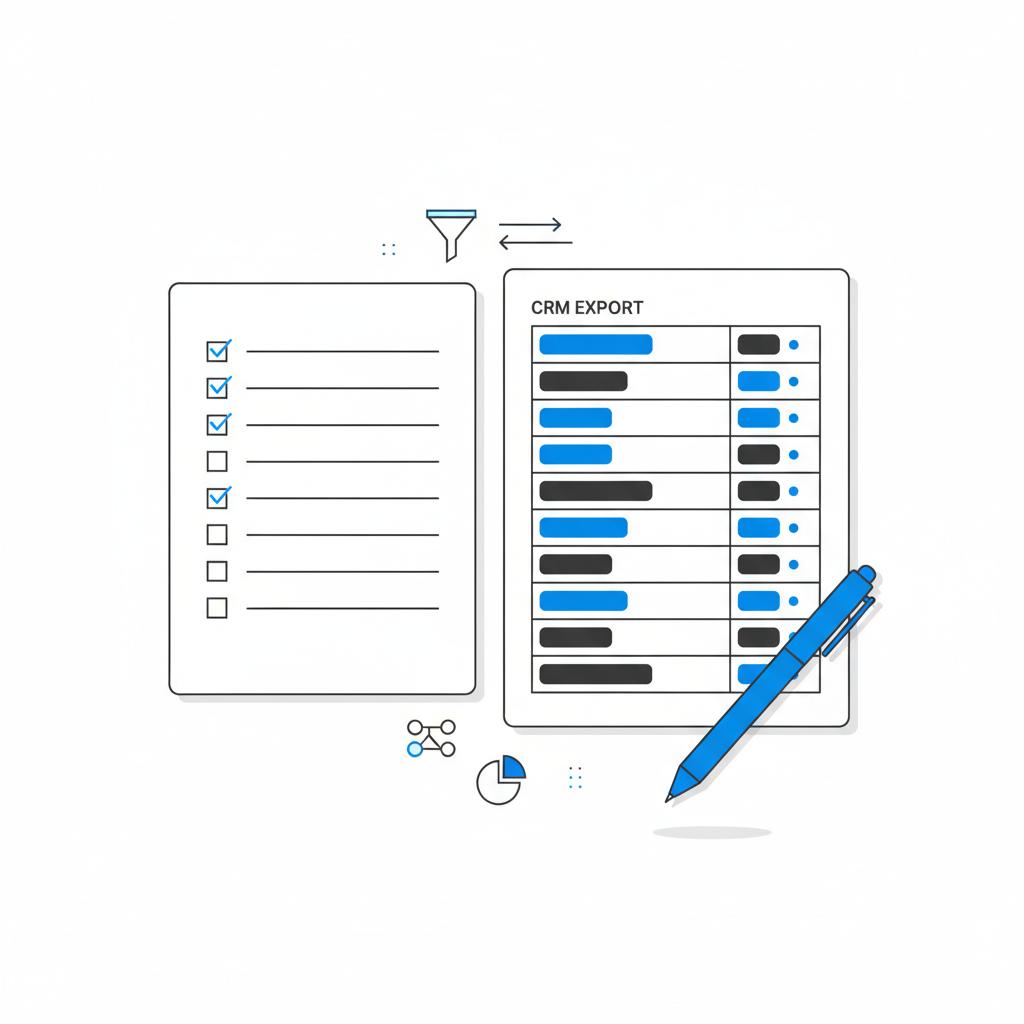
5) Tag everything: Tag each Angi lead in your CRM immediately at first contact.
6) Track outcomes: Record no answer, estimate scheduled, job booked, job completed, and paid.
7) Measure: Calculate cost per lead, close rate, cost per booked job, and gross profit per booked job.
Sample tracking fields to add to your CRM
Use these fields to keep your data clean and useful:
– Lead source: Angi
– Lead ID: (Angi reference or timestamp)
– Time to first contact: minutes from lead arrival to first call/text
– Outcome: No answer / Estimate / Booked / Completed / Paid
– Job category: Faucet / Water heater / Remodel / etc.
– Lead type: Shared / Exclusive
Simple math: turning per‑lead cost into cost per booked job
Headline per‑lead costs are only half the story. Use your conversion rate and average ticket size to find the effective acquisition cost and profit.
Example formula (one line):
Cost per booked job = (Average cost per lead × Number of leads) ÷ Number of booked jobs
Then compare that number to the average gross profit per job. If gross profit per job is higher than acquisition cost, the channel can work.
Worked example with sensitivity checks
Imagine you pay $50 per lead. You buy 20 leads in a month: that’s $1,000. With a 20% conversion, you book 4 jobs; cost per booked job = $250. If your average job is $1,200 with a 40% gross margin, gross profit per job is $480. Subtract the $250 acquisition cost and you keep $230 per job in gross profit.
Run small sensitivity checks: what if cost per lead rises to $75, or conversion falls to 10%? The numbers change quickly. That’s why pilots and quick iterations matter.
Response time: the single biggest lever
Across contractors, leads contacted within minutes convert at far higher rates than leads contacted hours later. Consumers compare multiple providers; whoever answers first often wins. If your team can’t answer immediately, use a plan B: a text‑capable inbox, an on‑call responder, or a routing system that alerts staff as soon as a lead arrives.
How to improve Angi lead quality and conversion
Don’t hope leads change — change how you work with leads. Practical moves that produce outsized gains:
– Narrow categories: Receive fewer, more relevant leads.
– Improve your profile: Recent reviews, clear service pages and before/after photos increase trust.
– Use scripts: Short, persuasive opening lines win more bookings.
– Daily review: Look at leads and outcomes daily for rapid learning.
– Cap and pause: Use spend caps and pause lead types that underperform.
Sample phone script for first contact
Open fast, be brief, set the next step. Example:
“Hi, this is [Your Name] with [Company]. I just got your request on Angi — is now a good time to ask a quick question so I can give an accurate estimate?”
Two quick qualifying questions: 1) What problem are you seeing? 2) When would you like someone to look? If they’re a fit, offer a same‑day or next‑available estimate and a clear time window.
Common mistakes and how to avoid them
1) Treating Angi like a magic box. It’s a channel, not a guarantee.
2) Not tracking leads. Without tags and consistent outcome recording you’ll guess instead of measure.
3) Too broad filters. Narrow the geography and job types to improve relevance.
4) Pricing without acquisition cost in mind. If your margin doesn’t cover lead cost, raise prices or sell add‑ons.
Refunds, credits and disputes
Angi’s terms for refunds or credits can vary. Keep detailed records of problem leads and raise disputes quickly. Document timestamps, screenshots and call logs. If you believe a lead meets the platform’s criteria for a credit, present the evidence concisely and follow up until resolved.
Comparing Angi to other acquisition channels
Don’t compare channels by headline per‑lead numbers alone. Compare by net profit per booked job and by capacity (how many booked jobs can you handle without losing quality?).
Channel tradeoffs:
Paid search: High control and intent, requires ongoing management.
Local SEO & reviews: Compound over time and lower cost per booked job when mature.
Referrals & repeat customers: Often highest ROI but take time to build.
Lead marketplaces (Angi): Fast lead flow with variable quality – useful as a part of a diversified mix. For a detailed Angi vs HomeAdvisor comparison, see this guide.
Negotiation and account management tips
Because Angi customizes prices, your account rep can sometimes help. Ask for:
– A trial pricing window to test rates;
– Limits on shared leads or higher odds of exclusives if you show strong conversion;
– Clear rules on credits and lead disputes so you can contest poor leads promptly.
Detailed pilot example — kitchen, heater and remodel case
Run a 60‑day pilot with $1,200. If average cost per lead is $40, you’ll receive ~30 leads. Suppose conversion and job values are:
– Faucet replacements: 30% conversion, $250 average.
– Water heater repairs: 20% conversion, $650 average.
– Bathroom remodels: 10% conversion, $6,000 average.
If you book 3 faucet replacements, 2 water heater repairs and 1 bathroom remodel (six jobs), cost per booked job = $200. Multiply each job by its gross margin and check if average gross profit > $200. If yes, consider scaling; if not, tighten filters or response steps.
Many forget to estimate capacity: booking more jobs is good, but if crews get overloaded and quality drops, long‑term value and future referrals suffer. Plan capacity before scaling and measure delivery metrics alongside acquisition costs.
Many forget to estimate capacity: booking more jobs is good, but if your team can’t deliver on time or quality drops, future reviews suffer and long‑term value declines. Plan capacity before scaling up.
Advanced tracking: attribution and multi‑touch paths
Some customers first find you on Google, then contact via Angi. If you only tag Angi leads, you may undercount organic influence. Add a simple field: “Prior touch” (Google, Referral, Email, None) and note if the contact mentioned prior searches. Good attribution helps you value long‑term channels properly.
How to judge whether Angi should remain in your marketing mix
Use this decision rule after your pilot:
– Keep Angi if: Cost per booked job < average gross profit per job and you have capacity to fulfill jobs.
– Iterate if: Cost per booked job close to gross profit — tighten filters or improve response.
– Pause if: Cost per booked job consistently exceeds gross profit despite small changes.
Alternatives to try alongside or instead of Angi
If Angi looks expensive or variable, test these alternatives in parallel:
– Local search ads (Google Local Services or search ads) with tight geo‑targets.
– Local SEO improvements: collect reviews, update citations, and add project galleries.
– Referral partnerships with realtors and property managers.
– In‑field upsells and maintenance plans to increase lifetime value.
Checklist: what to set up before you start a pilot
– CRM tags for Angi leads and outcomes
– A 60‑day budget and weekly caps
– A response owner and scripts
– Filters for geography and job types
– A quick dispute plan for bad leads
Case study (hypothetical) — small plumbing company
Local Plumbing Co. (hypothetical) ran a 60‑day test with $800 budget and saw 20 leads at $40 each. They converted 20% -> 4 booked jobs: 2 faucet fixes ($250, 35% margin) and 2 water heater repairs ($650, 45% margin). Weighted average gross profit per job was roughly $300; cost per booked job = $200. Net positive, so they increased spend 25% while tightening filters to favor heater repairs. They also updated their Angi profile with recent reviews, which increased conversion over the next 30 days.
Questions to ask your team before scaling
Do we have the crews and parts to fulfill a 25% increase in booked jobs? Can we maintain the same response time if leads double? What filters will we tighten to keep quality consistent?
Top takeaways
– There’s no single flat price: Angi charges per lead and prices vary by trade, market and exclusivity.
– Run a short pilot: 60 days with caps, tags and daily review is the fastest way to learn.
– Measure profit per booked job: That’s what matters, not just cost per lead.
– Response time matters: Minutes often beat hours in conversion rates.
Use these steps and you can answer the original question — “How much does Angi cost for service business owners?” — for your business, in dollars and in profit. Replace guesswork with measurement, iterate, and treat lead marketplaces like one tool among many.

– Set a 60‑day pilot with a $500–$1,500 budget depending on business size.
– Implement CRM tags and a fast response script.
– Cap spend weekly and review results weekly.
– If you’d like hands‑on help running or analyzing a pilot, Agency VISIBLE can help you set the tracking and interpret the numbers.
Ready to test Angi without the guesswork?
Ready to test Angi without the guesswork? Get a short, tactical pilot set up and tracked by experts so you know the real cost per booked job in 60 days. Contact Agency VISIBLE to start.
Finally, remember that Angi is a source of opportunities – not a guarantee. With clear tracking, fast responses and narrow filters you can make the marketplace profitable for many trades.
End of article content.
Respond as quickly as possible — ideally within minutes. Contractors consistently report higher conversion rates when they contact leads right away. If immediate phone response isn’t possible, use a text‑capable inbox or an on‑call responder to acknowledge the lead and schedule a follow‑up. Document response times in your CRM so you can correlate speed with conversion.
Angi’s refund and credit policies vary and are handled case by case. Keep detailed records (timestamps, screenshots, call logs) and raise a dispute quickly if a lead violates the platform’s rules. Present concise evidence and follow up with your rep. If you want help documenting disputes and tracking outcomes, Agency VISIBLE can assist with the process.
A 60‑day pilot is recommended for reliable data, though 30 days can provide early signals. Budget depends on your business size; many small to mid‑sized contractors start with $500–$1,500 to collect 10–40 leads. Cap weekly spend to control risk, tag leads in your CRM, and calculate cost per booked job at the end of the pilot.