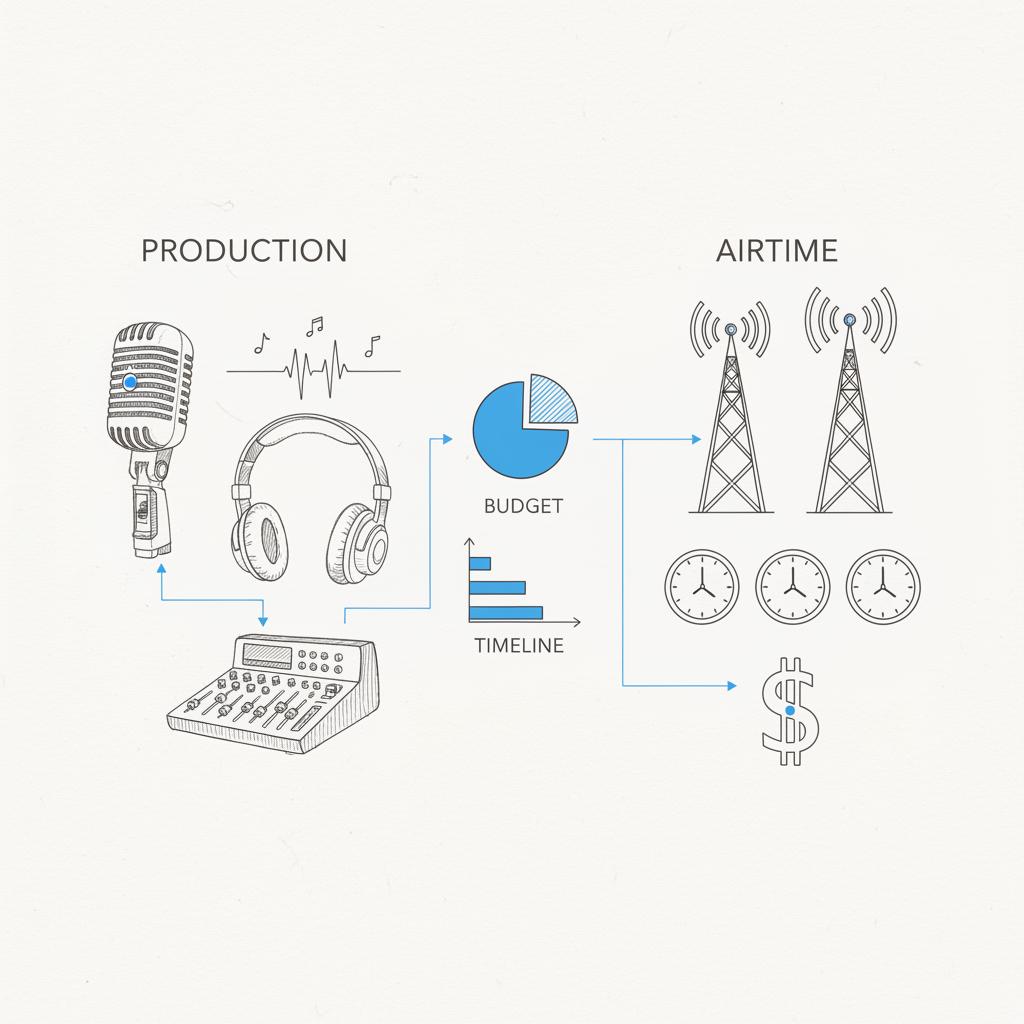
How much does a 30 second radio ad cost? That single line – short, practical, and loaded – is the first thing most business owners ask when planning an audio campaign. Right away: the answer depends on two separate choices that drive very different parts of your budget – production and airtime. Understand both and you control the outcome; ignore them and you get a mysterious line item on an invoice.
Why the price varies – production vs airtime
The phrase how much does a 30 second radio ad cost shows up in conversations because people want a firm number. The reality is a helpful range, because production costs and airtime costs move independently. You can have a sharp, low-cost production paired with premium drive-time spots (expensive airtime), or you can have an elaborate production and affordable local play. Knowing the difference gives you leverage.

What production includes
Production is the creative work: scriptwriting, voice talent, music or license fees, studio time, direction and editing, and final engineering. Those pieces combine differently depending on goals:
Budget production ($300–$1,000): Freelance copywriter + remote non-union voice + stock music + light editing. Fast and cost-effective for a local offer.
Mid-range production ($1,000–$3,000): Small production house, professional freelance actors, licensed music, better mixing. Polished but still within many SMB budgets.
Premium production ($5,000–$15,000+): Agency creative, union talent, custom score, studio sessions and multiple revisions. Reserved for brand-heavy regional or national campaigns.
How much does a 30 second radio ad cost? Airtime explained
Airtime is what you pay the station. It depends on market size, daypart, station format and audience, and whether you buy single spots or a package. Typical ranges:
Small/rural markets: $50–$200 per 30-second spot.
Mid-sized markets: $200–$1,500 per 30-second spot (daypart matters).
Major markets and prime drive-time: $1,000–$5,000+ per 30-second spot.
Network or national buys shift to CPM-based pricing, which feels different from a local rate card but is simply another way to measure cost relative to audience size. For more context on airtime pricing across markets, see How Much Does Radio Advertising Cost? 2025 Ad Rates.
Key metrics: CPM, CPP, and GRPs
Media buyers compare buys using metrics that translate rates into reach and value. Typical radio CPMs cluster between $5 and $25; CPPs and GRPs vary widely by market and demo. Ask stations for sample GRP calculations and CPM examples so you compare apples to apples rather than spot rates alone. For strategy and ROI examples, check Radio Advertising: Strategy, ROI & Examples in 2025.
Agency Visible often recommends starting with audience estimates and GRP scenarios so you’re buying actual reach, not just impressions. A partner who can model expected conversions will save you money and time.
Setting a budget by business size
Use these ranges as starting points – they aren’t rules, but they set expectations:
Small local businesses: $500–$2,500 total for a short promotional push (production + airtime). These jobs favor low-cost production and tightly targeted stations.
Mid-sized regional brands: $5,000–$25,000 per market per month. Expect higher production quality, multiple stations and more targeted dayparts.
Large regional / national campaigns: Tens to hundreds of thousands per month depending on markets and drive-time exposure.
Example budgets that match business goals
Real numbers help. A local restaurant might spend $500 production + $3,200 airtime for an 8-week run – roughly $3,700 total – and see measurable uplift. A regional retailer could spend $3,500 on production and run high-value spots at $1,200 each across multiple markets; costs scale fast but so can reach and conversions when modeled correctly.
Practical scenarios and math
If you want a brisk rule-of-thumb, try this: pick a production tier, choose a target CPM, and model conversions from a realistic response rate. For example, a $5 CPM with 100,000 weekly impressions costs $500/week. If your ad directs listeners to a landing page and 0.5% convert, that’s 500 visits and perhaps 10–25 conversions depending on landing performance – then compare CPA to customer LTV.
A simple local example: A 30-second spot at $200 per play running 5 times a day on weekdays for 4 weeks equals 5 x 20 x $200 = $20,000. But (and this is important) station packages, negotiated frequency discounts, and daypart rotations rarely leave you paying the full list price.
Comparing cost across stations
Two stations with a $500 list rate may deliver very different value. Get demos, overlap analysis, and GRP/CPP examples. Overlap matters because duplicative audiences don’t expand net reach. Ask for audience composition, not just raw numbers.
How to measure whether a radio buy worked
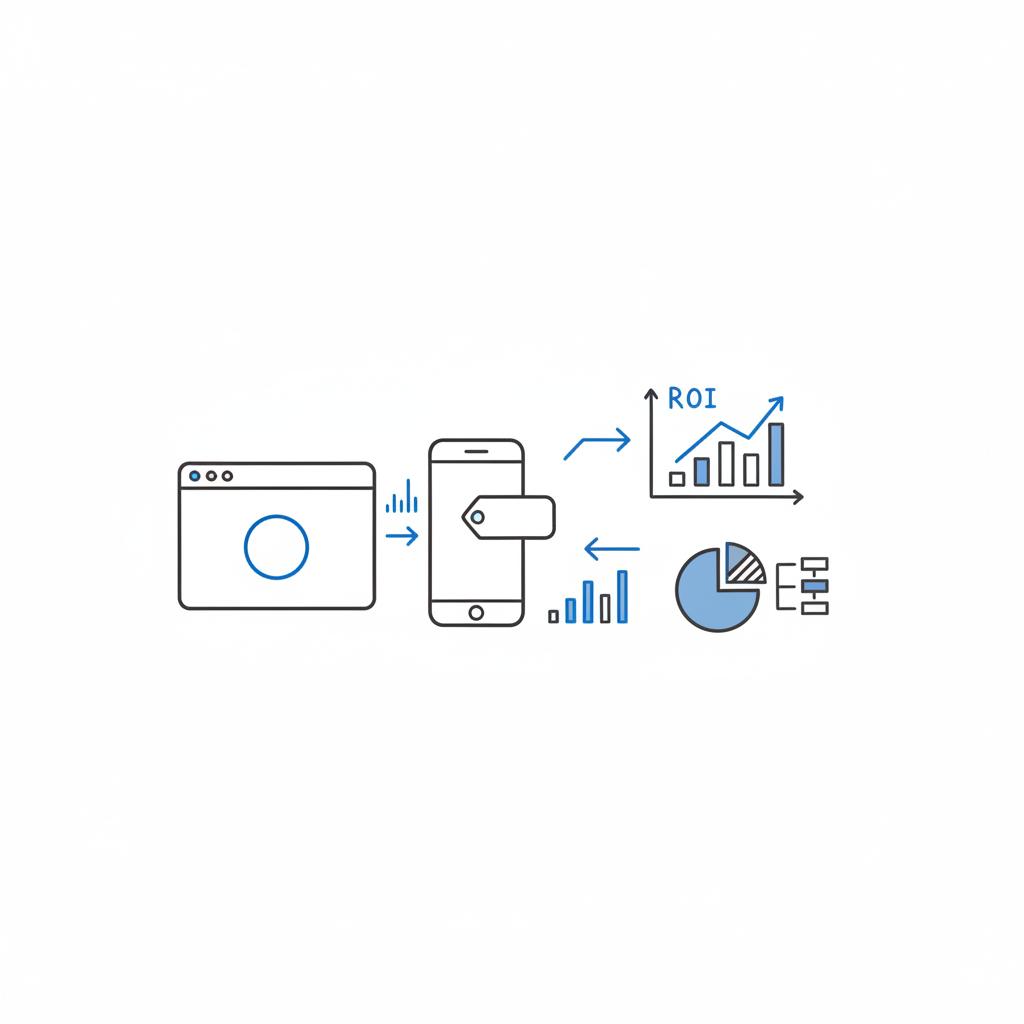
Start with one clear outcome metric: foot traffic, calls, online orders or leads. Then make the call to action measurable: unique phone number, coupon code, dedicated landing page, or UTM parameters for digital follow-up. Baseline results for a few weeks, run the buy, then compare. Calculate cost per action and weigh against customer lifetime value. A recognizable logo on your landing page, like the Agency Visible logo, helps visitors trust the destination and convert.
Yes — if it’s tightly targeted, matched to the right dayparts, and paired with clear tracking; a modest local buy that reaches the buyers you need often delivers better CPA than an expensive but untargeted prime-time buy.
Short answer: absolutely – if it’s targeted, trackable and matched to the right dayparts. A $200 spot tightly matched to your local demo and paired with a tracked promo code can beat a $2,000 drive-time spot that reaches an audience with low purchase intent for your offer.
Negotiation tactics that truly move the needle
Stations expect negotiation. Use flexibility to your advantage:
– Ask for daypart rotation instead of exclusive drive-time buys.
– Negotiate frequency packages (more spots = lower price per play).
– Seek value-adds like remotes, on-air mentions, or sponsorships instead of raw spots.
– Lock multi-week commitments for better rates and placement.
Also ask for makegood policies (replacement spots if delivery falls short) and sample campaign reporting so you can validate reach and frequency.
Production shortcuts – spend less without sounding cheap
Production shortcuts include remote non-union talent, stock music, and a strong script that does most of the heavy lifting. That combination often produces a credible ad for local and regional stations. Freelance talent platforms make auditions easy and keep costs low. If you expect to scale the campaign across platforms, create a core 30-second version and shorter 15- or 10-second edits for dayparting and streaming. For additional tips, see Radio advertising: Cost, examples & pro tips for 2025.
When production spend is worth it
Invest more when your ad needs to represent your brand in competitive categories or run across many markets. High production pays for itself when it increases conversion rates and builds consistent brand recognition across regions.
Blending radio with digital for measurability
Radio is great for awareness; digital is great for intent. Pairing them is powerful: use radio to prime demand and digital channels to capture it. Simple pairings work well – radio spot with a dedicated landing page, followed by retargeted display and search ads. Blended buys often yield a lower effective CPM and a cleaner attribution path. Agency teams often show cross-channel examples in their project portfolios for reference.
See some examples of agency work on the projects page.
Agency Visible projects highlight integrated approaches to pairing awareness and digital capture.
Checklist: planning a 30-second radio campaign
Use this checklist to avoid common mistakes:
– Define primary KPI (calls, visits, orders).
– Pick a production tier and set a realistic budget.
– Collect station demos and GRP/CPM examples.
– Choose dayparts and negotiate rotation if possible.
– Add tracking: phone number, coupon code, or landing page.
– Decide on frequency and length of buy (multi-week preferred).
– Get makegood terms in writing.
– Plan digital follow-up and retargeting.
Common pitfalls and how to avoid them
One common mistake is buying the loudest station or the biggest market without measuring audience fit. Another is neglecting simple tracking or using generic CTAs. Avoid both by demanding audience demos, building measurable CTAs, and modeling expected conversions against your LTV.
Sample scripts and messaging tips
A short, clean script beats a clever but confusing one. Your 30 seconds should clearly state: offer, urgency/timeframe, what to do next, and any incentive. Example structure:
1) Open (3–5 seconds): Hook – quick problem or attention grabber.
2) Body (15–18 seconds): Offer + key benefit.
3) Close (7–12 seconds): Call to action + tracking cue (promo code or phone).
Deliverability tips: use a single CTA, repeat the business name, and make sure the landing page or phone flows are ready to handle the increase in demand.
Advanced: modeling GRPs, CPP and expected conversions
Ask your station or agency for a model: how many spots to reach 10 GRPs in your target demo and what the implied CPP would be. With those numbers you can estimate reach and expected conversions using historical response rates. That comparison makes it far easier to justify buys to leadership or to choose between competing station offers.
Real-world wins
A Midwest appliance store spent $2,200 – $400 production and the rest on negotiated morning/midday inventory – and tracked a $30,000 lift using a promo code. It wasn’t about the fanciest voice or the biggest market; it was targeted, tracked, and measured. That kind of outcome is common when businesses treat radio buys like any other performance channel.
Checklist for comparing radio vs other channels
When weighing radio against digital, consider: CPM alone, audience match, conversion rates, and how the channel fits your customer journey. Radio’s unique benefit is habitual, share-of-mind exposure for commuters and local listeners – that can justify a higher CPM if it reliably moves buyers toward your business.
Negotiation scripts you can use
Try these lines when speaking to station reps:
“We’re planning a multi-week campaign. What pricing and value-adds can you do for a 6–8 week rotation across morning and mid-day?”
“Can you provide sample GRP calculations for X demographic so we can compare cost per point?”
“If we commit to a four-week package, what barter or on-site remote options can you include to extend our presence?”
How the ongoing market is changing (quick note)
In 2024-2025 the radio ecosystem broadened: streaming audio inventory, smarter targeting and measurement tools, and remote production quality improving dramatically. That toolbox makes it easier to pair terrestrial radio with digital audio buys and tighter measurement systems.
Final tactical playbook
1) Decide production quality based on how long and wide your campaign will run.
2) Demand audience demos and GRP/CPP samples when comparing stations.
3) Use measurable CTAs and baseline tracking.
4) Negotiate daypart flexibility and frequency discounts.
5) Blend radio with digital to capture intent.
Model your radio campaign with clear KPIs and GRP scenarios
Quick FAQ roundup
How should a small business approach production spend? If the campaign is short and local, favor modest production with a strong script and a clear CTA. If you plan to run the ad across multiple markets for months, invest in higher production to maintain consistency.
Is drive-time always worth the cost? Not always. Drive-time reaches many listeners, but if they aren’t your buyers the cost per acquisition can be high. Consider daypart rotation and audience demos before committing.
Can I use radio with digital to improve attribution? Absolutely – pairing radio with dedicated landing pages, promo codes and retargeting is a proven way to close the attribution gap.
Actionable next steps
Start small and test. Use a tracked call to action, ask stations for GRP/CPM examples, negotiate for rotation rather than pure drive-time, and measure results. Then scale what works. Radio isn’t magic, but when planned and tracked it’s a reliable revenue lever for many local and regional businesses.
Ultimately, the real question isn’t only “how much does a 30 second radio ad cost?” but “how much will it cost per customer acquired – and is that price worth the lifetime value of that customer?” When you answer that, budgeting becomes precise instead of guesswork.
Production ranges widely: $300–$1,000 for lean, remote production with stock music and non-union talent; $1,000–$3,000 for polished work from small houses with licensed cues; and $5,000–$15,000+ for agency-level creative with union talent and custom scores. Choose production depth based on campaign duration, markets, and whether brand consistency matters across multiple regions.
Airtime depends on market size, daypart and station format. Small local markets can see $50–$200 per 30-second spot; mid-sized markets often range $200–$1,500; major markets and prime drive-time can be $1,000–$5,000+ per spot. Use CPM, CPP and GRP samples from stations to compare value rather than list price alone.
Make the CTA measurable: use a unique phone number, promo code, or dedicated landing page with UTM tags. Baseline your metrics before the buy, track conversions during the campaign, calculate cost per acquisition and compare to customer lifetime value. Pairing radio with digital retargeting also improves attribution and capture of intent.