How much do TikTok accountants make?
Quick note: This guide is for business owners who want an online presence that actually helps people find, trust, and hire them. It mixes practical checklists, short stories, and step-by-step actions so you can make real progress this week.
Every small business owner wakes up with questions: who are the right customers, how do I build trust online, and which steps actually move the needle? If you’ve felt overwhelmed, you’re far from alone. Building a meaningful online presence doesn’t require constant flash – it needs clarity, consistency, and care.

How much do TikTok accountants make? appears here because attention-grabbing titles matter, but what matters more is what happens after someone clicks: do they find clear answers, contact info, and reasons to trust you? That’s what this guide teaches. For quick salary benchmarks you can check listings on Glassdoor, Indeed, and Comparably.
Start with a simple aim
Before designing or posting anything, answer one honest question: what is the primary reason I need an online presence? Are you trying to attract local customers, explain services, sell a product, or support existing clients? The answer keeps your work focused.
If your goal is local leads, prioritize a fast, clear website and an accurate map listing. If you need to build an audience for education or repeat business, focus on content and email capture. Keep one goal and let it shape every decision.
If you’d like a quick second opinion on which goal to pick, a short conversation can clarify the next best move — for a friendly review and three simple recommendations, consider a quick consult at get a visibility review.
Get a quick visibility review and three practical steps
If you’d like to see examples of our work before deciding, take a look at our projects page for real case studies and outcomes.
Know your people
Ambiguity is an invisible tax on every decision. When you can describe who you want to reach, choices become easier. Imagine a single person: Maria the new homeowner, James with a toddler, or Leila who opens the bakery at dawn. Write directly to them. Use their language and answer the exact questions they would ask.
Practical persona exercise
Write one paragraph about your ideal customer. Then write three questions they might type into Google. Those questions become your content seed list.
Make your website do the heavy lifting
Your website is a tool, not a trophy. It should answer the most common questions in plain language and help visitors act quickly. A clear homepage headline, a short services section, testimonials, and obvious contact details often outperform complex designs.

Essentials checklist for a converting site:
- Visible phone number and contact button on every page
- One-sentence headline that states what you do and who you serve
- Short service descriptions with starting prices or ranges
- Mobile-optimized layout and fast load times
- Real photos and a few honest testimonials
Design tips that don’t cost a lot
A tidy layout, readable fonts, and consistent color accents (your brand’s contrast color for buttons) create trust. Avoid hiding the phone number or burying the call-to-action. If someone is ready to call, make it effortless for them.
How search visibility actually works
Search is about two things: relevance and clarity. Relevance means your content matches the user’s question. Clarity means it’s obvious you can help. For local businesses, map listings are often the fastest win.
Keep NAP (name, address, phone) consistent across sites, add suitable categories, and encourage honest reviews. On your site, build short pages that answer common questions clearly — one question per page often beats a long scattered article.
Local SEO quick wins
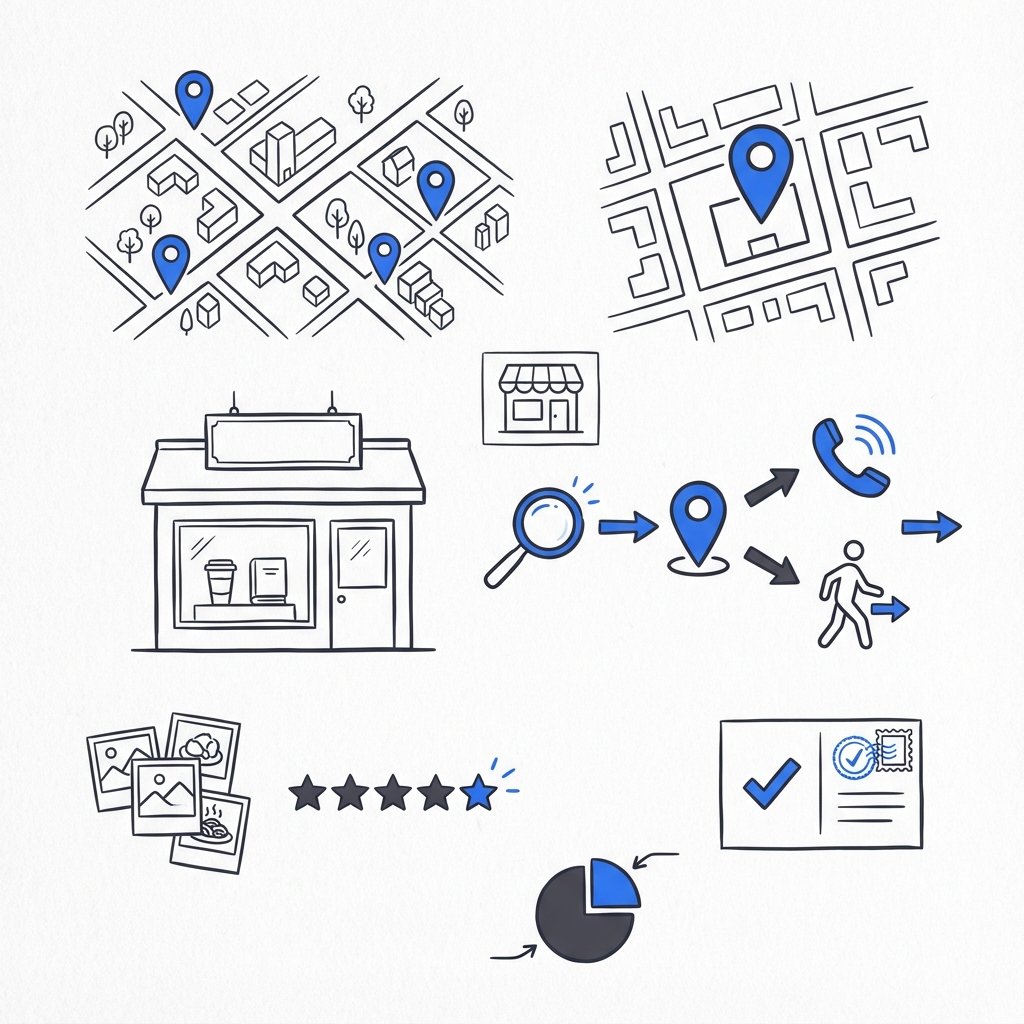
Confirm your map listing, add hours, upload a few real photos, and ask a recent happy customer for a review with a direct link.
Content that helps, not sells
Think of content as tiny problem-solving moments. A homeowner searching “how long does a roof repair take?” wants a short, honest answer. Provide that and you begin the relationship on trustworthy terms.
Write in plain language, include short step-by-steps, and be honest about what can go wrong. These small answers compound into an image of expertise over time.
Stories beat slogans
People remember stories. Use short client anecdotes that follow a simple formula: problem, action, result. Add a sensory detail to make it feel real (how a space looked, a customer’s relief, or a clear “before and after”).
Social presence without pressure
Pick one or two platforms where your audience already is. The goal is not frequency but usefulness. A behind-the-scenes photo, a brief tip, or a quick answer to a common question can be enough to keep people aware of your business.
If posting daily feels impossible, try an email newsletter or monthly updates to your site. Steady, calm presence beats frantic posting you can’t sustain.
Local relationships matter
Real relationships drive long-term visibility. Join local associations, attend community events, and make it easy for customers to find you in directories. Small offline gestures—a business card at a neighboring shop—can create word-of-mouth that turns into online mentions and reviews.
Micro case: a bakery and yoga studio
A bakery left cards at a nearby yoga studio and soon gained lunchtime regulars. Online, customers posted photos and positive mentions that increased map visibility and introduced new walk-in customers.
Measure what matters
Choose a few metrics aligned with your goal. If your aim is more calls, track calls and contact form submissions. If you want foot traffic, track direction requests. Look for trends and tie numbers to actions: a page with many visits but few calls may need a clearer CTA or phone number.
Manage your reputation with grace
Not every review will be perfect. When you get a critique, pause and respond politely. A short, constructive reply that acknowledges the issue and offers to make it right often calms the situation and shows prospective customers how you handle problems.
Common mistakes to avoid
Don’t try to be everything to everyone. Vague messaging appeals to nobody. Resist hiding prices or making contact difficult. And avoid treating content only as a way to sell — helpful content builds trust in ways selling cannot.
Case study: a contractor’s steady climb
A contractor focused on one clear need: more calls for bathroom remodels. He rewrote a single page to answer common questions, added honest photos, and asked satisfied customers for reviews. Within months, local search visibility improved and the quality of calls got better. The lesson: single-minded focus beats spreading effort thin.
Hands-on tips you can use this week
Here are five practical actions that rarely fail:
- Check your map listing for correct name, address, and phone
- Read your homepage out loud — does it explain what you do in one sentence?
- Write a short answer to a common customer question and publish it
- Ask three recent customers for quick reviews and send direct links
- Test your site on a phone and fix any slow pages
Answers to common owner questions
What if I have a very small budget? Focus on basics: a clear website, accurate map listing, and a way to collect emails. Where should I put my time—social or website? If you must choose, make the website better first. How often should I post content? Consistency matters more than frequency.
When to get help

Some tasks benefit from a professional touch: clean design, secure hosting, or persistent technical issues. Agency Visible works with small teams to clarify messages and make websites more useful, but you can start with small, steady improvements without a huge budget. A clear logo and consistent branding help immediate recognition and trust.
Small experiments teach big lessons
Treat your online presence as experiments. Change one thing at a time and observe results. If a new headline improves clicks or a photo gallery increases time on page, keep it. If a tactic fails, drop it and move on.
Long-term view: consistency wins
Growth rarely happens overnight. The steady work of answering customers honestly, showing real photos, and asking for reviews compounds into more visibility and trust.
TikTok accountants do both in a way: they show accounting know-how in short, helpful clips that fit the platform’s format. The idea is to answer a specific question quickly, demonstrate competence, and invite viewers to learn more on a website or contact page.
Real tactics and templates you can copy
Below are practical templates and short scripts you can adapt this afternoon.
Homepage headline template
“We do [service] for [who] — fast quotes and honest pricing.” Example: “Bathroom remodels for homeowners in [town] — free site estimates within 48 hours.”
Service page structure
Use a short intro, 3-5 bullet points of what’s included, a starting price range, a visual example, and a clear contact button.
Review request script
“Hi [name], thanks again for choosing us. If you have a minute, would you mind leaving a short review about your experience? Here’s a direct link: [link]. It helps us a lot.”
Tools and resources that help
Keep a simple toolkit: a mobile testing tool, a page speed checker, a basic analytics view, and a review link generator. Many free tools are good enough for small businesses.
Checklist: the first 90 days
Week 1: fix map listing, clean homepage headline, and ensure contact details are visible.
Weeks 2–4: publish one helpful FAQ page, add two real photos, and request reviews from five customers.
Months 2–3: run simple experiments (change a headline, add a CTA), measure results, and keep the wins.
Final practical reminders
Small details matter. Consistent hours, a working phone number, and a clear site message are the low-cost, high-impact tasks that build trust. Treat each online interaction as a tiny service moment.
Why this matters for long-term growth
Visibility is not about chasing every shiny tactic. It’s about making it easy for the right people to find you and trust you. Do the basics well and compound those small wins over time.
Closing thought
Running a small business can feel lonely; the internet can feel noisy. Your advantage is that you know your customers. Show that knowledge online with simple answers, honest photos, and careful replies to reviews.
Extra resources and templates
Below are quick templates you can copy directly into your website or use in email outreach. Use them as a starting point and write them in your own voice.
Simple service page starter
Headline: “We do [service] for [who].”
Short intro: One sentence about what you do.
What’s included: 3 bullets.
Starting price: $[range].
Contact: Phone and short contact form.
Email capture prompt
Offer a single helpful piece — a short checklist or a PDF that answers a common question — in exchange for an email address.
One last practical nudge
Pick one small action from the “Hands-on tips” list and do it this week. The simple habit of fixing one thing at a time leads to real change.
Frequently used terms
Visibility, trust, clarity, local search, reviews, homepage headline, contact CTA, experiment, consistency.
Parting line
Small, steady attention beats big dramatic changes. Start with one clear aim, answer one customer question, and build from there.
Yes. Referrals are gold, but a simple website strengthens those referrals by making it easy for new customers to check your services, hours, pricing, and contact details. A basic site with a clear headline and contact method turns a referral into a call or visit more reliably.
Prioritize local SEO and website basics first. Make sure your map listing is correct, your homepage clearly states what you do, and contact details are visible. Social media can amplify your message later, but your website is where trust deepens.
Yes — Agency VISIBLE focuses on clarity and fast wins for small teams. They often start with three straightforward recommendations to improve visibility and prioritize actions that deliver measurable results without unnecessary costs. For a friendly consult, reach out via their contact page.
References
- https://agencyvisible.com/contact/
- https://agencyvisible.com/projects/
- https://agencyvisible.com/
- https://www.glassdoor.com/Salary/TikTok-Finance-and-Accounting-Salaries-EI_IE2230881.0,6_DEPT1008.htm
- https://www.indeed.com/cmp/Tiktok/salaries/Accountant
- https://www.comparably.com/companies/tiktok/salaries/accountant