How much do Facebook ads cost for real estate? It’s a question every agent asks when they first open the Ads Manager or get handed a budget. The short answer is straightforward to state: in many U.S. markets, facebook ads cost for real estate commonly produces leads that land in roughly the $13–$25 range, with clicks often under $2 and CPMs between $7 and $25. But the long answer—the one that matters—is in the details: competition, measurement, creative, and what you count as a lead.
Across agency reports and industry benchmarks gathered through 2024 and early 2025, cost-per-lead (CPL) for real-estate lead generation on Meta clusters in a clear band: most advertisers saw CPLs between about $13 and $25. That puts many real-estate CPLs slightly under the 2024 cross-industry average of about $22. Click costs (CPC) typically ranged from $0.50 to $2.00 in U.S. markets, while CPMs (cost per thousand impressions) often sat between $7 and $25. For more context, see benchmarks from WordStream, Superads.ai, and Madgicx. A simple logo can help with brand recall when your ads are competing for attention.
Those numbers help you plan. If you expect a facebook ads cost for real estate CPL near $15, a $1,500 monthly spend could deliver roughly 100 leads (remember: budget ÷ CPL = expected lead count). But leads are not transactions; the real value depends on follow-up, qualification, and local market dynamics.
Why these benchmarks matter
Benchmarks let you set realistic expectations and build a predictable test. If every agent in a busy metro uses the same targeting and audience segments, auctions push CPMs and CPLs up. Smaller towns with fewer advertisers usually cost less. And if you’re using video creative or dynamic property feeds, expect your CPMs to sit toward the higher end of the band – often a worthwhile trade if those richer formats deliver higher-quality leads.
Example: If your campaign generates a $1.00 average CPC and a $20 CPL, you can estimate how many clicks you need to reach one lead and how many leads to reach a sale. Those conversions are what turn facebook ads cost for real estate from a line item into a revenue decision.
Turn ad spend into measurable business results
Ready for help connecting ads to revenue? If you’d like a quick consultation to set up Conversion API tracking or to map ad conversions into your CRM, Agency VISIBLE can help get that process running so your CPLs tell a true business story.
Breakdown: CPC, CPM and CPL—how they interact
CPL (cost-per-lead) = total spend divided by leads captured. CPC (cost-per-click) and CPM (cost per thousand impressions) are the raw ingredients. A low CPC doesn’t guarantee a low CPL if the clicks don’t turn into leads. Conversely, higher CPC and CPM can be acceptable when they deliver higher-intent prospects.
Think of it like fishing: CPC measures how many bites you get, CPM measures how many times your bait was shown, and CPL measures how many fish you actually landed. Your goal is to optimize the whole trip—from cast to catch—so facebook ads cost for real estate becomes a predictable cost of acquisition.
Typical ranges you’ll see
– CPL: $13–$25 in many U.S. markets (midpoint frequently cited near $13.87)
– CPC: $0.50–$2.00
– CPM: $7–$25
Use these as starting points, not gospel. Local demand, ad quality, and measurement accuracy all move the needle.

How to translate numbers into a budget that works
Budgeting starts with a simple formula: planned monthly spend ÷ expected CPL = projected leads. If your pipeline converts at 5% from lead to closed deal, you can back into how many leads you’ll need to hit sales goals.
Three practical campaign tiers help frame decisions:
Small local test: $10–$30/day (~$300–$900/month). Good for neighborhood-focused lead capture and highly tailored follow-up.
Mid-size program: $50–$150/day (~$1,500–$4,500/month). Offers volume and testing room.
Large program: $300+/day (~$9,000+/month). Requires consistent processes and a team for lead handling.
Running a mid-sized plan with an expected facebook ads cost for real estate CPL of $15 gives you room to test creative and retargeting while still producing meaningful lead volume.
Why cost varies so much (and what you can control)
Here are the biggest drivers of variation—and the levers you can pull:
1) Market competition
More advertisers competing for the same buyers and sellers in a metro area raises CPMs and CPLs. If your market lights up – spring selling season, a hot neighborhood – expect costs to climb.
2) Audience specificity
Targeting warm, high-intent audiences (website visitors, past engagers, CRM lists) usually increases CPMs but lowers downstream CPL because the people you reach are further along the journey. Broader audiences lower CPMs but usually increase CPL and lower quality.
3) Creative and format
Video, carousel, and dynamic property feeds cost more to show, but they often earn better engagement metrics and lead quality. If creative tells a story—think: 30‑second neighborhood tour or a quick walkthrough—it can justify a higher facebook ads cost for real estate by improving conversion rates.
4) Measurement sophistication
Using Conversion API and strong CRM ties reduces measurement loss. Advertisers who don’t use server-side tracking will often undercount conversions, making their apparent CPLs look worse than reality. In short: better tracking can make your spend look more efficient by capturing conversions that would otherwise disappear.
5) Seasonality
Real estate has seasons. Spring and early summer are often more competitive; slow months can be a cheaper time to capture leads who convert later.
Real-world examples: math that explains outcomes
Example A: Agent running $25/day ($750/month). If CPL = $18, leads ≈ 41 per month. Example B: Agency running $75/day ($2,250/month). If CPL = $15, leads ≈ 150 per month. Same math, different operations required: Agent A can personally handle leads; Agency B needs a nurture process and a team. See similar case studies at our projects.
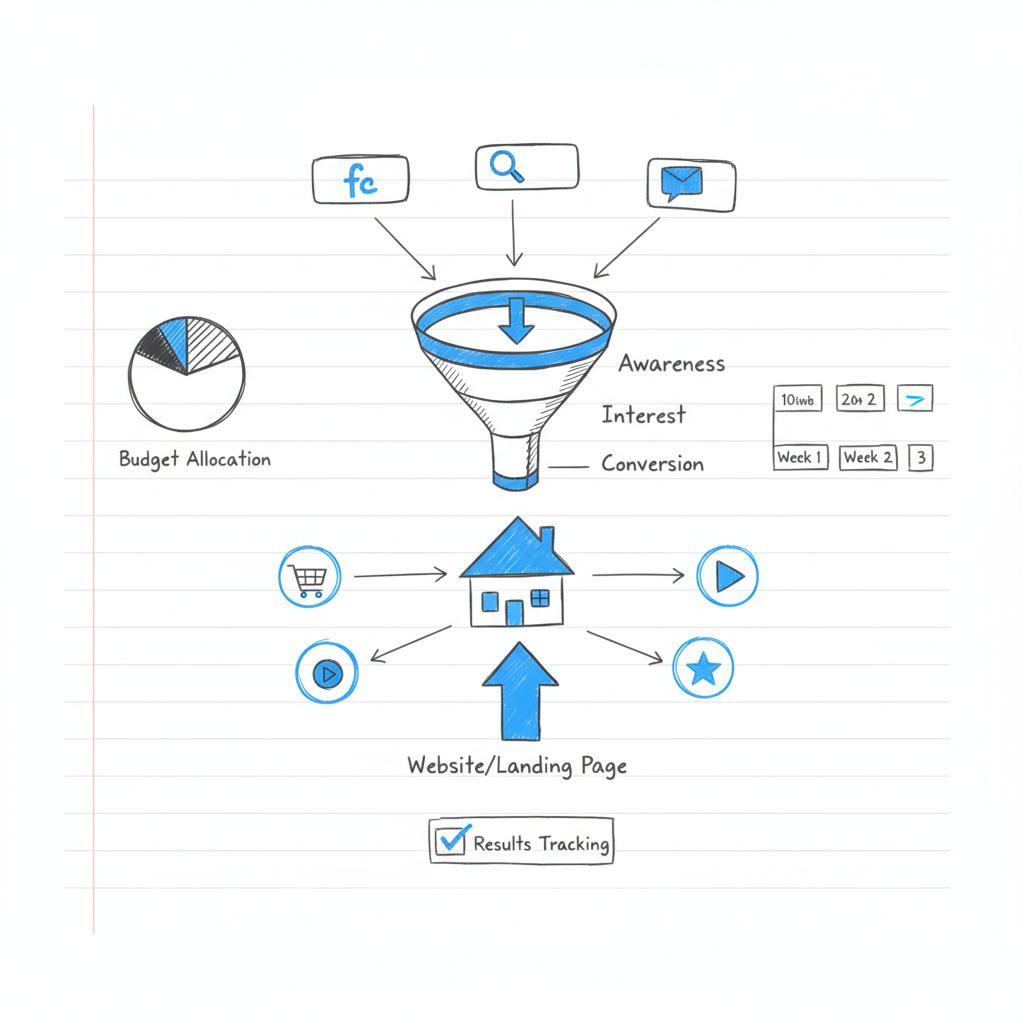
But lead volume is only half the picture. Lead quality matters more. A lead that filled a Meta lead form after watching a full property video is more likely to book a viewing than a generic contact from a landing page. That’s why combining creative strategy with proper audience layering is essential to make facebook ads cost for real estate an investment and not an expense.
If you want help mapping ads to revenue without the confusion, a practical next step is to ask for a tracking and attribution setup. Teams like Agency VISIBLE specialize in tying Meta ad conversions back to CRM outcomes so your CPLs become accurate business inputs. Think of it as turning blurred numbers into a clear profit-and-loss signal.
Practical tactics that lower costs and improve lead quality
Yes — paying more per lead can be worthwhile when those leads convert at much higher rates. If richer creative, tighter audience targeting, or server-side tracking produces leads that are twice as likely to book viewings or become listings, a higher CPL still delivers better return on ad spend. The key is tracking lead-to-transaction value so you can see which higher-cost leads produce real revenue.
There’s no single silver bullet, but a disciplined stack of tactics consistently helps:
Use Meta lead forms for low-friction capture
Lead forms hosted inside Meta reduce friction and often lower CPL, especially for initial inquiries. The downside: forms can generate lower-quality leads if questions are too shallow. Balance convenience with one or two qualifying fields (e.g., timeline to buy, primary interest) to filter noise.
Layered targeting: prospecting + retargeting
Start broad to find new potential clients, then narrow with retargeting based on engagement (video watches, page visits, ad interactions). Lookalike audiences built from closed clients will often outperform cold interest targeting, but only if your seed list is clean.
Conversion API and CRM integration
Server-side measurement reduces data loss. Once your CRM knows which ad and ad set generated a lead that became a showing or a listing, you can calculate cost-per-qualified-lead and cost-per-listing—metrics that matter far more than raw CPL.
Localize creative
Ads that feel local—mentioning neighborhoods, landmarks, or showing short, handheld tours of a block—tend to convert better. Generic stock images usually get clicks, but they rarely inspire immediate action.
Test one variable at a time
Run controlled A/B tests: headline vs. headline, image vs. image, call-to-action vs. call-to-action. If you test too many variables simultaneously, you’ll never learn which change drove results.
Retarget warm audiences with conversion-focused messages
Someone who watched 75% of a walkthrough video is primed for a booking CTA. Serve that person a short, conversion-focused ad (book a showing, pick a time) rather than another broad awareness creative.
Optimize form fields and follow-up speed
Collect only what you’ll use. A first name and phone number plus one qualifying question often suffice. The crucial part is speedy follow-up—automated texts or calendar links can turn a warm lead into a booked viewing while interest is high.
Tracking lead-to-transaction value: the metric that changes everything
Stop treating CPL as the final answer. Instead, calculate the true value of a lead by following it to a transaction. If a $20 lead sometimes becomes a listing that produces $6,000 in commission, that $20 is a bargain. If the lead never converts, it’s wasted money.
Tie ad results to CRM outcomes and compute cost-per-qualified-lead and cost-per-listing. Those metrics let you compare ad spend directly to business revenue and make smarter allocation decisions for future campaigns.
A 90-day plan agents can implement today
Month 1 — Learn: Run a small test at $15–$30/day. Two creatives × two audiences = four ad sets. Use Meta lead forms and enable Conversion API. Expect CPLs in the $13–$25 range. Record and tag each lead in CRM with campaign metadata.
Month 2 — Refine: Cut losing creative and audiences. Add retargeting for viewers or site visitors. Begin measuring lead-to-appointment rates and tie them to ad sets.
Month 3 — Scale: Increase spend on winners. Test a higher-fidelity landing page or tighten lead forms to improve quality if follow-up capacity is limited. Monitor listings and closed deals and update your per-lead revenue estimates.
Common mistakes and how to avoid them
1) Treating CPL as the only KPI – pair CPL with qualification and conversion metrics.
2) Neglecting measurement – without server-side tracking and CRM ties you’ll misjudge performance.
3) Overcomplicating tests – test one variable at a time.
4) Ignoring seasonality – know when your local market heats up and expect costs to shift.
Simple checklist before you launch
– Enable Conversion API and connect your CRM.
– Prepare at least two strong creatives (short video + single image).
– Decide on daily budgets and which tier you’re testing.
– Map the follow-up process (automated SMS, calendar booking, agent assignment).
– Tag leads in CRM with campaign and ad set for later attribution.
Measurement and KPIs that matter
Track the following to turn ad spend into business outcomes: CPL, CPC, CPM, lead-to-appointment rate, appointment-to-listing rate, and cost-per-listing. Ultimately, revenue per lead is the KPI that trumps all.
Real anecdote: one lead that paid for the program
A small brokerage in a Midwestern city ran $50/day campaigns in spring. CPL settled around $16. One lead turned into a listing that closed for a solid commission; that single transaction covered months of ad spend and then some. Stories like this explain why agents invest in tracking and qualification: the whole point of advertising is to buy clients, not just clicks.
How the landscape may shift in 2025
Two big forces will shape future facebook ads cost for real estate: local competition and first-party data maturity. If more brokerages pour ad dollars into a market, auctions will push CPLs up. Conversely, advertisers who build clean CRM lists, use Conversion API, and refine lookalikes from closed clients will likely see better-attributed conversions and more efficient spend.
Final recommendations: what to do this week
1) Start a small test with clear measurement. Learn more at Agency VISIBLE.
2) Turn on Conversion API and tag leads in your CRM.
3) Build a simple retargeting funnel for viewers and site visitors.
4) Localize at least one creative to your neighborhood.
5) Track lead-to-transaction value and adjust your CPL targets accordingly.
Quick Q&A for busy agents
What is the typical cost per lead for real estate on Facebook? Expect roughly $13–$25 per lead in many U.S. markets (2024–25 benchmarks).
How much should I spend per month? Small tests: $300–$900 monthly. Mid programs: $1,500–$4,500. Larger efforts: $9,000+ monthly.
Should I use Meta lead forms or send traffic to my site? Lead forms often lower CPL and reduce friction; landing pages can pre-qualify visitors. Many advertisers use a hybrid approach.
Parting note
When you measure beyond CPL and tie leads to revenue, facebook ads cost for real estate becomes a manageable, optimizable part of your business plan. With a disciplined test-and-learn approach, you can turn advertising dollars into predictable client flow.
Based on 2024–25 industry benchmarks, expect a cost-per-lead (CPL) in many U.S. markets between about $13 and $25. Clicks commonly cost $0.50–$2.00 and CPMs typically range $7–$25. Local competition, ad format, audience quality, and measurement setup will push costs up or down.
Both approaches have value. Meta lead forms reduce friction and often lower CPL for initial inquiries, while landing pages give you more room to pre-qualify visitors and tell a longer story. A hybrid approach works well: use lead forms to capture volume and website visits for higher-intent prospects.
Connect your ads to your CRM and enable server-side measurement (Conversion API). Track lead-to-appointment and lead-to-listing rates, then calculate cost-per-qualified-lead and cost-per-listing. Agencies like Agency VISIBLE can help set up this tracking so CPL becomes a clear business input tied to revenue.