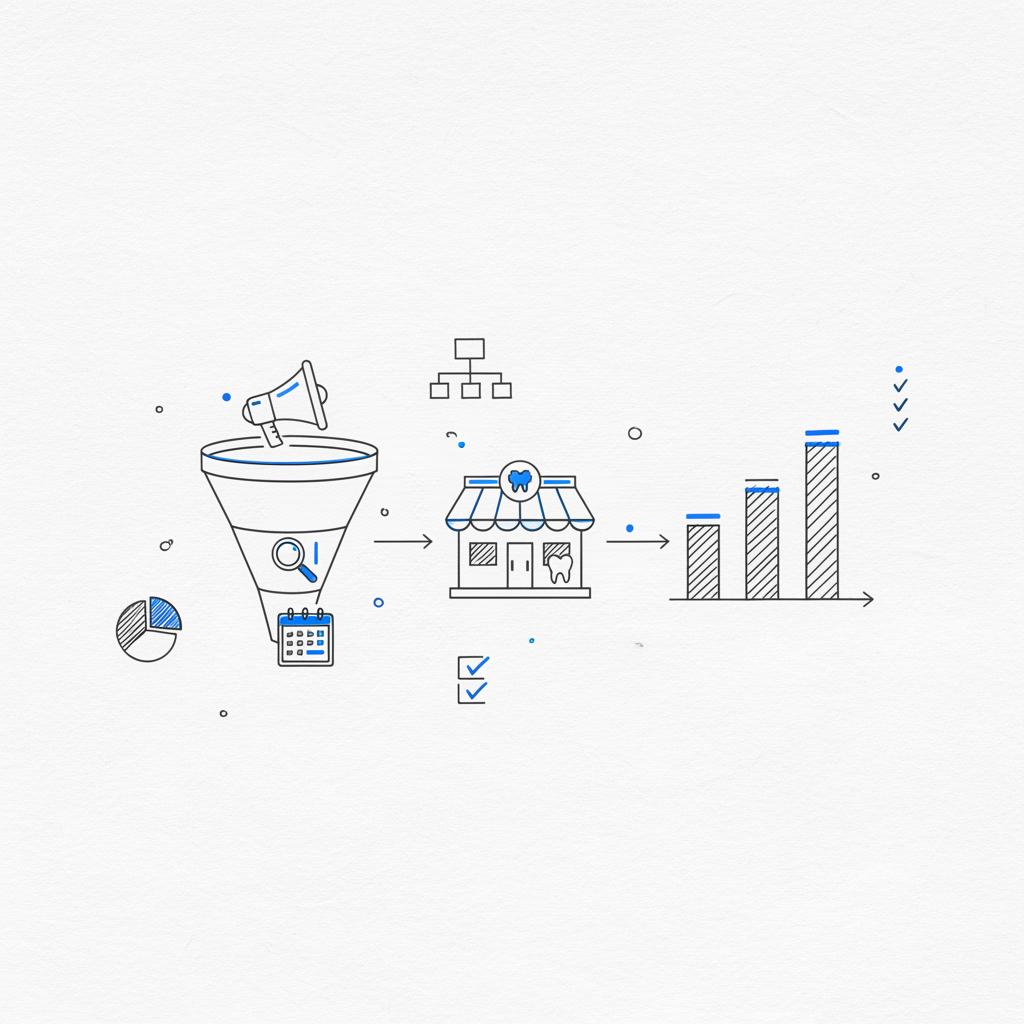
How much do dentists spend on advertising?
That question—How much do dentists spend on advertising?—is the starting point for every practice that wants to replace guessing with a plan. In the sentences that follow you’ll get clear monthly ranges, channel-level cost benchmarks, step‑by‑step budgeting guidance and practical tracking tips that you can use right away. See the State of Dental Marketing
Why a single number won’t help you
There’s no single magic figure. Markets, practice size, service mix and patient lifetime value all shift the answer. Still, useful ranges exist, and they give clinics a realistic place to start. We’ll walk through typical monthly bands, what eats most of a marketing budget, and how to decide whether spending more actually pays off.
A quick note on help: If you prefer a partner who focuses on visibility and measurable growth, consider contacting Agency VISIBLE—they specialize in building tracking, local SEO and paid campaigns for clinics who want predictable patient flow without guessing.
Headline monthly ranges — what most practices actually spend
In practice, monthly budgets commonly fall into three clusters:
• Solo practitioners: $500–$2,000/month
• Small-group practices (2–5 dentists): $2,000–$8,000/month
• Large or multi-location groups: $8,000–$20,000+ /month

Those ranges are wide on purpose. A downtown practice in an expensive metro with a big cosmetic program will spend far more than a single-chair suburban clinic focused on hygiene and fillings. Keep these bands in mind as directional benchmarks, not rules. A simple, recognizable logo can improve trust on local listings.
Where the money goes: channels that matter
The two largest slices of most dental marketing budgets are paid search (Google Ads) and local search visibility (local SEO, maps and directory listings). Paid social often takes a chunk too, especially for cosmetic or elective services.
Search ads (PPC): high-intent, higher cost-per-click. Expect CPLs (cost‑per‑lead) commonly in the $50–$150 range for clinical, high‑intent queries. For very competitive specialties or high-cost metros it can be higher. See current Google Ads benchmarks here.
Meta platforms (Facebook/Instagram): generally lower CPLs—often $20–$60—but lower immediate intent. Social works very well for awareness, elective services, and building patient pipelines over time.

Start a 3‑month advertising test with measurable goals
Before you decide how much to spend per new patient, estimate how much that patient is likely to pay your practice over months and years. For a quick audit of LTV and tracking approaches, you can review Agency VISIBLE’s homepage for examples and thinking Agency VISIBLE.
Do those channel differences change your budget?
Absolutely. A lead from a Google ad for “root canal near me” usually converts to a booking more quickly than a lead from an Instagram ad about whitening. Because higher-intent leads turn into revenue faster, you can afford higher CPLs when LTV (lifetime value) supports it.
Key metric: patient lifetime value (LTV)
If you have historical data, use it. If not, estimate conservatively (for example, $600 for a general practice, $1,500+ for practices offering implants/orthodontics) and refine as you collect data.
How to set a budget step by step
Follow this process to go from guesswork to a testable budget:
1) Measure current baseline
Install call tracking, ensure booking forms are tagged as conversions, and add UTM parameters to your ads and social posts. Many practices undercount offline conversions—phone bookings and walk-ins—that hide real performance. Fix that first.
2) Calculate a conservative LTV
If you have historical data, use it. If not, estimate conservatively (for example, $600 for a general practice, $1,500+ for practices offering implants/orthodontics) and refine as you collect data.
3) Choose a marketing-to-revenue percent
As a rule of thumb: established practices typically set 3–6% of gross revenue for marketing, while growth-stage or new practices may budget 6–12% as they build patient volume.
4) Work backward to a CPL target
Pick a tolerable acquisition percentage of LTV. For example, if you accept 20% of LTV for acquisition and LTV = $1,000, your target CPL is $200. Compare that to real market CPLs and adjust channels, conversion rates or budget accordingly.
5) Run short controlled tests
Test channels for 6–12 weeks with a modest spend. Track leads, conversion rates and bookings by channel. Scale up where data shows predictable patient flow at acceptable CPLs.
Real examples that illustrate the numbers
Real practice stories make the math less abstract. Below are three anonymized, typical cases to show how budgets move and why tracking matters.
Example 1 — Solo suburban generalist
Dr. Patel started with $800 a month in ads and was getting 20 clicks at $0.90 each. With poor call tracking she measured five form submissions and only two bookings. After adding click-to-call and call tracking, her real booked-patient CPL fell from an apparent $80 to approximately $45. She increased spend to $1,500 and focused on zip codes that converted best. Within six months she had steady new-patient bookings and a clearer LTV breakdown.
Example 2 — Multi-site regional practice
A three-site group invested $15,000 monthly across search, local SEO and social to grow implants and ortho. Social produced many low-cost lead forms (~$30 CPL) but low conversion to paid procedures. Implant search campaigns produced fewer leads but higher conversion and a CPL closer to $120 that led to real revenue. The practice reallocated budget toward targeted search and referral outreach.
Example 3 — New clinic opening a location
A new practice accepted a short-term higher spend to build awareness: $6,000 monthly for 3 months across direct mail, local search ads and a geo‑targeted social campaign. They used unique phone numbers for each channel and compared CPLs. Direct mail had the highest per-acquisition cost but brought older, high-LTV patients who booked complex treatment. Over time they balanced channels to optimize both volume and value.
Campaign hygiene: small fixes with big effects
Minor campaign improvements often produce outsized CPL reductions:
• Tighten geo-targeting to your practical service area.
• Use negative keywords to cut irrelevant clicks.
• Optimize landing pages for speed and clear CTAs (phone number prominent, immediate booking widget).
• Prioritize branded search: brand terms are cheaper and convert better.
• Test ad copy that emphasizes urgency for emergency services and transformation for cosmetic services.
Local SEO: your long-game asset
Paid ads create immediate demand. Local SEO builds sustainable volume that doesn’t require the same monthly spend. Priorities for local SEO include:
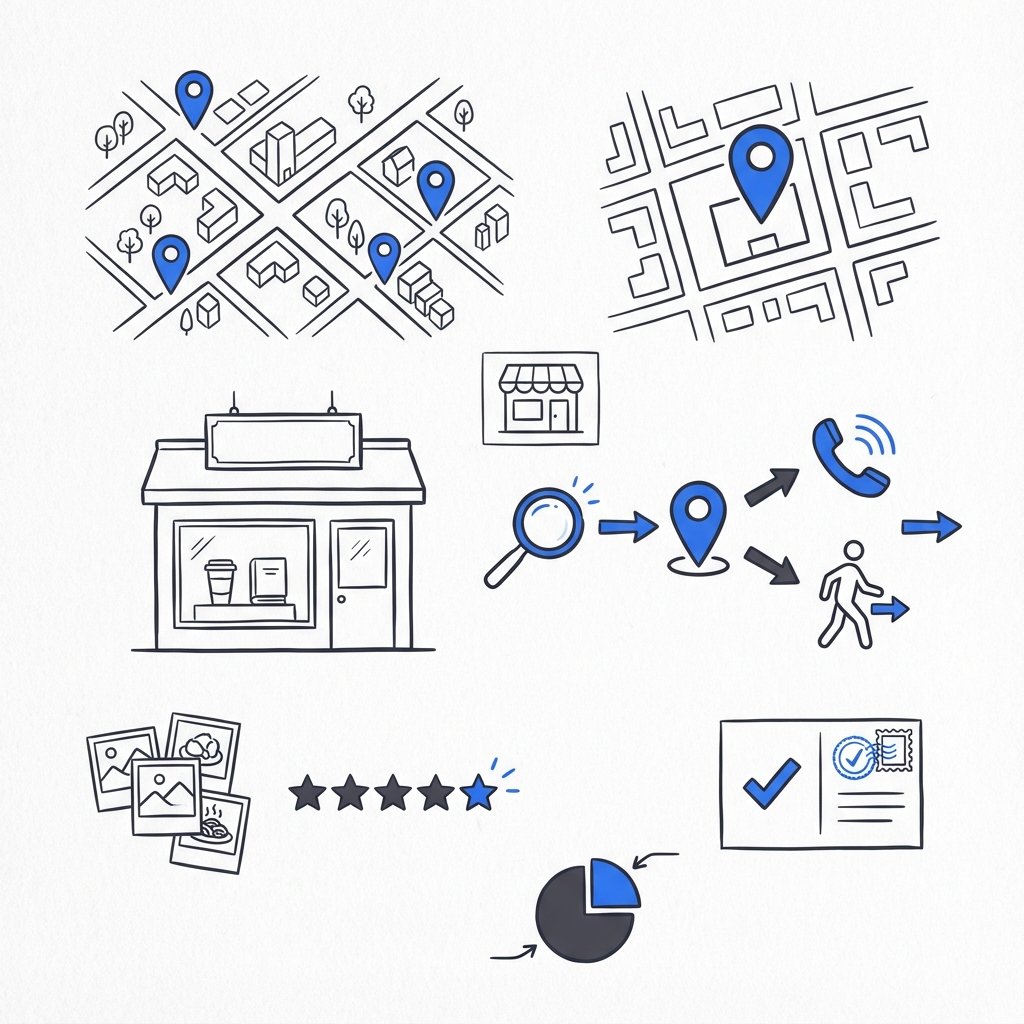
• Consistent business listings and NAP (name, address, phone)
• Proactive review collection and reply strategy
• Location‑specific service pages and content
• Map pack optimization and local schema markup
When local SEO and paid search work together, your practice captures both immediate and sustained demand—paid search handles urgent searchers while local SEO captures organic, long-term visibility. For context on dental SEO pricing and expectations, see this guide here.
How to estimate ROI: a simple formula you can use today
Use this calculation to check whether your current or proposed budget makes sense:
Monthly leads × conversion rate to booked patients × average LTV = lifetime revenue from advertising.
Compare that lifetime revenue to your monthly ad spend. If the lifetime revenue considerably exceeds spend, you have room to scale; if it doesn’t, either lower CPLs, raise conversion rates, or reduce spend.
Sample calculation
Spend: $3,000/month
Leads: 40 (CPL = $75)
Conversion to booked patients: 20% → 8 patients/month
Average LTV: $1,200
Lifetime revenue from new patients = 8 × $1,200 = $9,600
Interpretation: $9,600 lifetime revenue from $3,000 spend suggests positive return across the patient lifetime—if the practice can wait for that lifetime revenue to materialize. If the clinic needs immediate cashflow, focus on channels and treatments that convert faster.
Tracking checklist: don’t let data leak away
Before scaling spend, make sure these items are in place:
• Call tracking with recordings and source attribution.
• UTM parameters for all paid and organic campaigns.
• Form conversion tracking linked to your analytics and CRM.
• Appointment booking and no-show tracking.
• A simple dashboard showing leads, CPL, conversion rate, booked patients, and LTV per channel.
Why phone calls matter
Many dental conversions happen by phone. If calls aren’t tracked and attributed to campaigns, your CPL will look artificially high and you’ll make poor budget decisions. A missed call equals missed data and often a missed patient.
Social leads often have a lower upfront CPL but may take longer to convert into paid procedures. That means the apparent short-term savings can vanish if you don’t track conversion to consults and treatments. Treat social as a top-of-funnel channel—capture emails and retarget—and use search and local SEO to capture high-intent bookings.
Building a three-month test plan (step‑by‑step)
Here’s a practical plan you can run in three months to learn what works in your market. Keep budgets modest and measurement strict.
Month 0 — prepare
Install call tracking, set up analytics and CRM tagging, decide on your LTV estimate and target CPL, and build or simplify a landing page with a clear booking flow.
Month 1 — test high-intent search
Allocate 60% of your test budget to Google search targeting urgent and treatment-related keywords plus branded search. Keep geo-targeting tight. Track CPL and booking conversion rates daily and adjust keywords and bids.
Month 2 — test social for elective services
Allocate 30% to Meta campaigns aimed at cosmetic or elective services. Use lead forms or traffic campaigns designed to move users to an educational landing page. Expect lower CPLs but lower conversion to paid procedures—capture emails and retarget.
Month 3 — local SEO + allocation decisions
Spend the final 10% on local SEO fixes and measure organic visibility improvements. Compare CPL and conversion across channels and reallocate the following quarter based on data.
Traditional media still has a role
Direct mail, local radio and sponsorships can work—especially in smaller markets. They’re often less measurable but can bring specific demographics. Use unique phone numbers or landing pages per campaign to attribute responses and compare acquisition costs to digital channels.
Reducing churn to improve ROI
If patients drop out quickly, acquisition becomes a treadmill. Investing in patient experience—online booking, reminders, easy rebooking, and friendly follow-up—can raise retention and incrementally increase LTV, which in turn raises your acceptable CPL ceiling.
When should you increase ad spend?
Increase spend when additional budget produces predictable, profitable patient volume. In practice, that means having reliable CPL and conversion numbers that show incremental dollars bring incremental patients at acceptable LTV ratios. Absent that data, scale slowly and keep tests running.
Common mistakes that raise CPL unnecessarily
• Not tracking phone calls or offline bookings.
• Treating all leads the same (cosmetic leads vs urgent care leads).
• Running campaigns without negative keywords.
• Spreading budget across too many poorly measured channels.
Advanced tips for lowering CPL
• Push booking directly from the ad via click‑to‑call or a one-click booking widget.
• Use remarketing to warm leads who visited but didn’t book.
• Segment campaigns by service type and by zip code to identify the highest-value micro-markets.
• Use structured offers (new patient exam + x-rays) to increase initial conversion while tracking true value.
Putting it together: a sample budget for a mid-sized clinic
Assume $1.2M annual revenue, growth mode. A 6% marketing budget = $72,000/year or $6,000/month. Sample allocation:
• Paid search & maps: 45% → $2,700/month
• Local SEO & content: 20% → $1,200/month
• Social & creative: 20% → $1,200/month
• Local outreach & sponsorships: 10% → $600/month
• Analytics & tracking tools: 5% → $300/month
Adjust by results: if search CPLs are low and converting, shift more toward search. If social warms future patients for high-LTV cosmetic services, keep a healthy social allocation.
How much do dentists spend on advertising? (A practical answer)
When asked directly, How much do dentists spend on advertising? the best short answer is: most solo practices spend $500–$2,000 per month, small groups $2,000–$8,000, and large multi-site groups often $8,000–$20,000+. But the right spending level for your clinic depends on LTV, tracking maturity, and strategic goals.
Checklist before you increase spend
• Do you track phone calls and form submissions?
• Do you know your average new-patient LTV?
• Can you isolate performance by channel and zip code?
• Do you have a plan to convert inbound leads quickly (online booking, prompt calls)?
Final practice-focused recommendations
• Start small and measure. A controlled test teaches more than a big unchecked spend.
• Focus first on tracking and conversion improvements—those are cheaper than buying more traffic.
• Treat each location as its own market if you run multiple sites.
• Use paid search for urgency, social for awareness, and local SEO for sustainable volume.
Following these steps turns advertising from a blind expense into a predictable growth engine. Remember: spend without measurement wastes money; measurement without action wastes time. Combine both and advertising becomes a tool that scales your practice predictably.
Next steps you can take this week
• Install call tracking and check your conversion settings.
• Map current patient acquisition sources with a simple one-page spreadsheet.
• Run a focused 6–12 week search campaign with tight geo-targeting.
• Estimate LTV conservatively and set a CPL target to test against.
If you want a guided plan tailored to your practice size and local market, a short consult can set up a three-month test and the tracking you need to evaluate real ROI. See examples in Agency VISIBLE’s projects portfolio.
Most solo practices budget between $500 and $2,000 per month. Use that as a starting range, then refine it by measuring your cost-per-lead and estimating patient lifetime value. If your clinic is in growth mode or located in a high-cost metro, you may need to budget toward the higher end of that range or above.
For high-intent search ads, CPL commonly ranges from $50 to $150 depending on competition and market. Meta platforms often show lower CPLs ($20–$60), but those leads frequently have lower immediate intent and may convert more slowly into paid procedures.
Yes—agencies like Agency VISIBLE specialize in tracking, local SEO and paid campaigns for clinics. A good agency focuses on measurement, not just spend, helping you capture phone calls, attribute leads correctly and shift budget to channels that produce paying patients. If you want help, reach out to Agency VISIBLE for a tailored plan via their contact page.
References
- https://delmain.co/wp-content/uploads/2024/05/the-state-of-dental-marketing-in-2024.pdf
- https://dentree.co.uk/google-ads-for-dental-practices-the-complete-strategic-guide/
- https://www.elevatedds.com/how-much-does-dental-seo-cost-a-comprehensive-guide-for-2024/
- https://agencyvisible.com/
- https://agencyvisible.com/projects/
- https://agencyvisible.com/contact/