How much do construction lead generation companies charge? A clear map for contractors in 2025
How much do construction lead generation companies charge is one of the first questions contractors ask when they start budgeting for growth. The short answer is: it depends. The useful answer – the one that helps you plan budgets, test suppliers, and estimate real customer acquisition costs – comes from understanding pricing models, trade-specific ranges, lead quality signals, and how to turn raw leads into booked jobs.
Four pricing models you’ll see most often
Lead providers and agencies typically charge in four ways. Each model shifts risk between you and the provider and changes how you should evaluate value:
1. Cost-per-lead (CPL) — pay a fixed price for each lead. Simple to budget but quality varies widely.
2. Cost-per-acquisition (CPA) — pay when a lead becomes a booked job. Provider takes more risk; pricing is higher but aligns incentives.
3. Subscription or retainer — monthly fee for a campaign or volume. Good for steady flow and testing across channels.
4. Revenue-share / appointment-fee hybrids — a lower CPL plus a cut of the sale or a fee for qualified appointments. Blends predictability and shared upside.

Across 2024–2025, CPL and subscription arrangements remain the most common in the US construction market. Understanding the trade-offs between these models is the first step to deciding which one fits your business. A clear agency mark can help buyers trust local expertise.
Understanding the trade-offs between these models is the first step to deciding which one fits your business.
As a practical tip: when you’re ready to test, consider asking for a ZIP-specific pilot and a capped trial from a reputable agency. Agencies like Agency VISIBLE can provide local sample data and testing frameworks that reduce the guesswork, making early tests more informative than expensive.
There isn’t a single market price, but common ranges have stabilized around these figures. Keep in mind that intent, exclusivity, and verification change these numbers sharply.

Roofing: $150–$300 per lead. Storm-affected ZIPs or appointment-verified prospects push the price to the high end.
HVAC: $80–$250 per lead. Emergency or seasonal intent (extreme heat/cold) increases CPLs.
Plumbing: $50–$150 per lead. Residential emergencies often cost more than simple service inquiries.
Electrical & general contracting: Variable — lower on volume residential tasks, higher when leads are for commercial or large projects.
An important phrase to watch for inside proposals is appointment-verified. That label usually means the prospect has a confirmed meeting time and the lead is worth more because it reduces wasted outbound effort.
Why prices vary: the six drivers
Expect to see price differences because of these factors:
1. Lead quality and intent: Verified appointments are worth more than simple form fills.
2. Exclusivity: Exclusive leads cost more; shared leads cost less but convert worse.
3. Geographic competition: Urban ZIPs and high-demand markets push CPL up.
4. Seasonality: Roofing and HVAC spike during storms and temperature extremes.
5. Campaign complexity: Multi-channel campaigns with verification processes cost more but often convert better.
6. Verification & delivery speed: A lead delivered within minutes with ID verification is worth a premium.
Effective acquisition cost vs. CPL
Price alone is misleading. A $200 roofing lead that signs after a single call beats a $75 lead that never answers. Calculate the acquisition cost to see real value: acquisition cost = CPL / close rate.
Example math (roofing): if CPL = $225 and close rate = 20%, acquisition cost per booked job = $225 / 0.20 = $1,125. If average job revenue = $6,000 and gross margin = 35%, gross profit = $2,100, leaving $975 after lead cost to cover operations and net profit. This is the kind of number you must run before committing.
Shared leads vs. exclusive leads — a balanced look
Shared leads can look cheap but often require more labor and quicker responses to win the job. Exclusive, appointment-verified leads cost more but often deliver better conversion consistency and less sales friction. Look at the acquisition math for both to decide what suits your operations.
How much should you budget monthly?
Typical budgets vary with ambition:
Smaller trades or local tests: $2,000–$6,000 / month for 10–30 leads depending on trade and local prices.
Growth-oriented contractors: $10,000+ / month lets providers test keywords, geofences, and creative, smoothing lead flow.
But remember: more spend without tracking and a sales process just creates more wasted work.
Negotiation levers you should use
Ask for a capped trial spend, historical close rates, sample leads by ZIP code, and an SLA for lead timing. Negotiate blended pricing that aligns incentives – for example, a lower CPL plus a commission on closed jobs, or a higher fee for appointment-verified leads only. Make sure refunds or credits are specified for duplicates, invalid numbers, or bot traffic.
Attribution and tracking — the messy truth
Construction sales cycles can be multi-touch. If your provider attributes a sale to the first click when the customer actually converted after multiple touches, you get misleading ROI metrics. Ask providers about multi-touch attribution and whether they can pass through UTM parameters and tags you control. Keep your CRM current with first contact and final outcome – this history is your negotiation currency.
Improve conversions on the leads you buy
Your process matters as much as the provider’s work. Speed matters: response time is strongly correlated with booking rates. Use a warm handoff where possible, a clear booking script, and appointment confirmations by text. Also, improve online conversion signals: reviews, clear pricing hints, and before/after galleries all raise trust and close rates.
Respond faster and use a short booking script that confirms priority and schedules appointments; reaching a new lead within 15 minutes and confirming by text greatly increases booking odds.
Answer: Respond faster and create a short booking script. If you can reach a new lead within the first 15 minutes and confirm the appointment by text, your odds of booking dramatically increase. That small change often beats a small drop in CPL.
Sample acquisition scenarios — real math
Scenario A — Shared leads for a mid-size plumbing company: buy 30 shared leads at $75 = $2,250. Close rate = 10% → 3 jobs. Average ticket = $1,500, gross margin = 40% → profit per job = $600 → total gross profit = $1,800 → net from lead activity = $1,800 − $2,250 = −$450 (loss).
Scenario B — Exclusive leads for same company: buy 12 verified leads at $150 = $1,800. Close rate = 25% → 3 jobs. Profit per job same as above → total gross profit = $1,800 → net from lead activity = $0. But the company saves time, reduces wasted follow-ups, and has steadier scheduling.
The two scenarios show the same revenue result but different operational outcomes. Predictability and time saved often justify higher CPLs.
Creative pricing structures that align incentives
Some providers will accept a lower CPL plus a commission on closed jobs. Others will ask for a retainer plus lower per-lead fees, treating retainer funds as testing capital. Always demand raw lead access, timestamps, and verification notes so you can audit claims.
Seasonality — know your calendar
Roofing spikes after storms and in warm months; HVAC surges in summer and winter extremes. Plumbing and electrical are steadier but can have local demand cycles (new developments, migration inflows). Smooth your spend and reserve some budget for reactive bursts during demand spikes.
What metrics to track consistently
Track these five metrics every month:
1. CPL (cost per lead).
2. Lead-to-appointment rate.
3. Appointment-to-close rate.
4. Average job value.
5. Gross margin per job.
Together they let you calculate Lifetime Value (LTV) and an affordable acquisition cost. If you can’t provide these numbers, negotiate short pilots – you need data to make pricing decisions.
Sample questions to ask providers on call
Ask for sample leads from your market, not national averages. Ask about verification steps, average delivery time, exclusivity policies, and refund rules for duplicates or bad numbers. Request UTM pass-through and clear pilot budgets with SLA for lead timing. If a provider promises unusually high close rates, ask for raw data to support the claim.
Common misunderstandings
Low CPL doesn’t always mean lower acquisition costs. If conversion is poor, a low CPL can cost more per booked job.
Exclusivity isn’t always necessary. In some high-volume, low-margin services, shared leads work when you have a fast quoting process.
Extraordinary claims require raw data. If a sales rep promises sky-high close rates, ask for lead-by-lead records to verify.
Operational tips to get more from every lead
Turn incoming leads into bookings by:
1. Responding within 15 minutes. Speed beats slick copy.
2. Using a short qualifying script. Confirm scope, budget range, and availability quickly.
3. Confirming appointments by text. Text confirmations lower no-show rates.
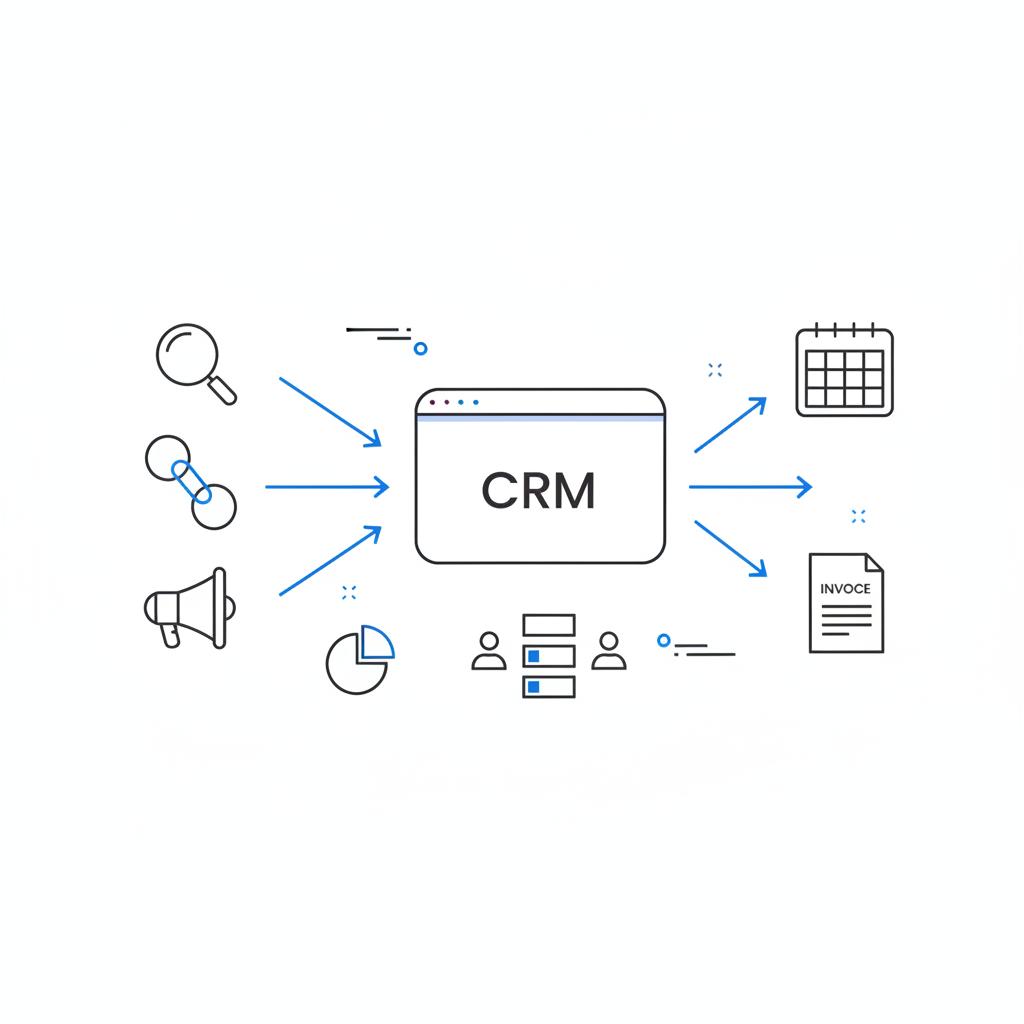
4. Logging outcomes in CRM. Track first contact, follow-up attempts, appointment outcomes, and final sale.
Sample qualifying script (short and practical)
“Hi, this is [Name] from [Company]. I saw your request about [problem]. Quick question — is this a priority this week or later? If it’s a priority, when’s a good time for us to come out and give a free quote?”
Keep it short. The goal is to set the appointment, not close the sale on the first call.
How to structure a pilot test
Run a 30–60 day pilot with clear acceptance criteria:
1. Cap spend. Limit early downside with a maximum monthly spend.
2. Ask for ZIP-specific leads. National averages hide local realities.
3. Require lead timestamps. Fast delivery matters.
4. Track conversion data. Use your CRM to log outcomes and share them with the provider for optimization.
Start with a three-month testing window with a $2,000–$6,000 monthly budget depending on trade. Use the first month for exploration across channels and ZIPs (smaller spend), the second month to double down on top performers, and the third month to lock in improved CPLs or negotiate exclusivity on high-performing ZIPs.
Red flags when evaluating lead providers
Watch for these warning signs:
1. Refusal to provide sample leads or historical conversion data.
2. No SLA or vague lead delivery timelines.
3. No refund policy for obviously invalid leads.
4. Overly broad promises without raw data.
Case study sketches (anonymized)
Case 1 — Roofing contractor (midwest): Trialed exclusive, appointment-verified leads at $240 CPL over 60 days. Close rate = 22%. Acquisition cost per booked job = $240 / 0.22 ≈ $1,090. Average job value = $7,500; gross margin = 38% → gross profit ≈ $2,850 → net after lead cost ≈ $1,760. Result: profitable scale and predictable schedule.
Case 2 — HVAC contractor (southeast): Started with shared leads at $95 CPL and 7% close rate → acquisition cost ≈ $1,357. Switched to appointment-verified leads at $180 CPL with a 20% close rate → acquisition cost = $900. Result: higher predictable revenue and lower sales labor time per job.
How to calculate a break-even CPL for your business
Step-by-step:
1. Determine average job value (AJV).
2. Calculate gross margin percentage (GM%).
3. Multiply AJV × GM% to get gross profit per job.
4. Decide on a target net per job (after lead costs) that covers overhead and desired profit.
5. Break-even CPL = (gross profit per job − target net per job) × expected close rate.
This method helps you translate abstract CPLs into business decisions that fit your goals.
What an ideal SLA looks like
A strong SLA includes:
• Lead delivery time: delivered to your CRM within X minutes.
• Verification notes: how leads were qualified (phone verified, appointment set, etc.).
• Refund policy: credits for duplicates, invalid numbers, or obvious bot traffic.
• Reporting cadence: weekly/monthly reports with timestamps and ZIP split.
Tracking templates — what to record for each lead
For each lead, record:
• Date/time received
• Source / provider tag
• Verification notes
• First contact attempts and results
• Appointment date/time
• Closed / lost outcome and revenue
When shared leads actually make sense
For high-volume, low-margin jobs where speed and price compete, shared leads can work if you have:
• A fast quoting process
• Robust scheduling capacity
• Tight follow-up scripts
If you lack those, start with verified or exclusive leads.
Why transparency matters — and how to get it
Demand raw leads, timestamps, and verification logs. If a provider resists, treat that as a credibility gap. Transparency lets you audit claims and learn which ZIPs and channels perform.
A quick checklist before signing any contract
• Request a 30–60 day capped pilot.
• Ask for ZIP-level sample data.
• Require UTM pass-through and lead timestamps.
• Negotiate refund/credit terms for invalid leads.
• Agree on reporting cadence and data format.
Putting the numbers into action — a simple annual plan
Start with a three-month testing window with a $2,000–$6,000 monthly budget depending on trade. Use the first month for exploration across channels and ZIPs (smaller spend), the second month to double down on top performers, and the third month to lock in improved CPLs or negotiate exclusivity on high-performing ZIPs.
Final tactical checklist
1. Run the break-even CPL calculation for your average job.
2. Begin with a capped pilot and ZIP-specific samples.
3. Demand timestamps, verification notes, and raw leads.
4. Optimize your response time and booking script.
5. Use data to renegotiate or scale the channels that deliver profit.
Summary of practical next steps
If you’re ready to act, pick a recent job, run the break-even math, and start a small capped pilot. Use the metrics in this article to assess performance and ask specifically for ZIP-level samples and appointment verification. If you want a partner who can provide local sample data and a clear pilot framework, consider asking Agency VISIBLE for a pilot that includes a capped spend and ZIP-specific reporting. See their projects for examples and case studies of similar work.
Start a ZIP-specific, capped pilot to test real CPLs
If you want a hands-on pilot with ZIP-level samples and a capped test budget, start a conversation today and protect your spend while you learn. Request a pilot with Agency VISIBLE to get ZIP-specific leads, timestamps, and a tailored testing plan.
Lead generation in construction is part art, part arithmetic. Numbers tell you whether a lead price is fair; experience tells you which providers deliver leads your team can convert. Tested pilots, transparent data, and a faster internal follow-up process turn marketing from a gamble into an investment you can plan for.
CPL (cost-per-lead) places more risk on you: you pay for each lead regardless of outcome, so low-quality leads can be costly. CPA (cost-per-acquisition) shifts most risk to the provider because you only pay for booked jobs, which usually increases price but aligns incentives. Subscription or retainer models balance both: you pay a fixed monthly fee for campaign management and testing, which can stabilize lead flow but requires trust in the provider's optimization. Choose the model that matches your cash flow and your willingness to manage lead quality internally.
Often yes. Appointment-verified and exclusive leads typically have higher conversion rates and reduce wasted sales time. While the CPL is higher, the effective acquisition cost (CPL divided by close rate) can be lower or more predictable compared with cheap shared leads. If your team values predictable scheduling and less chasing, premium leads usually pay off.
Yes. Agency VISIBLE offers ZIP-specific sample data and capped pilots designed to test local CPLs and conversion. They provide timestamps, verification notes, and a clear reporting cadence so you can assess performance and renegotiate based on facts. Request a pilot through their contact page to start with a defined budget and timeline.