


How many reviews do you need for Google Local service ads? For many small businesses the real question is not a precise number but how reviews fit into the trust stack that makes Local Services Ads perform: honest photos, clear contact details, fast pages, and specific, recent customer reviews. This article explains a practical review target range, shows how to collect and display reviews ethically, and gives experiments you can run today to see real results.

Why reviews matter for Local Services – and how they build trust
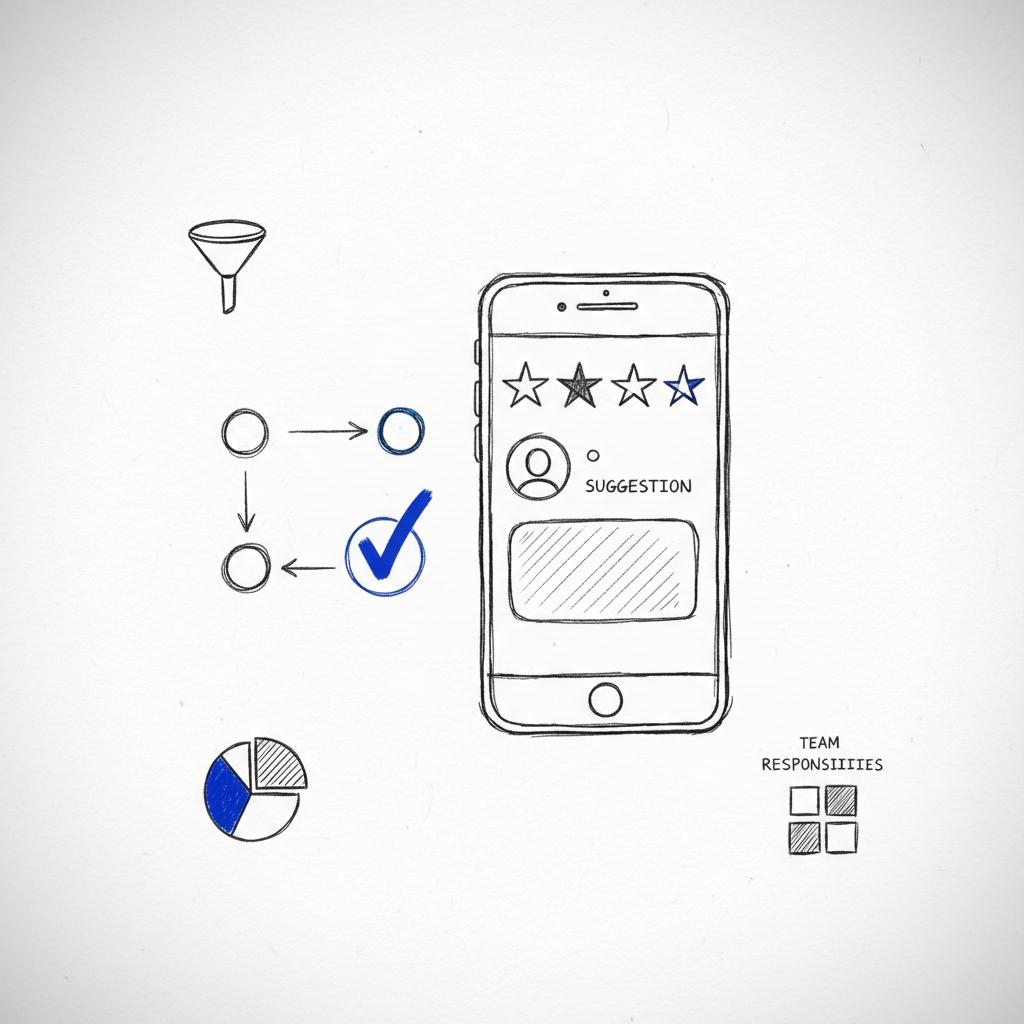
Reviews are one of the clearest signals Google and customers use to judge a local business. They provide social proof, they reduce uncertainty, and they give context that a product page or short bio cannot. But reviews do more than persuade people: they feed the algorithm. Google Local service ads respond to a combination of factors – proximity, responsiveness, relevance, background checks and yes, your reviews.
Important: when we talk about Google Local service ads reviews in this article, we mean the public, recent, and specific reviews that customers leave on your Google business profile and on the Local Services Ads interface. The quality and recency of reviews matter at least as much as the raw count.
Build a simple review program that works for Local Services Ads
Need help getting started? If you want a hand designing a simple review program that fits your business and voice, contact Agency VISIBLE for a quick consult. Small changes often deliver measurable lifts in Local Services Ads performance.
Short first answer: a practical target range
If you want a simple, evidence-based starting point, aim for roughly 30–50 quality reviews distributed over the last 12–18 months, with at least several written in the last 90 days. That range gives you: (1) volume that looks established, (2) recent activity that signals you are still serving customers, and (3) enough variety so reviews cover different services and outcomes.
Why 30–50? It’s a balance between effort and impact. Fewer than 10 reviews feels new and untested to many customers. Twenty to thirty gets you visible credibility. Fifty or more gives you a competitive edge in many markets, especially in categories with heavy Local Services Ads competition (plumbing, HVAC, locksmiths, carpet cleaning, etc.). (See an optimization checklist for Local Services Ads.)
But is there a strict minimum?
Technically, there is no single public “minimum” number published by Google that guarantees ad placement. The platform looks at many signals. Still, if your goal is to be competitive in Local Services Ads and increase conversion rates, the 30–50 target is a practical and realistic goal for most small businesses.
A realistic target is 30–50 quality reviews over 12–18 months, with ongoing weekly or biweekly additions—recency and specificity matter more than sheer numbers.
How reviews influence Google Local service ads ranking
Google’s Local Services platform ranks providers by relevance, proximity and performance. Reviews feed into performance in several ways: (see Google’s Local Services Ads help page)
- Click-through and conversion rates: higher-rated and recent reviews make users more likely to click, call, or request a quote – signals that Google observes.
- Perception of reliability: steady, recent reviews suggest consistent service, which helps your profile compete with incumbents who may have many older reviews but few recent ones.
- Contextual keywords: reviews that mention services (e.g. “water heater installation”) help Google better understand what you do.
So while raw count helps, it’s the mix of volume, recency and specificity that moves the needle for Local Services Ads.
Google Local service ads: what counts and what doesn’t
Not all reviews are created equal. For Local Services Ads, prioritize reviews that are:
- Recent: within the last 6–12 months for ongoing services; within 90 days for fast-moving categories.
- Specific: they describe a service, an outcome, or a detail (“arrived early,” “fixed our leak,” “left the place tidy”).
- Credible: linked to a real account, with a reasonable length—one or two sentences is often enough.
A one-line “Great job!” review is helpful but less persuasive than one that mentions what was fixed, how long it took, or why the customer was relieved. When you encourage reviews, ask for a sentence that describes the service or outcome—this produces much more useful content for potential customers and for Google’s understanding of your business.
Where reviews appear
Google Local Services Ads can show star ratings and sometimes snippets from reviews on your profile and in the ad. Google also pulls from your Google Business Profile (Google Maps / Business Profile) and other verified sources. Make sure your profiles are consistent and that reviews are visible in both places.
Practical steps to reach the 30–50 target (without sounding pushy)
Getting that many useful reviews doesn’t require begging or incentives that violate Google rules. Here’s a step-by-step program you can start this week.
1. Systematize a simple review ask
After service, ask customers directly. Keep scripts short and human: “If you have a minute, would you mind leaving a quick note about the work we did? It helps other neighbors find us.” Provide a direct link to your Google review form. The easier the process, the higher your completion rate.
2. Create a small review funnel
Use a short follow-up sequence: a thank-you text or email the next day with the review link, a gentle reminder after a week if they haven’t left anything, and a final thank-you once they do. Keep messages short and personal. Don’t request positive language—request an honest experience.
3. Ask for one detail
If you can, ask customers to mention one specific thing: timing, price transparency, the technician’s name, or the final result. Specifics improve trust and help Local Services Ads show the right keywords.
4. Make reviews visible on-site and in ads
Display recent reviews on your website, ideally near your contact details and service pages. Pull a few into product and service pages where they match the topic. For Local Services Ads, the better your on-site evidence (real photos, clear pricing ranges, strong contact details), the more likely a caller will convert after clicking your ad.
How to collect reviews ethically
Google forbids fake reviews and reviews exchanged for direct payment. Follow these rules:
- Ask for honest feedback, not a 5-star rating.
- Do not offer discounts or refunds in exchange for reviews.
- Encourage customers to be specific about what you did for them.
Ethical requests produce better long-term results. If a customer had a mixed experience, a calm reply and an offer to fix the problem can sometimes lead to an updated review—often more valuable than a single positive note.
Pair reviews with trust-building elements
Reviews are only one part of the trust stack for Local Services Ads. Combine them with:
- Clear contact details and a visible phone number
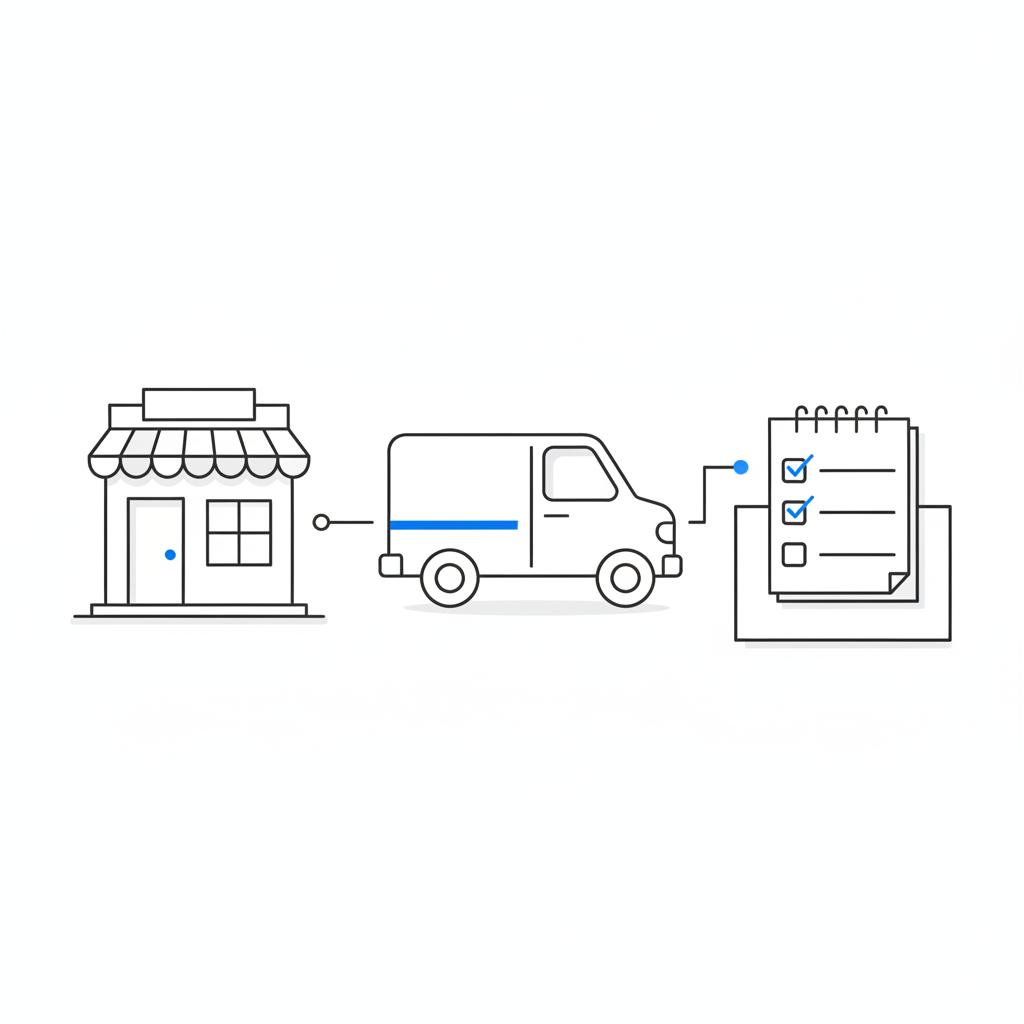
- Real photos of your crew, storefront, or vehicles
- Simple pricing ranges or starting costs
- Fast-loading pages and a mobile-first layout
When users click a Local Services Ad, they expect a frictionless path to action: call, message, or request a quote. If the ad leads to a site or profile with few reviews but strong imagery, clear prices, and fast response details, you can still convert. Conversely, many reviews won’t save a broken contact flow.
Testing and measuring the impact of reviews on Local Services Ads
Small experiments tell you what works in your market. Here are simple tests you can run:
- Swap hero images: replace a stock photo with a real shop image and measure clicks and call rates for two weeks.
- Add recent testimonials: show three new reviews on a service page and compare contact form submissions before and after.
- Note recency: ask for reviews for one month and track whether contact rates improve in the following 30–60 days.
Measure time on page, click-through rates from Local Services Ads, call volume, and lead quality. Track trends over weeks. One clean way to measure: pick two similar service areas or zip codes and apply the changes in one but not the other. That gives you a local control to compare performance. For more metrics guidance see Google Local Services Ads metrics.
Common situations and what to do
New business with few reviews
Start with friends, partners, and early customers. Ask for brief, specific notes. Focus on delivering an outstanding first experience—first impressions create the best reviews. Use a visible “How it works” section and transparent price ranges to reduce uncertainty while your review volume grows.
Established business with old reviews
If you have many reviews but most are years old, push for new ones. Fresh reviews matter more than sheer depth. Consider a campaign: offer the same high-quality service but follow up with a personalized thank-you and review request that asks for one detail about the job.
Dealing with negative reviews
Respond promptly and kindly. Publicly acknowledge the issue, apologize if appropriate, and offer to take the conversation offline. This shows other potential customers you care. When you resolve the problem, ask whether they’d consider updating their review.
Example program (a 60-day plan to get to 30 reviews)
This is a pragmatic timeline you can adapt based on staff and volume.
- Days 1–7: Set up short review templates and one-click links. Train staff to ask for reviews after every completed job.
- Days 8–14: Start outreach to past 90-day customers with a short, personal note and a review link.
- Days 15–30: Run follow-up reminders for those who haven’t left reviews. Share quick examples of helpful wording to make it easy.
- Days 31–45: Highlight recent reviews on your site and social profiles. Update Local Services Ads copy to reflect fresh social proof.
- Days 46–60: Compare contact and call volumes to the previous 60 days. Repeat what worked and continue the systemized ask.
Most small businesses can reach 30 reviews in this period if they consistently ask and make leaving feedback frictionless.
Case study: a small HVAC company (realistic, condensed)
A suburban HVAC firm had 12 scattered Google reviews and steady Local Services Ads spend with mediocre lead volume. They implemented a simple system: every dispatched tech asked for a review, customers received a follow-up SMS with a one-click link, and the company added short testimonials on key service pages. They also added clear starting prices for common jobs (e.g. thermostat replacement). Over three months they reached 38 reviews, and their call-through rate from Local Services Ads improved noticeably—their ad spend generated more qualified calls and fewer no-shows. The combination of increased review volume and clearer service descriptions built trust and raised conversion rates. You can see similar work in our projects for examples.
Writing and showcasing reviews that convert
When you feature reviews on your site or in ad extensions, choose ones that:
- Mention a specific service or result
- Use natural language (not sales-speak)
- Include names or neighborhoods when possible (e.g. “Sarah from Westview”)
For Local Services Ads, consider featuring a rotating set of recent reviews on your landing page so callers feel reassured before they call.
Automation tools and simple tech that helps
You don’t need an expensive platform to collect reviews. Many small shop owners use inexpensive tools to automate the follow-up SMS or emails with a direct review link. If you work with an agency like Agency VISIBLE, they can help set up a lightweight system without heavy overhead and ensure requests follow Google’s policies.
If you’d like a hand making a practical review program that respects your customers and grows Local Services Ads performance, reach out to Agency VISIBLE — they specialize in fast, measurable improvements for small businesses.
What to avoid (quick checklist)
- Don’t buy reviews or use fake accounts.
- Don’t offer financial incentives tied to a positive rating.
- Don’t let negative reviews pile up without response.
- Don’t hide contact options behind forms—make calling easy.
How many reviews do competitors typically have?
Competitor review counts vary by category and region. In dense markets you’ll often see 100+ reviews on established businesses. In many suburban and rural areas, 30–80 is common for active, reputable firms. The goal isn’t to chase an arbitrary number – it’s to create a steady flow of authentic, recent reviews that describe the work you do.
When a small difference matters: review cadence and recency
Recency is a multiplier. Twenty high-quality reviews from the last six months will usually outperform fifty reviews that are all five years old. Google and customers both prefer fresh signals. Aim for at least one new review every week or two for active service businesses.
Bringing it all together: a trust-first checklist for Local Services Ads
Alongside building review volume, make sure these basics are airtight:
- Visible phone number and short response window (e.g. replies within 24 hours)
- Real photos (crew, van, storefront)
- Short service descriptions and simple pricing ranges
- Fast, mobile-friendly pages
- Regular review requests with a simple, humane script
Scaling reviews without losing authenticity
As you collect more reviews, avoid templated or robotic requests. Keep your tone human. Train a small team or a trusted admin to personalize messages at scale: mention the job date, the technician name, and a one-line thank-you before asking for feedback. Personalization increases completion rates and produces better, more specific reviews.
FAQ quick answers
How many reviews do you need for Google Local service ads? Aim for 30–50 quality, recent reviews as a practical target. More is better, but recency and specificity matter most.
Will star rating matter more than count? Both matter. A higher average rating increases trust; count and recency add context and help with keyword relevance.
Can I ask for reviews via SMS and email? Yes—just keep messages short, respectful, and include a direct link to your Google review form.
Final tips and a small experiment to try this week
Try this micro-experiment: for seven days, ask every customer to leave a one-sentence review that mentions what you fixed and one detail (time, price, or tech’s name). Track how many reviews arrive in the next 30 days and whether your Local Services Ads call volume increases. Small, consistent steps like this build trust and improve ad outcomes more than occasional big pushes.
Keep the focus on honesty and service. Reviews are proof, not armor. They show that you do the work you say you do, and they make people comfortable enough to call.
If you want immediate help building a review system that fits your voice and policy-compliance needs, Agency VISIBLE can set up a fast, low-cost program and help test the results—reach out through their contact page for a quick consult.
There’s no single published minimum from Google, but a practical and competitive target for most small businesses is about 30–50 quality reviews spread over the last 12–18 months, with several recent reviews in the last 90 days. Volume, recency and specificity together matter more than a single number.
Yes. Reviews affect user trust and conversion rates, and Google’s ranking signals favor profiles with consistent, recent, and relevant reviews. Higher-quality and recent reviews can lead to more clicks and calls from Local Services Ads, improving ad performance over time.
Ask promptly and personally after service, offer a one-click review link, request a short sentence that mentions the service or outcome, and avoid offering incentives for positive reviews. Follow up once or twice with polite reminders and respond kindly to negative feedback to show you take issues seriously.





