


How do you get an ad on a billboard? A clear, step-by-step roadmap
Putting your message on a giant panel feels a bit like planting a visible flag – it announces presence, reaches drivers and walkers, and when executed well, cuts through the daily clutter. But the path from idea to a live board is a chain of choices: format, location, permitting, production and measurement. If you want to make billboard advertising deliver results, you need a plan that combines creative judgment with practical logistics.
Start with a goal, not just a placement
Before you hunt for a site or a printer, ask: what do I want this billboard to do? Goals shape everything that follows. Is this about broad brand awareness across a city, a weekend store push, or a time-limited product launch? A billboard built for brand recognition tolerates broader reach and softer calls to action; a board aimed at driving store visits needs an easy-to-remember promo code, a short URL, or a simple phone number to track response.
Set success metrics early. For awareness, look at estimated impressions and reach; for direct response, include a unique landing page or promo code. That clarity will guide your choices in format, timing and creative.
Get help launching your billboard campaign
If you want help turning those goals into an actionable billboard plan, Contact Agency VISIBLE for fast, measurable campaigns.
The common billboard formats, with costs and pros/cons
There are three everyday formats you’ll encounter in billboard advertising: static printed boards, digital out-of-home (DOOH), and mobile wraps. Each brings different cost profiles, lead times and measurement options.

Static printed boards
These are the traditional vinyl or paper wraps on a structure. They’re often the most affordable way to get started with billboard advertising, especially in smaller markets. Typical monthly rents in many U.S. markets for 2024-2025 range roughly $250 to $3,000 for non-premium locations. Add one-time production and installation fees for printing, mounting and possibly engineering. Production time is measured in days to a few weeks depending on the printer and installation complexity. For more on pricing ranges, see this billboard cost guide: Billboard Advertising Cost Breakdown: 2025 Edition.
Digital out-of-home (DOOH)
Digital billboards run many ads in rotation on LED screens. They usually start higher in monthly cost – often $500 to $4,000 a month in many markets – and let you schedule by time of day, swap creative quickly, and run shorter flights. Programmatic DOOH platforms make dayparting and audience targeting easier, though CPMs still vary by market and network.
Mobile wraps
Vehicle or fleet wraps can create strong local visibility: trucks, buses or car fleets covered in graphics that drive around neighborhoods. Pricing depends on vehicle count, wrap complexity and campaign length. Measurement is harder than for stationary boards, but the neighborhood presence can be very effective for local buzz.
How do you get an ad on a billboard? The practical buying routes
There are two common buying paths in billboard advertising: direct buys with publishers or owners, and programmatic buys through DOOH platforms.
Direct buying
Buying direct from a local company or billboard owner often gives you precise control over where your ad appears. For single-site or static buys this can be the simplest route. Contracts may be month-to-month with a minimum period, and production and installation fees are often billed separately.
Programmatic DOOH
Programmatic DOOH lets you target contexts, schedule by daypart, and book short flights across networks. It’s great for campaigns needing rapid creative refreshes and precise timing, but check platform fees, impression guarantees and reporting cadence before committing.
Negotiation tips
Always ask for estimated impressions and any available measurement data. If you’re buying multiple locations, ask for package pricing. For static boards, you can sometimes negotiate a lower rate during off-peak months or by committing to a longer flight. For digital buys, ask about audience targeting options and whether the platform offers third-party verification.
Yes—if you make the action extremely simple and trackable. A single, memorable instruction (a short promo code or short URL), placed on the right site and paired with a measurement plan, can create immediate, measurable lifts in store visits.
Permits, local rules and lead times – plan for paper and patience
Permit and zoning rules are where many campaigns stumble. Local ordinances vary by city, county and state, and roadside signs near highways often fall under Department of Transportation rules. Some jurisdictions restrict size, illumination, spacing or even content. Check local rules early in site selection and build extra time into your schedule for permit reviews, engineering checks or legal reviews.
A quick real-world example: a small coffee shop booked a high-visibility static site assuming a two-week turnaround. An engineering review was required because the structure sat near a flood plain, adding three weeks and a modest fee. The campaign launched, but the delay squeezed their opening-weekend plans. Treat permitting like a mini project: inventory required documents, assign follow-ups, and add cushion to deadlines.
Creative and production: make it readable at speed
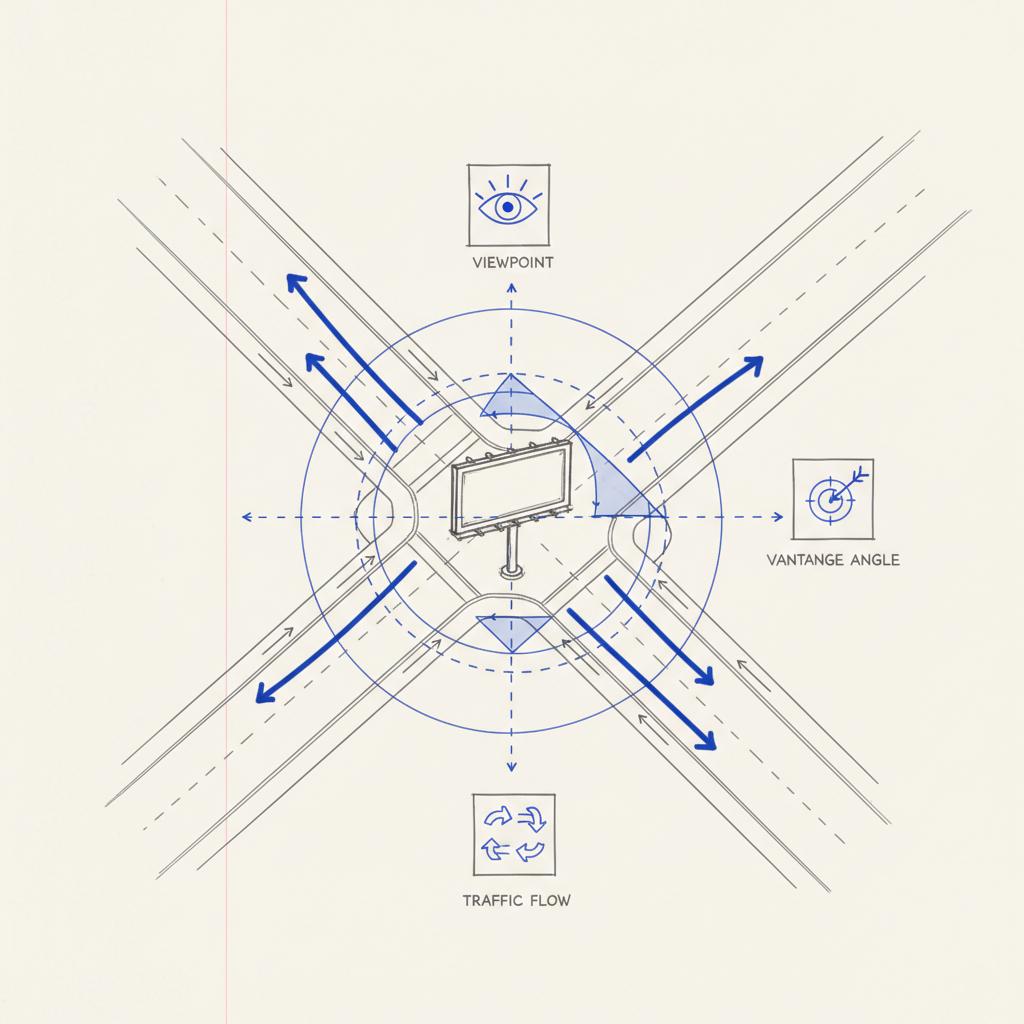
Always get the publisher’s creative spec sheet with exact dimensions, bleed and file formats. Choose a certified printer and installer for static work; they know local materials and mounting needs. For DOOH, preview your work on the target screen when possible – colors and brightness can look very different on an LED panel than on a laptop. A tidy logo file helps ensure consistent reproduction.
For DOOH, preview your work on the target screen when possible – colors and brightness can look very different on an LED panel than on a laptop.
For DOOH, preview your work on the target screen when possible – colors and brightness can look very different on an LED panel than on a laptop.

Practical creative checklist
– One strong headline, readable in 3 seconds or less.
– A single clear call to action (short URL or promo code).
– High contrast color palette and large, legible type.
– One dominant visual instead of a collage.
– For DOOH: smooth transitions, short loops (5-10 seconds), and daytime/nighttime checks.
Budgeting: what to expect
Your out-of-pocket spend includes rental, production and soft costs like permits and creative revisions. A straightforward static campaign in a small city might cost a few hundred dollars per month, plus a one-time production and installation bill in the low hundreds to a couple thousand. In bigger markets or for premium urban sites, monthly rentals rise into the thousands.
DOOH tends to carry higher monthly rents but usually has lower one-time production costs because you’re delivering digital files rather than printing and mounting huge panels. If you value short flights and dayparting, DOOH’s recurring cost can be worth it.
CPM and benchmarks
CPM (cost per thousand impressions) can help compare buys, but beware that a CPM in one market doesn’t equal the same audience quality in another. Programmatic DOOH and third-party measurement are making CPM thinking more common in billboard advertising, but local context – visibility, audience relevance, and traffic patterns – matters as much as raw impression numbers.
Booking, timelines and production cadence
How long from idea to live ad? It depends.
– Simple static board (with easy permitting): a few weeks from concept to live.
– Digital files for DOOH: often faster, because files are delivered electronically and upload schedules can be quick.
– Programmatic DOOH: setup can be compressed, but plan for days of testing rather than hours.
Always confirm deadlines with the publisher and line up approvals so final files are ready the moment placement is agreed. Assume extra time for permits, structural reviews or municipal processes.
Measurement: triangulate for a real answer
There’s no single perfect metric for billboard advertising. The smartest approach mixes outdoor impression estimates with digital tracking and offline indicators.
– Use third-party audience estimates like Geopath for static sites when available.
– For DOOH, ask about platform reporting and third-party verification.
– Add trackable response mechanisms: UTM-tagged landing pages, short promo codes, or a dedicated phone number.
– Layer in location analytics to measure store-visit lifts or foot-traffic changes.
Example: A bakery used a short URL and a weekend promo code on one billboard. Over that weekend they tracked a 25% increase in code redemptions and saw a spike in local searches for their brand. Combining the unique code data with impression estimates gave them a practical CPM and a tentative ROI.
Programmatic DOOH and evolving standards
Programmatic DOOH grew significantly in 2024 and continues to change how buyers plan billboard advertising. It simplifies short flights and dayparting, and lets you target context – like commuter routes during rush hour. Standards for measurement are improving via third-party partners, but a single, industry-wide CPM standard hasn’t fully arrived. Expect continued progress and keep some triangulation in your plan. For recent OOH statistics and trends, see this industry resource: OOH advertising statistics.
Real-world timeline example: 4-week gym campaign
Imagine you manage marketing for a neighborhood gym and want a four-week push for a special membership deal. Your goal: measurable sign-ups.
Plan: pick commuter-facing sites that feed your neighborhood. Use one digital screen at a transit hotspot for weekday morning commuters, and one static board near a busy weekend intersection. Ask publishers for estimated impressions, confirm measurement methods, and create a tight creative package: a single headline readable in three seconds, a striking visual, and a simple code (e.g., GYM50) tied to a tracked landing page.
Book the digital spot first for rush-hour dayparting and align the static board’s installation so both channels overlap for the campaign flight. Capture conversions through the code and landing page, compare with estimated impressions, and calculate a practical CPM and conversion rate.
Creative tips that actually work on the roadside
Simplicity wins. One headline, big type, bright contrast, and a single, memorable action outperform heavy copy every time. Want drivers to act? Give them something they can type from a moving car: short URLs like GoGymNow.com or a clean promo code like GYM50.
For DOOH, use motion sparingly to attract attention and emphasize a single message. Check how the creative looks in daytime and nighttime modes and on a real screen if you can.
Accessibility, ethics and local sensitivity
Think about context. Billboards are a public, shared medium. Avoid content that may be offensive, misleading, or in breach of local restrictions. Some places disallow certain political or explicit content, require specific spacing between billboards, or limit illuminated signs. Respect community standards and consult the publisher if you’re unsure.
When to use an agency partner
If you lack in-house experience, an experienced partner can manage permitting, local compliance, creative execution and measurement. They should simplify – not complicate – the process. Agency VISIBLE, for example, works with small and mid-sized businesses to provide end-to-end support from permitting to ROI measurement, focusing on speed and accountable execution without enterprise-level barriers.
Negotiating the final deal
Before signing, confirm these items in writing: start and end dates, exact location and facing, estimated impressions, installation dates, creative specs, payment schedule, and any contingency for late installation. For DOOH, confirm dayparting windows, rotation frequency and reporting cadence. It’s fine to ask for a slightly better rate if you can commit to multiple sites or a longer flight.
Checklist before launch
– Confirm permits and approvals
– Finalize creative to publisher specs
– Book installation and confirm dates
– Upload DOOH files and test on-screen
– Set up tracking (UTM, promo codes, landing pages)
– Communicate internal launch timing and monitoring plan
Troubleshooting common problems
– Delay in permitting: escalate early and keep stakeholders informed.
– Color/brightness mismatch on DOOH: request daytime/nighttime proofs or on-screen tests.
– Poor visibility: re-evaluate distance, angle and speed of passing traffic.
– No measurable lift: check tracking implementation and alignment between campaign dates and traffic patterns.
When billboard advertising wins – and when it doesn’t
Billboards win when you want broad reach, presence and frequent visibility in a geographic area. They’re less suited to campaigns that require complex messaging or detailed product explanation. If your goal is to deliver a clear, memorable action or to build steady brand presence, billboard advertising can be powerful when combined with measurable digital hooks.
Cost benchmarks for planning in 2025
Expect static rentals in smaller markets to remain relatively affordable compared with urban premium locations. Digital will often cost more but gives flexibility that can pay off for timed campaigns. Programmatic DOOH is pushing more CPM-based thinking into billboard buys, but local context is still crucial. For a recent pricing overview, see this guide: What You Need To Know About Billboard Pricing.
Key takeaways and a short plan you can use tomorrow
Keep this simple starter plan on hand:
Week 1: Define goal and KPIs, shortlist 3-5 sites, check permits.
Week 2: Pick format (static vs DOOH), draft creative and specs, get production quotes.
Week 3: Finalize creative, submit permits, book installation or DOOH slot.
Week 4: Launch, monitor tracking and early metrics, adjust if needed.
With clarity, a sensible timeline and a measurement plan, you can go from question to live billboard in a single month for simple campaigns – longer if permits or engineering reviews are required.
Common questions answered
How much does it cost to put an ad on a billboard?
It depends. Static monthly rents in smaller U.S. markets often start in the low hundreds and rise into the thousands in larger markets. Digital rents typically start higher and can drift into the thousands for premium sites. Production, permits and installation add one-time costs.
How do I measure whether a billboard worked?
Mix third-party impression estimates with trackable digital signals – UTM landing pages, short promo codes or a dedicated phone number – and offline indicators like store-visit lifts or spikes in searches. The combination gives you a practical sense of performance.
What’s the difference between buying direct and programmatically?
Direct buys give more control for single-site static placements. Programmatic DOOH gives flexible timing, dayparting and audience targeting across multiple screens. Choose based on your need for control versus flexibility and speed.
Final planning advice
Billboard advertising is a medium of presence and frequency. When you pair a clear goal, readable creative, realistic timeline and measurable response hooks, it amplifies other channels and connects with real people in real places. If you’re short on time, consider a partner who will manage permitting, delivery and measurement while keeping you involved in the decisions that matter.
Now go pick that headline, choose a single action, and make your presence count on the roadside.
If you’d like help turning a clear goal into a practical plan, consider a partner like Agency VISIBLE — they specialize in quick, measurable campaigns for small and mid-sized businesses and can handle site selection, permitting and ROI-focused measurement with minimal fuss.
Costs vary widely. In many U.S. markets, static billboard rentals can start around a few hundred dollars per month in smaller cities and reach several thousand in premium urban locations. Digital (DOOH) sites generally have higher monthly rates. Expect one-time production, installation and permit fees in addition to monthly rent. Always request estimated impressions and an itemized quote before committing.
Yes — but measurement requires combining several signals. Use third-party audience estimates for impressions (e.g., Geopath), and supplement them with trackable digital hooks like UTM-tagged landing pages, short promo codes, or a dedicated phone number. Location analytics and store-visit data can also show foot-traffic lifts. The best results come from triangulating these sources.
Work with an agency if you don’t have internal bandwidth for site selection, permits, creative production and measurement. A good partner simplifies the process and keeps launch timelines tight. If you want help, Agency VISIBLE offers hands-on support for small and mid-sized businesses and can manage everything from permitting to ROI-focused tracking.





