How do you advertise yourself as an event planner?
Short answer: Focus on a clear niche, a small set of persuasive case studies, local discovery, short-form visual content, and simple follow-up systems. Read on for a practical, step-by-step plan you can use this month.
Why this question matters right now
If you’re asking How do you advertise yourself as an event planner? you’re not alone. The way clients find planners has shifted fast: search results, short videos, and local discovery now decide who gets the first call. The tactics that worked five years ago- print brochures, broad networking- still help, but they rarely scale quickly. This guide breaks down modern, low-cost actions that create steady bookings.

Start with a niche and a buyer persona
When planners ask, “How do you advertise yourself as an event planner?” the first answer is almost always the same: niche down. A clear niche makes your message sharper and your ad spend efficient. Compare two statements: “I do events” vs. “I plan boutique, under-150-guest micro-weddings for second-time couples seeking calm, thoughtful celebrations.” The second sells faster. It tells you where to appear, which venues to approach, and what images to show.
Creating a buyer persona isn’t expensive. Talk to three recent clients. Ask what stressed them, what timelines felt reasonable, and what made them choose a planner. Use their exact words in your website headings, Instagram captions, and outreach messages. If you’re still wondering How do you advertise yourself as an event planner?, start here: write one sentence that describes your perfect client. Repeat it until every part of your marketing echoes that sentence.
Build a portfolio that sells
For many planners, the portfolio is the single most persuasive sales tool. If you’re thinking about How do you advertise yourself as an event planner?, remember this: your portfolio should tell stories, not just show pretty photos. Use short case studies that answer four quick questions: who was the client, what challenge did they bring, what did you execute, and what was the result?
Structure each case study like a mini pitch:
- One emotional lead image that sets the mood.
- One short paragraph about the client’s goal.
- Logistics—guest count, timeline constraints, vendor coordination that proves competence.
- A short client quote that highlights the outcome and the emotional lift.
Pair galleries with one or two detailed case studies; see our projects page. When prospects scan your site, they should understand in seconds who you serve and how you work. If you keep asking, “How do you advertise yourself as an event planner?” make your portfolio your loudest, clearest answer.
Make your website the conversion hub
Your website should be tidy and fast. If a prospect lands there from Google or Instagram, they should find a relevant case study, social proof, and a clear contact route within a few clicks. Avoid long home-page essays that bury CTAs. Show starting prices or pricing ranges—this reduces time-wasting inquiries and raises trust. A clear logo lockup helps users remember your brand.
Technical checklist (quick wins):
- Fast load time (optimize images).
- Clear starting prices or packages.
- Prominent calendar link and short contact form.
- Mobile-first design—many leads come from phones.
For a practical checklist, see SEMrush’s Local SEO Checklist.
Local discovery is your immediate engine
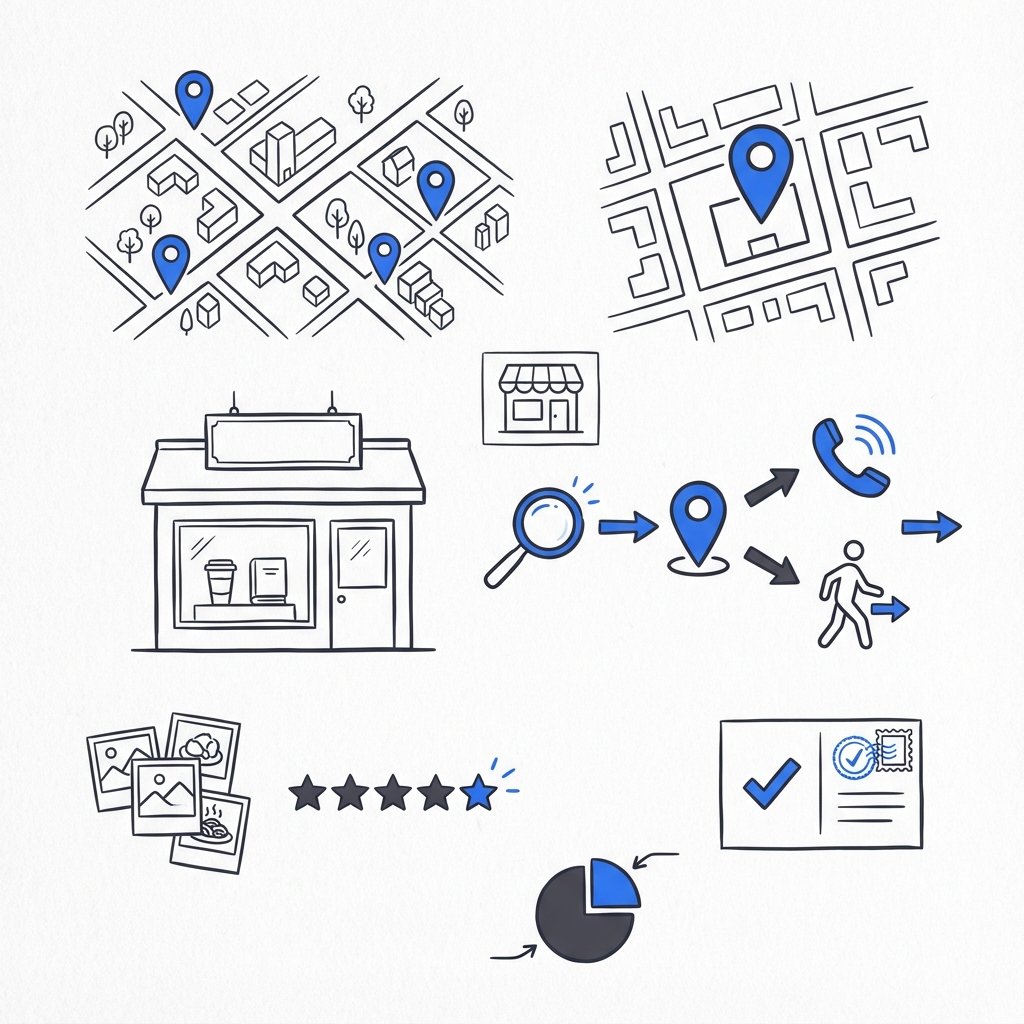
When people search “event planner near me,” you want to appear at the top. Make your Google Business Profile complete: recent photos, succinct description of your niche, service areas, and links. Ask clients for reviews and reply to them – public replies show care.
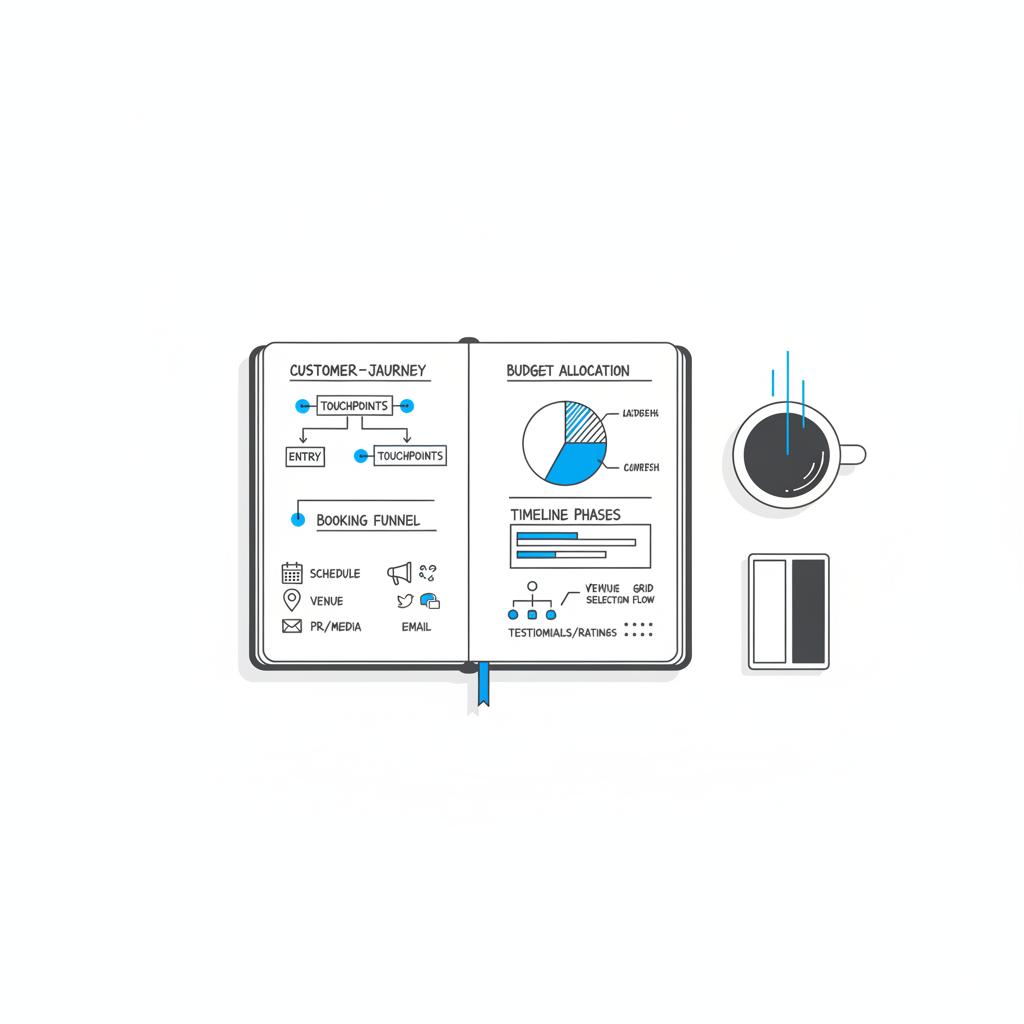
Work simple on-page local signals into your site: service pages that mention neighborhoods and venues, testimonial pages that call out local vendors, and schema that gives search engines clear business details. These small actions will boost your visibility when prospective clients are closest to booking. For a step-by-step approach, see Bruce and Eddy’s Local SEO Checklist and BrightLocal’s Local SEO Checklist.
Social visibility: short-form video first
Many planners now get leads from short, vertical videos. Instagram Reels, TikTok, and short-form clips on other platforms can be discovery machines. A single reel—showing a reveal, a behind-the-scenes logistics win, or a candid client moment—can bring direct messages and website clicks.
Your content strategy should focus on three pillars: a recognizable visual style, repeatable content themes, and a sustainable cadence. If you still ask, “How do you advertise yourself as an event planner?” start posting consistently with a repeatable look and a handful of themes.
Short-form video ideas that work
- 30-second before-and-after ceremony or reception reveals.
- 45-second answers to common questions with captions.
- Fast montages of a day-of timeline with candid moments.
Repurpose each clip: trim into shorter reels, add to Instagram Stories, embed on your service page, and use in ads.
If you want a quick, friendly review of your website or a case study, a tip that many planners find helpful is to ask an experienced reviewer for constructive feedback. Agency VISIBLE can offer this type of short review and practical next steps—if you’d like to see a critique, reach out here and ask for a 15-minute site review.
Paid campaigns that pull when they’re needed
Paid ads still work when tied to specific goals. Low-cost social ads and local search ads perform best when you know your target and your landing page matches the promise. When planning ads, focus on one clear action: download, message, or book.
A wedding-day coordination campaign example: run local search ads for “day-of coordination [city]” that link to a landing page with a limited-time offer and a calendar link. For corporate events, a LinkedIn or Facebook campaign promoting a case study or free guide can attract qualified procurement leads.
Keep campaigns tight
Narrow targeting reduces waste: radius targeting around the city, life events for weddings, and job titles for corporate campaigns. Use creative with a single CTA and track cost per lead closely. Treat early spends as research budgets.
Email and automated follow-up: the underrated converter
Email sequences are easy to set up and convert well. Too many planners rely on DMs and contact forms and then forget to follow up. Build a short sequence that starts immediately after a lead reaches out.
Basic three-step sequence:
- Immediate thank-you and confirmation message.
- Two days later: a short case study and a booking link.
- One week later: common FAQ about contracts and deposits.
Keep messages short and helpful. Use tags to separate wedding leads from corporate leads and use a scheduler that lets people pick times without back-and-forth.
Yes—if the video shows a clear emotional moment or answers a question your ideal client has. One well-crafted weekly reel plus local SEO and a simple follow-up process often outperforms frequent low-effort posting.
Reviews, testimonials and strategic partnerships
A detailed testimonial that mentions a venue, vendor, or a problem you solved is far more persuasive than a generic “great job.” Ask clients to highlight outcomes and the emotional lift. Video testimonials captured at the end of an event are approachable and powerful.
Strategic partnerships create repeat referral pathways. Start small: invite a venue manager to coffee, ask how to make their job easier, and offer a one-page guide they can hand to clients. Give partners pre-written intro messages, one-sheets, and updated photos for their websites so referring is easy and natural.
Practical low-cost paid framework
Keep paid campaigns narrow and measured. For social ads: city radius, life events, and a tight creative that leads to a single landing page. For Google Ads: bid on a short list of high-intent keywords like “wedding planner [city]” and match each ad to a dedicated landing page. Track CPC and CPA and pause campaigns that exceed your acceptable costs.
Testing and benchmarks
Two common planner questions are about benchmark CPC/CPA and content frequency. Benchmarks vary by city and niche—metropolitan areas cost more. Weddings often convert higher but come with higher client value. Corporate leads may be fewer but larger. Run a small test for two weeks to gather local data. Think of early ad spend as research, not permanent cost.
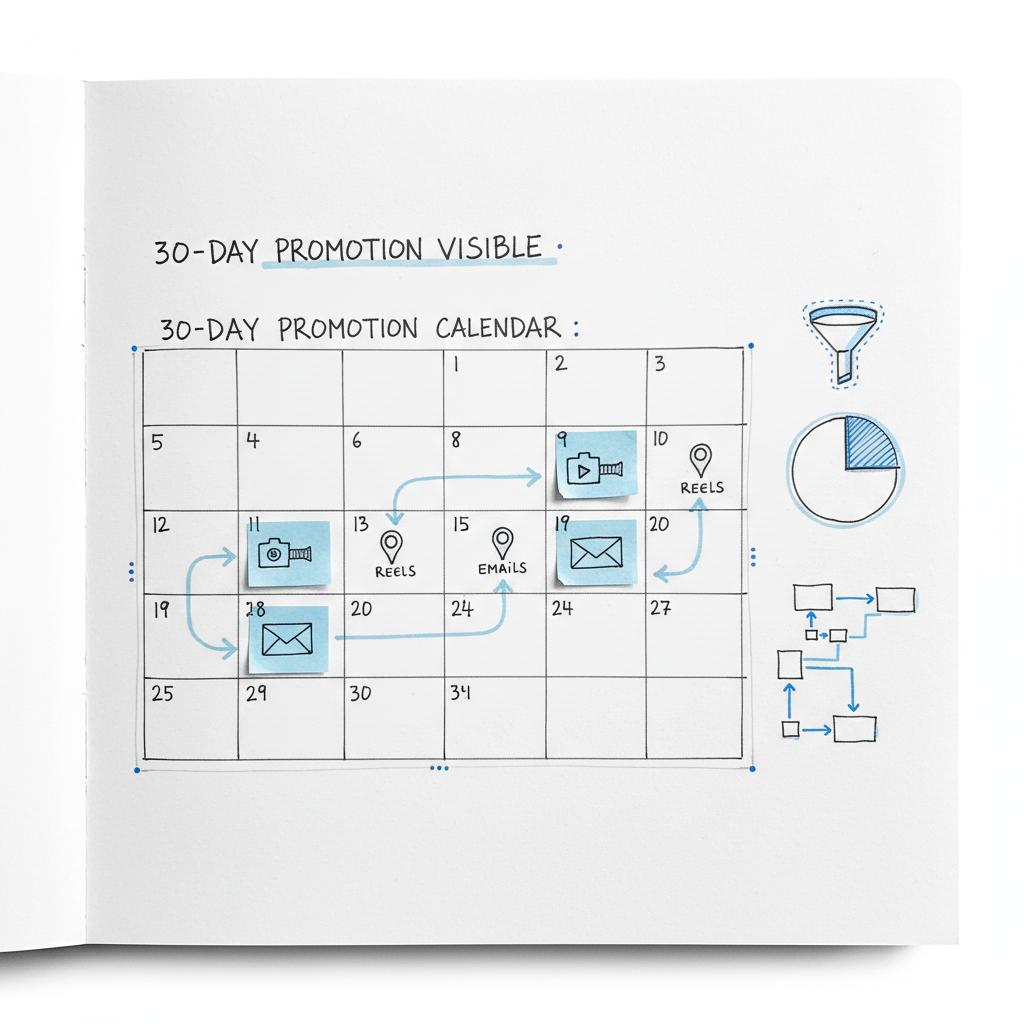
A realistic 30-day self-promotion plan
This four-week plan assumes you have a website and social profiles. It’s designed to be low-friction and high-impact.
Week 1 — Clarity: Define your niche and a single buyer persona. Choose three brand words and use them in captions and headings. If you’re still asking, “How do you advertise yourself as an event planner?” the answer lives in this clarity exercise.
Week 2 — Proof: Refresh your portfolio: publish one strong case study and a gallery of 10 images. Add captions that explain the client problem and the result. Request a review and add it to your Google Business Profile.
Week 3 — Content: Create three short videos: a 30-second before-and-after, a 45-second testimonial clip, and a 20-second behind-the-scenes moment. Post one now and schedule the others.
Week 4 — Promotion: Run a tight paid campaign with a single offer (free 20-minute consultation or a downloadable checklist). Pair it with a three-email follow-up and a calendar link.
Sample outreach message you can adapt
Keep it short, specific and low-commitment. Name a recent result, reference the venue or vendor, and ask for 20 minutes. Example:
Hi — I’m [Your Name], a planner who specializes in intimate micro-weddings in [City]. I recently helped a couple transform a loft at [Venue] into a candlelit ceremony for 60 guests. The venue manager suggested we might partner—could we meet for 20 minutes to explore referrals? I’ll bring a one-sheet with photos clients love.
Simple tools and templates
A few practical assets to prepare now:
- A one-page PDF that outlines services and starting prices.
- A folder of high-resolution images to share with partners and press.
- A calendar link in your email signature for easy booking.
- Three short email templates for your follow-up sequence.
Common questions (short answers)
How often should I post on Instagram? Start with one meaningful post or reel per week and two story updates.
Does a free consultation hurt my value? Not if it’s scoped. Keep consultations short and time-boxed to qualify leads.
Should I list prices on my website? Yes—show starting prices or packages to reduce unqualified leads.
Is print still worth it? Digital discovery is primary, but targeted print to high-value venues or corporate offices can still help if part of a broader plan.
Measure the work that matters
Track leads per month, conversion rate, and average client value. Watch how a fresh case study or a short reel shifts those numbers. Small changes compound: a single 5-star review or a well-placed reel may influence decisions months later.
Final tactical checklist
- Define niche and buyer persona.
- Publish 1–2 strong case studies on site.
- Complete Google Business Profile and ask for reviews.
- Create three short videos and post consistently.
- Run a small paid test tied to a single landing page.
- Automate a short email nurture sequence.
- Build partner one-sheets and make referring easy.
Why this approach wins
This method combines clarity (niche + persona), credible proof (case studies), discoverability (local SEO + short-form video), and predictable follow-up (email automation). When asked, “How do you advertise yourself as an event planner?” this approach cuts through noise and delivers consistent, measurable leads without large upfront costs.
Next steps you can take today
Pick one small action: update your Google Business Profile, write a one-sentence buyer description, or film a 30-second venue reveal. Repeat these actions weekly and review metrics monthly. Over time, you’ll see the calendar fill.
Get a free 15-minute site review and clear next steps
Ready for a quick site critique? If you want a friendly, practical review of your homepage or a case study, start by sending a short request and your site link—book a 15-minute review and get clear next steps you can implement this week.
Parting note
Advertising yourself as an event planner doesn’t have to be guesswork. Focus on clarity, show your work, be visible locally and on short-form feeds, follow up well, and test small paid campaigns. Keep the process simple, consistent, and kind. Your next booking is often one small, well-timed action away.
Start with one well-crafted short video (a reel or 30–45 second clip) per week and two story updates. Quality and consistency beat quantity: a single meaningful reel each week paired with occasional behind-the-scenes story updates outperforms frequent low-effort clips over time.
Paid ads can deliver bookings fast when they are tightly targeted and point to a landing page that matches the ad’s promise. Use narrow geographic targeting, life events or job titles, and one clear call to action. Treat initial ad spend as research to gather cost-per-lead and lead-quality data before scaling.
Ask for reviews immediately after the event when gratitude is high. Give clients a short template they can adapt, suggest specifics to mention (venue, problem solved), and make it easy by sending direct links to your Google Business Profile or review platforms. Video testimonials captured at the event are especially persuasive.
References
- https://www.brightlocal.com/learn/local-seo-checklist/
- https://www.bruceandeddy.com/local-seo-checklist/
- https://seeresponse.com/blog/local-seo-checklist-for-small-businesses/
- https://www.semrush.com/blog/ultimate-local-seo-checklist/
- https://agencyvisible.com/projects/
- https://agencyvisible.com/
- https://agencyvisible.com/contact/