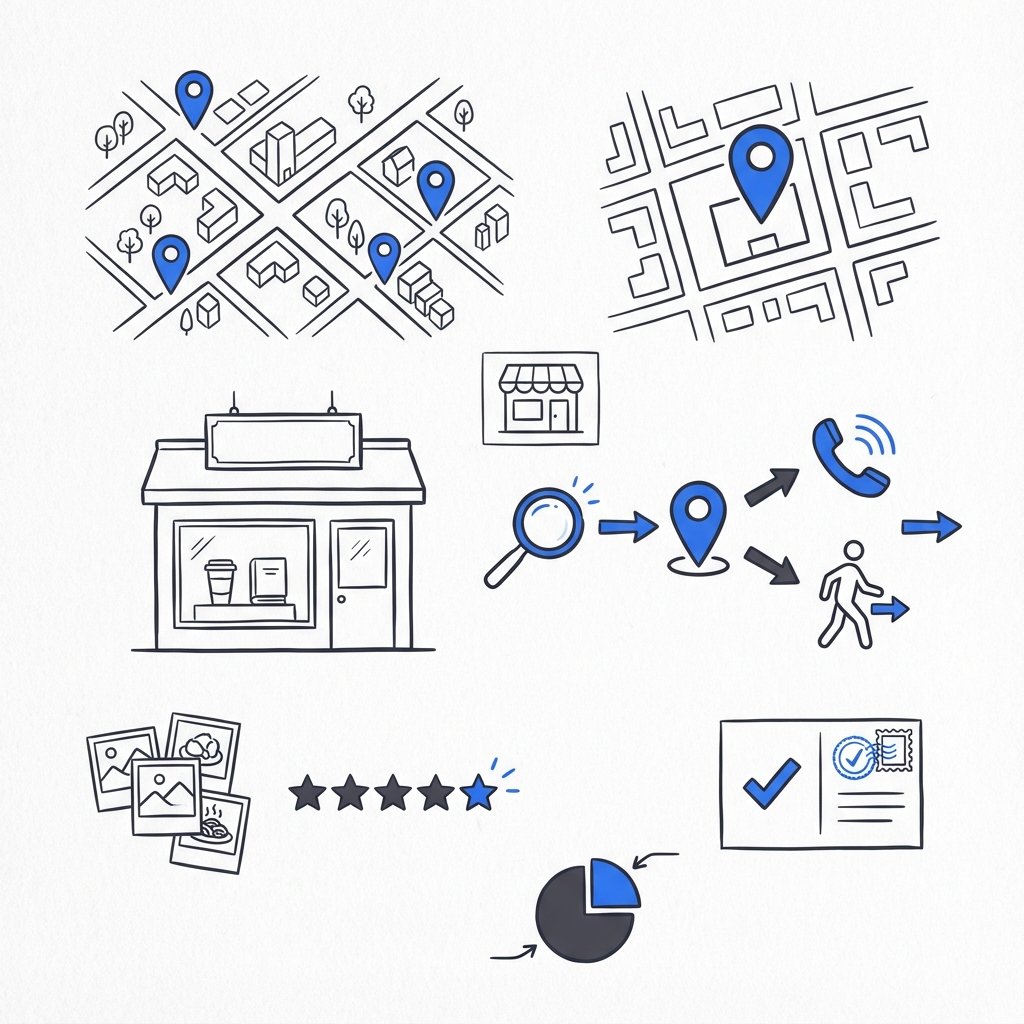
How do landscapers get leads? Start here: the most dependable pathway for most small landscaping teams is a local-first, blended approach, one that puts simple local SEO and Google Business Profile work at the foundation, adds a few paid tests for volume, uses marketplaces sparingly, and pairs offline neighborhood tactics with a fast, repeatable sales system.

Why local-first beats chasing every shiny channel
Most homeowners begin close to home: they search a town name, a ZIP code, or a phrase like “lawn care near me.” That search intent is high: people searching those phrases are usually ready to book or request a quote within days. When you answer those searches with a strong presence, you win the easiest customers first.
Google Business Profile is your storefront in search
Your Google Business Profile (GBP) shows a photo, phone number and reviews right in the search results. For landscapers this often converts best because homeowners can call immediately. Optimizing GBP is low cost, high return and cumulative – a single well-answered review or an updated photo can lift calls for weeks. A consistent logo helps homeowners recognize your listing quickly.
On-site local SEO keeps the discovery steady
On-site signals—service pages named in plain language, local area mentions, a clear phone number in the header and a structured contact block—help your site and GBP appear for local searches. Think of GBP as the quick front door and on-site SEO as the steady sidewalk that leads more people to it. For a deeper how-to, see this guide on Local SEO for landscapers and practical SEO tips from SEO for Landscapers.
Practical steps to make local search work
Here’s a quick checklist that any small crew can act on in a day:
GBP checklist: correct business name and categories, 6–12 recent job photos, real hours, a few posts for seasonal offers, and a review request link sent after every job.
On-site checklist: service pages for core offers (e.g., “mulch installation [town]”), a visible phone number, a contact page with structured address, and a short FAQ that mirrors local search queries.
Do those two things first — they cost little and they work.
Tip: If you want a quick hand setting up GBP or testing which service pages to prioritize, consider a friendly chat with an agency that specializes in small businesses. Visit the Agency VISIBLE contact page to ask a few tactical questions — no hard sell, just practical guidance.
Ready to fill your calendar with local jobs?
Need a fast, practical next step? Schedule a short consult or see recent projects on the Agency VISIBLE homepage or review case studies on the projects page to get ideas for your listing and service pages.
Fast-response systems beat fancy CRMs
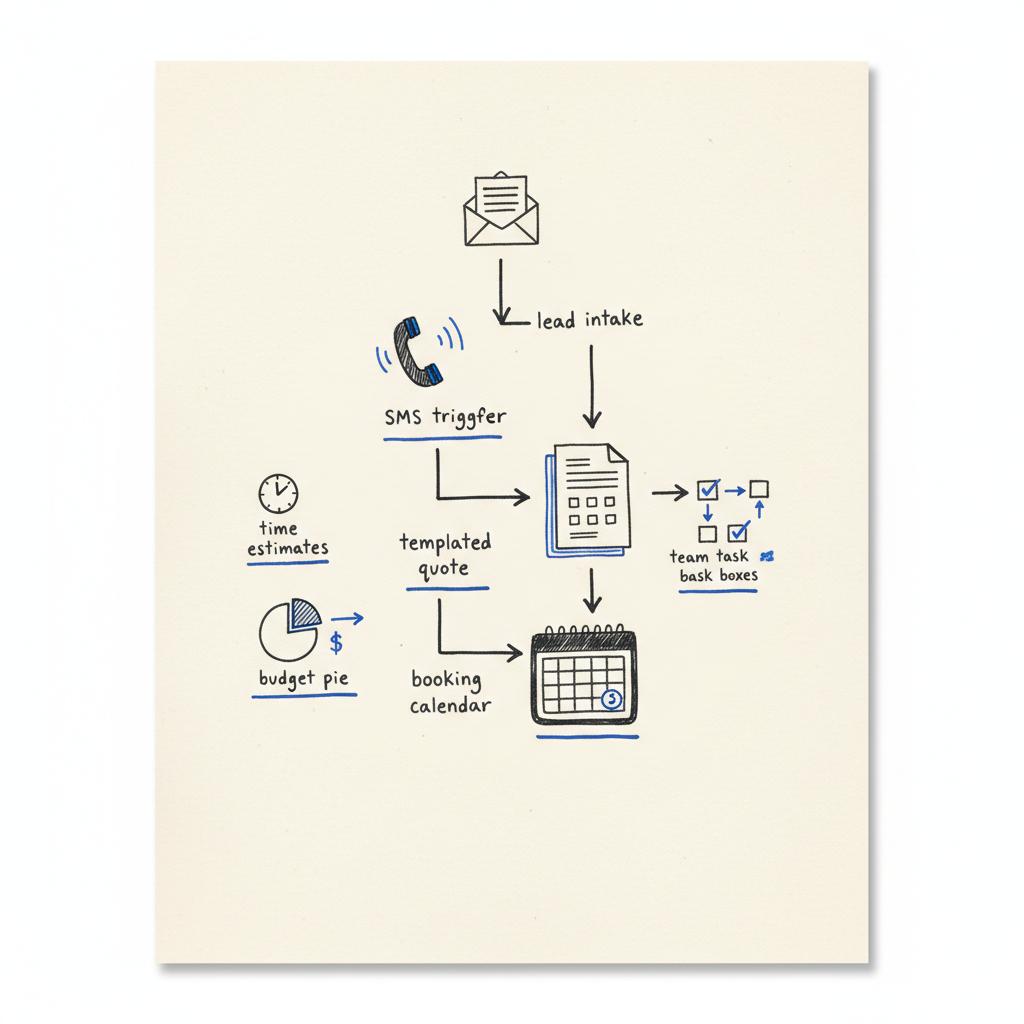
How quickly you respond to an inquiry often matters more than where the lead came from. Answering within the first hour — and sending an SMS within 15 minutes if you miss a call — materially improves booking odds. For a small crew, a lightweight CRM or even a shared spreadsheet plus an SMS tool is enough to start. The important part is the rule: respond fast, and send templated quotes within 24 hours.
The single fastest change is speeding up lead response. Answer calls quickly, send an SMS within 15 minutes if a call is missed, and deliver templated estimates within 24 hours. Fast follow‑up increases close rates more reliably than adding another ad channel.
Paid channels: scale volume without losing control
Paid search ads and Local Services Ads put you at the top of search when demand is immediate. Meta lead ads reach homeowners scrolling their feeds and can work well for seasonal promotions. But paid channels cost money, and prices vary by area, season and service.
How to test paid ads without wasting money
Start with a small monthly test budget – many small landscapers use $500–$2,000 to learn local CPCs and CPLs. Run search ads for high-intent terms like “landscaping company [town]” and use clear landing pages that mirror the ad’s promise. Track whether leads are phone calls, form fills or bookings and keep tests at least two weeks to gather meaningful data.
Sense-checking ad performance
Don’t stop at cost per lead. Calculate cost per booked job by multiplying CPL by your close rate from that channel. If you get many form fills but few booked jobs, improve follow-up speed or change the landing experience. For an overview of building a lead generation strategy, see Scorpion’s guide to lead generation.
Lead marketplaces: useful, but know the tradeoffs
Marketplaces can provide extra volume quickly. Typical reported CPLs in recent marketplaces vary widely, often between $15 and $85 depending on service and ZIP. The catch: close rates from marketplace leads are typically lower than referrals or calls from GBP because those leads are often shared with competitors.
How to use marketplaces strategically
Buy small batches of leads in a new ZIP to learn pricing and demand. Use marketplaces to fill slow days, but always track how many marketplace leads convert to estimates and how many estimates close. If many leads come in but few convert, either improve your pitch or reduce marketplace spending.
Door-hangers, direct mail and yard signs have measurable response rates when used smartly. Response rates often sit in the 1–5% range for a targeted block, which is low individually but meaningful at neighborhood scale. The best offline campaigns pair with digital follow-through: a postcard with a short URL or QR code that points to your GBP or a booking page, plus a follow-up SMS, increases conversions.

Low-cost, high-impact offline ideas
1) Targeted mail for spring cleanups to 200 nearby houses. 2) A weekend of yard signs at jobs in high-visibility blocks. 3) Sponsor a local youth sports team where a banner or jerseys build local name recognition.
Build a simple sales playbook: templates, SLAs and scripts
Small changes in process consistently beat flashy channel moves. A short playbook should include:
Lead intake rule: Phone call within 60 minutes during business hours, SMS within 15 minutes if missed.
Quote template: Standard line items, clear pricing bands, and common upsells so you can send an estimate in minutes.
Follow-up sequence: Automated SMS thanking the prospect, a day-two nudge, and a final close attempt seven days later.
Scripts that work (examples)
Initial call: “Hi — this is [Your Name] with [Business]. Thanks for reaching out about your [service]. We can visit for a quick onsite look as soon as [date/time]. Does that work for you?”
Estimate follow-up SMS: “Thanks for the chat — I just sent your estimate. Reply to book or I can hold this price until [date].”
Tools that actually move the needle
Pick tools your team will use every day. The essentials are:
– A simple CRM or lead sheet with source tracking and follow-up timestamps.
– SMS and email templates with scheduling links.
– A basic booking page that syncs to your calendar.
– Phone tracking or unique numbers for ads and offline campaigns.
– UTM tagging practice for online campaigns.
Keep tracking light and actionable: capture source (GBP, ad, marketplace, direct mail), timestamp of first contact, follow-up actions, and outcome (estimate, booked job).
30/60/90-day roadmap for a small landscaper
Days 1–30: set the baseline
Claim and tidy your Google Business Profile, collect 5–10 recent reviews, make sure your phone number and hours are correct, and add basic local signals to your website. Set up a simple lead capture system (even a shared spreadsheet) and decide on your response SLAs. These steps are low cost and deliver immediate lift.
Days 31–60: test and build partnerships
Start modest paid search tests for high-intent keywords and a small Meta promotion for a seasonal offer. Reach out to property managers, garden centers and local contractors for potential referral relationships. Try a 200-house mail drop to a nearby subdivision and measure response.
Days 61–90: scale what works and formalize referrals
If you see consistent calls from GBP and acceptably low CPLs from ads, increase spend where the numbers make sense. Launch a referral program for past customers and partners (small gift cards or a service credit often works). Formalize a monthly review: CPL by channel, estimate close rate, and bookings per week.
How to measure success without getting lost
Define what a conversion means for you: a phone call? a booked job? an on-site estimate? Track the funnel: leads → contacted → appointments → estimates → closed jobs. Then calculate cost per booked job, not just cost per lead. That’s the figure that directly links your marketing to revenue.
Smart attribution practices
Use first-touch and last-touch notes in your simple CRM. If someone saw a yard sign then Googled you, keep both marks, but be pragmatic: the goal is to see which channels reliably produce paying customers at an acceptable cost.
Real crew example (expanded)
A two-person crew in a mid-sized suburb followed this blueprint. They spent three weeks cleaning GBP and collecting reviews, adopted a 90-minute call SLA and sent templated quotes within 24 hours. With $700 in local search ads and a 30-lead marketplace test they learned local CPCs and close rates.
Their GBP produced most steady calls; ads delivered a handful of high-intent leads; marketplace leads converted less often. Because their response rules were strict, they closed a higher proportion of estimates. The predictability let them plan crew days and set a modest ad budget without surprise costs.
Common experiments to run by market
Every ZIP behaves differently. Try these tests for 2–4 weeks each:
– Search ads on high-intent keywords to measure CPL
– A small batch of marketplace leads to measure close rate
– A 200-house direct mail drop with a QR code to a booking page
– A weekend of yard signs in a high-visibility block
What to avoid
– Chasing every new channel without tracking results.
– Over-complicating follow-up systems: complexity kills execution.
– Focusing on cost per lead only and ignoring downstream conversion.
How much to budget at start
Small test budgets of $500–$2,000 per month are common. Start low, measure, then reallocate to channels that produce booked jobs at acceptable cost. Remember: the operational changes (faster responses, templated quotes) often have a higher ROI than doubling ad spend.
Frequently asked implementation details
Suggested follow-up cadence (example)
– Immediate: automated SMS acknowledging request
– Within 60 minutes: phone call during business hours
– Within 24 hours: sent templated estimate if needed
– Day 2: SMS reminder
– Day 7: call or final SMS
How to price estimates for better close rates
Offer clear, tiered pricing (basic, recommended, premium) so homeowners can see value choices. Include examples of past jobs and quick before/after images on the estimate to increase perceived value.
Final practical checklist before you go live
– GBP claimed and updated
– 5–10 recent reviews requested
– Phone number in header and click-to-call enabled
– Simple CRM/lead sheet with source tracking
– Response SLA defined and shared with the team
– 1 paid test running for two weeks
– 1 offline neighborhood test planned
Wrap-up: the steady path to predictable work
Great landscaping depends on both craft and visibility. A local-first approach — strong GBP, clear on-site signals, quick responses and modest testing of paid channels — gives most small teams the predictable pipeline they need. Keep experiments small, measure cost per booked job, and iterate. Over time you’ll know which neighborhoods, keywords and offers produce the best returns.
Good luck, and remember: the quickest wins are often the simplest ones – tidy your listing, answer fast, and the bookings will follow like an easy season after a long winter.
Respond as fast as you can. Industry experience shows that answering within the first hour — and sending an SMS within 15 minutes if you miss a call — significantly increases the chance of booking the job. Set a simple SLA (e.g., call within 60 minutes during business hours, SMS within 15 minutes if missed) and enforce it. The operational improvement in response speed often boosts close rates more than additional ad spend.
They can be useful for short bursts or market testing, but expect lower close rates compared with referrals or organic GBP calls because marketplace leads are often shared with competitors. Use marketplaces strategically: buy a small batch to learn pricing in a new ZIP, then measure how many leads convert into estimates and booked jobs to calculate the true cost per booked job.
Agency VISIBLE focuses on practical, measurable visibility work for small businesses: cleaning up Google Business Profiles, prioritizing high‑intent service pages, and creating simple follow‑up systems that lift close rates. If you want tactical advice or a short project to set these foundations, reach out via their contact page for a consultative conversation.
References
- https://improveandgrow.com/contractors-and-trades/local-seo-for-landscapers/
- https://www.loopexdigital.com/industries/seo-for-landscapers
- https://www.scorpion.co/landscaping/insights/blog/verticals/landscaping/how-to-build-a-landscaper-lead-generation-strate/
- https://agencyvisible.com/
- https://agencyvisible.com/projects/
- https://agencyvisible.com/contact/