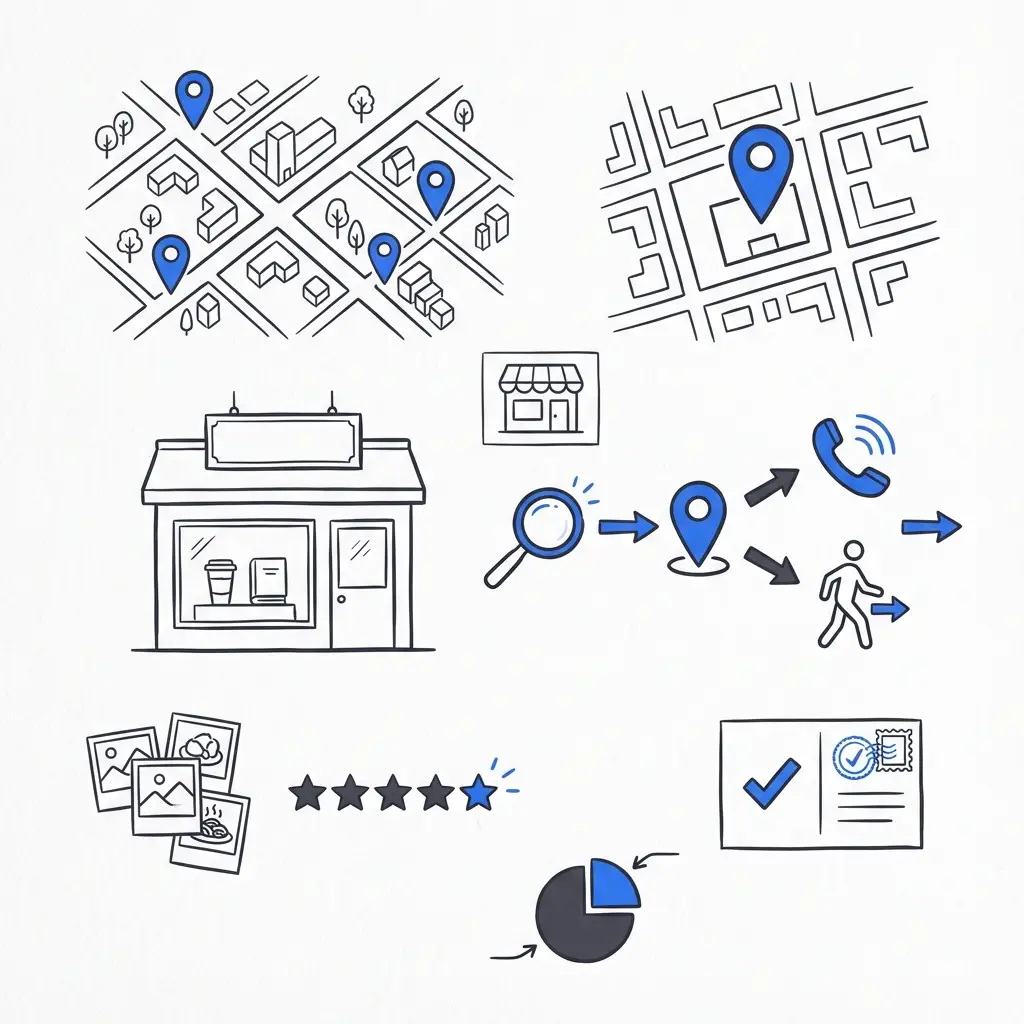
If you’re asking “How do I market my general contracting business?” you’re not alone. The best single move most contractors can make is to prioritise local visibility and treat every incoming lead like a customer you want to welcome, not chase. That mindset shift – combined with consistent, repeatable systems – turns casual browsers into booked jobs.
How do I market my general contracting business? A local-first blueprint
How do I market my general contracting business? Start where customers start: on their phones. Someone needing a quick roof patch, a siding replacement, or a kitchen remodel types a phrase into search and expects nearby options. The actions below focus on making sure your business is the answer they find and the one they choose.
For teams that want a short, measurable path to better leads, consider a practical partner approach—for example, reach out to Agency VISIBLE to set up initial tracking and booking pages. A tactical audit and a few setup hours can make your early paid tests meaningful instead of noisy.
We’ll cover simple to-do lists, short scripts, tracking templates, and a 90-day starter plan that you can use whether you work alone or run a small crew. Throughout this guide you’ll find concrete steps, not marketing myths. Read on and pick two actions to finish this week.

Why local-first wins (and what that actually means)
Local-first is not a slogan. It’s a practical stance: most homeowner searches are local by nature. That means your Google Business Profile (GBP) — sometimes called Google My Business — is your digital storefront. A tidy, complete GBP listing increases calls, clicks, and trust. The first impression happens there.
Key GBP actions to finish in one session:
- Confirm the business name, address, and phone are exactly right.
- Pick accurate service categories and list neighborhoods you serve.
- Upload a gallery of recent projects: before, during, and after shots.
- Post short updates or offers monthly to keep the profile active.
When someone searches for “google business profile optimization for contractors,” these details are the low-hanging fruit that separate findable businesses from invisible ones. A strong GBP combined with local SEO ensures you appear when customers actually need you. A clear logo helps reinforce recognition across listings.
Core local SEO: consistency, pages, and schema
Consistency is the invisible glue of local SEO. Your NAP—name, address, phone—should read the same across your website and every directory. Tiny differences (Street vs St., extra punctuation, mismatched phone formats) can confuse search engines and clients.
Make short, location-focused service pages for the work you sell most often. Use the language homeowners use: “roof repair in [neighborhood],” “kitchen remodel near [town],” and similar phrases. Pair those pages with schema markup so search engines can read your service areas, operating hours, and review counts without guessing.
Reputation: more than stars, it’s ongoing conversation
Online reviews are modern word-of-mouth. Ask for them routinely and make it easy. Simple tactics that work:
- Text a short, friendly message the day the job completes with a link to review.
- Send a follow-up email that thanks the client and asks one specific question: “What did you like most?”
- Reply to every review—thank positive reviewers and respond to negative feedback with calm, problem-solving language.
Response matters. A 4.5-star average with active replies builds more trust than a locked 5.0 with no engagement. If you don’t have a CRM, a simple spreadsheet to track who to ask and when will lift results fast.
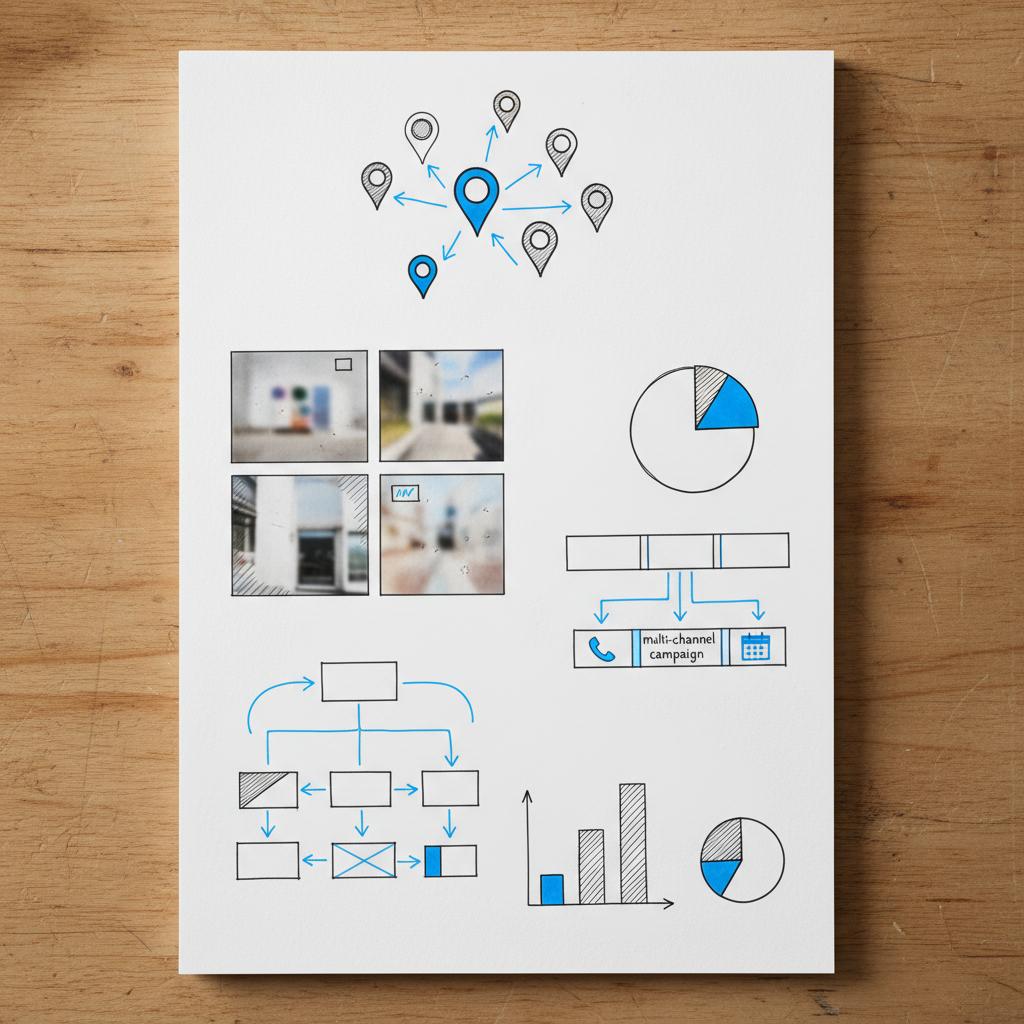
Photos and short galleries convert. Before-and-after sequences, progress shots, and close-ups of joinery or trim give homeowners evidence that you know your craft. When you publish these images on GBP, Instagram, Pinterest, and your website, they reduce doubts before the first call.
Simple gallery rules:
- Tell a micro-story with captions: problem, process, result.
- Use a consistent framing style—same distance, angles, and lighting when possible.
- Test pro photos on high-value projects and compare results to DIY photos for three months.
Practical paid channels and how to keep spend honest
Paid channels scale, but only if you pair them with tracking and focused landing pages. For many contractors, Google Local Services Ads (LSAs) work well because they appear at the top of local results and include trust signals. Traditional search ads and Performance Max campaigns can capture intent-driven queries too (see the ServiceTitan guide to Google Ads for contractors).
Rules for paid tests:
- Keep budgets small and controlled at first—think of month one as learning, not scaling.
- Send traffic to booking-focused pages: visible phone number, clear offer, short booking form.
- Track calls, form fills, and bookings and attribute them to the channel that produced them.
If you don’t track, you’re guessing. Use call tracking numbers, UTM parameters, and a simple spreadsheet or CRM to tie leads back to source and measure cost-per-lead (CPL).
Local Services Ads (LSAs) vs. Search Ads — a quick decision map
LSAs show at the top and often win clicks in many regions. Traditional search ads can catch niche terms and lower-funnel queries you won’t find in LSAs. Test both with small budgets and compare their CPLs and close rates. For more on ranking and optimization, see this piece on LSA ranking factors.
Referral and trade-partner programs that actually work
Word-of-mouth is powerful, but it’s more reliable when formalised. Create a simple referral program with clear incentives and straightforward mechanics. Make it easy for clients and trade partners to pass leads to you and feel rewarded.
Sample referral engine:
- Offer a fixed-value gift or credit for completed referred work.
- Send an immediate thank-you message when a referral turns into a job.
- Keep a rolling list of your top five trade partners and check in quarterly.
Scripts and templates — make follow-up feel human
Use short, human-sounding templates. For example, a text you can send the day after completion:
“Hi [Name], this is [Your Name] from [Business]. Thanks again for letting us work on your [project]. If you have a sec, could you share one sentence about what you liked most? It helps small businesses like ours—thanks!”
Prioritise your local digital presence—clean up your Google Business Profile, ensure NAP consistency across the web, and treat every lead like a welcomed customer; these changes create the fastest and most reliable uplift in calls and booked jobs.
Lead nurturing: the 24–72 hour sweet spot
Timing improves booking odds. Responding within 24 to 72 hours increases the chance of turning enquiry into estimate. Use email and SMS templates that sound human: short, helpful, and tailored to the project type.
Segment outreach by project value and type. High-value commercial bids need a different cadence than a homeowner wanting a bathroom update. Track follow-ups in a CRM or simple spreadsheet with columns for contact, service, follow-up date, and outcome.
Automation without sounding robotic
Automation should remove friction, not personality. Use automation for reminders and initial confirmations; follow it with a human call or personalised message when the lead shows interest. Templates should be copy-ready but easy to personalise with a quick sentence.
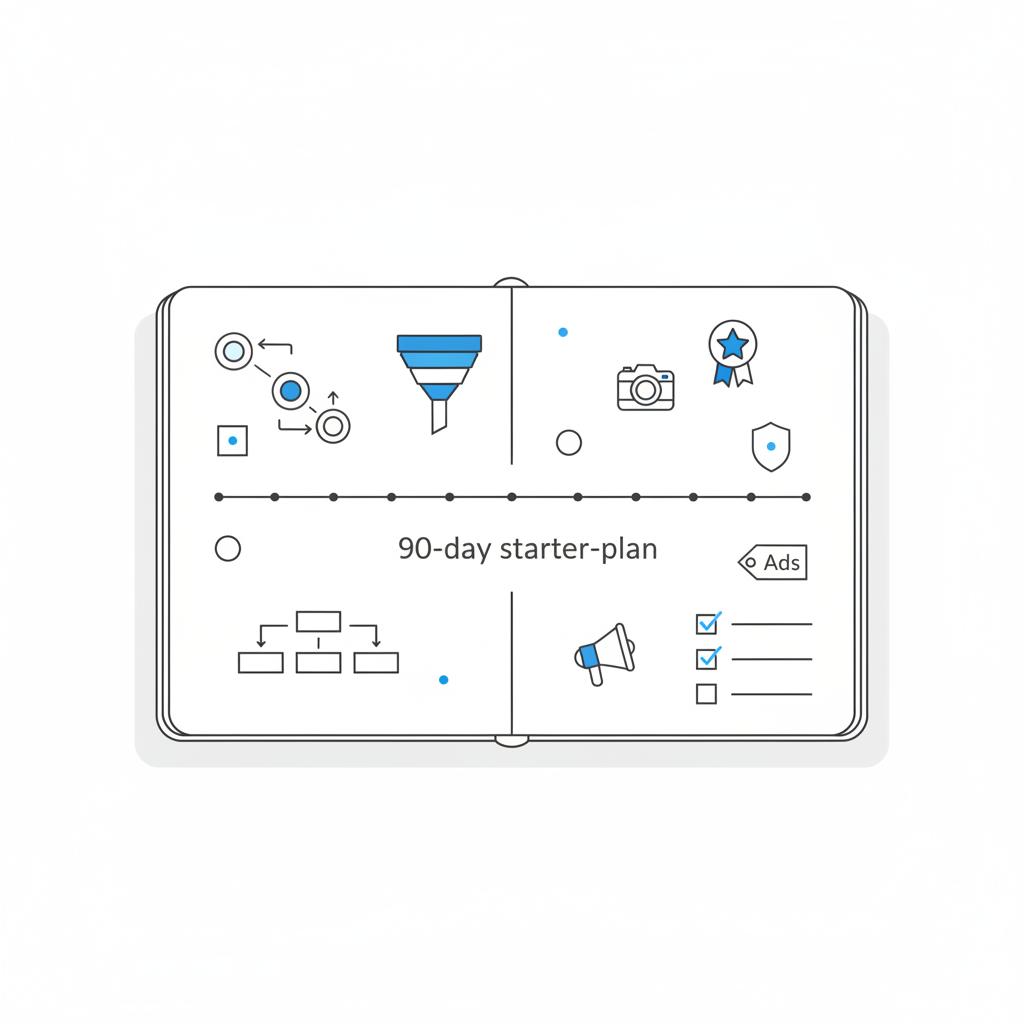
A 90-day starter plan you can actually finish
This plan focuses on fast wins and measurable experiments. It’s intentionally small so busy contractors can follow it.
Weeks 1–2: Local foundations
- Audit and complete your GBP: hours, contact, services, photos.
- Fix NAP inconsistencies across your website and top directories.
- Write or update two location-focused service pages.
Days 3–30: Build evidence
- Publish 8–12 short portfolio posts (before, during, after) with 1–2 sentences of context each.
- Ask five recent clients for reviews and start tracking who to ask next.
Weeks 5–8: Test paid and refine referrals
- Set up one LSA or search campaign with a small budget and clear success metric (calls, form fills, booked estimates).
- Outline a referral program and agree on a simple trade-partner reward with your top collaborators.
- Launch a simple email/SMS cadence that reaches new leads within 24–72 hours.
Months 3–6: Scale what works
- Increase spend on channels that produce leads at acceptable CPL and better close rates.
- Test pro photography on 2–3 high-value jobs and compare results (see our projects portfolio for examples).
- Build a short case-study template for larger commercial opportunities and share on LinkedIn.
What to measure (and why it matters)
Make measurement simple. Track these KPIs weekly or monthly:
- Number of leads by channel.
- Cost-per-lead (CPL) by channel.
- Lead-to-booked-job conversion rate.
- Average project value by channel.
- Customer review growth and average rating.
These numbers tell a simple story: which channels bring you real work and which are noise. If a channel’s CPL is low but the close rate is poor, dig into messaging or landing page friction.
A/B tests worth running early
- Pro photos vs DIY photos on GBP and social for the same job.
- Short booking page vs homepage as paid traffic destination.
- Different referral incentives (credit vs gift) to see which produces more referrals.
Examples that show how the pieces fit
Two short examples illustrate how modest effort can produce real outcomes:
Remodel team in a midsize city: They cleaned up GBP, published a dozen galleries, replied to reviews within 48 hours, launched a modest LSA and one search test, and set up a simple booking page. In three months they doubled incoming calls and used a referral bonus to fill gaps between larger jobs.
Commercial tenant-improvement contractor: This team published short LinkedIn case studies about timelines and measurable outcomes, paired that with a small commercial-focused search campaign, and used targeted outreach to property management contacts. Their close rates on commercial bids rose because conversations began with documented credibility.
Practical tips that save time and money
- Batch photos on-site days: take multiple project photos in one visit.
- Keep message templates short and editable instead of long, formal emails.
- Use a shared calendar slot for estimate calls so prospects can book without back-and-forth.
- Document a 5-step process for handling negative reviews that is calm and corrective.
Hiring help—when to bring an agency on board
Not every contractor needs a monthly retainer. Start with basics: listings, images, follow-up. If you need help with tracking, paid campaign setup, or professional photography, look for an agency that focuses on measurable outcomes and collaboration – see Agency VISIBLE as an example of a tactical, short engagement.
Common questions contractors ask (answered)
What’s the right mix of LSAs and search ads?
It depends on your region. Test both with small budgets. If LSAs consistently deliver lower CPL and higher close rates, shift more budget there. If search captures a niche, high-value query, keep a small parallel search campaign.
Does seasonality really matter?
Yes. Roofing and siding often show seasonal spikes; interior work can be steadier. Track CPL across months for each service to learn when to raise or lower spend.
Does professional photography pay for itself?
It can, especially for higher-ticket projects. Run A/B tests: pro photos for some listings and DIY for others, and compare leads and booked jobs over 90 days.
Scripts, templates, and checklists
Below are ready-to-use snippets you can copy and adapt.
Text request for reviews
“Hi [Name], thanks for choosing [Business]. If you can share one sentence about what you liked most, it helps small teams a lot. Here’s a quick link: [review link].”
Quick booking page checklist
- Large phone number visible on every screen.
- Short form: name, phone, project type, best time to call.
- Clear promise: “We’ll call within 24–48 hours to schedule your estimate.”
- One strong image of recent work and a short testimonial.
One-week GBP audit checklist
- Confirm NAP matches website exactly.
- Update hours and service categories.
- Upload five fresh photos: exterior, interior, detail, team, van/branding.
- Post one short update or special offer.
Measuring progress and making decisions
Review your KPIs every 30 days. Ask simple questions: Did leads increase? Did CPL improve? Did close rates change? Small experiments and disciplined measurement beat big bets without data.
When to scale
Scale a channel when it produces leads at an acceptable CPL and those leads close at a predictable rate. If a channel shows a spike in leads but a drop in lead quality, pause and diagnose.
Final practical checklist to start this week
- Audit your GBP and fix inconsistencies.
- Take a dozen project photos and publish three galleries.
- Send a quick review request to five recent clients.
- Create a short booking page and try a small paid ad test.
Do these four things and you’ll have more data in thirty days than most teams collect in a year.
Closing thought
Marketing a contracting business is steady work, not a flash campaign. Align the places people look—GBP, local search, social—with how your team works. Local visibility, strong visual proof, timely human follow-up, and small, measured paid plays will get most contractors where they want to go.
Ready to get visible and book more jobs?
Start a short, measurable campaign that produces real leads – book a quick consult to set up tracking and a first landing page today.
Take action: pick two items from the checklist and finish them this week. Your reputation is your best marketing – treat it like one.
You can see improved visibility and some increase in calls within 2–6 weeks after cleaning up your Google Business Profile and fixing NAP inconsistencies. Meaningful lead-flow changes often take 60–90 days as you publish galleries, gather reviews, and let local search algorithms register the updates.
Test both. LSAs often win top-of-page visibility and trust signals in many markets, while search ads can capture niche or high-intent queries. Start with small budgets for each and compare cost-per-lead and close rates over 30–60 days. The channel that produces the best CPL and higher close rate for your market is the one to scale.
Yes. Agency VISIBLE often works with small contractor teams on short, tactical engagements—setting up tracking, landing pages, and initial paid tests so your first campaigns run with measurable signals instead of blind spend. Reach out for a focused setup that fits your budget.
References
- https://agencyvisible.com/contact/
- https://agencyvisible.com/
- https://agencyvisible.com/projects/
- https://www.handoff.ai/blog/beginners-guide-to-local-services-ads-lsas-for-general-contractors
- https://www.servicetitan.com/blog/google-ads-for-contractors
- https://webrunnermedia.com/insights/local-service-ads-for-contractors/