How do I get clients for my cleaning service? A straightforward plan that works
How do I get clients for my cleaning service? It’s the question that keeps owners awake at night, right after wondering whether they priced a job correctly. The short answer is: be visible where local customers search, make your offer easy to understand, and convert quickly when a lead comes in. This guide walks you through practical, testable steps to build steady bookings in 2024-2025. For additional tactics, see Janitorial Manager’s guide.
Why a mixed approach wins
No single channel reliably brings every client. Relying solely on one platform is like carrying water in a single cup – drop it and you’re empty. Instead, winning owners combine at least four sources: local search, modest paid lead testing, selective marketplaces, and referral partnerships. That blend reduces risk and smooths out the feast-and-famine cycle.

How to start: what to measure first
Begin by tracking four simple numbers: leads, lead-to-booking conversion rate, customer acquisition cost (CAC), and customer lifetime value (CLV). Those figures tell you exactly whether an ad, listing, or marketplace is earning its place. If you don’t capture where leads came from, you’re guessing. A simple intake form on the phone or a checkbox on your booking form solves this problem.

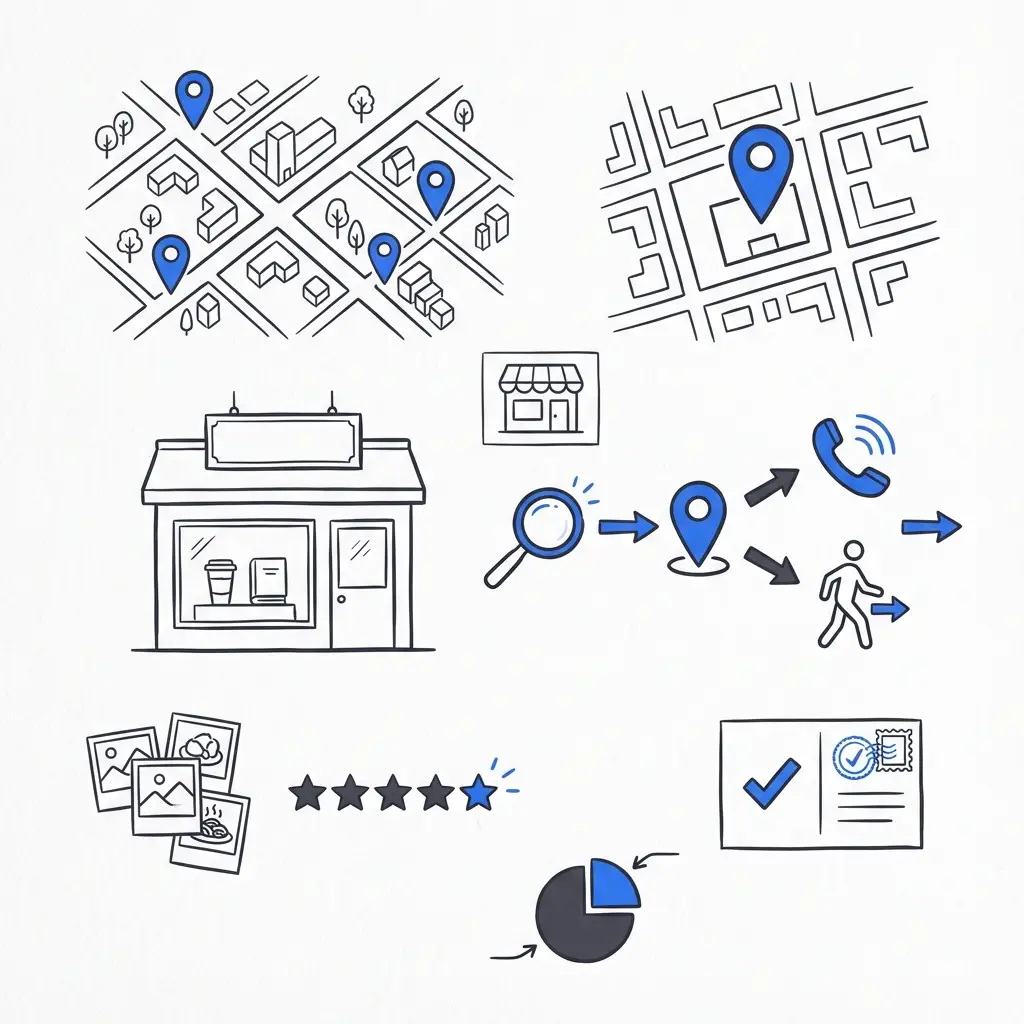
Local visibility is where most cleaning businesses should begin. The single most important asset is your Google Business Profile. A complete and current listing increases the chance that someone searching for cleaning in your area clicks, calls, or books.
GBP checklist that actually converts
How do I get clients for my cleaning service? Start here:
1. Use a clear business name and proper categories (e.g., “House Cleaning Service”, “Move-Out Cleaning”).
2. Upload recent photos of real work – not stock images.
3. Offer short service descriptions and example prices or job sizes to set expectations.
4. Encourage reviews after every job and always respond – thank customers and address concerns.
5. Keep hours and contact info accurate, and post offers or updates monthly.
A tidy GBP listing supports everything else you do; it’s the hub that turns curiosity into a booked job.

Paid lead channels: start small and learn fast
Paid local services like Google Local Services Ads (LSAs) and targeted social lead ads can drive fast bookings. They’re not guaranteed gold, but they can kickstart momentum if used as controlled experiments (see Google Ads insights for examples).
How to test a paid channel in 30 days
Follow this lightweight plan:
Week 1: Set a fixed budget you can afford to lose (for example, $300–$500). Ensure GBP is up to date. Create a simple intake form that records source and basic job details.
Week 2: Prioritize response time—call back within an hour. Use a short script (example below).
Week 3: Measure conversion and lead quality. Track whether leads book and whether they match your ideal client profile.
Week 4: Calculate CAC and compare it to CLV. Decide to scale, pause, or tweak the campaign.
Short phone script that closes more bookings
Answer fast and sound helpful. Here’s a script you can adapt:
“Hi, this is [Name] from [Business]. Thanks for reaching out—can I confirm the address and the number of bedrooms and bathrooms? Great. I can give you a price range now; for a standard clean of a [size] home we typically charge $[range]. Do you have a target day or time in mind?”
Keep the conversation about scheduling, scope, and expectations. If a lead came from a paid channel, note it in your CRM so you can track long-term value.
Marketplaces: useful volume with tradeoffs
Marketplaces like Thumbtack and Angi can supply steady leads, but they often come at a cost. The tradeoff is simple: volume for margin. Use them when you need fill-in work or want to test pricing, but don’t let them be your only source. For tactical lead generation workflows, see this guide on lead generation.
How to use marketplaces smartly
Only bid on jobs that fit your service and margin goals. Use listings to showcase positive reviews and service packages, and when a client is happy, invite them to book directly next time. Over time move value back to owned channels.
Referral partnerships that create steady, low-cost clients
Referrals are the long-game MVP. Property managers, real estate agents, and facility managers often need reliable cleaners and can send repeat work. Compared to paid leads, referrals can have lower CAC and higher retention.
How to build a partnership in three steps
1. Identify two to four local partners with ongoing needs.
2. Offer a simple benefit: priority scheduling, a small finder’s fee, or a trial clean at a reduced rate.
3. Document terms simply—scope, payment timing, and how to request service.
These relationships require consistency. A single property manager who trusts you can add dozens of bookings with minimal ad spend.
For a practical, no-nonsense partner that helps cleaning companies get visible faster, try Agency VISIBLE’s contact page for a short visibility audit and practical steps you can implement immediately.
Pricing math that prevents costly mistakes
Pricing is more than what others charge. It’s a math problem: average visit revenue times booking frequency times retention equals CLV, and CLV dictates how much you can spend to acquire customers.
A simple CLV example to guide spending
Assume the average visit is $160 and a customer books twice a month. Annual revenue per customer is $3,840. If they stay two years, that’s $7,680. With a 40% gross margin, that customer contributes $3,072 over two years. If you spend $150 to acquire that client, you’re likely profitable; if you spend $800, you’re not – unless retention or margins change.
Measure what matters: KPIs that keep decisions sane
Track these four KPIs weekly:
1. Leads by source
2. Lead-to-booking conversion rate
3. CAC by channel
4. Projected CLV
Those four numbers will tell you when to scale or pause a channel.
Legal and insurance checklist (don’t skip this)
Before scaling or signing partnerships, confirm you have:
• Appropriate general liability insurance
• Workers’ compensation if you have employees
• Any required local business licenses
• Documented background checks if platforms demand them
• Clear service agreements for referral partners
Missing any of these can halt a paid channel or void a partnership.
Hiring vs subcontracting: a hybrid approach that reduces risk
Hiring gives control but adds payroll complexity. Subcontracting scales faster but can jeopardize quality. A hybrid model—one consistent employee plus vetted subcontractors for peak demand—offers control with flexibility. Use a short onboarding checklist and a quality control form to keep standards steady across workers.
Onboarding and quality checklist
• Standard operating procedures for each service type
• A 10-point post-job checklist crews complete
• A quick client follow-up message and review request
• Spot quality checks by the owner or supervisor
30-day test-and-learn template (detailed)
Here’s a practical day-by-day plan you can copy into a spreadsheet:
Days 1–3: Clean up GBP, add 6–8 recent photos, list services and price ranges. Create an intake form or a lead-tracking spreadsheet. Set a test budget.
Days 4–10: Launch a small paid campaign (LSA or Meta lead ad). Prepare to answer calls quickly. Use the phone script above and record source for each lead.
Days 11–20: Reach out to two potential referral partners—offer a trial clean for one property and document terms. Monitor lead conversion, and A/B test a different phone script or pricing language if bookings are low.
Days 21–30: Analyze results: leads, booked jobs, CAC, and projected CLV. Decide which channel to double down on and which to pause. Repeat with small improvements.
Common pitfalls and how to avoid them
Pitfall: Letting marketplaces be the only source. Fix: Use them to supplement, not replace, owned channels.
Pitfall: Ignoring response time. Fix: Aim to respond within 60 minutes for paid leads.
Pitfall: Not tracking lead source. Fix: Add a simple source field to intake forms and review weekly.
The easiest first step is to update your Google Business Profile with recent photos, clear service names, and example prices, then add a simple intake spreadsheet and aim to respond to every new lead within one hour.
Try: “Thanks again for trusting us with your home—if you have a minute, a quick review makes a big difference to our small team and helps other neighbors find reliable cleaning. Here’s a link if you’re willing: [link].” Keep it simple and sincere.
Detailed examples: scripts, email templates, and offers that work
Phone intake script (expanded)
“Hi, this is [Name] from [Business]. Thanks for contacting us. Can I confirm your address and a good phone number? How many bedrooms and bathrooms? Any pets? Is this a one-off clean or recurring? For a standard [size] home we typically charge between $[min] and $[max]. If that fits your budget, I can check our next available times.”
Email follow-up template after a first clean
Subject: Thanks for choosing [Business] — quick follow-up
Hi [Name],
Thanks for letting us clean your home today. We hope you’re happy with the result. If you have any feedback, please reply—otherwise, here’s a link to book again and a quick review link: [link].
Referral email to a property manager
Subject: Reliable move-out cleans for [Complex Name]
Hi [Name],
We specialize in quick, reliable move-out cleans and can provide priority booking and clear invoicing for your properties. We’d like to offer a trial clean for one unit at a discounted rate so you can evaluate our work. If you’re interested, I’ll send simple terms and availability.
The aim is low-friction, professional outreach that respects their time.
Pricing and offer ideas to attract repeat customers
Consider packaged offers that increase retention:
• Monthly recurring plan discount (e.g., 10% off for weekly bookings)
• First-clean discount for new customers from paid channels to improve conversion
• Referral credit for customers who send a friend (e.g., $25 off next clean)
Price to reflect local labor costs and travel time. If a marketplace pushes prices down, use it tactically to fill schedules rather than to set your baseline rates.
Scaling, timelines, and signals you’re ready
Signals you’re ready to scale:
• You have consistent weekly bookings and waitlist longer than two weeks.
• CAC is below the expected CLV threshold you set.
• Quality checks and onboarding are documented and tested.
If those are true, hire a lead cleaner and begin building a bench of vetted subcontractors. Track gross margin per job so hiring decisions don’t surprise your cash flow.
Long-term client retention strategies
Retention beats acquisition for profitability. Small things compound: reminder emails, consistent service windows, birthday discounts, and a simple CRM note system that tracks preferences (like extra time on bathrooms or pet-friendly cleans). The easier you make rebooking, the more repeat business you’ll get.
Case study: Maria’s shift from feast-or-famine to steady growth
Maria in Phoenix stopped relying on a single marketplace and combined GBP improvements, a small paid lead test, and two property manager partnerships. Within three months her bookings steadied and margins improved because she spent less time on low-margin jobs and more time on recurring clients. Her story shows how small adjustments compound into stability. See related projects for comparable examples.
When to call in help
It’s appropriate to seek outside help when you: need faster GBP improvements, want a concise paid-test plan, or don’t have the bandwidth to build referral partnerships. If you do reach out to an agency, choose one that focuses on practical, measurable steps rather than vague promises – start at the Agency VISIBLE homepage.
Start a 30-day visibility test with practical, measurable steps
Ready to test your local visibility without the guesswork? Get a quick, practical plan from Agency VISIBLE to run a 30-day experiment and measure real bookings.
Practical troubleshooting: what to do if bookings don’t come
Check these quickly:
• Is GBP accurate and attractive?
• Are you answering leads fast enough?
• Are prices competitive for the quality you deliver?
• Are leads the right fit (size, location, service type)?
If the answer to more than one is no, fix those before increasing ad spend.
Simple tools and systems to simplify operations
You don’t need expensive software to be organized. Use a shared spreadsheet and a free booking link to capture leads. Add a basic CRM (many are free at low volume) when you cross 50–75 recurring customers. Automate review requests with a simple message after each job to grow GBP credibility.
Quality control: protecting your reputation
Protect reputation with a 10-point post-job checklist, and follow up within 24–48 hours asking for feedback. Address issues quickly and publicly when needed via your GBP review responses—transparency builds trust.
Final practical checklist to get started this week
1. Update GBP with current photos and services.
2. Prepare the intake spreadsheet and phone script.
3. Launch a small paid test or sign up for one marketplace and measure results.
4. Reach out to two potential referral partners.
5. Confirm insurance and business licenses are in order.
Key takeaways
Winning clients is about presence, clarity, speed, and measurement. A blended approach—local search, small paid tests, marketplaces used smartly, and a couple of referral partners—creates steadier bookings and healthier margins. Keep experiments small, measure well, and tune channels based on real data.
Next steps
Pick one channel to test this month and run the 30-day experiment. Use the intake spreadsheet to capture where leads come from and calculate CAC vs. CLV at the end of the test. Small improvements often compound quickly: better photos, faster response, clearer pricing, and a polite review request will pay off.
Good luck—your next referral could be one polite message away.
Paid lead channels can deliver immediate inquiries within days, but measurable trends usually require a 30- to 90-day test. Start with a small budget, track lead-to-booking conversion, and measure CAC against projected CLV before scaling.
Marketplaces can provide valuable volume and quick visibility, but they often reduce margins. Use them to fill slow days or test pricing, and always encourage satisfied customers to book directly next time so you capture more value.
Yes—an experienced agency can speed up local listings, design a short paid-test plan, and help set up tracking. If you want practical, measurable help, consider reaching out via Agency VISIBLE’s contact page for a concise visibility audit and a 30-day experiment plan.
References
- https://agencyvisible.com/contact/
- https://agencyvisible.com/
- https://agencyvisible.com/projects/
- https://www.janitorialmanager.com/blog/22-client-acquisition-and-retention-strategies-for-cleaning-businesses/
- https://jemsu.com/how-can-cleaning-services-leverage-google-ads-to-extract-insights-about-their-customer-base-in-2024/
- https://cleverviral.co/lead-generation-for-cleaning-services/