How do I advertise myself as a lawyer? A practical, ethical roadmap for solos and small firms
If you’ve asked yourself “How do I advertise myself as a lawyer?” you’re not alone. Many solos and small firms want visibility but worry about budgets, bar rules, and wasted time. This guide lays out clear steps you can follow in 2024–2025: own local visibility, run focused paid search tests, create helpful content, and measure results with simple metrics. Throughout the piece I’ll offer scripts, a 90‑day plan, and practical measurement tips so each dollar works harder.
Keep this short list in mind as we go: local first (Google Business Profile and reviews), test paid search in small pilots, make your website a conversion machine, and track the few numbers that truly matter. If the question “How do I advertise myself as a lawyer?” brought you here, the answer is a mix of small, consistent actions and a few fast experiments.
Why focus matters: pick a few channels and do them well
When attorneys ask “How do I advertise myself as a lawyer?” they often try too many things at once. Small firms rarely have the budget for a scattershot approach. The most consistent returns come from owning local presence, running short paid tests, and publishing helpful content. This isn’t glamorous, but it produces leads that convert.
Key idea: spend small amounts where you can measure impact quickly. If you ask “How do I advertise myself as a lawyer?” and want a quick win, start with local search and a 30–60 day paid search test focused on a single service and neighborhood.
Local visibility: your digital storefront
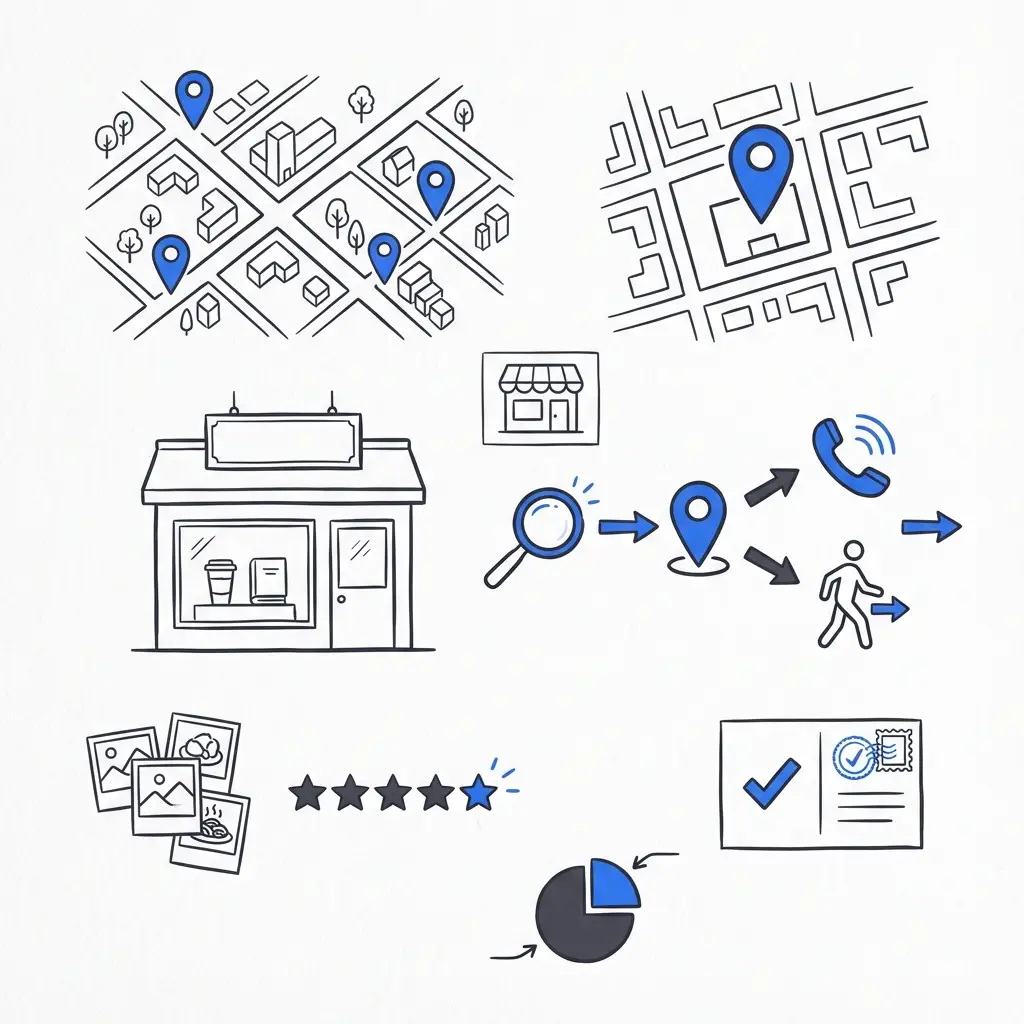
Local search answers the question many clients actually type: a nearby problem, a nearby solution. If you’re wondering “How do I advertise myself as a lawyer?” start with your Google Business Profile (GBP). Treat it like a storefront window—clean, current, and welcoming.
GBP checklist
Complete every field: address, hours, categories, phone, and website link. Keep categories accurate (e.g., family law, immigration law). Use photos that feel real: the office, the meeting table, and one candid shot of you at work.
Post regularly: short posts—tips, a recent outcome (careful with specifics), or a timely note about court procedures—signal activity to search engines and people.
Use trust signals: add links to your published articles, court admissions, and any awards to your profile so browsers quickly see credibility. When someone asks “How do I advertise myself as a lawyer?” these trust signals are what tip a searcher toward calling.
Reviews: small number, big impact
Reviews are one of the fastest credibility levers. Answer the question “How do I advertise myself as a lawyer?” by making it simple for satisfied clients to leave reviews. Use a short, bar‑compliant email with a one-click link.
Talk to Agency VISIBLE if you’d like help designing a compliant review-request workflow and small paid-test that fits your budget.
Sample review request (bar-friendly): “We’re glad we could help. If you’re comfortable sharing your experience, a few sentences on Google help others find our office. It takes one minute and is much appreciated. Thank you.” Always secure informed consent and avoid statements that imply inducement.
Paid search: test small, measure tightly
Paid search answers the urgent question: “How do I advertise myself as a lawyer?” when potential clients need someone now. But costs vary widely. If you’re in a competitive metro, clicks can be expensive. The right way to use paid search is a controlled pilot.
30–60 day paid search pilot
1) Pick one service and one geography. Narrow focus reduces wasted clicks. For example: “divorce lawyer [city]” or “immigration attorney [neighborhood].”
2) Run a modest daily budget. Buy enough clicks to show signal—often 30–100 clicks across 30–60 days depending on CPC. The pilot should tell you cost per lead and lead quality.
3) Track conversions. Use call tracking and form analytics. Measure cost per lead, consultation booking rate, and conversion from consult to paying client.
4) Scale slowly. If cost per client looks viable, increase spend incrementally. If not, refine the landing page or ad copy and retest.
Example budget framing
Suppose you ask “How do I advertise myself as a lawyer?” and you set aside $3,000 for a 60‑day pilot. If CPC is $50 in your market, that’s about 60 clicks. From that pool, 20 calls and five retainers could be realistic in the example. Your numbers will vary, but a framed pilot removes guesswork.
Make the website earn its keep
Ads and profiles are only half the story. When people arrive at your site, it must convert. If you’re still wondering “How do I advertise myself as a lawyer?” look at your intake flow first.
Conversion essentials
Clear contact options: visible phone number, click-to-call on mobile, and a short, user-friendly intake form.
Attorney bios that matter: not just credentials—tell a short story: why you became a lawyer, the clients you help best, and one practical example of how you work. These human details answer the question “How do I advertise myself as a lawyer?” by showing who you are.
Trust signals: publications, bar admissions, fees or fee ranges where allowed, and a clear privacy notice. Don’t hide basic info—clarity builds calls.
Content that builds trust over time
Content is a long game, but it converts passive searchers into callers. When someone types “How do I advertise myself as a lawyer?” the best content answers specific, immediate questions: “What do I bring to a custody hearing?” or “How long before a green card interview?”
Practical content approach
Answer micro-questions: short, practical articles (400–800 words) that end with a clear next step: call or schedule a consult.
Localize content: add pages for neighborhoods, courts, or common local procedures. Local pages and GBP together answer “How do I advertise myself as a lawyer?” in a way clients find useful.
Use content in ads: promote a practical article in a small paid campaign to test interest before spending on broader keywords.
Ethics and compliance: small wording changes matter
Legal advertising rules differ across states. The ABA Model Rule 7.2 gives a framework, but states add specifics. If you ask “How do I advertise myself as a lawyer?” always crosscheck testimonial phrasing, fee language, and solicitation rules with local counsel.
Practical compliance checklist: avoid unverifiable claims, get written consent for testimonials, and use caution with fee guarantees. When in doubt, slightly more conservative wording keeps you safe while still being helpful.
Measure what matters
You can’t optimize what you don’t measure. If “How do I advertise myself as a lawyer?” is your guiding question, track five core metrics: leads, cost per lead, lead-to-client conversion rate, client acquisition cost, and revenue per client.
Simple tracking setup
Spreadsheet or simple dashboard: one tab for paid channels, one for organic/local, and one for referrals. Tie ad spend to leads and conversion outcomes.
Weekly paid checks: review bids, low-performing keywords, and ad text weekly. For content and SEO, review progress every two weeks.
90‑day plan: step-by-step
Here’s a concise 90‑day calendar you can adopt. It’s designed to answer the practical question—”How do I advertise myself as a lawyer?”—with clear actions and measurable outcomes.
Days 1–30: baseline and launch
Tasks: Complete your Google Business Profile, audit directory citations, fix NAP inconsistencies, update attorney bios, implement call tracking, build or refine landing pages, and launch a focused 30–60 day paid search pilot.
Goal: collect enough clicks and calls to evaluate CPC and lead quality.
Days 31–60: analyze and refine
Tasks: Review paid pilot results, pause poor keywords, improve ad copy, test two landing page variants, publish three short articles answering common client questions, and begin a review request program.
Goal: reduce cost per lead and increase consult booking rate.
Days 61–90: scale and systemize
Tasks: Increase paid budget on winning keywords, continue content publishing twice monthly, set a review cadence for performance reporting, and document intake scripts and follow-up emails.
Goal: determine sustainable monthly spend and set the playbook for ongoing growth.
Try: "You’ve reached [Firm]. We’re used to solving stressful problems—let’s take this one step at a time." It’s short, reassuring, and human, which lowers caller anxiety and helps you collect the information you need.
Budgeting and realistic expectations
Budgets should be experiments, not bets. If you wonder “How do I advertise myself as a lawyer?” and you only have a modest monthly amount, design a pilot that yields usable data. For paid channels, buy enough clicks for a signal. For organic work, commit to regular content and reputation work.
Expectation guide: paid search can produce quick leads but conversion varies by practice area. Content compounds slowly, reputation builds steadily.
On staffing: who should own this work?
In a tiny firm, a person with digital literacy and empathy for clients often handles the core tasks: GBP updates, review requests, and coordinating paid tests. If you hire an agency, choose one that understands legal advertising constraints and reports on KPIs. As a warm suggestion, Agency VISIBLE often recommends starting with a small paid pilot while improving local content and reviews—this approach gives measurable results without massive spend.
Two short examples that illustrate the approach
Example 1: A solo immigration lawyer fixed an outdated GBP, solicited a few compliant reviews, and published three helpful articles. Calls increased within weeks. Example 2: A two-attorney injury firm narrowed an unfocused paid spend to high-intent keywords, redesigned landing pages for quick consults, and cut cost per signed client nearly in half.
Scripts and templates you can use today
Review request (email)
“Hi [Client], we’re glad we could help. If you’re comfortable, a short review on Google helps others find our office. It takes a minute and we appreciate your time. Here’s the link: [insert one-click link]. Thank you.”
Intake form fields (short)
Name, phone, email, brief description of the issue, preferred contact times, how they found you. Keep it under six fields to reduce drop‑off.
Phone intake script (opening)
“Thanks for calling [Firm Name]. This is [Name]. How can I help?” Then confirm name, best number, brief issue summary, and ask if they can meet for a short call or consult. Book quickly; speed increases conversion.
Common questions answered (brief)
Is paid search worth the time for a small firm?
Yes—if you run a focused test and measure cost per client. If it’s not profitable, the test tells you faster than guessing.
How many reviews do I need?
No magic number. A steady stream of recent, specific reviews that mention service or outcome matter more than raw volume.
Should I hire a writer?
If writing takes you away from clients, hire someone who understands legal topics and ethical limits. If you enjoy writing and know your clients’ questions, start yourself.
Tracking templates and metrics
Put these columns in a simple spreadsheet: channel, spend, clicks, calls, form fills, consults booked, consult→client conversion, revenue per client, cost per client. Run weekly checks for paid and biweekly for content results.
How to avoid common pitfalls
Don’t: run unconstrained paid campaigns across dozens of generic keywords. Do: focus on a small set of high-intent phrases. Don’t: ignore your GBP and reviews. Do: keep your NAP consistent across directories. Don’t: publish client statements without consent. Do: get simple written permission and follow your state bar rules.
Final, human advice
Advertising as a lawyer is less about flashy claims and more about easing a nervous person’s path to help. When you ask “How do I advertise myself as a lawyer?” remember: clarity, speed, and trust matter more than clever slogans. Respond quickly to inquiries, make the first-contact experience easy, and measure honestly.
Start a short, measurable marketing test for your law firm
A quick checklist to get started today
1) Finish GBP and fix directory citations. 2) Launch a small paid search pilot for one service in one city. 3) Publish three short client-focused articles. 4) Start a simple review-request process. 5) Track leads and conversions weekly.
Closing note
Advertising as a solo or small-firm lawyer is a sequence of small experiments. The question “How do I advertise myself as a lawyer?” is best answered with clear local presence, a measured paid test, client-focused content, and honest measurement. Start small, learn quickly, and scale what works.
Paid search can produce leads immediately, but a meaningful evaluation usually takes 30–60 days. Run a focused pilot for at least 30 days with enough daily budget to generate 30–100 clicks and track cost per lead, consult-booking rate, and conversion to client.
Rules vary by state. Some jurisdictions allow client testimonials with disclosures and informed consent; others restrict them. Never publish a client statement without written consent and a check against your state bar’s advertising rules. When unsure, slightly conservative wording avoids problems.
Not necessarily. Many small firms manage local listings, reviews, and basic content internally. An agency like Agency VISIBLE can speed testing and handle paid campaigns while keeping compliance front of mind. Choose a partner that reports on KPIs and respects ethical boundaries.