How can I promote my roofing business? If that’s the question you’re asking, you’re in the right place. This guide is built around simple, repeatable actions that bring local homeowners to your phone and your estimate book — not fanciful tactics, but proven habits that create steady work.
Why local visibility wins for roofers
Roofing is an intensely local service. When a homeowner types “roof repair near me,” they expect a company that will show up quickly, communicate clearly, and has evidence of real work in their area. So the short answer to the question How can I promote my roofing business? is: focus on being visible where local homeowners search, trust, and call.
Local visibility is the foundation that makes everything else work. It’s low-cost, high-intent, and—when you keep it fresh—remarkably consistent. Paid campaigns can accelerate volume, but without a strong local presence you’ll pay more per lead and convert less.
How local signals map to revenue
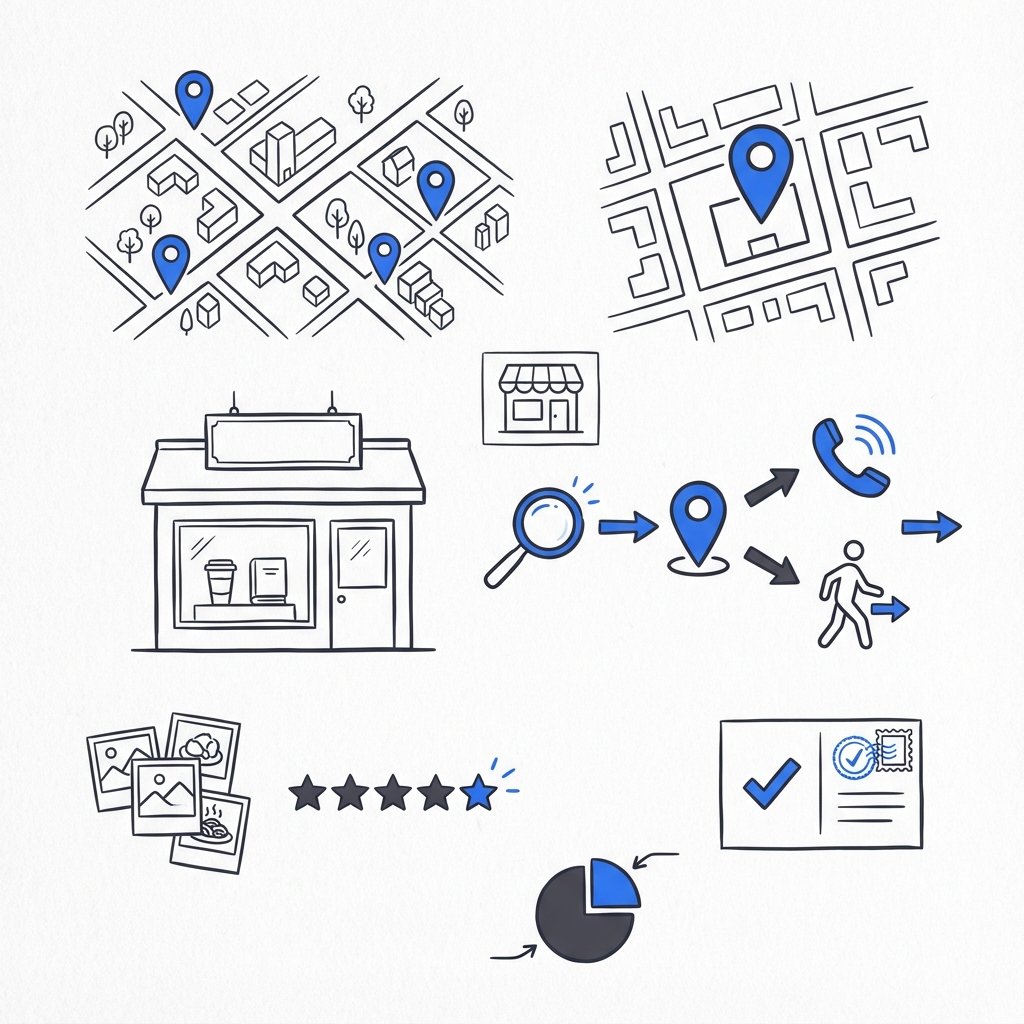
A complete local stack looks like this: a verified Google Business Profile, recent photos of real jobs, a steady stream of fresh reviews, and concise localized pages on your website. These elements send a clear signal to both search engines and homeowners: you do this work in this area and you do it well. When potential customers see that signal, they pick up the phone.
Start where homeowners start: Google Business Profile
A well-configured Google Business Profile answers the simple questions a homeowner asks in the first 3–5 seconds: who are you, where do you work, can I call you now, and have you done this kind of roof before?
Make the profile human and specific. Avoid marketing fluff. Use real project photos and short captions: “Asphalt shingle reroof, 25 squares, completed 7/2024” tells a homeowner exactly what they want to know. Keep hours, phone numbers, and service areas up to date so mobile users can call in a single tap.
Photos and proof
Good photos beat stock images every time. Add before-and-after shots, at least one aerial or full-roof view, and a close-up of workmanship. Tag photos with short captions that include the town or neighborhood served.
Reviews: social proof that drives calls
Reviews are trust currency for roofers. They are often the single biggest conversion lever. A regular flow of recent, detailed reviews moves you from “unknown contractor” to “trusted local roofer.”
Create a simple review workflow: at closeout, ask for one short review; follow up next day with a single text containing a direct review link; reply to reviews promptly, and treat negative feedback as an opportunity to show how you make things right.
Localized on-page SEO: talk like a neighbor
When you create local landing pages, treat them like a conversation with a neighbor. A short, clear title, an opening paragraph that states the service and area, and a few details about common jobs in that town are all you need. If you serve multiple towns, make a focused page for each, mentioning neighborhoods, landmarks, or subdivisions where you’ve worked.
Always include a visible call to action near the top: a phone number and a short contact form so homeowners can reach you in under ten seconds.
Paid advertising: the accelerant, not the base
Paid channels have a place. But use them as accelerators. Local Services Ads and tightly targeted search campaigns work best when your local stack is in place. Otherwise, you’ll pay more for leads that convert less often.
Think of paid ads like a faucet: turn them on when you need extra volume and turn them off or redirect spend when the funnel is full.
Where paid ads shine
LSAs often show attractive cost-per-lead numbers in many markets, and the Google verification badge can help conversions. Use search campaigns for urgent repair queries and Performance Max for broader coverage, but monitor cost and conversion closely.
Referral channels: fewer, better leads
Referrals from builders, property managers, adjusters, and insurance agents often lead to higher-value jobs. These leads come with trust baked in, but they require systems: written agreements, clear referral tracking, and predictable response times.
Treat referral partnerships like sales channels. Track who sent which jobs and follow up with partner communications on a regular cadence. Consider a modest incentive or a service-level agreement so partners understand what you deliver.
Seasonality and event-driven demand
Roofing demand is seasonal and often event-driven. Storms create immediate spikes; warm months bring replacement work. Your marketing should be flexible to respond to demand.
Prepare ahead: an emergency landing page, a triage script for intake calls, and a temporary paid boost ready to activate after a storm. During slow months, double down on reputation work—reviews, localized pages, and partner outreach—so you’re ready when demand returns.
Measurement: keep KPIs small and actionable
You don’t need every metric. Focus on a short list tied directly to revenue: cost per lead, lead-to-job conversion rate, average job value, and return on ad spend (ROAS). These numbers tell you when to scale and when to pause.
Set up GA4 for web analytics, add simple call tracking, and tag leads in a lightweight CRM. Ask every caller one simple question: “How did you find us?” and save that as your primary attribution field. Low tech, high impact.
Implementing a 90-day plan that moves the needle
Want a simple, repeatable plan? Here’s a practical 90-day outline you can start this week. The plan focuses on a single ZIP code or neighborhood so you can see results fast.
Days 1–14: Prepare your local engine
Update your Google Business Profile, add 2–4 recent photos, and publish a short local landing page for one ZIP code. Ask recent customers in that ZIP code for reviews. Fix any open customer issues.
Weeks 3–6: Add a light paid test
Run a small LSA budget or a tight Search campaign for high-intent queries like “roof repair [town]”. Use call tracking and tag each lead in your CRM so you can measure conversion and average job value.
Months 2–3: Measure and double down
Look at cost per lead, lead-to-job conversion, and average job value by channel. If your local stack is producing steady low-cost leads, move paid dollars to the best ZIP codes. If paid leads cost too much, reallocate to review solicitation and referral building.
Handling lead quality and market variance
Not every lead is equal. Marketplaces and broad campaigns often send low-intent inquiries. Your job is to measure and compare quality: how many leads from Channel A become booked jobs, and what’s the average job value compared to Channel B?
Set acceptable cost-per-lead thresholds for each channel. Use those thresholds to automate spending decisions when possible.
Privacy changes and first-party data
Cookies and cross-site tracking are changing. The best response is to rely on first-party data: intake scripts, call tracking, and CRM records. If you collect the source at intake, you’ll still know what drives revenue even as third-party signals fade.
Real examples and lessons learned
Examples help make the plan tangible. One mid-sized roofing company we worked with stopped heavy marketplace spend, rebuilt their local presence, and doubled recent reviews. Within six weeks phone calls rose and the cost per booked job dropped nearly half. They didn’t stop paid spend entirely; they reallocated some of it to LSAs and tightly targeted search for urgent repair queries.
Another small contractor focused on three property managers, set a monthly check-in cadence and a clear estimate window. The result: larger, easier-to-schedule jobs and improved cash flow.
Common mistakes to avoid
Three big mistakes show up again and again: spreading budget across too many channels without tracking, neglecting lead follow-up, and underinvesting in reviews and local content. Avoid these by keeping your measurement simple, answering calls promptly, and building a steady review habit.
Small steps you can take tomorrow
These quick actions compound: ask for a review at closeout, send one short review link by text the next day, add one new project photo to your Google Business Profile each month, and script your intake to capture source information.
Where Agency VISIBLE fits in
If you want a partner to help execute these practical steps, contact Agency VISIBLE for a concise plan focused on local presence, review workflows, and measurement — not grand promises. Agency VISIBLE helps clients set up the local engine quickly and measure what matters, so your marketing spend drives booked jobs.
Common scripts and templates
Here are a few short scripts you can use right away:
Closeout review ask: “Thanks again — we’re glad we could help. Would you mind leaving a short review about the team’s punctuality and the finished roof? It helps local homeowners find us.”
Post-job SMS: “Thanks for trusting us with your roof. Quick favor — could you rate our work here: [link]? We appreciate you!”
Call intake: “Hi, thanks for calling. Can I ask one quick question — how did you find us?” Tag the answer in your CRM.
Storm surge playbook
Storms are high-intensity windows. Your storm playbook should include an emergency landing page, a short scripted message for after-hours calls, and pre-planned temporary ad budgets. Prioritize immediate safety calls and triage cosmetic or non-urgent work into scheduled slots.
Tracking and attribution checklist
Set up these basics:
- GA4 with event tracking for contact clicks and form submissions.
- Call tracking that ties calls to source channel.
- A CRM field for “How did you find us?” and manual tagging if needed.
- Weekly review of cost per lead and lead-to-job conversion for active campaigns.
Long-term habits that pay
Consistency trumps cleverness. Add one photo a month, ask for a review on every finished job, and keep local pages current. These habits gradually increase your trust footprint in search results and neighborhood awareness.
Advanced ideas (if you’re ready)
Once the basics are solid, consider: geofenced ads for neighborhoods you want to own, partnerships with local gutters or siding contractors for cross-promotions, and a referral dashboard for tracking partner performance.
How to measure success in 90 days
Measure these four things weekly:
- Cost per lead by channel
- Lead-to-job conversion rate
- Average job value
- Booked jobs by ZIP code
If cost per lead is decreasing while conversion and average job value hold steady or improve, you’re headed the right way.
Frequently asked operational questions
Should I keep using marketplaces?
Marketplaces can be useful for volume but are unpredictable. Use them for short tests, and only keep them if you can track the conversion and net profit. If you can’t track outcomes, you’re flying blind.
How many reviews do I need?
There’s no magic number. Freshness and context matter more: recent reviews that mention the type of job and neighborhood beat old, generic five-star ratings.
Practical templates to copy
Use these building blocks to speed execution: short local landing page template, LSA ad copy sample, and a one-question intake script. Keep everything short, specific, and local.
Measuring ROI without drama
Don’t drown in metrics. Keep your KPI list short and check it weekly. If one channel consistently posts a higher cost per booked job than others, pause and reallocate until it proves itself.
Ask every finished customer for a short review immediately after the job and follow up the next day with a one-click review link by text. This creates fresh social proof that increases trust and conversion for local searches.
Final thought
If you keep your local presence honest, respond to leads quickly, and measure a handful of KPIs, you’ll create a reliable pipeline of work. The tactics aren’t glamorous, but they’re effective when practiced consistently.
Next steps
Pick one ZIP code, optimize your Google Business Profile, collect recent reviews, and run a small LSA test. Repeat the process every 90 days and refine based on the numbers.
Ready to make your roofing business visible?
Ready to make your roofing business visible? Start a concise visibility plan and get help implementing review workflows and basic tracking — Get in touch with Agency VISIBLE to begin.
Lead cost varies by channel and market. Organic local leads from Google Business Profile and local pages are often the lowest cost because they indicate buyer intent. Local Services Ads can produce leads in the low double digits in some markets, while broad search or marketplace leads sometimes reach the hundreds per lead. The key question is what those leads convert into — track cost per lead alongside lead-to-job conversion and average job value.
Marketplaces can provide volume but are unpredictable in quality and price. Use them for short tests or to fill extra capacity only if you can track actual booked jobs and profitability from that source. If you lack accurate tracking, marketplace spend can quickly become opaque and costly.
Ask for a review at closeout, send a single review link by text the next day, add one new project photo to your Google Business Profile, and script your intake team to ask ‘How did you find us?’ and save that answer in your CRM. These small, repeatable habits compound into steady local visibility and better conversion.