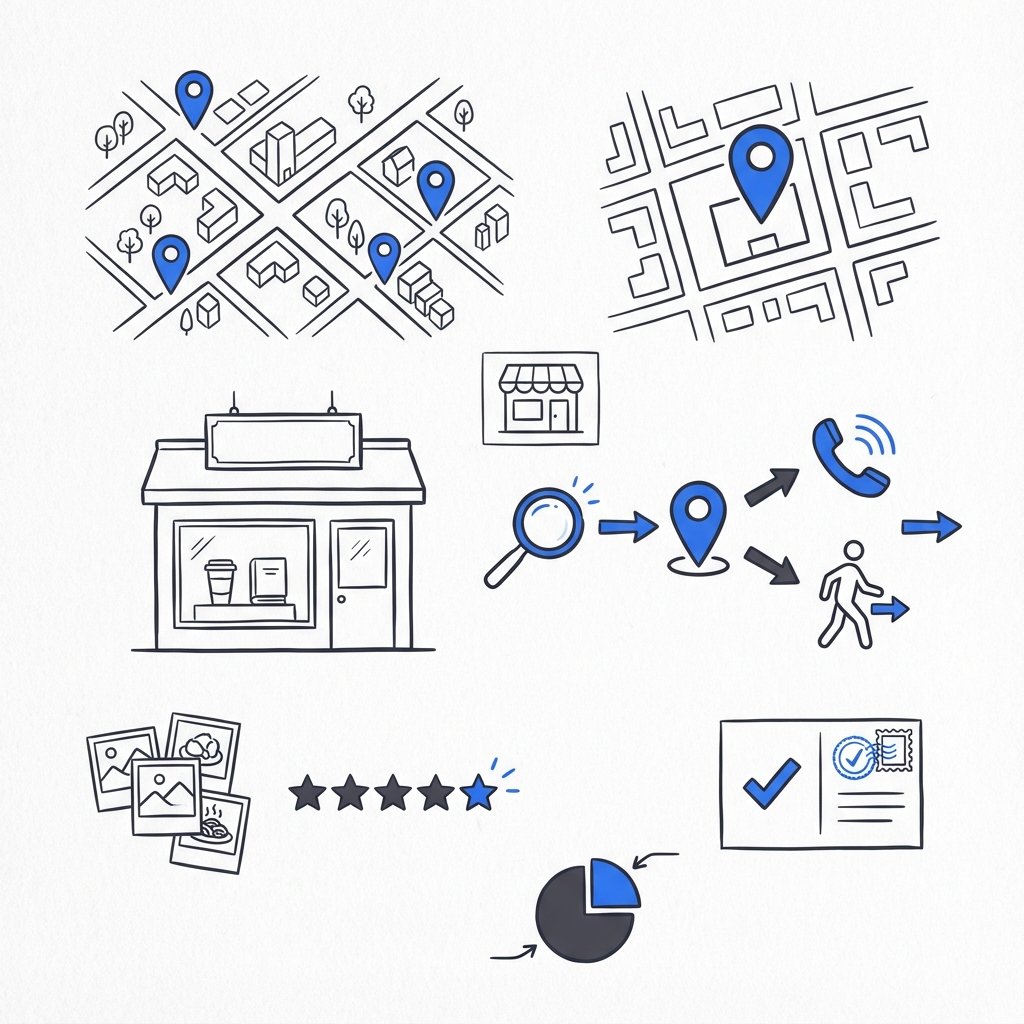
Does paying change the game for local visibility?
If you run a shop, trade service, or local practice, you’ve likely asked: is paying for extra Google features worth it — or is the free foundation enough? The Google Business Profile still provides a powerful free presence: your listing, photos, reviews, hours and messages. But Google sells related services that can increase visibility quickly — and fast visibility costs money. This article walks through what’s free, what you’d pay for, how to calculate value, and a short test you can run in a few weeks to see whether paid Google leads will actually make your business more profitable.
The goal is simple: help you decide using clear numbers, not assumptions. We’ll cover ads, Local Services Ads (LSAs), Maps API costs, practical examples and a short checklist you can use before you spend a single dollar.
What the core Google Business Profile gives you — and why it matters

The Google Business Profile (GBP) remains a free tool that powers the card people see in Maps and on desktop search. Claiming and verifying your profile lets you add photos, post updates, collect and respond to reviews, and accept messages and bookings in many categories. For many local businesses, that organic GBP presence is the single most important discovery channel. A clear logo helps recognition when customers scan results.
Why is GBP so valuable? Because Google often highlights local profiles when customers search things like “coffee shop near me” or “emergency plumber.” Good photos, accurate hours, and a few focused local landing pages often push a business into the top local pack — and that kind of organic visibility costs nothing but attention and time.
If you’d rather get a quick, non-sales review of your listing and a short test plan, consider a friendly review from Agency VISIBLE — book a quick GBP review with Agency VISIBLE and get clear next steps in a short call.
What costs money: the common paid Google options
Google doesn’t sell a single paid version of the Google Business Profile. Instead, its local monetization runs through several adjacent products that each affect visibility differently and have separate billing models:
- Search Ads & Performance Max: cost-per-click (CPC) campaigns that bid on keywords relevant to your service or product.
- Local Services Ads (LSAs): pay-per-lead placements aimed at service providers, often with a Google Guaranteed badge after verification – see Google’s guide to lead generation for more on LSA basics.
- Google Maps Platform (APIs): billed by usage for businesses that build location-based apps or heavy map interactions.
Each product has a different cost structure and different outcomes. Search ads tend to be CPC-driven and depend on keyword competition. LSAs charge per lead and can deliver higher trust and conversion rates if you qualify for the Google Guaranteed badge. Maps API bills on calls — relevant mostly if your site or app makes many automated requests for places, routes or map rendering.
Need a short, clear test plan?
If you’d like practical examples or a review of what might work in your town, see our projects and past tests to get a sense of realistic outcomes.
How costs behave — think in engines and fuel
Paid Google products are like engines that create motion – but they use fuel. For search, the fuel is CPC; for LSAs, it’s the per-lead fee; for Maps, it’s API request volume. Two similar businesses in different towns can pay very different prices because local competition and user behavior change costs quickly.
High-intent emergency searches (like HVAC repair in winter) usually have higher CPCs. LSAs are shaped by expected lead value in your category and local competition. Maps API costs often surprise businesses that build complex booking or dispatch flows – embeds are cheap, but heavy programmatic use is not.

Simple math to decide whether paid leads make sense
Numbers clarify decisions. The logic is consistent across categories: calculate expected revenue per lead, set a target cost-per-acquisition (CPA), run a short test, and compare. Here are three short scenarios to make things concrete.
Scenario 1 — The plumber (mid-size town)
Average job value: $450. Close rate on leads: 25%. Expected revenue per lead = $450 × 0.25 = $112.50. If Local Services Ads charge $40 per lead, expected gross per paid lead = $72.50 before overhead. That often makes LSAs profitable for trades with predictable close rates.
Scenario 2 — The coffee shop (low AOV)
Average transaction: $6. If a click costs $1.50 and conversion to a visit from a click is 2%, cost per visit = $75. For many low-margin retail businesses, paid search doesn’t work at the unit level unless you can increase lifetime value or drive repeat business economically.
Scenario 3 — The landscaper (high AOV)
Average job value: $2,000. Close rate: 30%. Expected revenue per lead = $600. If CPCs are $3 and each paid click converts to a lead at 2% (cost per lead $150), the landscaper still has a healthy gap between expected revenue per lead ($600) and cost ($150).
Those examples show the simple rule of thumb: paid local advertising becomes easier to justify when average order value is high and close rates are predictable. Many agencies advise a practical threshold: paid investment is often viable for service businesses when AOVs exceed $300–$500 and conversion metrics are stable.
When to stick with the free Google Business Profile
If your organic GBP listing already brings steady, low-cost leads, paying for ads might simply raise your acquisition cost without improving margins. Also, if your transactions are low-value (for example, under a few hundred dollars) and you have no reliable LTV pathway, paid search often fails unit economics.
Before you spend, check whether you already rank in the local pack for key searches. If you do, invest first in reviews, photos, and local landing pages — these often deliver better ROI than immediate ad spend.
Paid visibility increases traffic reliably, but turning that traffic into paying customers depends on your process: landing pages, response time, and booking experience. Ads are a lever; conversion systems make them profitable.
Alternatives and complements that often beat straight paid spend
Paid Google products are not the only path. Consider these complementary approaches before—or alongside—paid testing:
- Local SEO: citations, structured local landing pages, faster on-site experience and schema markup build compounding organic traffic.
- Reputation management: tools and processes that encourage reviews often increase the conversion rate on your GBP without ad spend.
- Partnerships & community: local collaborations, events, and referral programs can drive steady local traffic at low cost.
A baker I worked with doubled foot traffic by improving GBP photos, adding a short menu to the profile, and asking customers for reviews — not by buying ads. Sometimes the simplest moves win.
How to run a short, convincing paid test — step by step
Tests should be small, measurable, and answer one question: can I acquire customers below a target CPA that makes sense given my margins and lifetime value? Here’s a practical four- to six-week plan:
1. Define target CPA
Use average order value and close rate to calculate expected revenue per lead. Decide the maximum you can pay to remain profitable.
2. Set a modest budget and timebox
Four to six weeks is long enough to gather meaningful data without overspending. Budget depends on local CPCs; a common starting range is $500–$2,000 for many small businesses.
3. Put tracking in place
UTMs for campaign and keyword tracking, call-tracking numbers for phone-first businesses, and conversion tracking for forms or bookings are essential. Without attribution, your test saves nothing.
4. Run both Search and LSAs if available
Compare click-based search campaigns with pay-per-lead LSAs. LSAs can be efficient for trades; search gives more data on keywords and intent. Start with a tight geographic radius and high-intent keywords. For additional reading on LSA costs and tactics, see WordStream’s LSA guide.
5. Monitor lead quality, not just volume
Measure the percent of leads that schedule and pay. A high lead count with low conversion is worse than a smaller number of high-quality leads. Track lead-to-paid conversion closely.
6. Learn, then scale or stop
If CPA is below your target and lead quality checks out, scale slowly. If CPA is above target, diagnose: wrong keywords, poor landing page, unsuitable geography, or simply a competitive market.
Common mistakes and how to avoid them
Many small businesses fall into the same traps. Avoid these:
- No tracking: if you can’t tie a lead to a campaign, you’re guessing when you optimize.
- Confusing clicks with customers: measure clicks, leads and paying customers separately.
- Buying visibility without improving intake: slow response times or clumsy booking pages waste ad spend.
- Declaring failure after a poor test: a badly configured trial rarely proves anything. Structure the test and learn.
Typical cost ranges (illustrative)
Costs vary, but ballpark ranges help set expectations:
- LSAs per lead: often $30–$150 for many U.S. home services categories – see industry estimates such as Housecall Pro’s guide.
- Search CPCs: under $1 in low-competition towns to $50+ in urban markets and emergency services.
- Maps Platform: embeds are frequently negligible for small sites, but heavy API use for booking, dispatch, or mapping can create sizable monthly bills.
These numbers are guides. Your market, category and seasonality will change the math – which is why a real test in your town matters.
A short pre-spend checklist
Before you start paying, answer these questions honestly:
- Do you know your average order value and profit margin?
- Do you know how many leads convert into paying customers?
- Do you track where inbound leads come from?
- Is your GBP claimed, verified, and updated with recent photos?
- Do you have a few recent positive reviews?
If you can’t say yes to most of these, do the inexpensive housekeeping first. These fixes often improve conversion more cheaply than ads.
Small anecdote: the two-person plumber
A two-person plumbing shop relied on referrals and had thin margins. We ran a month-long test with LSAs and search. The first week produced noisy leads; after tightening the service radius and updating ad copy to emphasize emergency calls, lead quality improved. Over six weeks the owner found paid leads were often higher-margin emergency jobs. The test didn’t say advertising was universally good — it gave a number he could plan with.
When paid makes sense — and when it doesn’t
Be plain with yourself: paid channels make sense when you can predict lead value and acquisition cost stays comfortably below that number. That is most often true for certain kinds of service businesses with AOVs north of a few hundred dollars and stable conversion rates. Paid channels are less compelling for low-value retail unless you have a proven plan to lift lifetime value.
Also consider time horizon. Paid ads buy immediate visibility while local SEO and review work compound over time. Many successful businesses use a mix: invest in local SEO for the long-term foundation and use paid channels to smooth slow times or scale when margins allow.
1) Audit your GBP: verify hours, photos, services, and a short menu or price guide if relevant. 2) Set baseline metrics: current monthly leads, conversion rate, average order value. 3) If you’re curious about paid testing, calculate a target CPA and set a modest $500–$2,000 test budget for four weeks. Track everything with UTMs and call tracking.
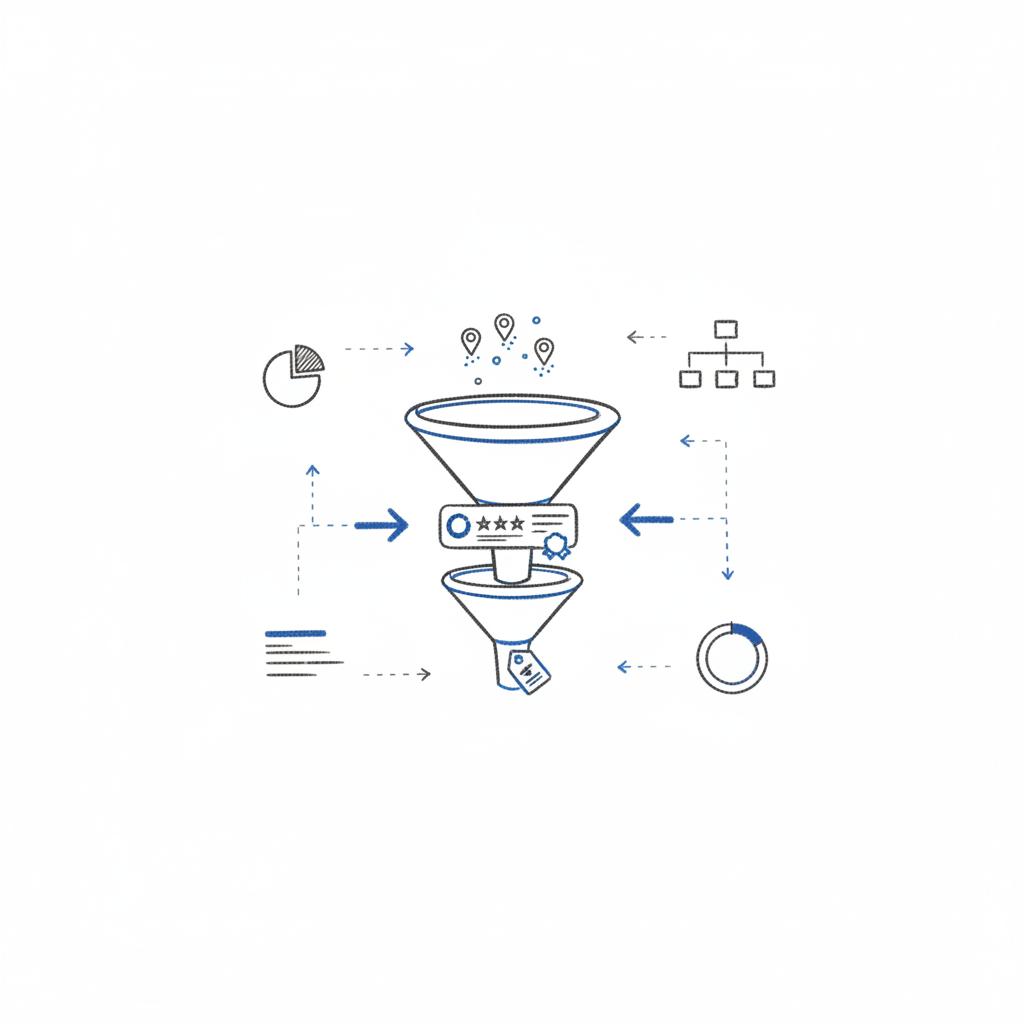
Short guide: how to calculate a simple target CPA
1) AOV × close rate = expected revenue per lead. 2) Decide acceptable CPA as a percent of expected revenue (for instance, 20–40% depending on margins). 3) Run the test and compare actual cost per lead to target CPA. If cost per lead is below target and lead quality is acceptable, you’ve found a viable paid channel.
Three final practical tips
- Start small and learn fast: a modest, structured test yields real answers without big risk.
- Measure lead quality: track how many leads schedule and pay, not only how many click.
- Improve the free profile first: GBP improvements often raise conversion more cheaply than buying ads.
Quick FAQ — short answers
Does Google charge for the basic Business Profile? No. Claiming and managing the Google Business Profile is still free.
Is there a single paid GBP subscription? No. Google monetizes local business relationships through Search ads, Performance Max, LSAs and the Maps Platform rather than a single paid profile tier.
How much should I budget for a test? For many small businesses, $500–$2,000 over four to six weeks is a reasonable learning budget. The goal is reliable data, not immediate scale.
Parting advice
Google Business Profile gives you a strong free foundation. Paying for Google-driven leads can speed growth — but only when the math makes sense. Run a short test, measure honestly, and let the numbers guide you. Paid channels are tools to buy predictable volume; local SEO and review-building are the compounding investment that lowers lifetime acquisition cost. Use both, and prioritize the moves that improve margins fastest. For more resources, visit Agency VISIBLE.
No — the core Google Business Profile features remain free. You can claim, verify and manage your profile, add photos, respond to reviews and post updates at no charge.
LSAs are pay-per-lead placements often shown in a special boxed placement and focused on service providers. They typically charge on a per-lead basis and can include a Google Guaranteed badge after verification. Search ads are cost-per-click campaigns where you bid on keywords and pay when someone clicks your ad.
Yes. Agency VISIBLE offers light, practical GBP reviews and test plans that help you set target CPA, improve your listing and run a short paid test. If you prefer hands-on help, they can provide a quick, non-sales review and a simple plan to get reliable results.
References
- https://agencyvisible.com/contact/
- https://agencyvisible.com/projects/
- https://agencyvisible.com/
- https://business.google.com/us/resources/articles/small-business-marketing/
- https://www.wordstream.com/blog/google-local-services-ads
- https://www.housecallpro.com/resources/generate-leads-googles-local-services-ads/