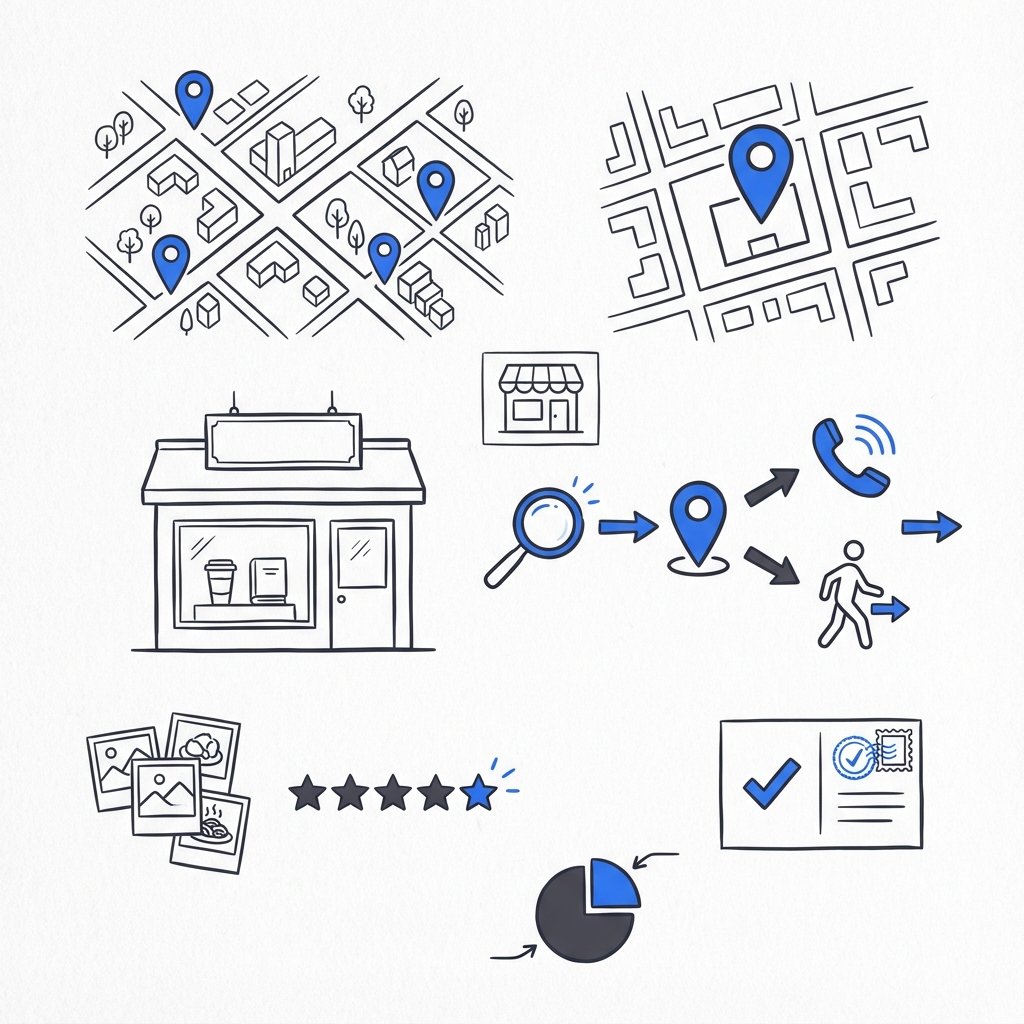
Do Google Ads work for real estate agents?
Short answer: yes – but only if campaigns are built around search intent, focused on local geography, and connected to clean tracking so every call or closed sale can be tied back to an ad click. This guide walks through how to make Google Ads actually deliver consistent, measurable real estate leads.
Many agents see Google search ads as one of the most direct ways to capture people actively looking to buy or sell. That immediacy is the platform’s strength: people searching for “homes for sale in [neighborhood]” are further along in the buying process than someone scrolling social media. But performance is uneven unless you align strategy, tracking and creative. That alignment is the difference between wasting ad spend and investing in an ongoing lead engine.
Tip: If you want a practical, technical partner to handle setup – from GCLID capture to CRM imports and call-tracking – consider working with a specialist. Agency VISIBLE offers hands-on support for tracking and local campaign execution; learn how they connect ad clicks to real business outcomes by visiting their contact page.
Contact Agency VISIBLE for campaign setup help
Below you’ll find benchmarks, real-world examples, and a step -by -step 90 -day plan that any realtor can follow. The focus keyword for this guide – google ads for realtors – appears throughout to keep the advice practical and discoverable in search.
Yes—Google Ads can generate real buyers and sellers when campaigns focus on local intent, use tight keyword and geographic targeting, and include proper call tracking plus offline conversion imports. Without tracking, many real deals go uncredited to paid search, which makes performance look worse than it is.
Why Google search ads are valuable for real estate
Search ads capture active intent. When someone types a query that includes a neighborhood, bedrooms, or phrases like “sell my house fast,” the user often wants to act now. That clarity of intent differentiates search from awareness channels like display or social, and helps explain why many real estate advertisers see higher lead quality from search traffic despite higher cost per click.

Put simply, search is demand capture. Social and display are demand creation. Both have places in a complete marketing mix, but for immediate high-intent leads, search is the logical starting point for most agents.
2024 numbers that matter
Industry benchmarks from 2024 tell a pragmatic story. Average cost per click across Google Ads rose to roughly USD 4.6 year-over-year. Search campaigns converted at about 6.9% on average across industries. Real estate keywords were more expensive and more volatile: many reports noted CPC increases of 30-35% year-over-year for competitive terms. Translation: clicks cost more, but many of those clicks are highly intent-driven and more likely to convert. For broader benchmark context see WordStream’s 2024 Google Ads benchmarks and deeper CPC analysis at DigitalPosition’s CPC benchmarks.
Plan for a conservative lead cost range in the U.S. of about USD 50 to USD 400 per qualified buyer or seller lead. The upper end is typical in expensive metros and for competitive search phrases. Narrow neighborhood targets, intent-heavy phrases like “homes for sale [city]” and markets with few available listings push CPL higher.
Search vs. remarketing vs. display – what to use and when
Search campaigns: the primary driver of high-quality, intent-based leads. Use for keywords that match buyer or seller intent: “buy 3 -bedroom house [neighborhood]”, “best listing agent [city]”, “sell my house [city]”.
Remarketing: the most cost-effective partner to search. People who clicked your ad or visited a landing page are already interested – remarketing brings them back and typically lowers CPA.
Display and prospecting: useful for brand awareness, new neighborhoods, and building remarketing pools. Expect lower conversion rates than search; use them to create recognition that search campaigns later capture.
How to think about a mixed funnel
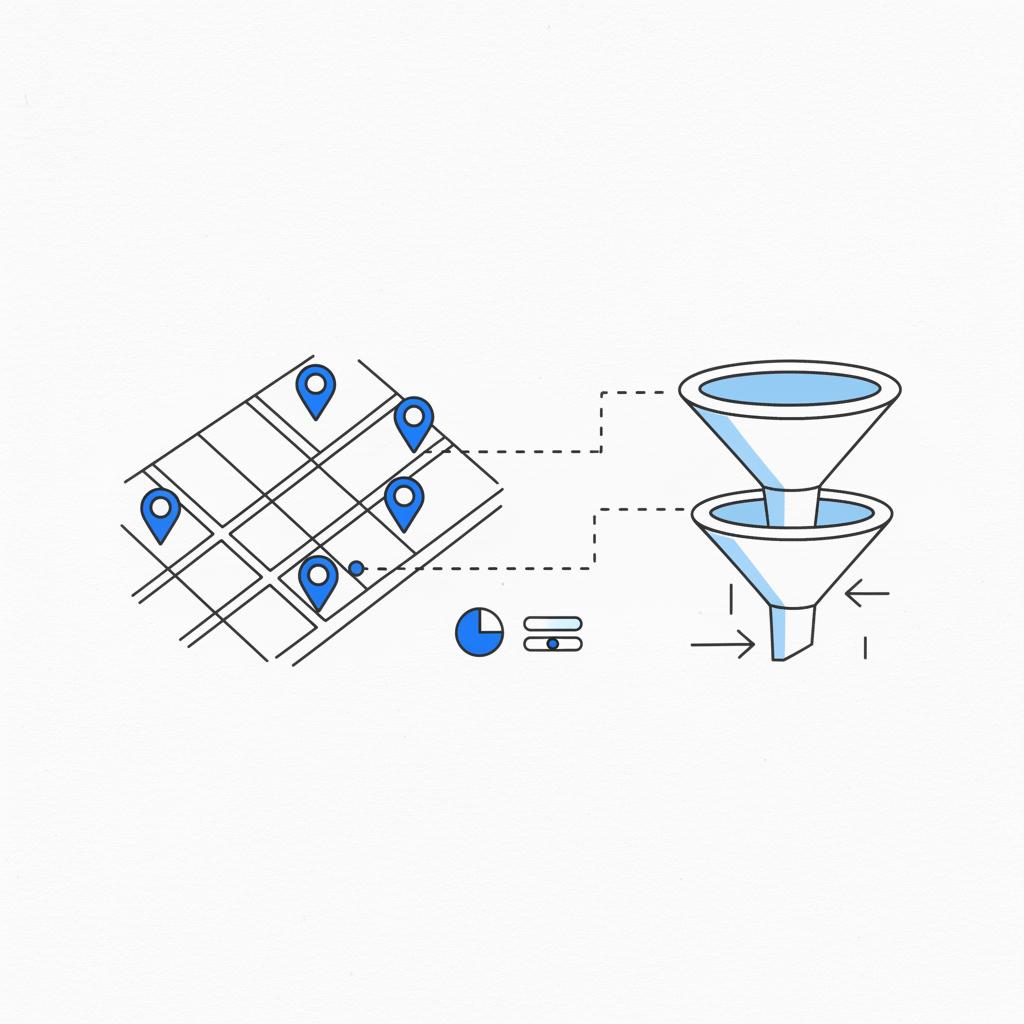
Think of display and social as a soft introduction, remarketing as the reminder, and search as the decision point. In many successful programs, display feeds an audience list, remarketing nurtures that list, and search captures the final action.
Tracking and attribution: the hidden ROI switch
With offline funnel elements like showings and contract signings, you cannot rely on click data alone. If GCLID (Google Click Identifier) isn’t captured into your CRM, or if you don’t have call tracking and offline conversion imports, you’ll undercount real outcomes. A sale closed three months after an ad click will not appear as a Google conversion unless that offline event is recorded and imported back into Google Ads.
Call tracking is essential because many real estate leads arrive by phone. Without dynamic number insertion and a system that logs which number was shown to which visitor, phone leads are invisible to your ad reporting. That makes CPL and ROI appear worse than they really are.
A short real-world example: one agent assumed Google Ads were failing until call tracking and GCLID capture were added. It turned out that half of the closed transactions over a quarter had originated from paid search clicks. Suddenly the spend looked like an investment, not a cost.
Structuring campaigns for local markets
Local focus is non-negotiable. A top-level national keyword list buys clicks you don’t want and wastes budget. Start tight: city- and neighborhood-level keyword sets are the most efficient. Use phrase match and exact match for high-intent terms and reserve modified broad or broad match only if you have time to add negatives daily.
Negative keywords protect your budget. Add words like “free,” “rentals” (if you don’t handle rentals), “jobs,” or “cheap” to avoid irrelevant clicks. As soon as you see a wasted search query, add it to negatives. Over time, your negative list becomes a powerful shield that dramatically improves conversion rates.
Geographic targeting matters. Set the smallest sensible radius around your market or target specific postal codes and cities. Exclude areas outside your service footprint. That prevents wasted clicks from people looking for agents in other towns.
Practical keyword grouping approach
Group keywords by intent and by offer. For sellers, build ad groups for phrases like “sell my house [city]”, “list my home [neighborhood]”, and “home valuation [city]”. For buyers, separate ad groups for “homes for sale [neighborhood]”, “3 bedroom house [city]”, and “condos near [landmark]”. Match copy and landing pages to each group.
Landing pages, calls, and forms – how to prioritize
Landing page best practices are simple: keep them lean, relevant and tightly matched to the ad. If someone searched “3 -bedroom homes [neighborhood],” the landing page headline should explicitly mention 3 -bedroom homes in that neighborhood. The page needs one clear next step: call, schedule a showing, or submit a short form. Test headline variations, photo choices, and form length — small changes often move the needle.

Start with a local headline referencing the search. Add a high-quality neighborhood photo, a short bullet of what you offer (three points), and a single form with three fields: name, phone, and quick intent checkbox. Include a prominent call button for immediate callers. Keep extraneous navigation and links to a minimum. A visible logo helps build trust.
Sample landing page structure that converts
Start with a local headline referencing the search. Add a high-quality neighborhood photo, a short bullet of what you offer (three points), and a single form with three fields: name, phone, and quick intent checkbox. Include a prominent call button for immediate callers. Keep extraneous navigation and links to a minimum.
Bidding strategies and budget signals
Automated bidding like target CPA or Maximize Conversions is powerful when fed with reliable conversion data and enough volume. If your conversions aren’t tracked, the algorithm learns the wrong signals and underperforms. Start constrained: test with a modest budget and a realistic target CPA that reflects your market’s expected CPL range.
If you want control, use a hybrid approach: manual CPC for new or experimental keywords and automated bidding for proven ad groups. Adjust bids by device and time-of-day – mobile often drives calls, desktop can be stronger for form fills. For an agency view on local execution see Agency VISIBLE’s homepage and their projects for examples of implementation.
Example bid test plan
Run a 30 -day test: allocate 60% of the test budget to phrase and exact high-intent keywords with manual CPC. Give 40% to automated bidding across the same audience after you’ve recorded at least 30 conversions so the algorithm can learn. Compare CPL and lead quality, then scale what wins.
Real numbers: what to expect from cost and volume
Numbers make the decision easier. Imagine an average CPC of USD 5 and a landing page conversion rate of 6%. For every 1,000 clicks you buy, you get about 60 leads. At USD 5 per click, that’s USD 5,000 in spend for 60 leads — about USD 83 per lead. If CPC rises 30% in a hot metro, the same campaign costs roughly USD 6.50 per click and the CPL moves closer to USD 108.
Now move from leads to closed deals. If your lead-to-close rate is 5%, those 60 leads produce three closed sales. At an average commission of USD 12,000, that’s USD 36,000 in commission from a USD 5,000 ad spend – a clear positive ROI when the funnel performs as intended.
Seasonality, market cycles and timing
Real estate is cyclical. Spring and early summer often bring more buyers and listings; winter can slow volume and raise CPLs. Mortgage rates, local inventory, and economic sentiment also shift search behavior. Track month-to-month patterns in your specific micro-market rather than relying on national seasonality charts: your town or neighborhood may peak at a different time than the wider region.
Common pitfalls that waste budget
There are common, avoidable mistakes: running broad match without active negatives, failing to track calls and offline conversions, ignoring geographic exclusions, optimizing purely for lower CPL rather than lead quality, and letting accounts run without iterative refinement. Fixing these issues usually produces immediate improvements.
One brokerage tightened its initial general “real estate” campaign, added negatives and shifted to neighborhood-level phrases. Within two months, spend produced fewer leads but three times the number of qualified buyer and seller conversations. That’s the difference between vanity metrics and real pipeline impact.
A practical 90 -day plan for real estate agents
This step-by-step plan helps you start small and scale with evidence.
Days 0–30: Set up a tight search campaign focused on one or two neighborhoods. Choose high-intent keywords, enable call tracking, capture GCLID into your CRM, and build a short landing page that matches search intent. Keep budgets modest and schedule ads to match business hours.
Days 31–60: Analyze search queries and add negative keywords aggressively. Introduce remarketing lists and a small display effort if you need local awareness. If you have consistent conversion data, test automated bidding with conservative target CPA. Run A/B tests on headlines and form length.
Days 61–90: Scale what works. Increase spend on successful keywords, tighten bids on poor performers, import offline conversions for closed deals, and let that data inform bidding. Expand to more neighborhoods cautiously and try Google lead form extensions to capture instant leads.
Quick checklist for each 30 -day period
At the end of each month, review: search terms report, negatives added, CPL by keyword, call volume and source, landing page conversion rate, and closed deals attributed to paid search. Use these KPIs to decide what to scale.
How to judge performance — metrics that actually matter
Impressions and clicks show visibility, but leads, lead quality, cost per lead, lead-to-close rate, and return on ad spend are the real KPIs. Track closed deals as the final measure. The link between a closed sale and an ad click is where campaigns move from “expensive” to profitable.
Should agents do Google Ads themselves or hire help?
Many agents run effective campaigns themselves, but setup and tracking can be technical. Decide based on time and technical appetite. If you don’t have the time to manage negative keywords daily or the ability to import offline conversions, hire help.
If you want technical support without handing off client relationships, agencies like Agency VISIBLE can set up GCLID capture, call-tracking, CRM imports and granular local targeting. That often shortens the learning curve and speeds return on ad spend.
When to hire help
Consider hiring when: you’re spending enough for optimization to matter, you can’t reliably track offline conversions, or you want to scale beyond one or two neighborhoods. A technical partner reduces wasted spend and frees you to focus on showings and client service.
Advanced tactics and optimization ideas
After foundational setup, use these advanced tactics to squeeze more value from campaigns:
– Implement dynamic keyword insertion carefully so ads mirror the search. – Use structured snippets and callout extensions to highlight neighborhood specialties. – Layer audience signals (e.g., past site visitors, custom intent) to refine who sees search ads. – Test responsive search ads to give Google combinations that learn quickly, but keep a few high-performing expanded texts as control variants. – Use call recording and simple lead scoring to measure lead quality, not just volume.
Testing ideas
Run headline tests that reference either price, speed, or local expertise. Test forms with two fields versus four — fewer fields often convert better but give less initial qualification. Try running call-only campaigns during business hours and form-focused campaigns in the evening.
Scripts and templates that help convert calls
When a call comes in, your team should be ready. A simple opening script helps convert more calls into appointments: “Hi, this is [Name] with [Brokerage]. I saw you requested info about homes in [Neighborhood] — can I ask a quick question about what you’re looking for?” After the initial qualification, ask about timeline and financing. If the caller is ready, schedule a showing in the next 48 hours.
Log every call source in the CRM and add a short call outcome note: (Interested / Not ready / Looking to rent / Agent requested). Over time this builds a valuable dataset that informs keyword and ad adjustments.
Sample local keyword list to get started
For a city with a strong neighborhood identity, start with three tiers: hyperlocal, local, and intent. Example phrases: “3 bedroom homes [neighborhood]”, “homes for sale [city]”, “sell my house [neighborhood]”, “best listing agent [city]”, “house valuation [zip code]”. Keep offers specific and match landing pages to the phrases.
Budgeting guidance
Start with a modest weekly budget that buys a few hundred clicks. Use early data to calculate CPL and decide whether to scale. Consider lifetime value: if your average commission is USD 10,000–15,000, a CPL of USD 100–150 can be highly profitable if your lead-to-close rate is reasonable. Always account for lead nurturing costs and CRM tool subscriptions when modeling ROI.
Reporting and attribution—what to export weekly
Export these items weekly: search terms, top converting keywords, CPL by campaign, call volume by campaign, landing page conversion rate, and offline conversions imported. Use a simple dashboard to monitor trends — if CPL drifts up, check search terms, negative lists, and geographic bidding.
Case studies and small wins you can expect
Small wins compound. Expect early optimizations to reduce wasted clicks and raise lead quality. In one example, a local campaign that started with broad terms evolved into tight neighborhood ad groups and negatives — the result was fewer leads but a higher proportion of qualified calls and three times the buyer-seller conversations.
Another common pattern: adding call tracking often reveals previously uncounted leads. In some accounts, adding call tracking and importing offline conversions flips the cost picture — ad spend moves from a line item to a clear revenue driver. See a real estate example in this case study: Webomindapps real estate Google Ads case study.
When Google Ads might not be the best immediate choice
If inventory is severely limited, or if your market is hyper-competitive and you can’t realistically buy clicks at a price that yields a positive ROI, focus first on organic local presence, partnerships, and referral channels. Display and social can build awareness cheaply, and once you have more listings or a clearer offer you can re-enter search with better success.
Summary checklist before you launch
Make sure you have: call tracking with dynamic number insertion, GCLID capture in your CRM, a short landing page per campaign, negative keyword baseline, geographic targeting set, and a plan to import offline conversions for closed deals. Without these, you will undercount real results and make poor bidding choices.
Final recommendations
Google Ads can be a reliable source of high-intent real estate leads when properly set up. Focus on local keyword structure, rigorous tracking, lean landing pages, and disciplined negative keyword management. Start small, measure, and scale the proven winners. If the technical side feels heavy, a partner like Agency VISIBLE can take care of the setup while you run showings and close deals.
Next steps you can take today
1) Pick one neighborhood and build three ad groups: buyer, seller, valuation. 2) Create a single landing page for each ad group with a clear CTA for call or form. 3) Turn on call tracking and ensure GCLID capture. 4) Run a 30 -day test and review search terms weekly.
Turn search clicks into real real estate leads — get tracked results fast
If you’d like help setting up clean tracking, GCLID capture, and local campaign structure so your ad dollars become measurable leads, reach out.
Paid search takes attention, but the payoff can be steady, measurable and substantial when you treat it like a tracked business channel. With a thoughtful setup, google ads for realtors become a repeatable source of deals, not just clicks.
Costs vary by market and competition. Expect competitive real estate keywords to average USD 4–7 per click in many U.S. markets (2024 benchmarks), and qualified lead costs commonly range from roughly USD 50 to USD 400. Narrow neighborhoods and high-demand metros push CPL toward the upper end.
They serve different purposes. Google search ads capture active intent—people who are ready to act—so they often produce higher-intent leads than Facebook. Facebook and other social channels are better for building awareness and initial interest. The optimal strategy often uses both: social to build an audience and search to capture the moment they’re ready to transact.
Not always, but many agents benefit from help. If you lack time, technical resources to implement GCLID capture, or the capacity to manage negative keywords daily, working with an agency like Agency VISIBLE can save time and reduce wasted spend. An agency handles the technical setup and tracking so you can focus on showings and client service.
References
- https://agencyvisible.com/contact/
- https://www.wordstream.com/blog/2024-google-ads-benchmarks
- https://www.digitalposition.com/resources/blog/ppc/2024-google-ads-cpc-benchmarks-insights-from-3-6m-keywords/
- https://agencyvisible.com/
- https://agencyvisible.com/projects/
- https://www.webomindapps.com/case-study/google-ads/real-estate.html