Where do flooring installers make the most money?
Where do flooring installers make the most money? It’s a question worth asking early if you’re choosing a trade, planning a move, or deciding whether to specialize. This guide looks at the national baseline and then breaks down the real differences you’ll see when you compare states, metros, specialties, employment models, and the business choices that change take-home pay.
To be clear: raw hourly rates matter, but they don’t tell the whole story. If you’re searching for practical answers about flooring installer salary by state, read on – we’ll show how to translate numbers into real household income and career moves you can actually use.
Need help turning local market data into higher-paying work?
Need help turning local market data into a plan? If you want a quick audit of local demand, pay ranges, or a roadmap to market yourself to higher-paying clients, reach out to Agency VISIBLE for a short consult to get visible where you work.

The national picture is a useful starting point. Current occupational data and industry reporting usually place median hourly pay for flooring trades in the mid-teens to high-teens per hour. That means many carpet, hardwood, tile, and luxury vinyl tile (LVT) installers see baseline wages between roughly $15 and $18 per hour. But this baseline is only the surface – state, metro, skill, and whether you’re on payroll or self-employed change the story.
Why geography matters – and how to read it
Geography shapes pay more than most people expect. In high-cost states and big metros, nominal wages for flooring installers can be 20% to 50% higher than the national median. Places that historically show higher nominal wages include Alaska, Massachusetts, New York, California and Washington. In those markets, experienced installers or union-scale positions may command wage premiums. (See recent market numbers on ZipRecruiter for typical ranges: ZipRecruiter: Flooring Installer Salary.)
But there’s a twist: higher nominal pay doesn’t always equal more purchasing power. When you account for cost-of-living – things like rent, utilities, and local taxes – some midwestern or southern metros with lower nominal rates can offer stronger real wages. In plain terms: a dollar in a quieter city can buy more than that same dollar in a large coastal metro. That’s why comparing raw hourly rates without adjusting for local costs can mislead you.

Specialties that pay better
Not all flooring is equal. Some specialties consistently bring higher pay:
– Tile & stone setting: Especially when working with large-format tile, natural stone, or waterproofing systems.
– Hardwood finishing and custom hardwood installations: Complex inlays, refinishing, and high-end species add value. Salary resources such as Salary.com: Hardwood Flooring Installer Salary can show how specialty work bumps typical pay in certain regions.
– Radiant and heated flooring systems: These require electrical/thermal knowledge and often higher liability coverage.
– Commercial systems and institutional projects: Larger contracts, tighter timelines and higher bonding/insurance requirements usually increase the budget and margins.
Installers with manufacturer certifications for specific adhesives, waterproofing membranes or engineered systems often command premium rates. Specialized skills are easier to price and easier to sell than general labor – and they reduce rework, which saves money and reputation.
Thinking of switching specialties or marketing higher-end services? Consider a short consult with Agency VISIBLE to map a simple, local marketing plan that connects your new skills to the right customers without wasting time on low-return leads.
Employment model matters as well. Employees usually have steadier hours, setbacks covered by an employer, and sometimes benefits like health insurance or retirement contributions. Self-employed contractors can bill higher hourly rates, but they also cover tools, insurance, vehicle costs and gaps between jobs. Both paths can lead to strong incomes – they just require different skills and tolerance for risk.
Specializing in luxury systems or moving to a big city increases potential earnings, but neither guarantees higher net income. Luxury specialties command premium rates and reduce price competition, and big cities often pay higher nominal wages. However, higher living costs, increased overhead and market competition can nullify nominal gains. The best path combines specialization, accurate estimating, and local market research to ensure that higher grosses turn into better take-home pay.
How much do you need to bill to reach a household income goal? As a rule of thumb, to net about $75,000 a year you typically need to bill around $36 to $40 per hour assuming 40 hours a week for 50 working weeks. That number is gross billing before taxes and overhead. If you want a $100k+ gross income, you’ll usually need a combination of higher hourly rates, specialty work, or efficient scheduling and quoting.
Real money: sample scenarios that fit real installers
Examples help make these numbers tangible. Here are three realistic scenarios you’ll recognize:
1) The steady employee (Jorge): Jorge works for a small firm in a midwestern city and earns $22 an hour. He has steady weekday hours and the company pays a portion of his health insurance. Jorge values predictability. His take-home is steady, and he doesn’t worry about a work van or tool replacement.
2) The higher-billing contractor (Mia): Mia is self-employed in a coastal metro and bills $45 an hour for high-end residential installs and bespoke hardwood inlays. She has weeks of 60 hours and weeks with less work. She covers all insurance, vehicle costs and marketing. Gross revenue is higher than Jorge’s, but net income depends on how well she controls overhead.
3) The specialist who breaks six figures: A specialist who charges $55 per hour for select luxury projects, or who contracts large commercial jobs with good margins, can push gross revenue above $100,000. Net income depends on expenses, but specialists with tight quoting and reliable suppliers often get there.
Costs that reduce take-home pay
If you’re self-employed, expect these recurring costs to factor into your pricing:
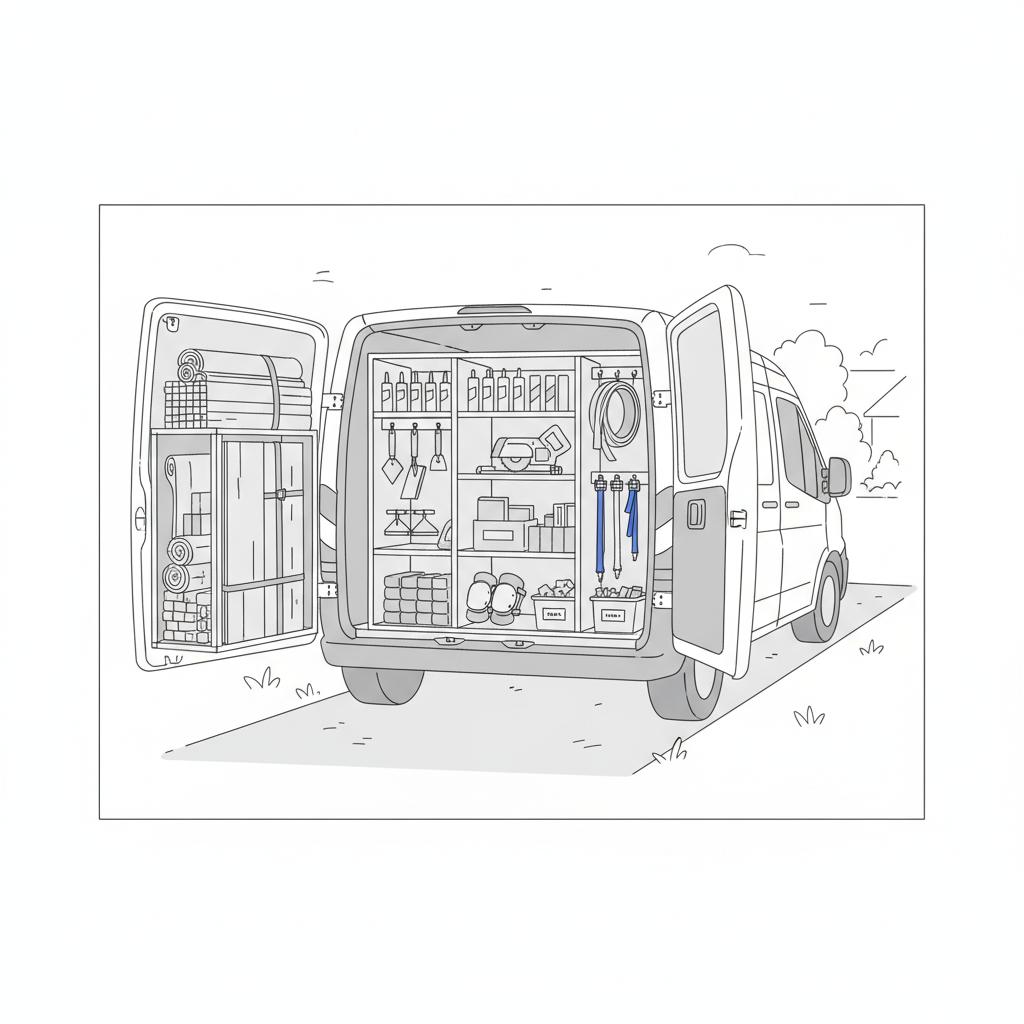
– Vehicle purchase and maintenance: A work van, insurance and fuel can be $6,000-$12,000+ annually depending on usage.
– Insurance: General liability, commercial auto, and potentially workers’ comp for employees.
– Tools and equipment: Saws, specialty blades, precision leveling tools, moisture meters and lifting equipment need replacement and upgrades.
– Licensing, bonding and permits: Common for larger commercial work.
– Business administration: Accounting, bookkeeping, marketing and proposal time.
These line items add up. For example, if you bill $35 an hour but your annual overhead is $20,000, your net hourly equivalent drops substantially. That’s why accurate job estimating and disciplined cash reserves make a huge difference.
How to choose between employee and contractor
There’s no single right answer – your decision depends on personal priorities. Consider these trade-offs:
– Stability vs. upside: Employees get steadier pay and often benefits. Contractors can earn more but must handle admin, taxes and downtime.
– Business risk: Contractors carry liability and uptime risk. Employees usually face lower day-to-day financial risk.
– Growth path: Contractors who master bidding and scheduling can scale to hiring others and winning larger jobs. Employees may have clearer apprenticeship paths and may access union jobs with excellent benefits.
Where in the U.S. pays best for installers?
Historically, the highest nominal wages show up in:
– Coastal tech and finance metros (San Francisco Bay Area, New York City) – high asking pay, but high living costs.
– Certain high-cost states (Alaska, Massachusetts, Washington, California) – wages reflect local price levels and union presence in some sectors.
– Growing Sun Belt metros (some parts of Texas and Florida) – these can show strong demand at varied pay levels depending on local supply.
But remember: a top hourly rate in an expensive city may not buy you the same lifestyle as a modest rate in a lower-cost metro. Use cost-of-living tools to compare real wages across locations before moving. For general national comparisons of posted job rates and reported averages, see sites like Indeed: Flooring installer salaries.
How local supply and demand shapes opportunities
Where skilled installers are scarce, advertised rates can spike. Job-board posted rates sometimes exceed paid survey wages in tight markets, particularly when contractors need experienced hands immediately. Conversely, when many entry-level workers are available, rates often compress toward the low end. If you’re open to moving, scout metros with a strong project pipeline but a weak supply of specialized installers – these places can be goldmines for higher pay.
Certifications, training and credibility
Certifications matter. Apprenticeships speed learning and reduce errors. Manufacturer endorsements and certifications for waterproofing, heated floors, or proprietary systems unlock access to higher-paying materials and projects. For contractors, documented warranties, portfolios and references translate into higher bid success rates and justify higher hourly rates.
Practical levers to increase income
Want concrete moves that improve pay?
– Specialize: Learn tile leveling systems, radiant heat, or advanced hardwood finishing.
– Target higher-value clients: Luxury residential and commercial users pay higher margins.
– Improve estimating: Break bids into labor, materials and overhead so you see where margins disappear.
– Document quality: Photos, before/after and warranties increase client confidence and referrals. Consider showcasing your work in a project gallery – see our projects for an example of a portfolio structure that helps customers decide.
– Build supplier relationships: Suppliers sometimes offer credit terms, training or volume discounts that improve margins.
How to bid smart – step-by-step
Accurate bids separate winners from losers. A simple framework:
1) Site assessment: Document site conditions, moisture readings and tricky access issues.
2) Material takeoff: Measure accurately and add waste percentage for cuts and pattern matching.
3) Labor estimate: Break the job into tasks and assign realistic hours – don’t underbudget for prep work.
4) Overhead allocation: Add a percentage to cover vehicle, insurance and admin costs.
5) Profit margin: Set a target margin and stick to it – be mindful of low-bid traps.
6) Written contract: Include schedule, payment terms, change-order process, warranty and site prep responsibilities.
Marketing and finding higher-paying jobs
Where do the best jobs come from? Repeat customers, supplier referrals and quality online presence. Simple, high-return marketing steps:
– Local SEO: Be findable in maps and local searches for terms like “tile installer near me” or “hardwood refinishing”.
– Portfolio online: Post strong photos of finished work and short case notes.
– Reviews: Encourage satisfied clients to leave reviews – social proof matters.
– Supplier networking: Meet local flooring suppliers, attend product training and stay on their radar.
Good marketing doesn’t have to be expensive – it needs to be consistent and focused on the clients who pay better.
Union options and their value
Union-affiliated installers often have higher nominal wages and better benefits. They also access large institutional and commercial contracts. However, union opportunities concentrate in specific regions and sectors and may require apprenticeship commitments and dues. If a union hall is active in your area, weigh the stability and benefits against the flexibility and potential higher billing of independent contracting.
Safety, warranties and reducing rework
Rework is expensive. Invest in training and tools that minimize mistakes:
– Follow manufacturer instructions: Adhesives and underlayment systems vary; use the right products and documentation.
– Use moisture meters and surface prep tools: These reduce failures and callbacks.
– Offer simple, clear warranties: A short, documented warranty reassures customers and differentiates your bid.
Relocation analysis – should you move for higher pay?
Moving for a higher nominal wage can make sense, but only after you compare living costs and demand. Ask local suppliers and contractors about backlog, typical job values, and the competitive landscape. Visit for a few weeks if possible, network, and test-run bidding on hypothetical jobs to see if rates align with your goals.
Tools and startup costs – rough numbers
Starting as an installer requires an investment in tools and setup. Here’s a conservative estimate for a functioning kit:
– Basic power tools (saws, drills) and blades: $1,000-$3,000
– Specialty tools (levellers, trowels, moisture meters): $1,000-$4,000
– Work van or truck: $8,000-$30,000 used, much higher new
– Insurance and licensing (first-year): $2,000-$8,000+
– Misc supplies and safety gear: $500-$2,000
These are estimates – some newcomers start lean and reinvest profits into tools, while others secure a loan or lease vehicle to accelerate growth.
Negotiation tips for installers
Negotiation is part craft and part people-skills. A few practical tips:
– Lead with value: Explain why a quality install costs more – fewer callbacks, longer lifespan, warranty.
– Offer tiered options: Provide a few package levels so customers can choose a scope that matches budget and expectations.
– Be transparent about extras: List what’s not included and how change orders are handled.
Stories from the field: lessons that matter
Real installers tell the same lessons: show up, document, and price accurately. A common arc: start as an employee, learn speed and quality, then move to contracting with an established base of repeat customers. Those who scale often hire an apprentice or two, delegate repeatable work, and keep the sales and estimating tasks in-house or outsourced to a reliable bookkeeper.
Common myths – busted
Myth: You must live in a big coastal metro to earn good money.
Fact: After cost-of-living adjustments, many mid-sized and lower-cost metros offer competitive real wages.
Myth: Self-employment is an instant path to wealth.
Fact: Self-employment increases gross potential but requires business skills and a cash buffer.
Local research checklist before you move or specialize
Before you make a major change, run this checklist:
– Talk to two local suppliers and one union hall or trade group.
– Scan current job postings for your specialty in the metro.
– Calculate a sample job using local material prices and a realistic labor rate.
– Contact a local accountant or bookkeeper to estimate tax and insurance costs for self-employment.
Quick math refresher: turning hourly rates into household income
Simple formulas help plan. If you bill $30 per hour for 40 hours a week and work 50 weeks a year, gross revenue is $60,000. Subtract overhead and taxes; net might land between $38,000 and $48,000 depending on how lean operations are. Aiming for $75,000 net usually requires billing north of $36-$40 per hour or securing higher-margin commercial work.
How to increase demand for your services locally
Small actions compound. Keep detailed before/after photos in a simple online gallery, ask satisfied customers for short reviews, and follow up with previous clients during seasonally relevant windows (like pre-winter checks for heated floors). Small, steady outreach yields better leads than sporadic expensive ads.
Final practical checklist – steps to higher income this year
1) Pick one profitable specialty to master.
2) Create three repeatable bid templates.
3) Build a 30-day marketing plan focused on supplier referrals and local SEO.
4) Keep a tool and vehicle replacement reserve (suggest 10-15% of gross revenue).
5) Track time precisely for better estimating.
These five steps create a visible plan that produces results over months, not years.
Thanks for reading. Use the checklist, talk to local suppliers, and test your bids against actual job costs—small changes in estimating and marketing add up to large differences in take-home pay.
Next steps: If you want direct help turning local market data into a clear plan, see the call-to-action near the top of this guide.
Most new installers find entry-level work within a few months through local contractors, apprenticeships, or trade schools. Expect baseline wages in the mid-teens per hour initially. Moving into higher pay brackets usually takes one to several years of focused practice, manufacturer endorsements, or specialization in tile, hardwood finishing, or radiant systems.
Yes. Certifications and manufacturer-sponsored training show competence and reduce risk for clients and contractors. They are especially valuable for waterproofing systems, radiant heat installations, and proprietary adhesive or underlayment systems. Installers who earn these endorsements can often bid higher rates and access work that generalists cannot.
Yes — Agency VISIBLE specializes in local visibility and marketing for trades. A short consult can identify high-return ways to reach higher-paying clients, from local SEO to supplier partnerships and simple portfolio strategies. Reach out through their contact page to explore a tailored plan.