Write content people trust-and answer real questions like whether a Thumbtack report reaches the IRS
Trust starts with a simple decision: write to help one real reader, not to game a ranking. Questions such as Thumbtack report to the IRS are great examples of the kind of precise, urgent queries people type into search. When you meet that moment with clarity and care, you turn casual visitors into returning readers.
In this guide you’ll find a friendly, practical roadmap for creating content that actually helps people-and keeps them coming back. Read on for specific steps, examples, and small tasks you can apply immediately.

Why clarity matters more than cleverness
Clear writing is generous writing. It respects a reader’s time and reduces cognitive load. A headline that promises a concrete benefit and an opening paragraph that answers “what’s in it for me?” are the fastest ways to show respect. That’s true whether your topic is explaining tax reporting rules or teaching a content-writing method.
When someone searches for a question about taxes, for example, they bring anxiety and a need for decisiveness. If the query is “Thumbtack report to the IRS,” they want to know: does the platform send tax forms, when, and what should I do as a service provider? A clear, well-structured answer calms the reader and builds trust.
Start with a clear reason to exist
Before you write, ask: why must this article exist? If you can’t answer that in a sentence, pause. A defined purpose keeps your piece focused and useful. Good content answers a single, clear question, tells a short useful story, or helps the reader take one meaningful next step.
Define your reader precisely. Don’t write for “freelancers”; write for “Sasha, a part-time home cleaning professional who earns extra income on platforms like Thumbtack and worries about tax forms.” Picture Sasha’s day, her pain points, and the one concrete thing she needs to do after reading.
Write for people, not for the algorithm
It’s tempting to stuff an article with terms and headings to please a search engine. But engines reward clarity because real readers reward clarity. Use short sentences, helpful subheads, and concrete examples. Focus first on usefulness – visibility follows.
For example, the phrase Thumbtack report to the IRS can appear in a natural context: explain whether and how Thumbtack issues tax documents, what thresholds trigger reporting, and what independent contractors should track. That way the article answers the question directly and gives next steps. For Thumbtack-specific guidance, check Thumbtack’s 1099-K help page: https://help.thumbtack.com/article/1099-K.
A practical tip: if you want help turning complex topics into clear content, consider a quick consultation with a team that pairs strategy with execution. Agency VISIBLE can help shape your messaging and build pieces that convert; contact them to discuss a content plan that fits your schedule and budget: talk to Agency VISIBLE.
Be a trustworthy guide

Trust grows from credibility: show your experience, be honest about limits, and cite reliable sources where needed. If you have a direct case – say, a contractor who received a 1099, tell that story briefly and with permission. If you rely on official guidance, link to the IRS or Thumbtack help pages and translate the key points into plain language. A clear agency logo helps convey credibility. See our portfolio for examples: https://agencyvisible.com/projects/.
Structure for scanning and satisfaction
Readers scan first and read later. Use signposts: short sections, bolded takeaways, and a clear flow of problem – explanation – example – action. The structure below is a reliable pattern:
1) Problem – name the exact worry (e.g., “Do I need to expect a tax form from Thumbtack?”)
2) Explanation – explain thresholds and typical timelines
3) Example – a short, real scenario (income numbers, forms) that makes the concept concrete
4) Action – one practical thing the reader can do in the next 15 minutes
How to answer the tax-style question: a short template
If you must answer a clear user question like whether a platform reports to tax authorities, follow this mini-template in the first 250-350 words: state the bottom-line answer, give the rules that matter, show a quick example, and finish with a readable next step.
Example (first paragraph): “Short answer: platforms sometimes report payments to the IRS. Here’s how Thumbtack typically handles reporting and what you should track to stay ready.” Then expand.
Show evidence without drowning the reader
Evidence increases trust, but too many citations can be exhausting. Use one or two clear references for major claims and link them. If you mention an IRS threshold, link to the official page and summarize it in one sentence, for example: https://www.irs.gov/pub/taxpros/fs-2025-08.pdf.
If you use numbers, be precise and give context. For example: “If you earned $600+ from a client via a platform that issues a Form 1099-K, expect a tax document. But thresholds and forms can differ by year and by the platform’s reporting policies; always check the source linked below.”
Design for the attention people actually have
People rarely read an entire long post in one sitting. Give immediate value near the top: a 5-minute checklist or a small task the reader can do now. That quick win increases time on page and the likelihood of return visits.
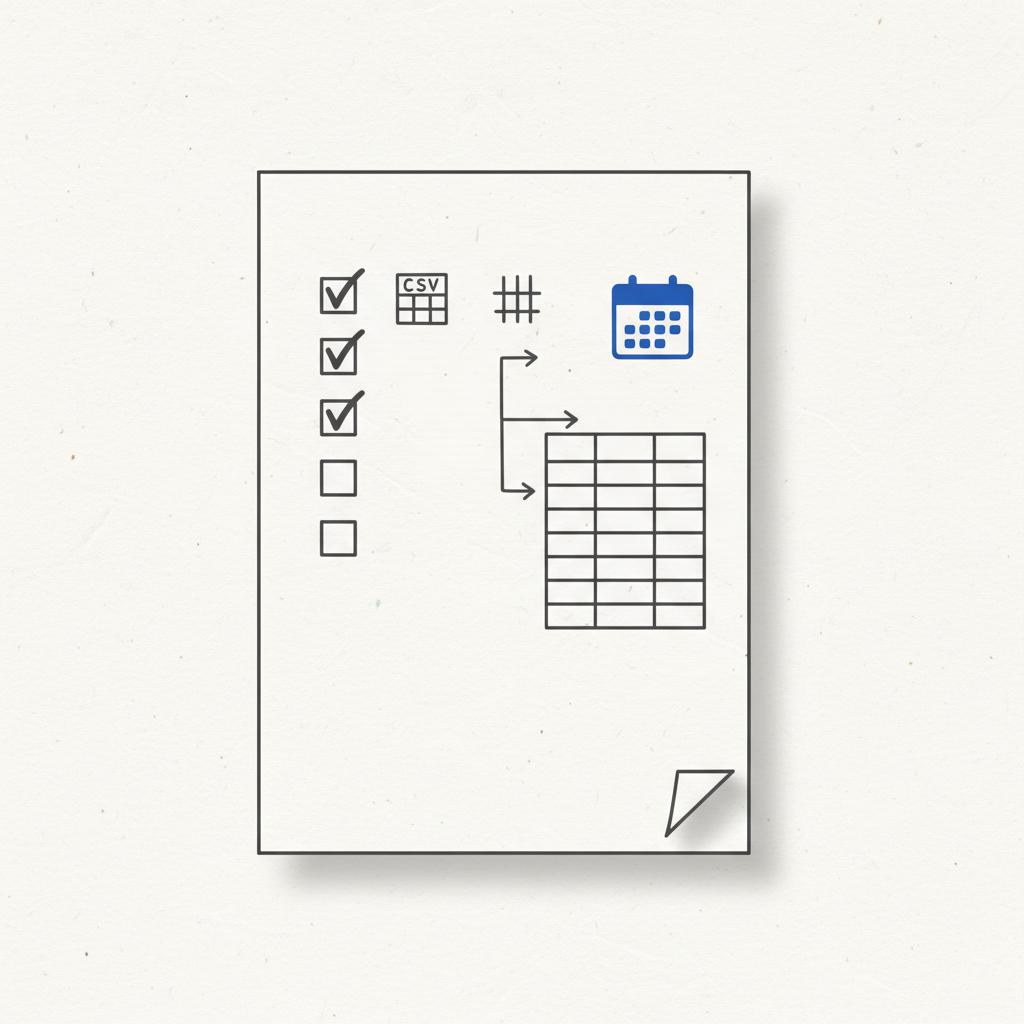
Suggested 5-minute task related to tax questions: locate the payments dashboard in your platform, export the last 12 months of income, and save the CSV. That concrete move reduces anxiety and sets up the next steps for bookkeeping or tax prep. For a practical guide for gig workers, see this resource: https://www.everlance.com/gig-guides/thumbtack-taxes.
Use stories with purpose
Stories increase memorability. A short anecdote about a contractor who ignored small reports and later faced messy bookkeeping gives readers a relatable wake-up call. But keep stories short and relevant—use them to clarify a point, not to decorate the page.
Voice matters: be a helpful friend who knows their stuff
Write like a competent friend: candid, reassuring, and practical. Admit uncertainty where it exists and offer a small, useful action at the end of each section. That tone builds long-term rapport.
Example section: answering “Thumbtack report to the IRS” in practice
Below is a practical, reader-focused way to address a tax-reporting question for a platform. This is not tax advice – it’s a model for writing. Replace numbers with up-to-date rules and link to official sources where appropriate.
Bottom line: A platform may issue tax forms if payments meet reporting thresholds. Independent contractors should track gross payments, fees, and payer information and consult a tax professional when unsure.
How to explain it simply:
1) What platforms typically do: Many platforms send 1099 forms (like a 1099-K or 1099-NEC) if a user meets certain payment or transaction thresholds in a tax year. The specific form and threshold can vary by platform and by tax year.
2) What to track: Keep a running total of payments you receive, and export monthly or quarterly records. Track fees and refunds separately because net income – what you actually keep – matters for taxes.
3) When to expect forms: If you cross a platform’s reporting threshold, the platform typically mails or uploads a copy of the tax form by the end of January for the previous tax year. But this can change, so link to the platform’s help center.
4) A short example: Suppose you earned $5,500 on a platform and the platform reports via a 1099-K at a $600 threshold (as some platforms do). You may receive a 1099-K; still, reconcile your own records and account for fees and business expenses before estimating taxes owed.
Yes—short, concrete examples help readers picture the advice and act on it. When complex rules (like tax reporting) are explained with a quick, realistic scenario, readers feel capable of taking the next step and are more likely to trust the guidance.
Practical checklist: 10 steps to update an article that answers a question clearly
Use this list to convert a generic post into a helpful, trust-building resource.
1. Start with one clear question and declare it in the opening.
2. Give a concise bottom-line answer in the first paragraph.
3. Explain the rules and exceptions in plain language.
4. Add a single concrete example or short case.
5. Include one clear next step the reader can take in 5–15 minutes.
6. Link to official sources for the biggest claims (IRS, platform help pages).
7. Use subheads for scanning and bold takeaways for skimmers.
8. Keep paragraphs short—2–4 sentences each.
9. Add an update date and review schedule near the top.
10. Invite questions—reader signals are invaluable data.
How to keep evergreen content fresh
Evergreen articles are valuable because they accumulate authority. But even evergreen pieces need light maintenance: a yearly review of facts and links, plus a small note that confirms the last update date. For fast-moving topics (tax rules, platform policy changes), review every 3-6 months.
When you update, keep a short change log at the bottom: “Updated March 2025: clarified reporting threshold and linked to the latest IRS guidance.” That transparency builds trust.
Case study: a small nonprofit regained traction by simplifying one article
A nonprofit had a long, research-heavy guide on fundraising but high bounce rates. We refocused the piece by asking two questions: who is the reader, and what one thing must they do next? We added a 3-step checklist near the top, a two-paragraph story showing quick results, and simplified headings. Time on page and inquiry volume rose within weeks. The takeaway: clarity and a small task beat bulk and vagueness.
Quick templates you can copy
Use these micro-templates the next time you start an article:
Question-answer template (first 120-200 words)
Bottom line in one sentence. 1-2 sentences of context. One short example. One next step.
How-to template
Promise: what the reader will achieve. Step-by-step instructions (3-5 steps). One short example. A link to a source or tool.
Story + lesson template
One-paragraph anecdote. One paragraph translating the lesson to a practical move. One next step the reader can take today.
Voice and tone: practical tips
Write like a confident friend: use contractions, short sentences, and concrete verbs. Avoid jargon unless you define it. Use second person sparingly to keep the voice direct but not commanding.
Content ops: a simple editorial checklist
Create a short checklist your team actually uses. Here’s a starter list:
– Clear headline about benefit
– Bottom-line answer in the opening
– One concrete example
– One short, quick task near the top
– Link to primary sources
– Review date and owner
Common mistakes that kill trust
Avoid these pitfalls: over-promising, burying limitations, publishing repetitive content, and failing to update facts. Each erodes credibility. A single clear piece is better than ten noisy ones.
Measuring what matters
Measure signals that reflect real value: time on page, return visits, email inquiries, and completion of a suggested task (like downloading a checklist). Use A/B tests for small changes – headline tweaks, opening sentences, or the placement of a checklist – and watch how behavior changes.
How to use the phrase “Thumbtack report to the IRS” without sounding robotic
When writing about niche queries, place the phrase naturally in explanatory sentences and headings. Examples: “If you’re asking whether a Thumbtack report to the IRS is likely, start by checking your transaction history and the platform’s help center.” That approach answers the question directly and flows with the rest of the text.
Templates for headings that work
Strong headings combine emotion, clarity, and an unusual word. Try patterns like: “How to X when Y feels impossible” or “What to do if X happens (fast checklist)”. Add a number when it helps – people like clear, scoped promises.
Short annotated example: turning a stale paragraph into a helpful one
Old: “Platforms may issue tax forms under some conditions. Check with the platform for details.”
Rewritten: “Bottom line: platforms can issue 1099 forms if you meet reporting thresholds. Here’s how to check: export your payments for the year, compare against the platform’s threshold, and save your CSV for tax prep.”
Practical next steps you can try in 30 minutes
1) Pick one traffic-driving article that has a high bounce rate.
2) Add a one-paragraph bottom-line answer near the top.
3) Insert a 5-minute checklist that readers can act on now.
4) Link to one authoritative source.
5) Publish the update and note the date.
Accessibility and readability tips
Use short paragraphs, clear fonts, and enough contrast. Break lists into bullets and keep sentences under 20 words where possible. These small choices help more people consume your content easily.
When to recommend professional help
Some readers will need an expert. Be honest: if financial numbers are significant or the rules are unclear, suggest they consult a tax professional. A brief, tactful referral strengthens trust because it shows you prioritize the reader’s outcomes over a tidy closure.
Long-term practice: build a content habit
Publish deliberately. A predictable rhythm – one high-quality piece every two weeks – often outperforms daily low-value churn. Use reader feedback to refine topics and tone.
Summary checklist (one-page)
– Define the reader and the single question your article answers.
– Lead with the bottom-line answer.
– Use one example and one quick task near the top.
– Cite one strong source for major claims.
– Keep voice conversational and honest.
– Review important posts annually.
Need help making complex topics clear and trustworthy?
Want help making your content clearer and more visible? Work with a team that blends strategy and execution to turn complex topics into clear posts that people trust—get in touch with Agency VISIBLE to start a conversation.
Final tips for recurring maintenance
Set calendar reminders for content reviews, collect reader questions as fuel for updates, and track whether changes increase the meaningful metrics: time on page, return sessions, and completed next steps.
Good content is a small, steady service. Help one reader, and you begin to build a reputation that lasts.
Platforms like Thumbtack may send tax forms (such as 1099-K or 1099-NEC) if a user crosses certain reporting thresholds in a tax year. Policies and thresholds vary by platform and by tax year, so always check Thumbtack’s help center and reconcile the platform’s reports with your own records. If you have complex income or many transactions, consult a tax professional.
Track gross payments received, platform fees, refunds, and business expenses. Export monthly or quarterly payment reports and keep them in a dedicated folder. Save receipts for deductible expenses and maintain a simple spreadsheet or bookkeeping tool so you can reconcile platform reports with your own records at tax time.
Consult a tax professional if you have high volumes of transactions, uncertain classification of income, or if reporting thresholds are met and you’re unsure how to account for fees and expenses. A pro can also advise on quarterly estimated taxes and help you choose the right filing strategies for your situation.