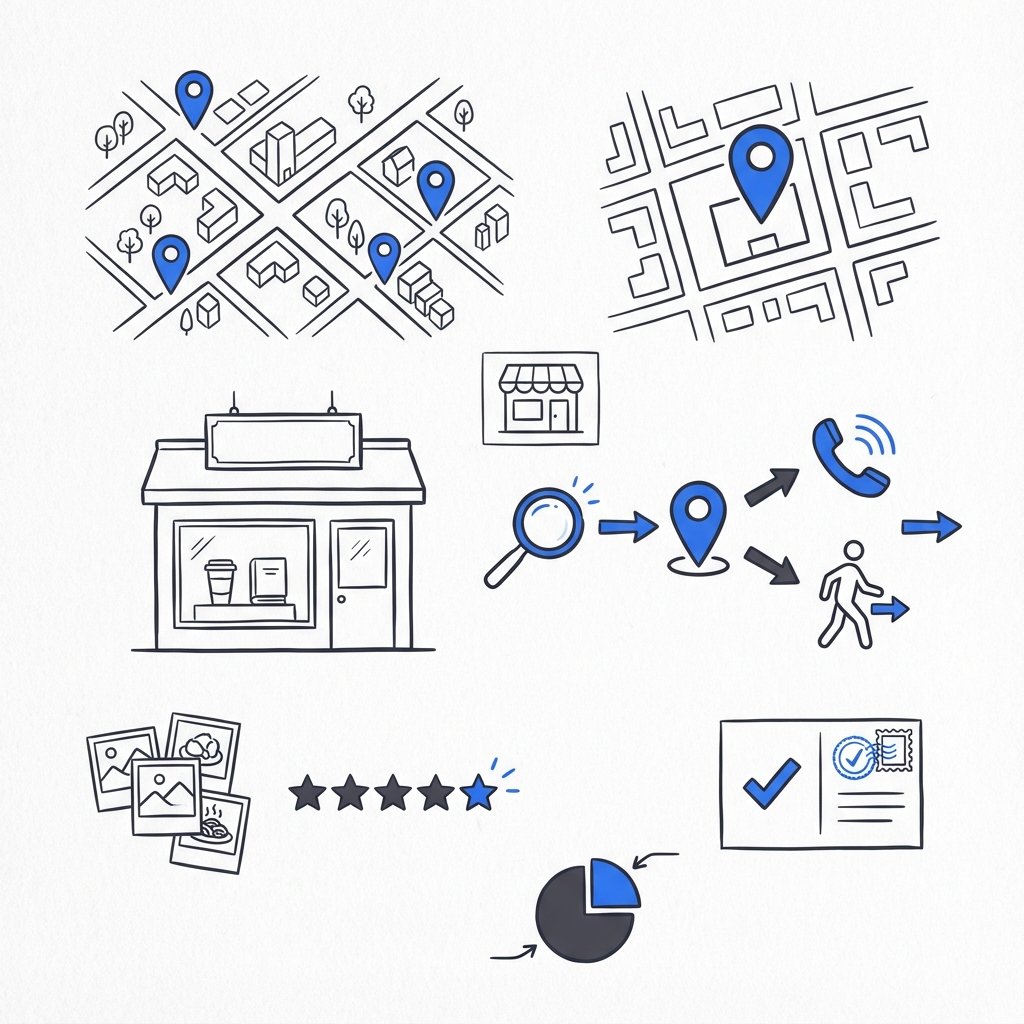
Google Business Profile optimization is one of the most direct ways a local business can influence how often it appears in Maps and the Local Pack – and how many people click, call or walk through the door.
Why a Google Business Profile matters for local customers
Think of your profile as the online shop window that appears when someone searches “near me” or a city + service. A complete, accurate profile helps Google match your business to a searcher’s intent, and it gives potential customers the tiny pieces of information they need to decide fast: hours, directions, reviews, photos and whether you offer the service they want.
When Google ranks local results it looks at three broad signals: relevance, distance and prominence. Your profile supplies clues for each. Relevance comes from categories, services and descriptions. Distance is Google’s estimate of how close you are to the searcher. Prominence is built from reviews, citations, backlinks and behavioral signals like clicks and direction requests (see this analysis by Search Engine Land).

That means a profile is not just a passive listing – it’s active data that helps Google decide whether you should appear for particular local queries. And because local queries are often high intent, improving the profile can turn searches into real customer actions.
Google Business Profile optimization: what actually matters
There’s no single hack that unlocks local visibility. Instead, a handful of repeatable signals consistently show up across case studies and industry audits.
1) Accurate categories and services
Choose the most specific primary category that fits your business and add relevant secondary categories and a detailed services list. If you’re a bakery that also does catering, make sure both appear in the profile – otherwise Google may miss those specific queries.
2) Consistent NAP (Name, Address, Phone)
Keep your published name, address and primary phone number identical across your website and the main citations (Yelp, Facebook, industry directories). Small inconsistencies fragment trust signals and can push Google to downgrade your listing’s reliability.
3) Reviews: volume, recency and responses
Reviews affect both customer trust and prominence. Ask satisfied customers for feedback, reply to reviews (especially negative ones) promptly and naturally, and avoid any scheme that tries to game review systems. Google rewards authentic activity; it penalizes manipulation.
4) On-profile content — photos, attributes, posts
Photos, attributes (like “wheelchair accessible” or “outdoor seating”) and posts (specials, events, updates) give Google and customers context. Fresh, genuine photos and regular posts increase engagement, which often correlates with higher visibility.
5) Local citations and backlinks
Citations on authoritative local directories (chamber pages, industry aggregators) and local backlinks help build prominence. Don’t chase every low-quality listing – focus on key, trusted sources and your own website.
Common profile mistakes that quietly reduce visibility
Many local owners unintentionally sabotage their listings. The good news is these are fixable.
Duplicate or unclaimed listings
Duplicate entries split engagement and confuse Google about which entry is correct. Claim and merge duplicates to consolidate signals.
Inconsistent contact details
Phone numbers and addresses that differ across directories erode trust. Run a quick citation audit to fix the big offenders first – the major directories and your own site.
Keyword-stuffed names and spammy content
Using a business name like “Sam’s Auto Repair – Best Mechanic in [City]” breaks Google’s naming guidelines. Keep names accurate and professional; the authenticity helps both users and ranking signals.
Ignoring reviews and photos
It’s surprisingly common to see listings with lots of stale information or no photos. Respond to reviews and add real photos – these small actions push engagement, which matters.
A practical seven-step checklist you can follow today
Here’s a simple, prioritized workflow that many small businesses can complete in a few hours and then maintain with short weekly sessions.
Step 1 — Claim and verify your profile
If you don’t control the listing, you can’t improve it. Verification (usually via postcard, phone, or email) is the baseline to access and edit your profile.
Step 2 — Complete every field
Add your exact business name, full address, primary phone number, accurate hours (including holiday exceptions), and a concise but specific business description. Complete fields = more ways Google can match you to queries.
Step 3 — Choose the right categories and list detailed services
Select the most precise primary category and add secondary categories that reflect real offerings. Use the services section to define individual services as discrete items (e.g., “emergency plumbing”, “tooth cleaning for kids”).
Step 4 — Clean up NAP across the web
Check the biggest citation sources and correct discrepancies. For many businesses, fixing the handful of major directories matters far more than correcting dozens of obscure listings.
Step 5 — Ask for reviews, and reply
Train staff to request reviews after a positive interaction. Use short review links or QR codes in receipts. When reviews arrive, thank the customer and address issues with clarity and calm.
Step 6 — Add photos, attributes and posts
Quality photos of your premises, products and team boost confidence. Add relevant attributes and publish short posts about offers, seasonal changes or FAQs. Keep posts concise and action-oriented.
Step 7 — Monitor GBP Insights with website analytics
Track clicks to your site, calls and direction requests in GBP Insights and compare them with website analytics. If a change correlates with more calls or visits, do more of it.
Looking for help that’s practical and accountable? Consider reaching out to Agency VISIBLE for straightforward local profile support — they focus on clear outcomes for small and mid-sized businesses.
Agency VISIBLE publishes case studies and examples of their work to show results.
Get a fast, practical GBP audit
Ready to make your profile actually drive customers? Get a quick audit and clear next steps from a team that works with businesses like yours — fast and without fluff. Contact Agency VISIBLE to start a short, targeted plan that produces measurable local visibility.
If you want to explore previous work, check the projects page for concrete examples.
Some changes (hours, phone number, photos) can result in measurable increases in clicks and direction requests within days to weeks; broader gains from reviews and citation cleanup often take two to three months.
Answer: Some changes — fixing hours, correcting the phone number or adding photos — can yield measurable increases in clicks or direction requests within days to a few weeks. Broader gains from steady review acquisition and citation cleanup often take two to three months to show up consistently in rankings and visibility.

A Google Business Profile helps local SEO but it’s not a substitute for a good website and a coherent content strategy. Treat the profile as a powerful complement to your site: use the profile to capture high-intent local searches, and use your website to build deeper content, authority and conversion funnels. Including a clear logo in your profile can help recognition.
For multi-location businesses, treat each physical location as a unique profile and avoid duplicating the exact same content across listings. Measure performance per location and prioritize the ones with the highest local intent.
Tools, services and when to hire help
Many citation and review tools can save time if you manage multiple locations. If you use a tool or work with an agency, ask for transparent reporting that ties profile changes to calls, direction requests and website engagement. A useful best practices guide and a practical step-by-step guide are worth reviewing before you commit to a vendor. Avoid vendors that promise quick rank jumps without clear measurement.
Sometimes hiring help is the fastest route to results: if your team is stretched thin and your listing is inconsistent, an experienced partner like Agency VISIBLE can clean up the basics, set a maintenance rhythm and hand you straight metrics to track progress.
This rhythm keeps your profile fresh and steadily improves the signals Google uses for local prominence.
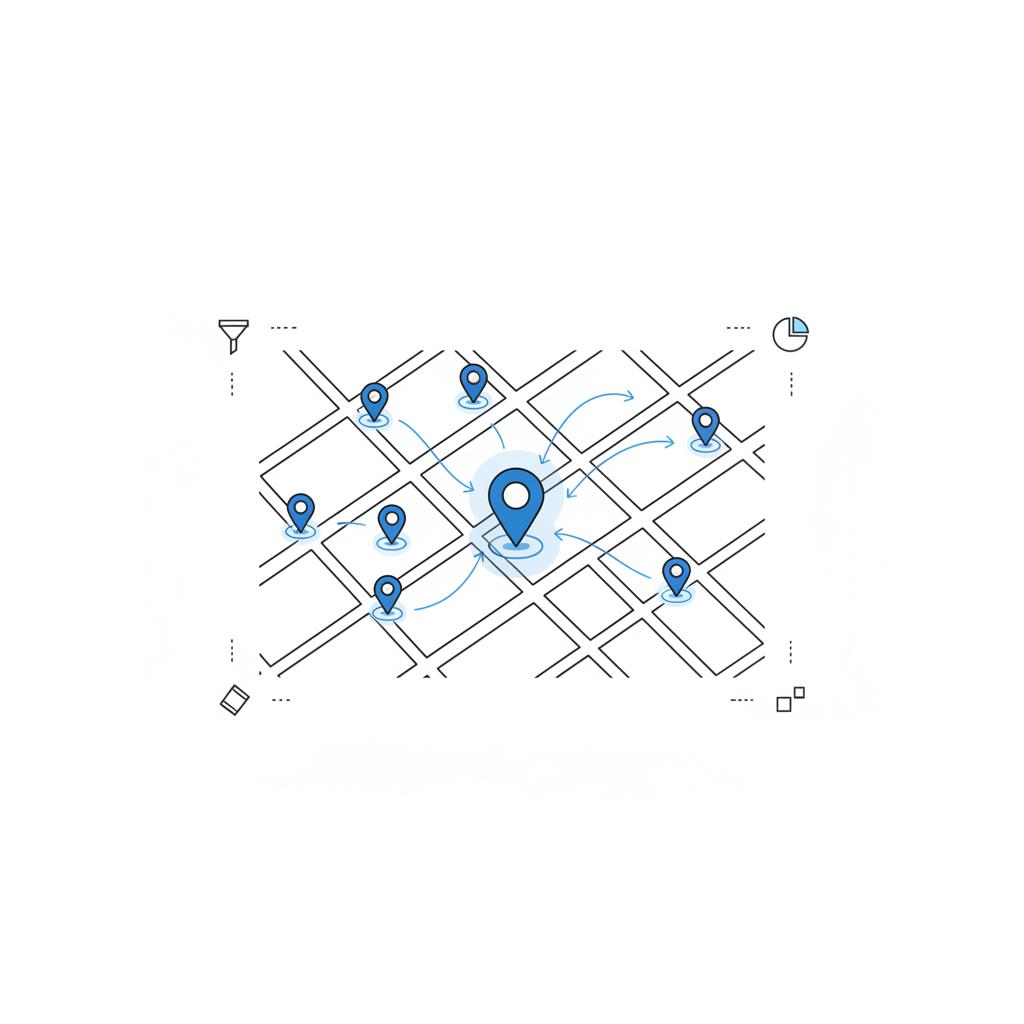
What not to do: avoid the tempting shortcuts
Some quick fixes are actually harmful. Don’t add extra keywords to your business name, don’t create multiple listings for the same location, and never buy fake reviews. Google’s automated systems and manual reviewers flag manipulation and the penalties aren’t worth it.
Limits and open questions
Two important realities: Google doesn’t reveal the exact weight of GBP signals relative to website SEO, and proximity remains an unavoidable factor. You can’t physically move closer to a searcher, but you can strengthen every other signal – reviews, accurate categories, good photos – to maximize the chance Google shows your listing.
How to measure ROI
Link profile work to the business metrics that matter: calls, direction requests and bookings. If you can, add phone-tracking or ask callers how they found you. For many small businesses, a meaningful uplift in these actions within a few months is enough to justify ongoing maintenance.
Checklist recap and a simple monthly plan
At the end of each month do the following:
- Verify NAP consistency on main directories and your site.
- Review and respond to all new reviews.
- Add at least five fresh photos or a short virtual tour clip.
- Update hours and attributes for any seasonal changes.
- Publish two short GBP posts about promotions, FAQs or events.
- Compare GBP Insights with website analytics and phone logs to spot trends.
These actions keep your profile healthy and give you repeatable data to show progress.
Quick FAQ
How often should I update my profile?
Regular maintenance is better than a one-time overhaul. Update holiday hours, add photos occasionally, and post when you have meaningful news – roughly every one to two weeks is a sensible cadence for most owners.
Are reviews or citations more important?
Both matter. Reviews influence conversions and prominence; citations help Google verify your legitimacy. Treat them as complementary parts of local trust signals.
How long before I see results?
Simple fixes can yield visible improvements in days or a few weeks. Bigger changes like a steady review flow or citation cleanup often take two to three months to affect rankings consistently.
Final practical tips (things many forget)
Use a short review URL or QR code on printed receipts. Ask staff to note when a customer mentions finding you on Maps – that anecdotal data can validate your tracking. And keep one person responsible for weekly maintenance so the profile doesn’t fall back into neglect.
Bottom line: a well-maintained Google Business Profile is a high-value, low-cost channel for local customer acquisition. It won’t replace a strong website or brand, but it will often be the most direct path to calls, visits and conversions for people searching nearby.
Thanks for reading – take a few minutes this week to claim or tidy your profile and you’ll likely see the payoff soon.
Regular maintenance beats one-time fixes. Update hours for holidays, add new photos occasionally, and publish short posts when you have meaningful news. A cadence of one small update every one to two weeks keeps your profile fresh and useful.
No — treat your website and your profile as complementary. A website builds deeper content and conversion paths; the Google Business Profile captures high-intent local searches and drives immediate calls and direction requests. Both work together for best results.
If you have multiple locations, inconsistent listings, or limited internal time, an agency can clean up your profiles, set a maintenance rhythm and provide transparent reporting tying changes to calls and visits. Choose a partner that focuses on measurable outcomes rather than vague promises.
References
- https://searchengineland.com/google-local-pack-signal-fit-brands-465921
- https://www.localmighty.com/blog/google-business-profile-optimization-best-practices/
- https://localo.com/blog/google-business-profile-optimization
- https://agencyvisible.com/
- https://agencyvisible.com/projects/
- https://agencyvisible.com/contact/