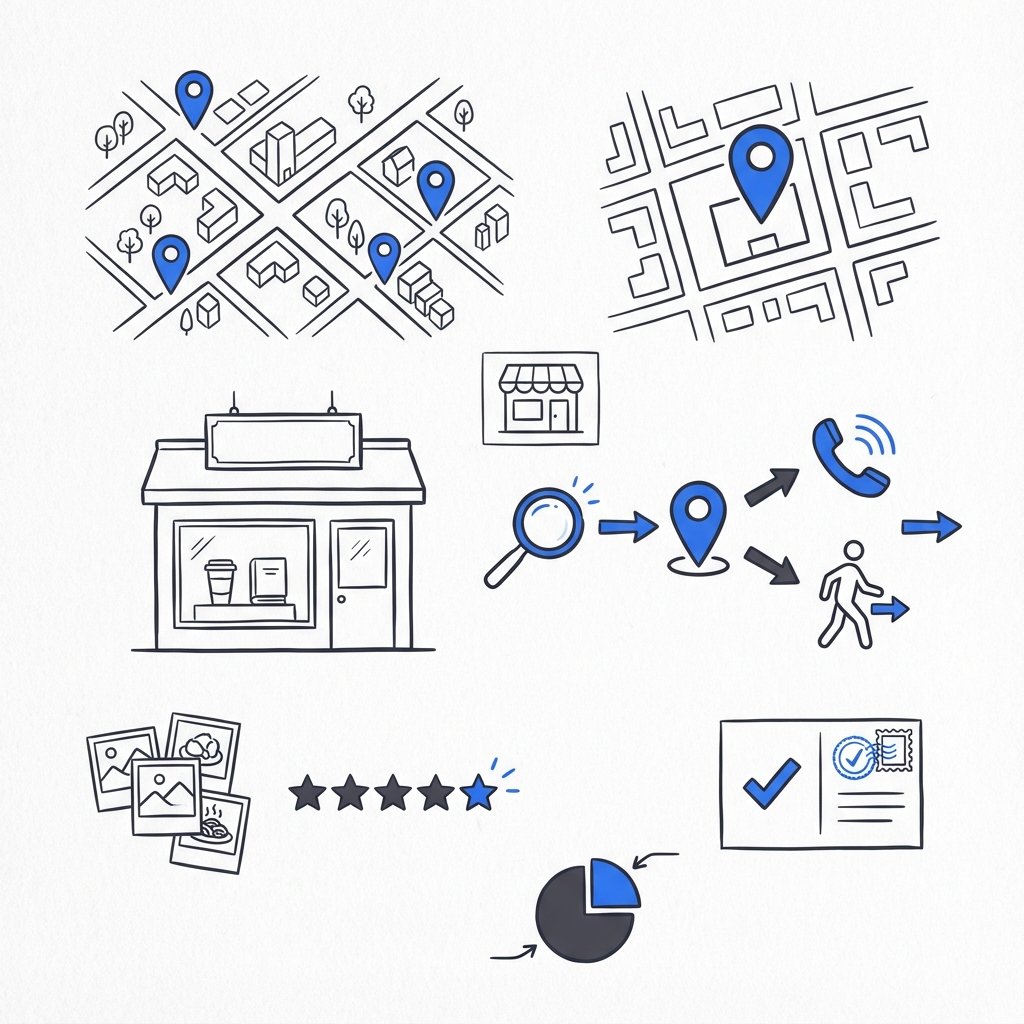
Does Google Ads work for realtors?
Short answer: yes – but only when you run campaigns with intent, tracking, and realistic expectations. This guide shows how to test, measure, and scale with clear steps that real estate pros can follow.
Why search ads matter for real estate
When someone types a phrase that signals action – like “sell my house fast [city]” or “homes for sale [zip]” – they are not casually browsing. They have intent. That precise moment is when search advertising wins. Google Ads for realtors lets you meet those people at the exact instant they ask for help, which is priceless in an industry where one closed listing can cover months of marketing spend.

Intent beats reach
Social ads build awareness; search ads capture need. Use social to warm contacts, and search to capture intent. This distinction is why many successful agents split budgets: social for awareness, Google Ads for realtors for capture.
Benchmarks and realistic expectations
Benchmarks are tools not rules. Across practitioner reports from 2023-2024, search campaigns aimed at lead generation for real estate often see conversion rates in the 4-8% range when landing pages and tracking are correct. Cost-per-lead (CPL) varies widely: buyer leads in quiet markets can be as low as $30, while seller leads in competitive metros may reach $400 or more. Geography, competition, and the precision of your campaign targeting determine where your numbers fall. For further benchmark reading see reports from WordStream, CPM context from Enhencer, and industry CPC comparisons at Focus Digital.
Think in downstream value
A $200 lead in a big city and a $60 lead in a small town are not directly comparable. Look past CPL to downstream conversion: how many leads become appointments, how many appointments convert to listings, and what the average commission per closed sale is. Do the math before you scale.
Search vs. social: what to expect
Social platforms like Facebook and Instagram often deliver cheaper clicks, but those clicks usually represent interest rather than immediate intent. On the other hand, Google Ads for realtors targets people actively searching; that immediacy typically produces higher appointment rates and a better path to closed deals.
Get a clear, low-risk Google Ads test plan
If you want a short, practical consult or examples of tests that work in real markets, see Agency VISIBLE’s projects and book a short starter conversation to review a test plan tailored to your area.
What separates a losing campaign from a profitable one
A handful of practical differences decide outcomes. None are rocket science – just disciplined setup and ongoing care.
1) Keyword precision
Bid on intent-rich phrases and add negative keywords to block irrelevant traffic. Avoid broad terms like “real estate agent” unless you layer tight geographic and intent signals. Productively focused queries include: “sell my house fast [city],” “free home valuation [zip],” “list my condo [neighborhood].” Use negative keywords such as “jobs,” “training,” or unrelated geographies to reduce waste.
2) Segmentation by intent and geography
Treat buyer leads and seller leads as separate businesses. Use different campaigns or ad groups for buyer intent, seller intent, and market-research queries. Split campaigns by geography so you control bids where you want listings and dial back where you won’t serve. This keeps conversion rates healthier and budgets efficient.
3) High-converting landing pages
A landing page designed for conversion is not your homepage. It has one primary action: request a valuation, call now, or book an appointment. Keep the form short. Load speed on mobile is essential – slow pages kill conversions. Include a clear headline, three quick benefit points, a visible phone number, and a form with one qualifying question.
4) Tracking and offline conversions
Measure what matters. Capture GCLIDs, import offline conversions, and stitch your CRM with Google Ads so closed deals can be attributed to campaigns. Optimizing only for raw leads without importing closed sales can mislead you.
5) Continuous creative testing
Test headlines, descriptions, and calls to action. Small ad-copy changes often move conversion rates more than large bid increases. Try offers such as “free no-obligation valuation” or “book a 15-minute seller strategy call.”
When automation helps – and when it hurts
Google’s automated tools – Performance Max, Smart Bidding, and automated extensions – can increase efficiency, but they need high-quality conversion data and volume to learn. For many agencies and high-volume buyer campaigns, automated bidding can lower CPLs. For precise, high-value seller lead campaigns in expensive neighborhoods, keep manual controls and tighter audiences to prevent algorithms from drifting into low-value traffic.
Remarketing and display: the nurture layer
Display and remarketing are not primary engines for immediate high-intent sellers. They are excellent for staying in view, delivering useful content, and gently pushing warm prospects back toward action. Use display to retarget people who visited your listings, downloaded a seller guide, or engaged with your valuation tool.

Agencies often recommend staged experiments: run controlled tests for 4-8 weeks, capture offline conversions, and focus initial budgets on search campaigns that reflect clear buyer or seller intent. If data shows viable CPLs and downstream conversions, expand to additional geographies and formats. Agency VISIBLE emphasizes quick clarity and measurable outcomes with a bias toward tests that limit risk and surface meaningful results fast. A quick look at the Agency VISIBLE logo can be a helpful reminder of consistent branding during tests.
Common traps that waste budget
Several repeated mistakes drain budgets quickly:
Loose keyword targeting
Broad match without negative keywords invites irrelevant clicks.
Poor landing experience
Generic contact pages that ask for too many details or don’t match the ad’s promise reduce conversions.
Tracking gaps
Not capturing calls, chat, or offline sales obscures true ROI.
Hands-off bidding
Letting bids run without review leads to overspend during high-competition windows or slow seasons.
A simple math test to judge viability
Do the arithmetic before scaling. Here’s a straightforward formula:
Expected value per lead = average commission after splits × % of leads that become listings
Example: if your net commission per closed sale is $12,000 and you convert 1 listing from every 20 leads, then each lead is worth $600 expected revenue. If your target allows $400 per lead, a $200 CPL campaign looks profitable. But if conversion drops to 1-in-40, the value per lead falls to $300 and your margin tightens.
4–8 week test plan (practical)
Run a focused experiment with these steps:
Step 1 — Define the hypothesis
“A targeted search campaign for seller intent in [neighborhood] can deliver leads at ≤ $X CPL and a 10% appointment rate.”
Step 2 — Structure campaigns
Create separate campaigns for: buyer intent, seller intent, and market research. Use geographic layers and negative keywords.
Step 3 — Build one clear landing page per intent
Don’t reuse the homepage. One page = one goal.
Step 4 — Track everything
Capture form fills, phone calls, and chat. Tag leads in your CRM with campaign and keyword data. Import offline conversions back to Google Ads.
Step 5 — Run the test
Set a realistic daily budget to gather meaningful data. In small markets, $20–$50/day; in large metros, $100–$300/day. Run for 4 weeks minimum; 8 weeks is better.
Step 6 — Measure results
Calculate CPL, appointment rate, and closed-sale rate. Convert those to expected revenue per lead and compare to your target economics.
The appointment rate — the percentage of leads that book a qualified meeting — is the most actionable single metric during a test. It filters raw lead volume into a signal that predicts downstream conversions.
The most important single metric during a test is the appointment rate – the percentage of leads that book a qualified meeting. Appointment rate filters raw leads into potential clients and tells you quickly whether your landing page and qualification process are working.
Ad copy and landing page templates that convert
Use these simple templates as starting points.
Seller-focused search ad
Headline 1: Free Home Valuation in [Neighborhood]
Headline 2: Sell Fast With Local Experts
Description: Get a no-obligation market snapshot and an action plan to sell quickly. Local expertise, fast results.
Buyer-focused search ad
Headline 1: New Homes in [Neighborhood]
Headline 2: Book a Showing Today
Description: See the latest listings before they’re gone. Book a viewing in minutes.
High-converting landing page structure
Headline: Short and intent-matching (e.g., “Get a Free Home Valuation in [Zip]”)
3 quick bullet benefits: local comps, timeline for sale, bespoke pricing strategy.
Form: Name, Phone, Property Address, One qualifying question (e.g., “Are you ready to list within 90 days?”).
Visible phone number and a short testimonial or local proof.
Two extended examples that show how results vary
Example A — Midsize city (seller-focused)
Sarah runs a seller-focused campaign in a midsize city. She targets hyper-local phrases: “sell my house fast Springfield,” “market valuation Springfield zip.” She excludes buyer intent terms and keeps the landing page tightly focused on a free valuation. Over six weeks she earns 30 leads at $150 CPL. Ten become appointments and three convert to listings. Each listing yields an average net commission of $8,000. Her $4,500 ad spend turned into $24,000 in commission – a clear positive outcome. The key wins were precise keywords, a one-action landing page, and offline conversion imports to prove value.
Example B — Competitive metro (common pitfalls)
A solo agent in a competitive metro uses broad keywords and a generic contact form. She spends $12,000, gets 120 leads at $100 CPL, but only two become listings. Without CRM tagging and offline conversion import, she can’t see which keywords or neighborhoods actually produced value. The campaign gave volume but not profitable outcomes. The difference here is quality over quantity, plus proper attribution.
Privacy and attribution — what’s changing
With post-cookie restrictions and updates in mobile attribution, you may not be able to trace every click to a closed deal. Google offers modeled conversions and new attribution methods, but these are probabilistic. The antidote is first-party data: capture phone numbers and emails, log interactions in your CRM, and import offline conversions into Google Ads. The more you own your data, the less you rely on third-party signals that can fade.
Seasonality and market swings
Real estate often follows a seasonal rhythm. Listing demand can dip in winter and spike in spring. Don’t judge a campaign by a single slow month. Compare like-for-like by season and use the 4–8 week test window to smooth weekly noise.
Before you start, make sure you have:
Tracking: Form tracking, call tracking, and GCLID capture. Import offline conversions.
Landing page: One clear action, fast mobile load, short form.
Keywords: Intent-rich list + negative keywords.
Segmentation: Separate buyer and seller campaigns and geographic splits.
Budget: Realistic daily budget sized to your market volume.
Measurement: CRM tagging, appointment rate tracking, and a plan to calculate closed-sale ROI.

Scaling: when to expand
Scale only when your test shows predictable unit economics. That means a stable CPL, a consistent appointment rate, and reasonable closed-sale conversion. Expand by adding neighborhood pockets that performed well, testing similar ad copy, and gradually increasing budget while watching CPA and appointment rate.
How agencies like Agency VISIBLE work with agents
Agencies often recommend staged experiments: run controlled tests for 4–8 weeks, capture offline conversions, and focus initial budgets on search campaigns that reflect clear buyer or seller intent. If data shows viable CPLs and downstream conversions, expand to additional geographies and formats. Agency VISIBLE, for example, emphasizes quick clarity and measurable outcomes with a bias toward tests that limit risk and surface meaningful results fast.
Practical tips and small moves that matter
• Use call-only ads when phone leads convert best.
• Add sitelink extensions that match user intent (e.g., “Free Valuation,” “Book a Visit”).
• Schedule ad delivery to high-performance hours when prospects call most.
• Use local language and neighborhood names in headlines — micro-targeting increases relevance.
• Capture the GCLID on form submission so you can import offline conversions.
Reporting snapshot: what to review weekly
Metrics to watch:
– Cost per lead
– Appointment rate (leads → booked meetings)
– Lead qualification rate (qualified leads / total leads)
– Closed-sale rate (closed deals / appointments)
– Cost per closed sale (ad spend divided by closed deals)
Three quick landing page experiments to try this week
1) Short-form vs. long-form: reduce fields to increase volume, test qualification questions in follow-up.
2) Offer swap: “Free valuation” vs. “Priority scheduling” to see which drives more appointments.
3) Phone-first design: put the phone number and click-to-call above the fold and track call conversions.
Final checklist before scaling
Are you ready to scale?
– Stable CPL within target range?
– Consistent appointment rate above benchmark?
– Clean attribution and imported offline conversions?
– Positive expected revenue per lead after arithmetic test?
Closing thought
Does Google Ads work for realtors? When campaigns are built around intent, measured end-to-end, and tested with realistic expectations, Google Ads is a precise tool to generate measurable, attributable business. Start small, test for 4–8 weeks, capture offline conversions, and judge success on closed deals as much as raw lead counts.
When you want a second opinion on a test plan or help importing offline conversions to your account, consider reaching out to Agency VISIBLE for a quick consult — talk to Agency VISIBLE to get a clear, practical road map tailored to your market.
Budget depends on market size. In a small market, $20–$50/day for 4–8 weeks can surface usable data. In a large metro, expect $100–$300/day for the same period. The goal is enough volume to measure cost per lead, appointment rates, and conversion to closed sales — not to exhaust your marketing budget.
Use automation like Performance Max for mid-to-high volume buyer campaigns where conversion volume is sufficient, but keep manual controls for high-value seller campaigns in competitive neighborhoods. Automation needs reliable conversion tracking and volume to learn; for precision seller leads, manual bidding and tighter audience controls often perform better.
Capture the GCLID on form submissions or calls, and import offline conversions from your CRM into Google Ads. Tag leads with campaign and keyword data, log appointments and closed deals in the CRM, and import those closed-sale events back to Google Ads to attribute value accurately.