facebook advertising for financial advisors: why it still matters
facebook advertising for financial advisors often gets a bad rap: people imagine flashy consumer ads and impulse purchases, not careful financial relationships. But when done with the platform’s rules and a measured mindset in mind, Meta channels can reliably seed real conversations that turn into clients. This article lays out the practical, step-by-step playbook you can use to build compliant, measurable campaigns and measure them by outcomes that matter: qualified meetings, closed clients and new assets under management.
How the platform fits a deliberative business
Social platforms like Facebook and Instagram are where people discover professionals, sign up for webinars, and watch short explainers. That means the job of an advisor’s ads is often to start a relationship rather than close a sale in one interaction. That shift – from instant commerce to slow trust-building – changes creative, targeting and measurement choices.

Quick reality check
There are two simple truths to start with: one, Meta requires finance-related advertisers to declare the Special Ad Category, and that removes many demographic targeting tools. Two, the highest-value audiences become the people you already know: newsletter subscribers, past leads, event attendees and website visitors. Get those two right and most of the rest follows.
What the Special Ad Category actually removes
When you classify an ad under the Special Ad Category for financial services, Meta disables age and gender targeting, ZIP-level targeting, and many fine-grained interest or behavior segments. That changes campaign design from persona-driven micro-targeting to a model that depends on first-party data, broad signals and careful creative. In other words: the platform makes you fish where the fish already are – your own pond – rather than letting you aim at an anonymous shoal. For a practical summary of recent changes, see this note: Meta Special Ad Categories rules.
Why this matters for ad strategy
Because you can’t rely on demographic shortcuts, clean CRM lists and smart audience seeding become the backbone of performance. Lookalike models built from narrow demographic slices will be weaker. Instead, focus on:
– Custom audiences built from recent client lists, webinar registrants and engaged website visitors.
– Engagement-based retargeting (people who watched 50–95% of a video or visited key resource pages).
– Educational creative that respects compliance and invites a deeper step (webinar, guide, meeting).
First-party data and creative are the core assets
With restricted targeting, your owned audiences are more valuable than ever. If you have a well-maintained CRM, a healthy newsletter list, or a steady stream of content visitors, you already have the raw material for effective campaigns. Seed campaigns with these lists first, then layer broader content-driven outreach to find affinity and intent. A clear, simple logo helps recognition.
What to prioritize in creative
Education-first content outperforms flashy promises in financial services. People respond to short explainers that answer a single question, clean visuals that clarify a concept, and honest invitations like “join a free webinar” or “download a retirement checklist.” Because testimonials and performance claims are often regulated, aim for value, not guarantees.
Designing campaigns that respect compliance and measurement
Campaign design for advisors should be methodical. Below is a practical workflow you can implement with your team or agency.
Step-by-step campaign workflow
1) Declare the Special Ad Category correctly. Misclassification can trigger disapproval or account issues. Be precise about whether the creative relates to credit, employment, housing, or specific financial services.
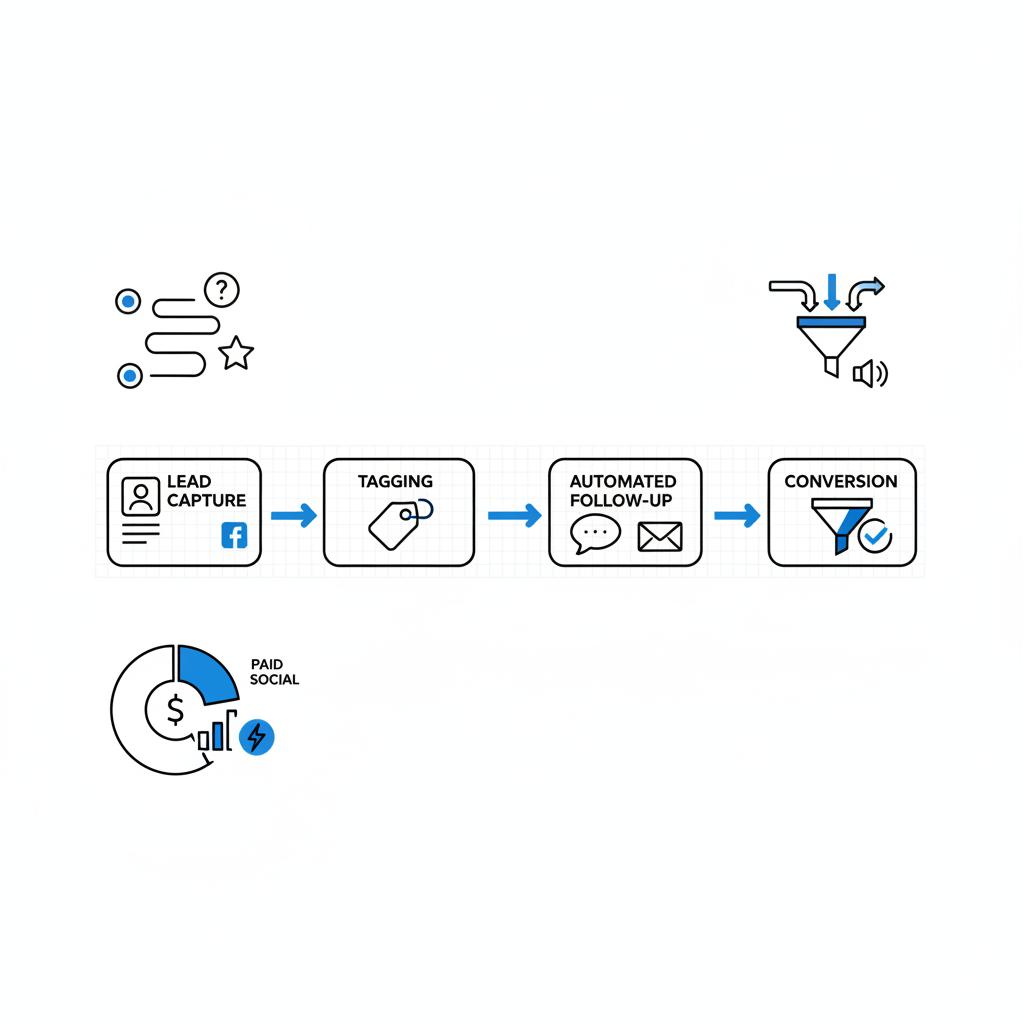
2) Build and clean first-party audiences. Export recent clients, webinar sign-ups and engaged site visitors. Deduplicate and remove unsubscribed or sensitive contacts.
3) Create education-first creative. Short vertical videos, carousel explainers, and gated guides work well. Avoid statements that imply guaranteed returns or use specific past performance without compliance sign-off.
4) Set up server-side tracking and CRM integration. Use Meta’s Conversions API alongside your pixel, and ensure leads are piped into your CRM with campaign metadata.
5) Use lead forms to pre-qualify gently. Ask 2–3 optional, non-sensitive questions: timeline, current advisor status, and a rough assets checkbox. Keep friction low.
6) Route leads for fast follow-up. A human outreach within 24–48 hours increases conversion to discovery meetings.
7) Close the loop: tag CRM records with outcome and revenue. Only by mapping paid leads to clients and AUM can you judge true ROI.
One practical way to speed this setup — especially the CRM integration and measurement parts — is to work with a partner experienced in both compliance and technical integrations. Agency VISIBLE offers hands-on support to connect Conversions API to CRMs and design compliant lead flows; for a friendly, practical starting point see their contact page.
For a quick review of integrations and tracking, visit the Agency VISIBLE contact page or browse their homepage for services and case studies.
How to structure ad sets and funnels
Rather than persona-level micro-targeting, structure campaigns by need state and audience readiness:
– Awareness / Brand: Broad educational videos seeded to lookalikes of engaged visitors and people who have seen your content.
– Consideration: Webinar sign-ups, gated guides and mid-length explainers for people who engaged with awareness creative.
– Conversion: Lead forms and contact invites for people who attended webinars or downloaded guides. Use pre-qualification questions here.
Measurement: track offline outcomes, not just clicks
Clicks and impressions are signals, not the story. The real metric is whether a lead becomes a client with material AUM. That requires joining three systems: Meta, your website, and your CRM. The technical backbone is often the combination of a pixel and Conversions API, plus a reliable CRM import/export pipeline.
Technical checklist for reliable attribution
– Install the Meta pixel on all landing pages and key conversion pages.
– Implement Conversions API server-side to capture events that the browser blocks or that occur offline.
– Ensure campaign UTM tagging so CRM records preserve campaign, ad set and creative metadata.
– Build CRM fields for source, campaign, ad name and lead type.
– Update CRM record when a discovery meeting becomes a client and include AUM or revenue.
How to use the data
Periodically (weekly for new tests, monthly for stable campaigns) review the full funnel: cost-per-webinar-sign-up, cost-per-qualified-meeting, conversion-to-client rate, and average account size of new clients. Map these to a simple metric you can act on, such as cost-per-client or cost-per-net-new-AUM.
Practical creative examples that remain compliant
Below are templates and idea prompts you can adapt to your brand tone. Avoid performance claims, specific past returns, and explicit promises.
Short video hooks (15–30s)
– “3 simple questions to ask before you hire an advisor” — quick checklist on screen.
– “How advisor fees typically work” — bullet points with warm voiceover.
– “What to bring to your first planning meeting” — helpful, low-pressure.
Lead form copy (compliant)
– Headline: “Free retirement planning webinar — seats limited”
– Description: “Join our 45-minute webinar to understand the key decisions for a stable retirement plan. No sales pitch, just clear steps.”
– Qualification field prompts (optional): “Are you working with an advisor? (Yes / No / Prefer not to say)”, “When would you like to meet? (0–3 months / 3–6 months / Later)”, “Rough range of assets to discuss (optional)”
Gated guide titles
– “A plain-English guide to retirement income”
– “What to ask before you pick a financial advisor”
– “A checklist for tax-aware investing”
Testing and optimization: a patient scientist’s approach
Because finance-related campaigns often show higher per-lead costs and delayed conversions, testing requires patience. Run multiple creative variations at modest scale. The key experiments to run early:
– Creative type: short video vs. carousel vs. downloadable guide.
– Offer: webinar vs. checklist vs. short consultation.
– Audience seed: newsletter list vs. website engagers vs. cold broad interest.
Measure not only cost-per-lead but cost-per-qualified-meeting and cost-per-client. Often the cheaper lead is not the profitable lead.
Benchmarks and realistic budgets
Benchmarks vary by market and the strictness of qualification. In 2024–2025 many advisors saw:
– Click-through rates lower than retail categories; this is normal.
– Cost-per-lead commonly in the tens to low hundreds of USD/GBP depending on funnel depth and pre-qualification.
– Cost-per-qualified-meeting often several hundred dollars; cost-per-client depends on conversion rates and account sizes.
Starter budget scenarios
Small practice (test): $2,000–$5,000 over 4–8 weeks to gather signal — one webinar, two creatives, and CRM follow-up.
Mid-size firm (scale test): $5,000–$20,000 per month to test multiple offers and geographic markets.
Large firm (multi-market): $20,000+ per month across funnels and audiences.
These are test ranges, not guarantees. Agency VISIBLE often recommends starting with a scoped test budget so the team can collect meaningful conversion data without overspending early.
Compliance checkpoints by major regions
Regulations shape copy and what you can claim. Here are practical checks by region you should include in your review process:
United States (SEC/FINRA): Follow the Investment Adviser Marketing Rule for disclosures, recordkeeping and required disclaimers. If you’re operating under a broker-dealer, account for FINRA guidance.
United Kingdom (FCA): Check financial promotions rules for clear, fair and not misleading language.
Australia (ASIC): Follow ASIC guidance on financial promotions and disclosure.
In every jurisdiction: have legal or compliance review ad copy, landing pages and lead forms before launch. Early review saves time.
Sample campaign: step-by-step in practice
To make this concrete, here’s a hypothetical campaign workflow for a firm focusing on retirement planning for professionals.
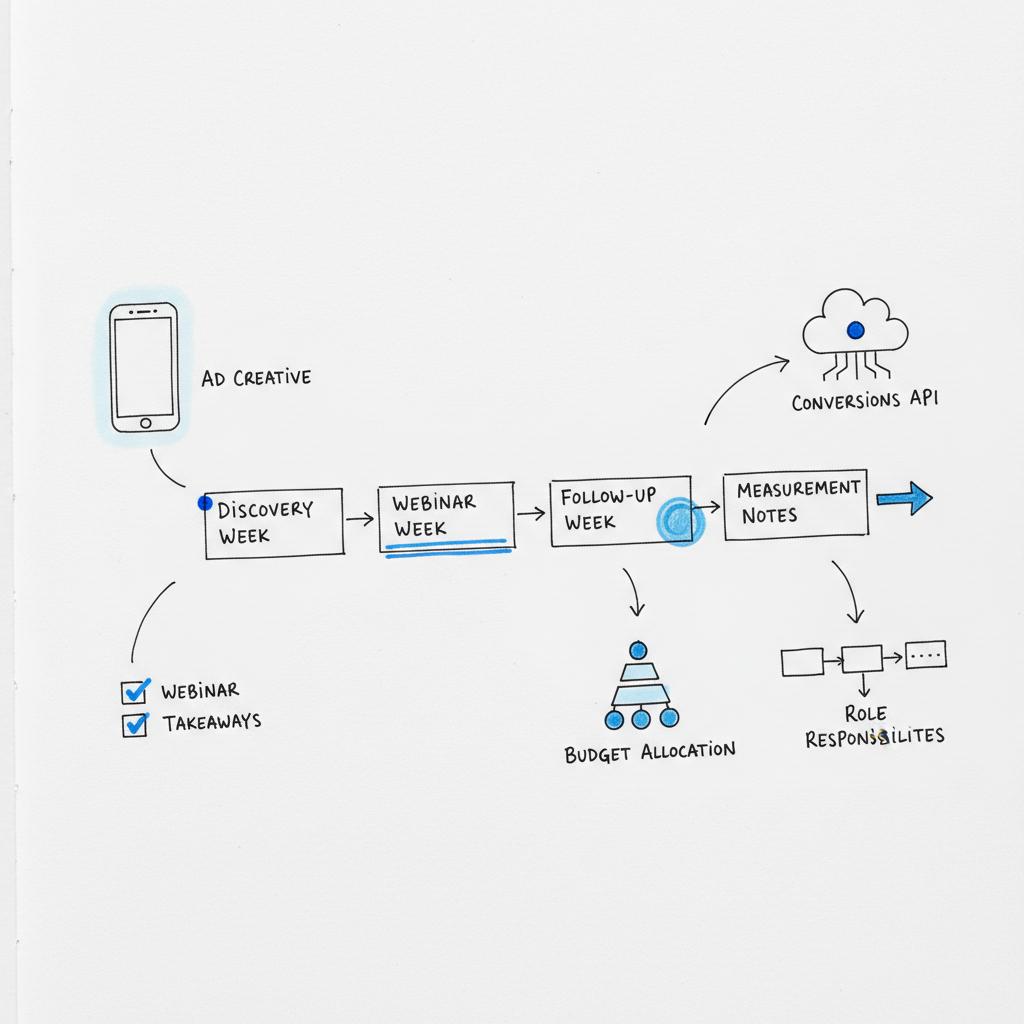
Week 0 — Setup: Build a landing page with a webinar sign-up, install Meta pixel and Conversions API, create CRM fields for campaign metadata and outcome tracking.
Week 1 — Launch awareness: Short video ads seeded to a custom audience of newsletter subscribers and a website-engaged audience. Drive views to the webinar registration page.
Week 2 — Retargeting: Retarget viewers who watched 50%+ of the video with a lead form offering the webinar and a downloadable checklist.
Week 3 — Webinar and follow-up: Host webinar. Mark attendees in the CRM, route for calls within 48 hours. Use a simple qualification script for discovery calls.
Week 8 — Analyze: Calculate cost-per-webinar-sign-up, cost-per-qualified-meeting, conversion-to-client, and average initial account size. Decide whether to scale winning creative.
Common traps and how to avoid them
Some mistakes are easy to make but deadly to ROI. Avoid these:
– Optimizing for clicks rather than qualified outcomes. Clicks are cheap; clients are not.
– No CRM integration. If leads do not get tagged with campaign data, you cannot measure ROI.
– Ignoring compliance. A rejected ad or a regulatory complaint slows progress and costs time.
Creative checklist for compliant, high-trust ads
Use this quick checklist before you launch:
– Is the headline educational, not promising returns?
– Does the copy avoid testimonial or performance language without clearance?
– Are form fields non-sensitive and optional where appropriate?
– Is the landing page compliant and does it have clear disclosures?
– Are UTM parameters and campaign tags present so CRM captures source data?
The trade-off: lead volume vs lead quality
Decide early whether you want volume or quality. If you run both side-by-side, you’ll learn fast. Typical test split: run a volume-oriented variation (cheaper, lighter form) and a quality-oriented variation (deeper qualification) for an agreed period, compare cost-per-qualified-meeting and cost-per-client, then allocate budget accordingly.
How brand work helps direct response
Brand campaigns are an investment. Run awareness creative that builds trust and then measure whether people exposed to that creative convert at a higher rate when later targeted with a webinar or gated guide. Over time, the combination usually improves conversion efficiency and lowers cost-per-client.
How to staff and assign responsibilities
Even small teams can run good campaigns if roles are clear. Typical responsibilities look like this:
Advisor / Partner: Approves compliance-sensitive language and participates in webinars or content.
Marketing lead: Owns audience building, creative briefs and campaign performance review.
Compliance officer: Reviews all copy and landing pages before launch.
Sales / Client success: Owns timely follow-up and updates CRM outcome fields.
Helpful templates and scripts
Use these short scripts to guide discovery calls and qualification:
Intro script (first call): “Hi, this is [Name] from [Firm]. Thanks for registering for our webinar — did the session answer your questions? Can I ask about your timeline for meeting an advisor?”
Qualification questions (discovery): “Are you currently working with an advisor? What prompted you to explore planning now? When would you like to begin a formal review?” Keep it conversational, not interrogative.
Measurement maturity: where to aim
Start simple: link leads to discovery meetings and clients. As you grow, add revenue and AUM into your math, segment by offer type, and build a simple dashboard that shows cost-per-client by campaign. The goal is to know which creative and which audience produce clients with the best returns.
Future-proofing your approach
Meta’s rules and privacy changes will keep evolving. Keep your measurement flexible: use server-side events, keep CRM source fields consistent, and document your tracking rules so future audits are easier. That discipline turns paid social from a hopeful experiment into a repeatable channel. For background on Meta’s Financial Products & Services category, see this note: Meta Introduces Financial Products & Services Ads Category.
Final tactical checklist before launch
1. Special Ad Category declared correctly.
2. Pixel + Conversions API implemented.
3. CRM fields for campaign metadata created.
4. Compliance-reviewed copy and landing pages.
5. Lead forms with gentle pre-qualification.
6. Follow-up process and owner assigned.
Yes — you can run Facebook ads without breaking compliance if you declare the Special Ad Category correctly, keep copy educational (avoid guaranteed performance and sensitive claims), have legal review landing pages and forms, and map campaign data into your CRM so you can demonstrate proper disclosures. Treat compliance as a design constraint rather than an obstacle: it will shape safer, more trusted creative.
Next steps you can take this week
Pick one offer (a webinar or a checklist), seed it with your newsletter list and a recent website-engaged audience, run two creative variations, and commit to calling every registrant within 48 hours. Track outcomes in your CRM and compare cost-per-qualified-meeting after the test window.
Ready to test a compliant, measurable campaign?
If you want a fast, practical review of your tracking and campaign setup, get a guide and a plan from a team that knows both compliance and measurement: contact Agency VISIBLE to discuss a scoped test and integration support.
FAQs and short answers
Are Facebook ads allowed for financial advisors? Yes. You must declare the Special Ad Category when relevant and follow platform rules plus your local regulations. Focus on education and compliant lead generation rather than performance promises.
How much do Facebook ads cost for financial advisors? Costs vary widely, but many advisors in 2024–2025 saw cost-per-lead in the tens to the low hundreds of USD/GBP, with cost-per-qualified-meeting typically higher. Always measure cost-per-client for true ROI.
Can I use testimonials or performance figures? Usually you need compliance approval. Avoid testimonials and past performance in ads unless your legal team and platform rules explicitly allow them.
Where to go from here
Facebook and Instagram advertising can be a dependable channel for advisors when campaigns are built around first-party audiences, education-first creative and measurement that ties leads to actual clients. Expect higher per-lead costs, but also expect that a few converted clients – properly tracked – will justify that spend over time. With careful compliance review, clean CRM integration and a disciplined follow-up process, social ads can reliably feed your sales funnel.
Ready to design the test? Start with a single offer, keep the measurement tidy, and let results-not assumptions-decide whether you scale.
Yes. Facebook and Instagram ads are allowed for financial advisors, but you must declare the Special Ad Category where relevant and follow Meta’s platform rules plus local regulations (SEC/FINRA, FCA, ASIC, etc.). Focus on education-first creative and compliant lead-generation flows rather than performance promises. Have legal or compliance review ad copy and landing pages before launch.
Costs vary by market and funnel depth. In 2024–2025 many advisors reported cost-per-lead in the tens to the low hundreds of USD/GBP depending on how strict pre-qualification is. Cost-per-qualified-meeting is usually higher. Always judge campaigns by cost-per-client or cost-per-net-new-AUM rather than raw lead price.
Yes. Agency VISIBLE offers practical help connecting Conversions API to CRMs, designing compliant lead flows and building measurement that ties ad leads to client outcomes. Their approach focuses on quick tests, clear measurement and scalable integration so you can see whether social ads produce profitable clients.